| Description |
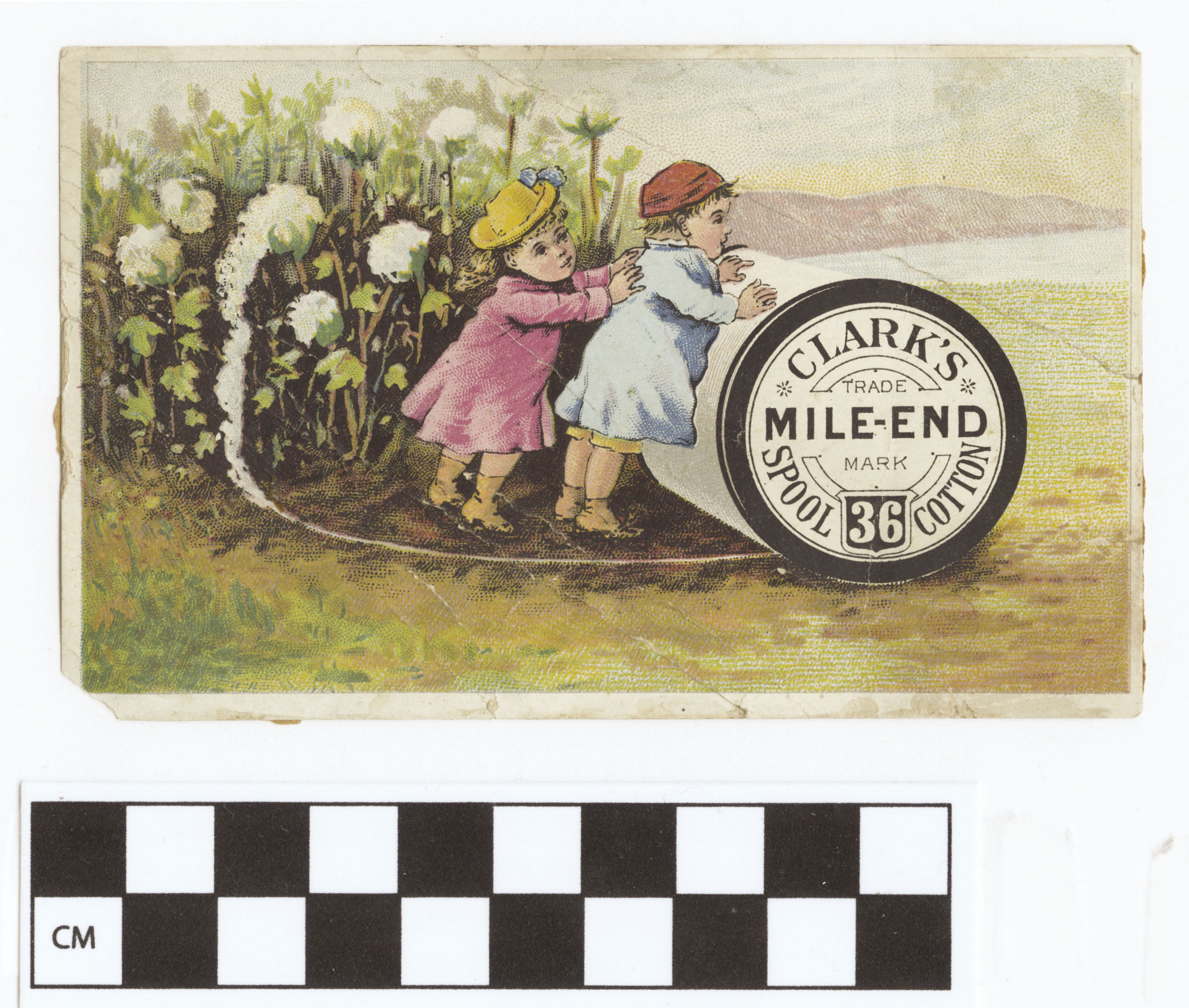
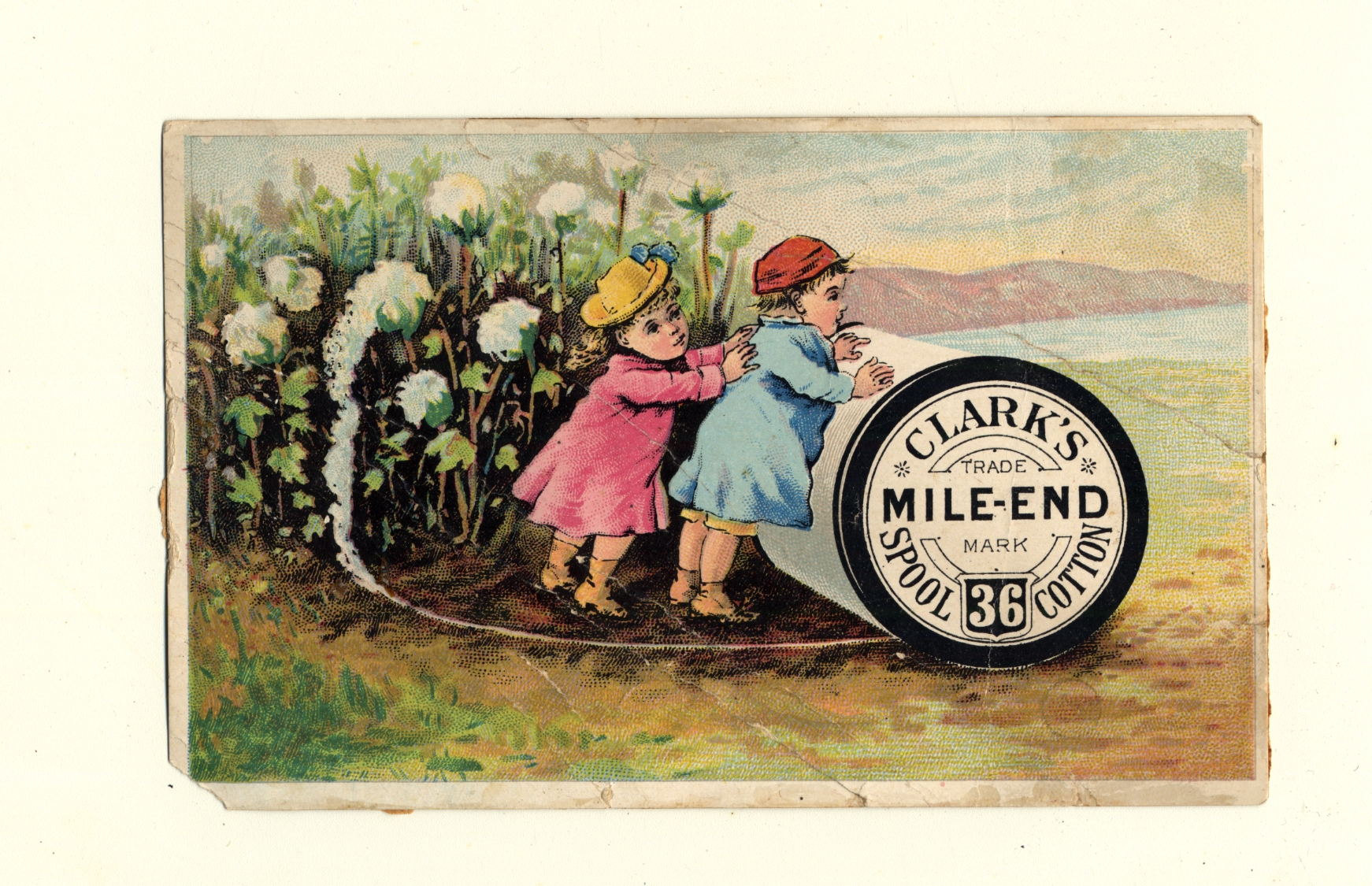
Many American advertising cards in the nineteenth century displayed a variety of visual and rhetorical themes to foster the attention of potential consumers. The appealing elements these cards displayed convinced the public that these easily disposable ephemera pieces were worthy of preservation. In this card for Clark's Spool Cotton, two advertising tropes which can be observed are scenes that inspire young American women and the positive reactions by consumers when children are included in the branding.
Advertising cards that featured children and young adults engaging in consumer lifestyles were appealing to young audiences. For young American girls, a demographic that often lived in constraining social environments, these cards were particularly endearing and relatable, especially when they featured girls of the same age group. The girls on the card participating in happy and even adventurous consumer activities were symbolic of what opportunities were available for young women in a new American industrialized era. This card features a girl and a boy experiencing the outdoors in a cotton field, insinuating that a girl’s clothing and quality of life will improve with the advertised product.
Children were terrific advertising tools in American trade cards, with producers often using charming images of young people to increase consumer sentiments and facilitate a positive reputation for their brands. Also, these children were often depicted as engaging in consumer lifestyles, a trend that their peers found inspiring. Additionally, some advertisers used sympathy for children–often depicting them as downtrodden or impoverished–to advertise the negative impacts of industrialized society. This card includes a boy and a girl rolling a large spool of cotton, a wholesome and curious image intended to help facilitate favorable attention from consumers.
|
| Bibliography |
“A Short History of Trade Cards,” Bulletin of the Business Historical Society 5, no. 3 (April
1931).
Berg, Maxine and Clifford, Helen, Selling Consumption in the Eighteenth Century: Advertising
and the Trade Card in Britain and France, The Journal of the Social History Society, (April 28,
2015).
Chase, Ernest D., The Romance of Greeting Cards, Rust Craft Publishers, 1956.
Jay, Robert, The Trade Card In Nineteenth-Century America, University of Missouri Press,
1987.
Lewis, John, Printed Ephemera: The Changing Uses of Type and Letterforms in English and
American Printing, W.S. Cowell Ltd., 1962.
Mehaffy, Marilyn Maness, Advertising Race/Raceing Advertising: The Feminine
Consumer(Nation), 1876-1900, Signs, 23, no. 1, The University of Chicago Press, 1997, 142-
143, https://www.jstor.org/stable/3175155.
Oatman-Stanford, Hunter, “Extreme Shipping: When Express Delivery to California Meant 100
Grueling Days at Sea,” Collectors Weekly, (June 2, 2016),
https://www.collectorsweekly.com/articles/when-express-delivery-meant-100-days-at-sea/.
Peterdi, Gabor, “Lithography” section of “Printmaking” article, Encyclopedia Britannica online,
2021, https://www.britannica.com/art/printmaking/Lithography. |