| Description |
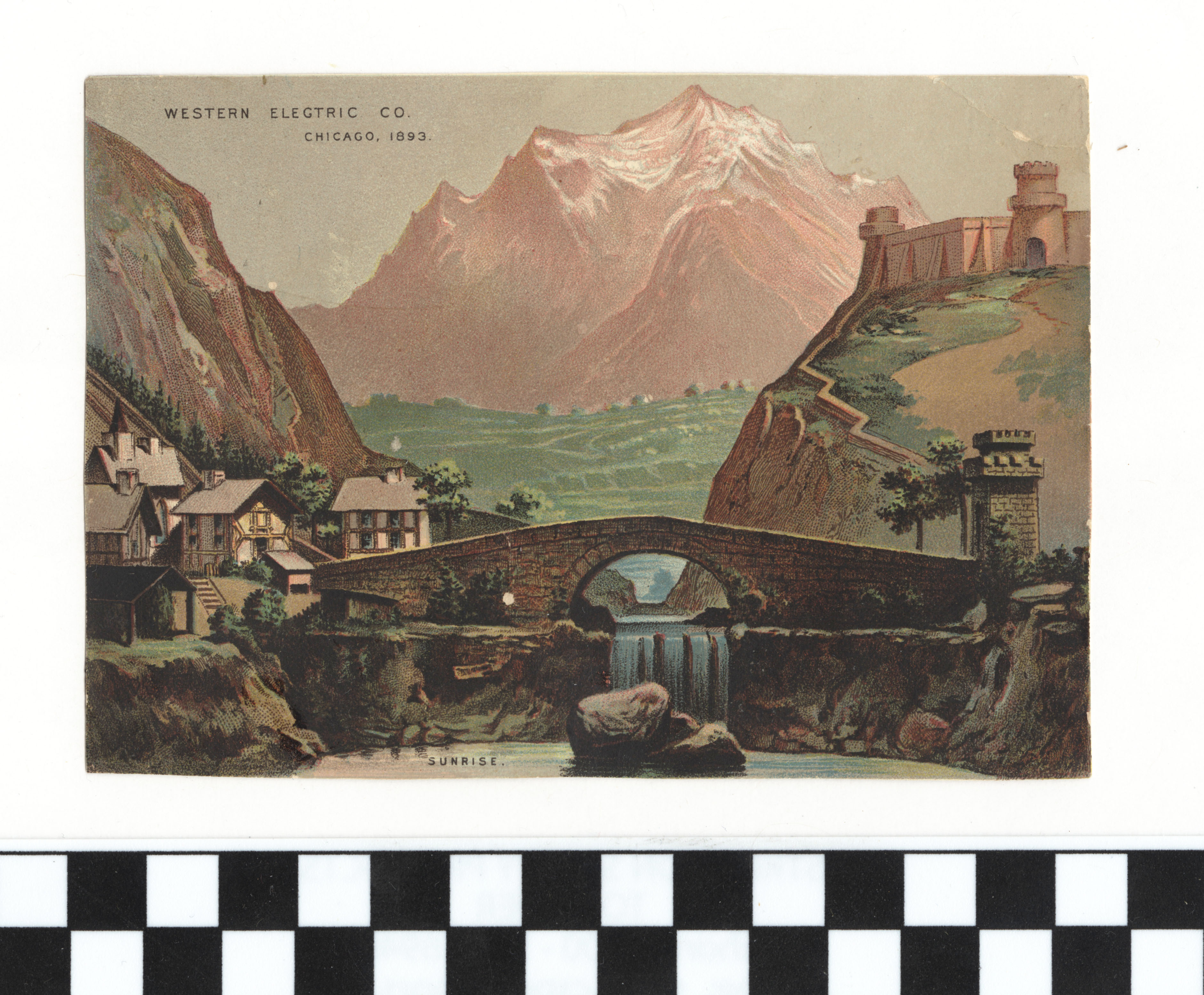
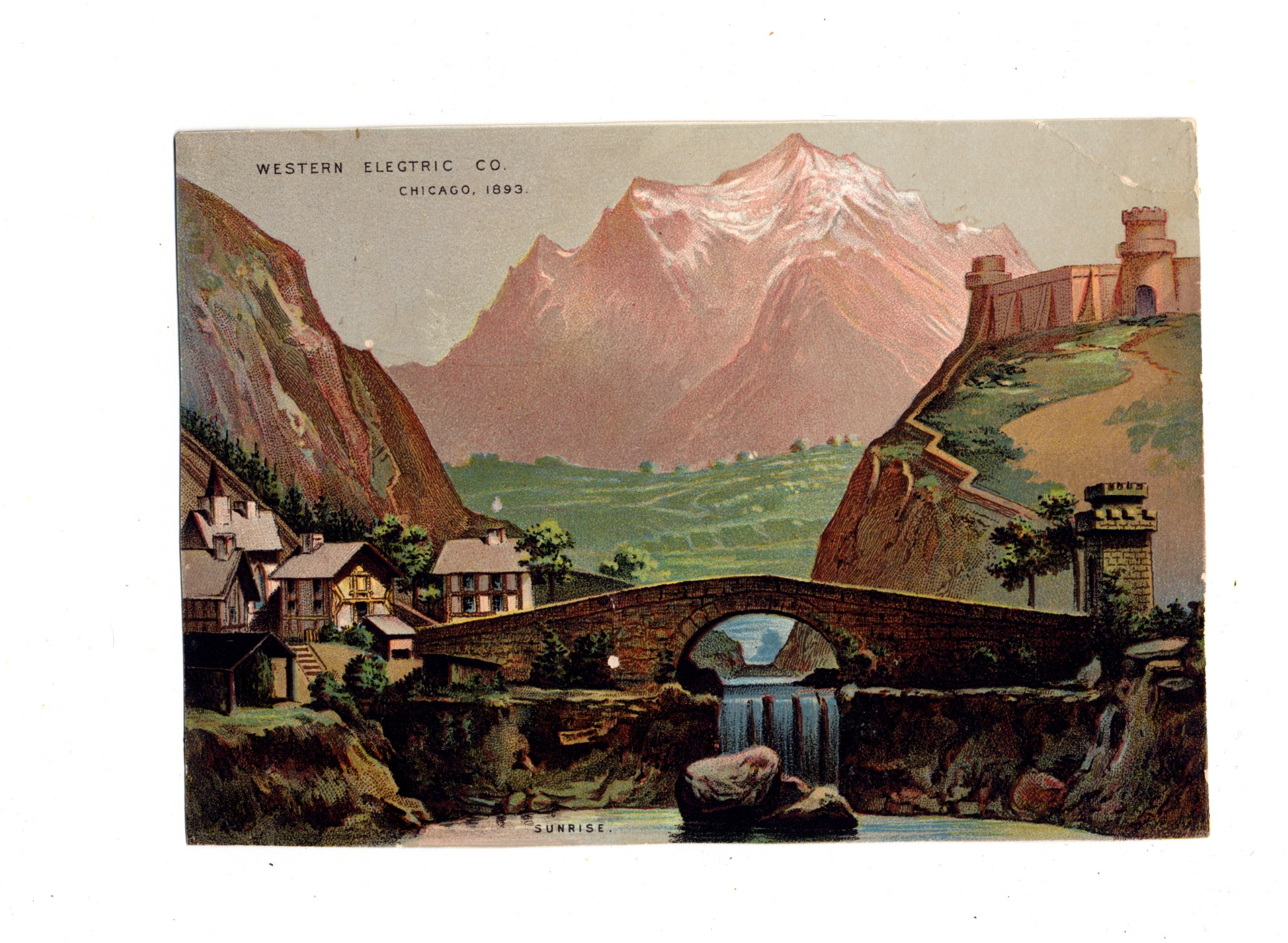
Many American advertising cards in the nineteenth century displayed a variety of visual and rhetorical themes to foster the attention of potential consumers. The appealing elements these cards displayed convinced the public that these easily disposable ephemera pieces were worthy of preservation. In this card for Western Electric Co., two advertising tropes which can be observed are natural imagery and eye-catching design features.
One of the ways trade card advertisers could compensate for the flat, mundane nature of their paper products was by implementing natural imagery. If a feeling of “naturalness” and “genuineness” was conveyed to the consumer successfully, then the advertised product was more likely to be researched and purchased. Chromolithography, the process of printing color-printed ephemera, allowed trade card authors to create colorful and appealing images which helped to circulate the supposed benefits of their wares. This card reveals a natural scene, hinting to consumers that the items and services from Western Electric Co. are supposedly of fine and wonderful quality.
Printed trade cards which featured appealing designs and imagery were more likely to be recognized by the American public and, therefore, generate brand recognition for the producing company. Scenes with exotic, eye catching, and even fantastical qualities were often implemented into these cards. This portrayal was meant to suggest that the advertised product, as opposed to similar items from other brands, was of high quality and perhaps even supernatural in its effectiveness. This card displays the romantic image of a mountain, village, and castle. A scene such as this is meant to insinuate to consumers that Western Electric representatives, through the services that they offer, are particularly successful in implementing a positive change to society.
|
| Bibliography |
“A Short History of Trade Cards,” Bulletin of the Business Historical Society 5, no. 3 (April
1931).
Berg, Maxine and Clifford, Helen, Selling Consumption in the Eighteenth Century: Advertising
and the Trade Card in Britain and France, The Journal of the Social History Society, (April 28,
2015).
Chase, Ernest D., The Romance of Greeting Cards, Rust Craft Publishers, 1956.
Jay, Robert, The Trade Card In Nineteenth-Century America, University of Missouri Press,
1987.
Lewis, John, Printed Ephemera: The Changing Uses of Type and Letterforms in English and
American Printing, W.S. Cowell Ltd., 1962.
Mehaffy, Marilyn Maness, Advertising Race/Raceing Advertising: The Feminine
Consumer(Nation), 1876-1900, Signs, 23, no. 1, The University of Chicago Press, 1997, 142-
143, https://www.jstor.org/stable/3175155.
Oatman-Stanford, Hunter, “Extreme Shipping: When Express Delivery to California Meant 100
Grueling Days at Sea,” Collectors Weekly, (June 2, 2016),
https://www.collectorsweekly.com/articles/when-express-delivery-meant-100-days-at-sea/.
Peterdi, Gabor, “Lithography” section of “Printmaking” article, Encyclopedia Britannica online,
2021, https://www.britannica.com/art/printmaking/Lithography. |