
Carving: Finger Citron (“Buddha’s Hand”)
2002.18.0012
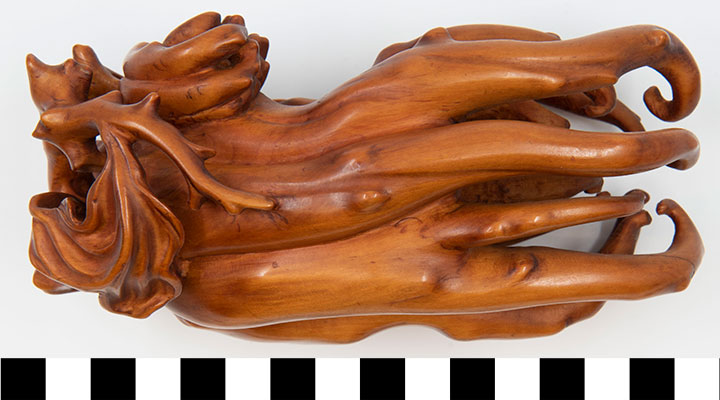
Detailed Images
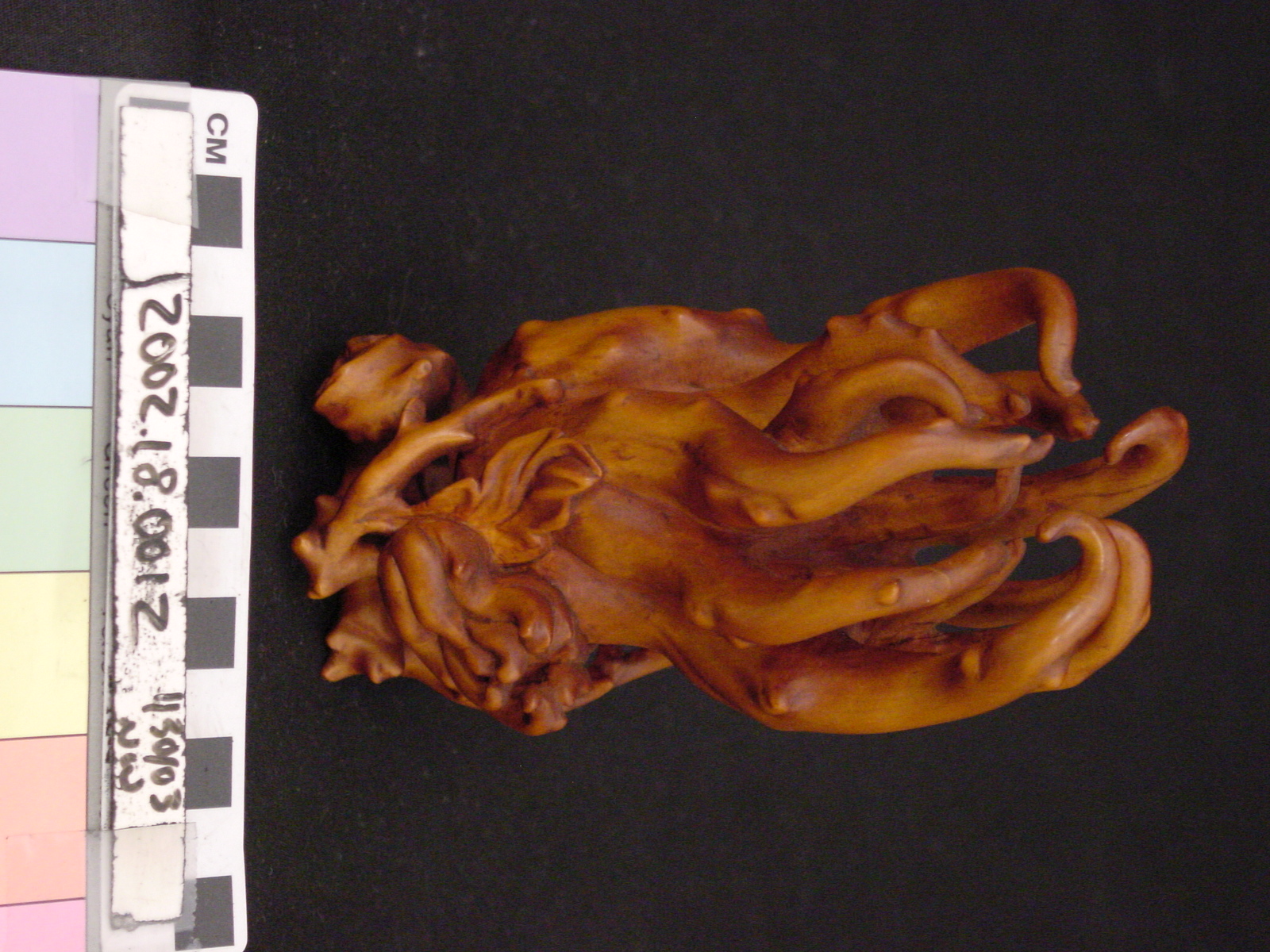
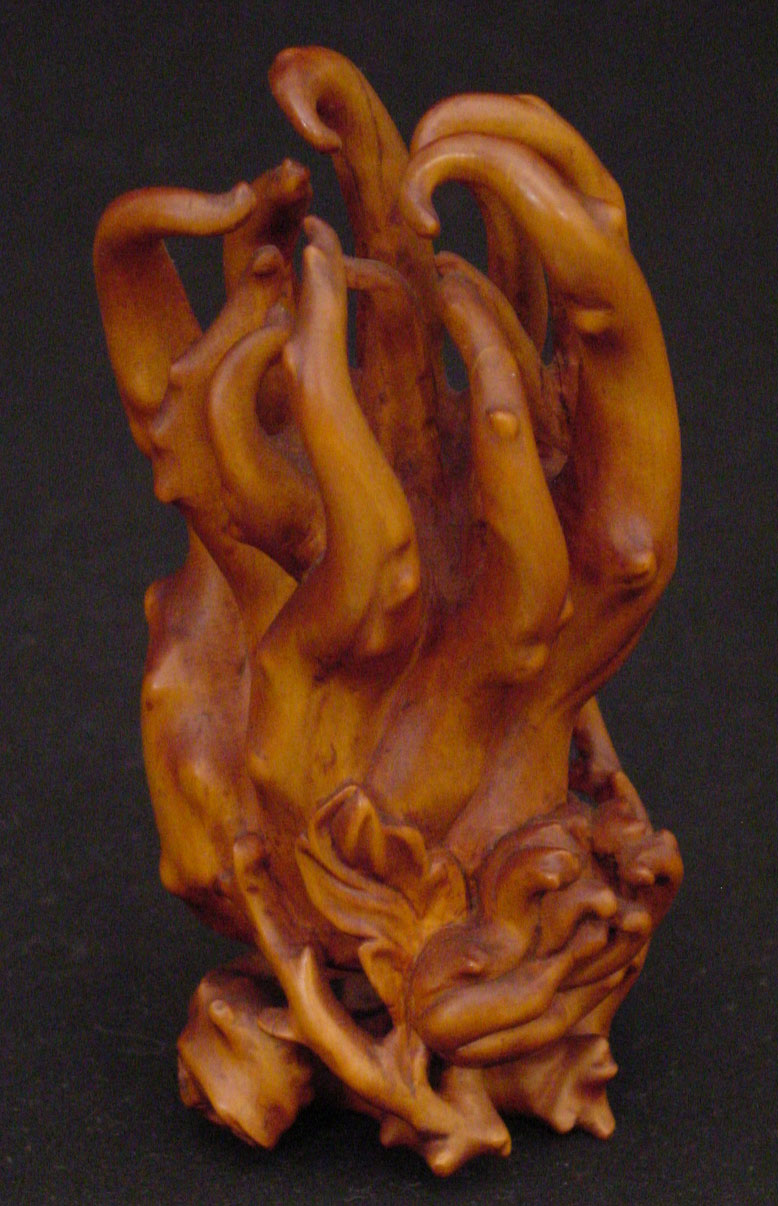
Basic Information
| Artifact Identification | Carving: Finger Citron (“Buddha’s Hand”) (2002.18.0012) |
|---|---|
| Classification/ Nomenclature |
|
| Artist/Maker | Unknown |
| Geographic Location | |
| Period | Late Edo Period (1603-1868) or Early Meiji Period (1868-1912) |
| Date | Early 19th century |
| Culture | Japanese |
| Location | Not on Exhibit |
Physical Analysis
| Dimension 1 (Length) | 13.3 cm |
|---|---|
| Dimension 2 (Height) | 6.4 cm |
| Dimension 3 (Width) | 6.5 cm |
| Weight | 167 g |
| Measuring Remarks | N/A |
| Materials | Plant--Wood, Plant--Boxwood |
| Manufacturing Processes | Carved |
Research Remarks
| Description | "A Japanese wood carving of a finger citron. |
|---|---|
| Published Description | N/A |
| Bibliography | Under Review |
Artifact History
| Credit Line/Dedication | Fred A. Freund Collection |
|---|---|
| Reproduction | No |
Contact
All information about our collection is constantly reviewed and updated. Please contact Dery Martínez-Bonilla, Registrar, if there is any information you are looking for that isn't currently online.