
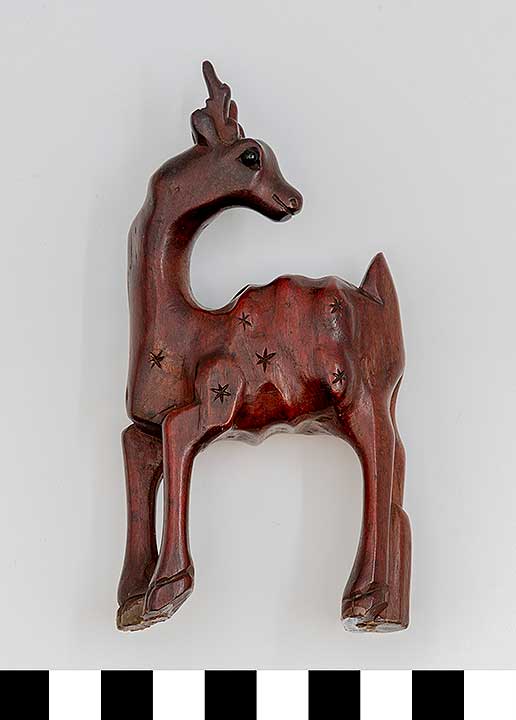
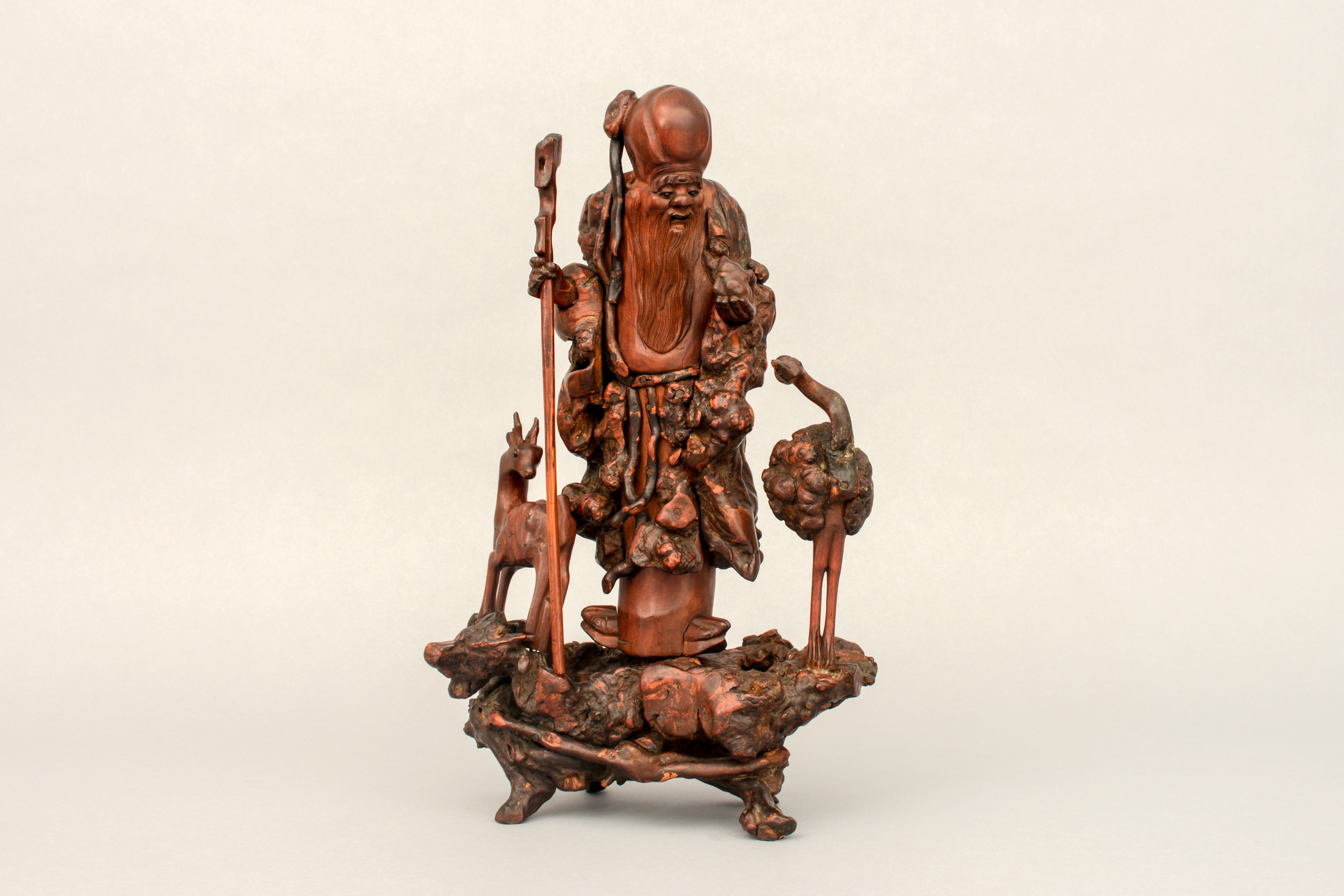
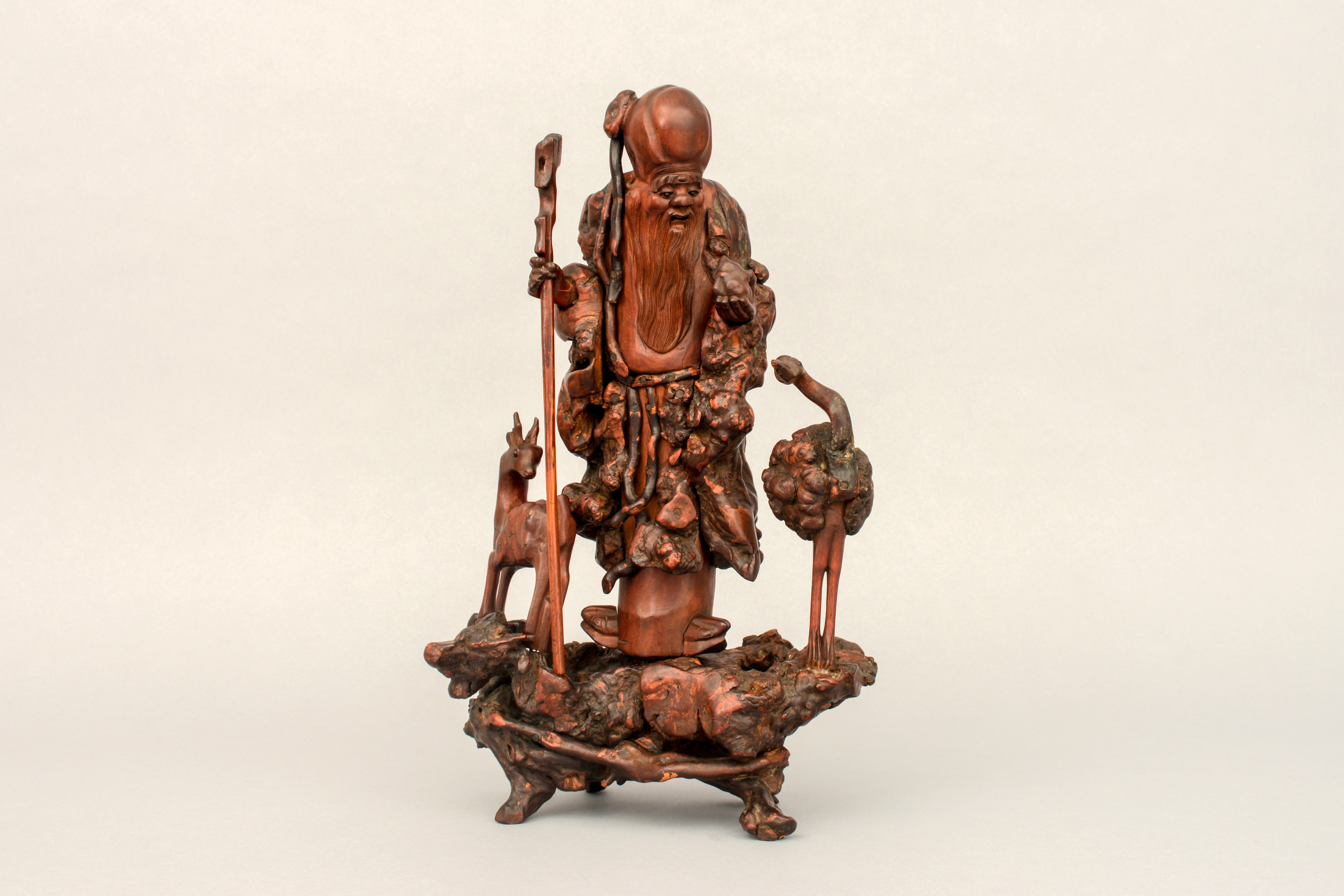
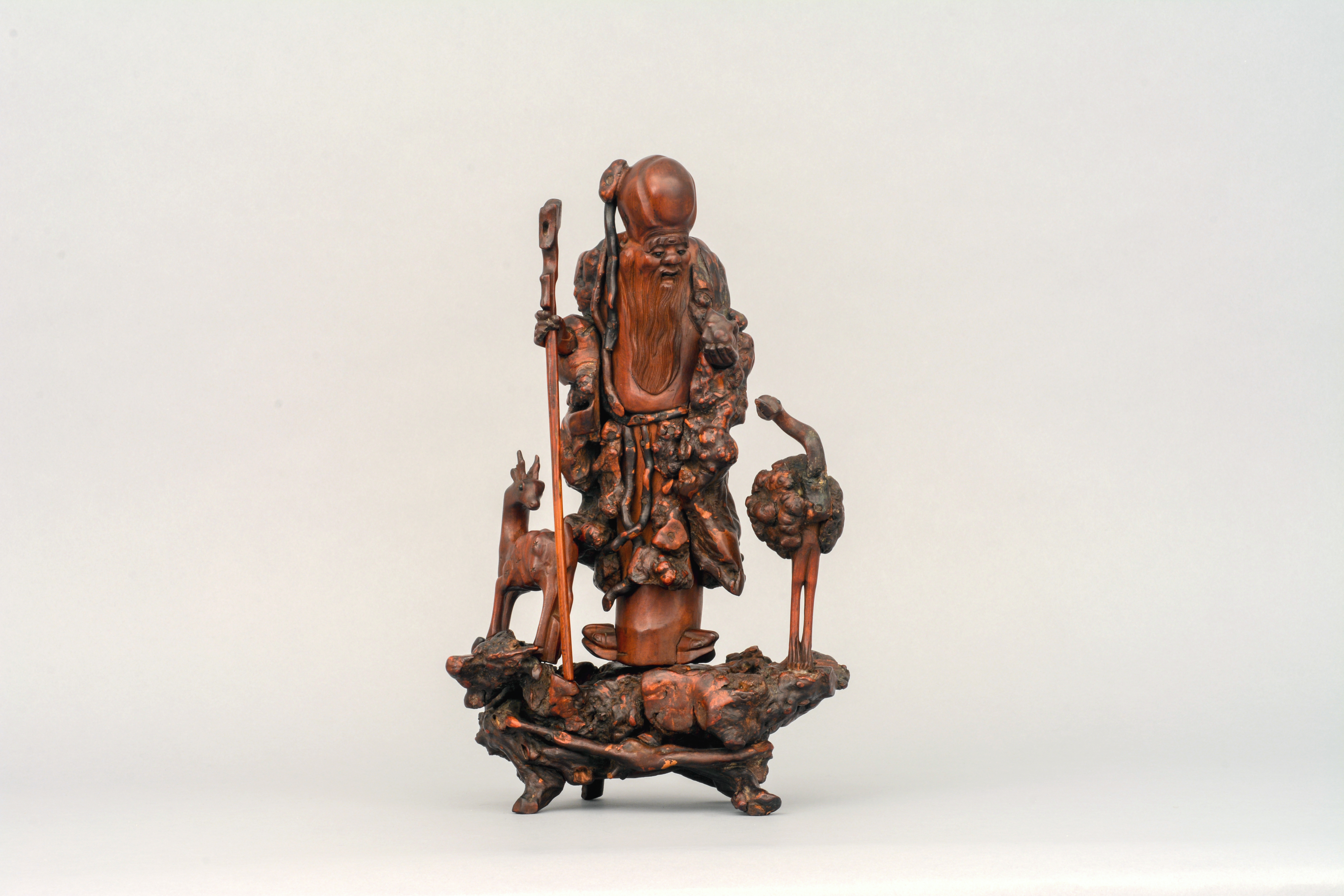
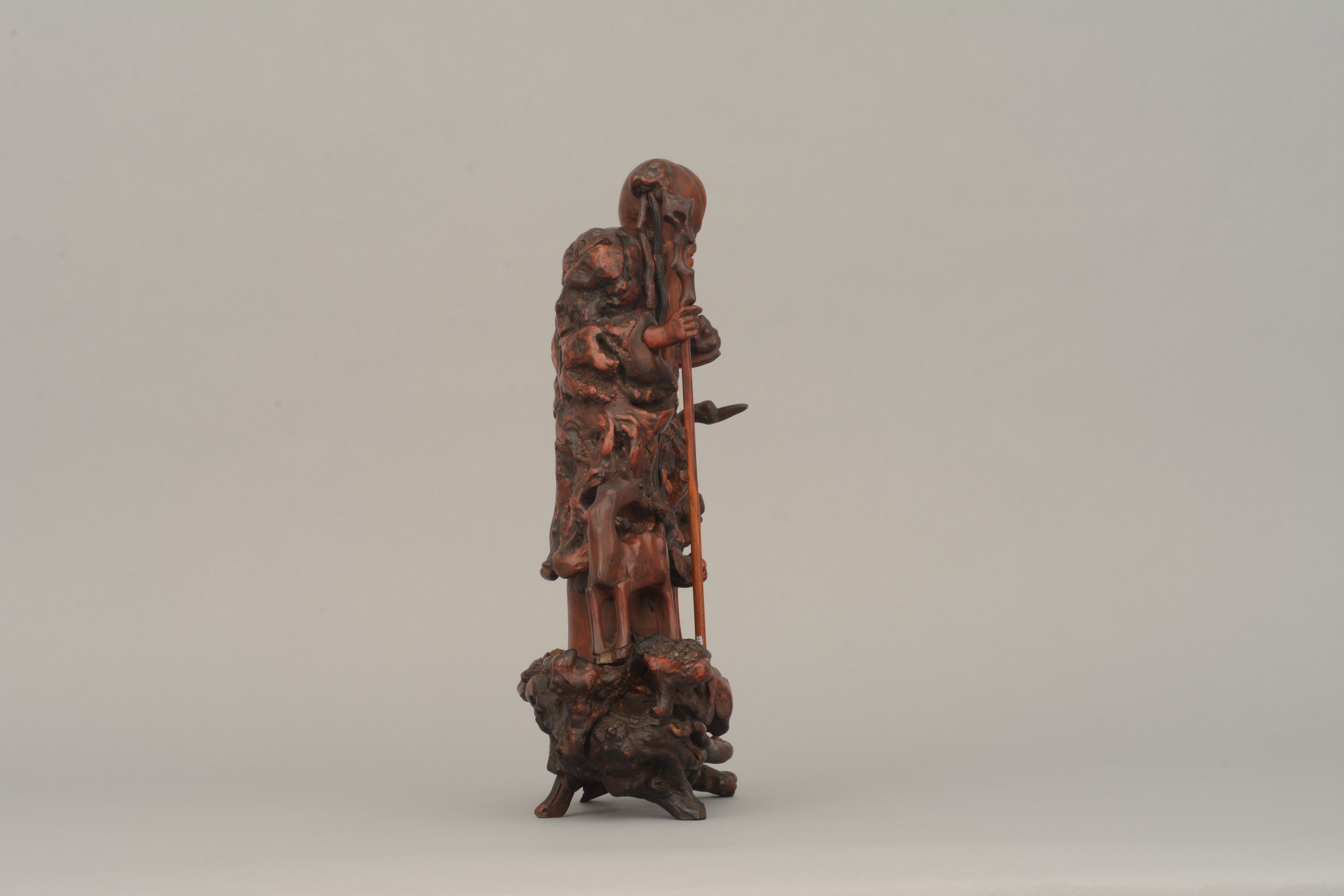
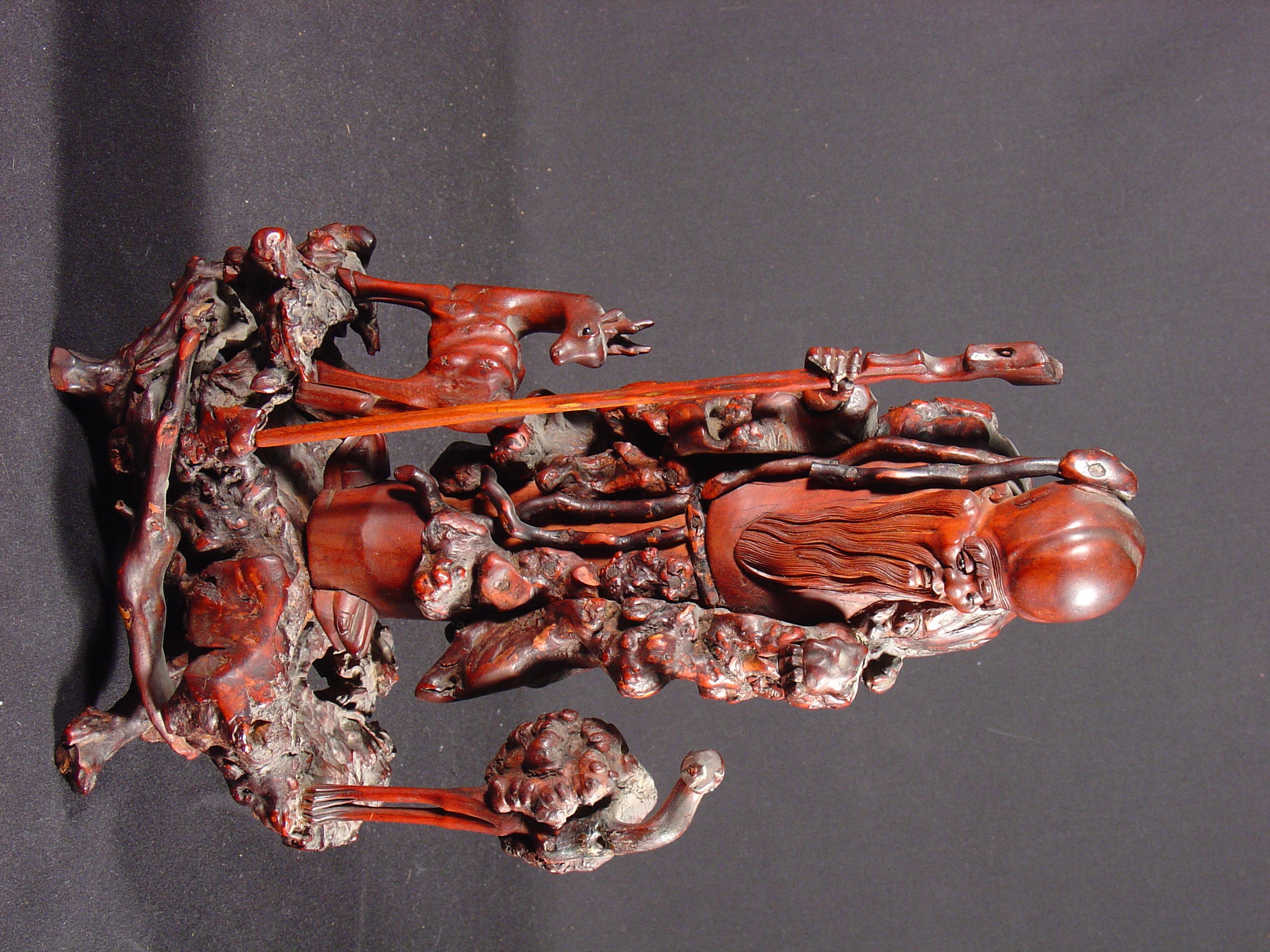
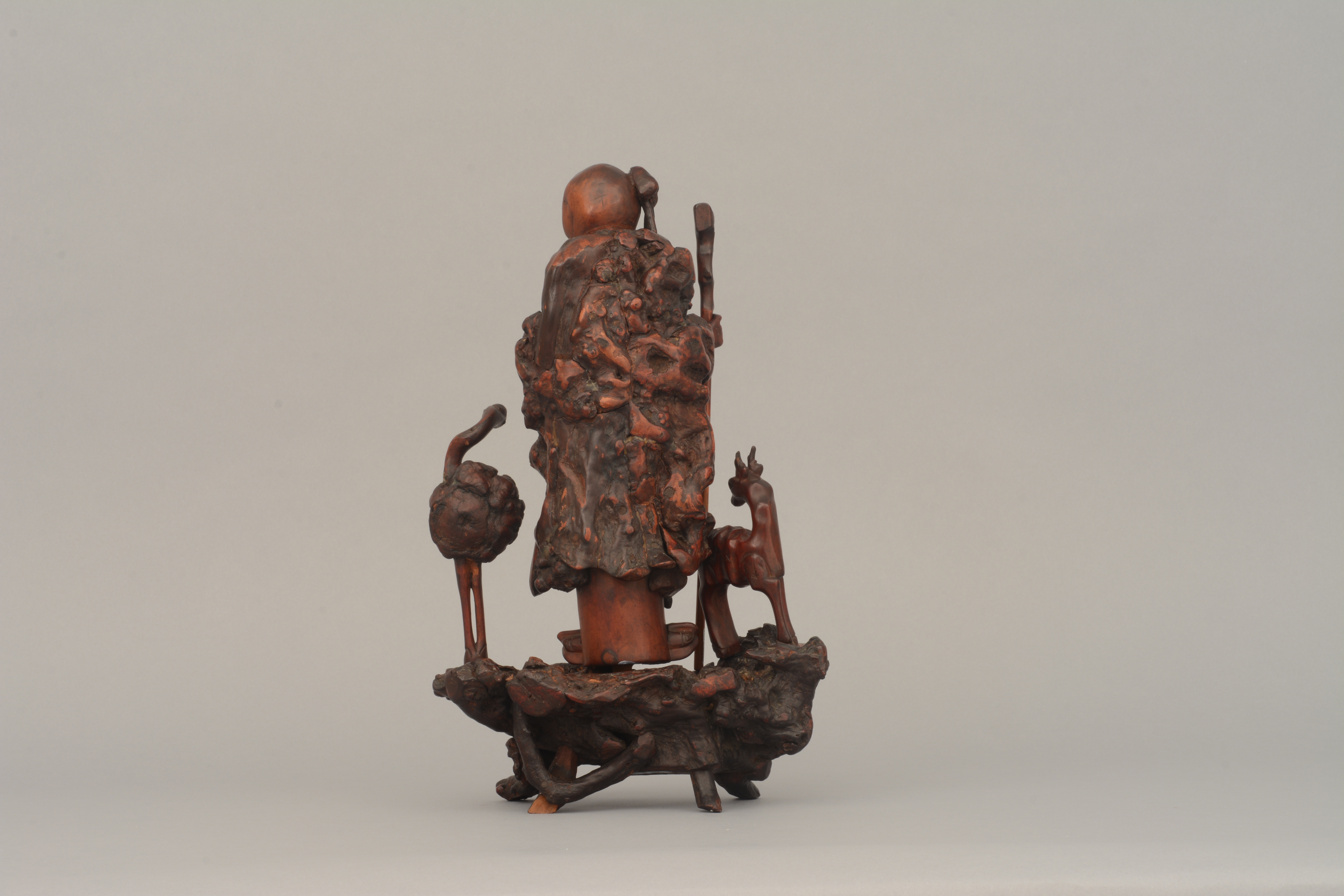
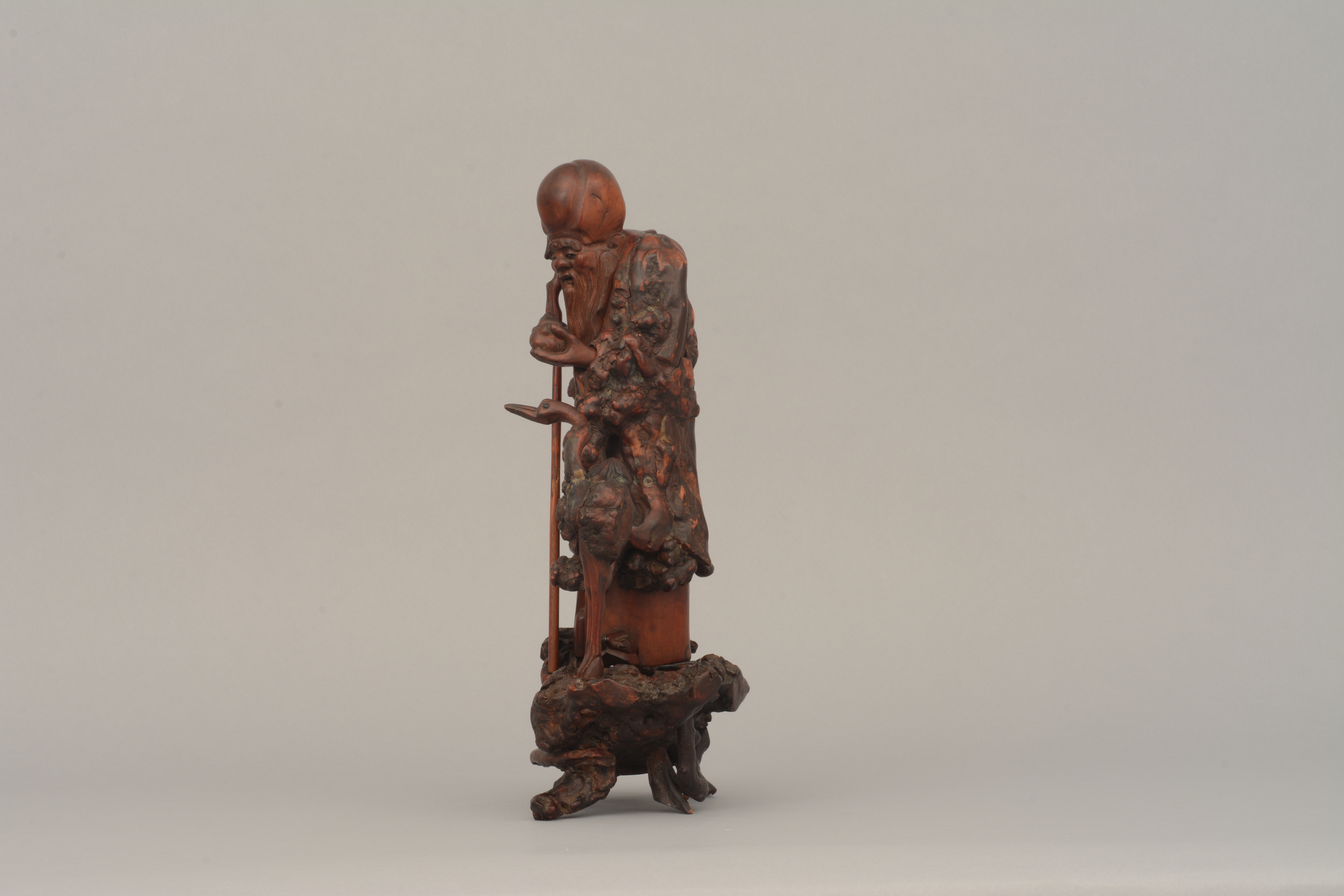
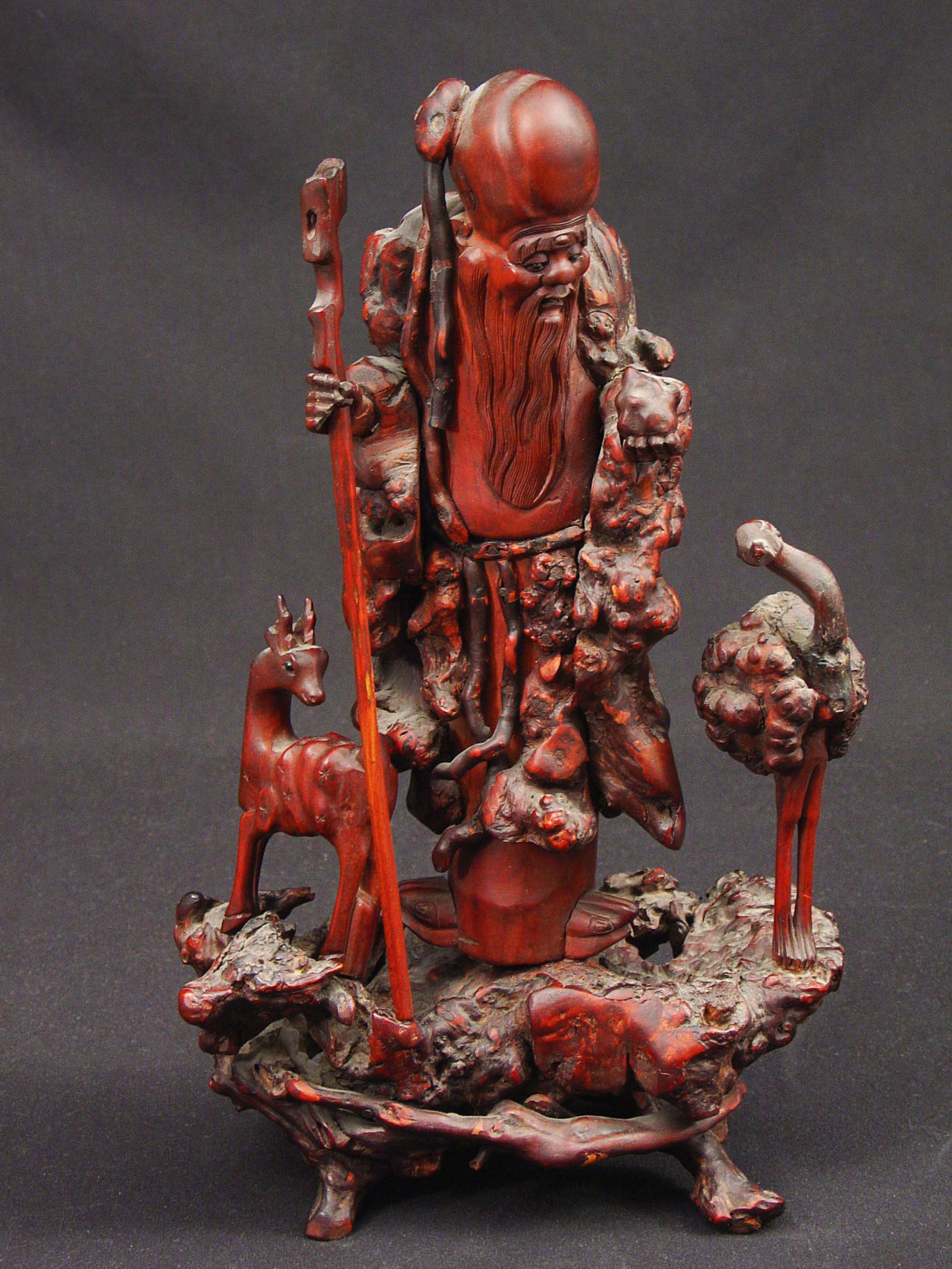
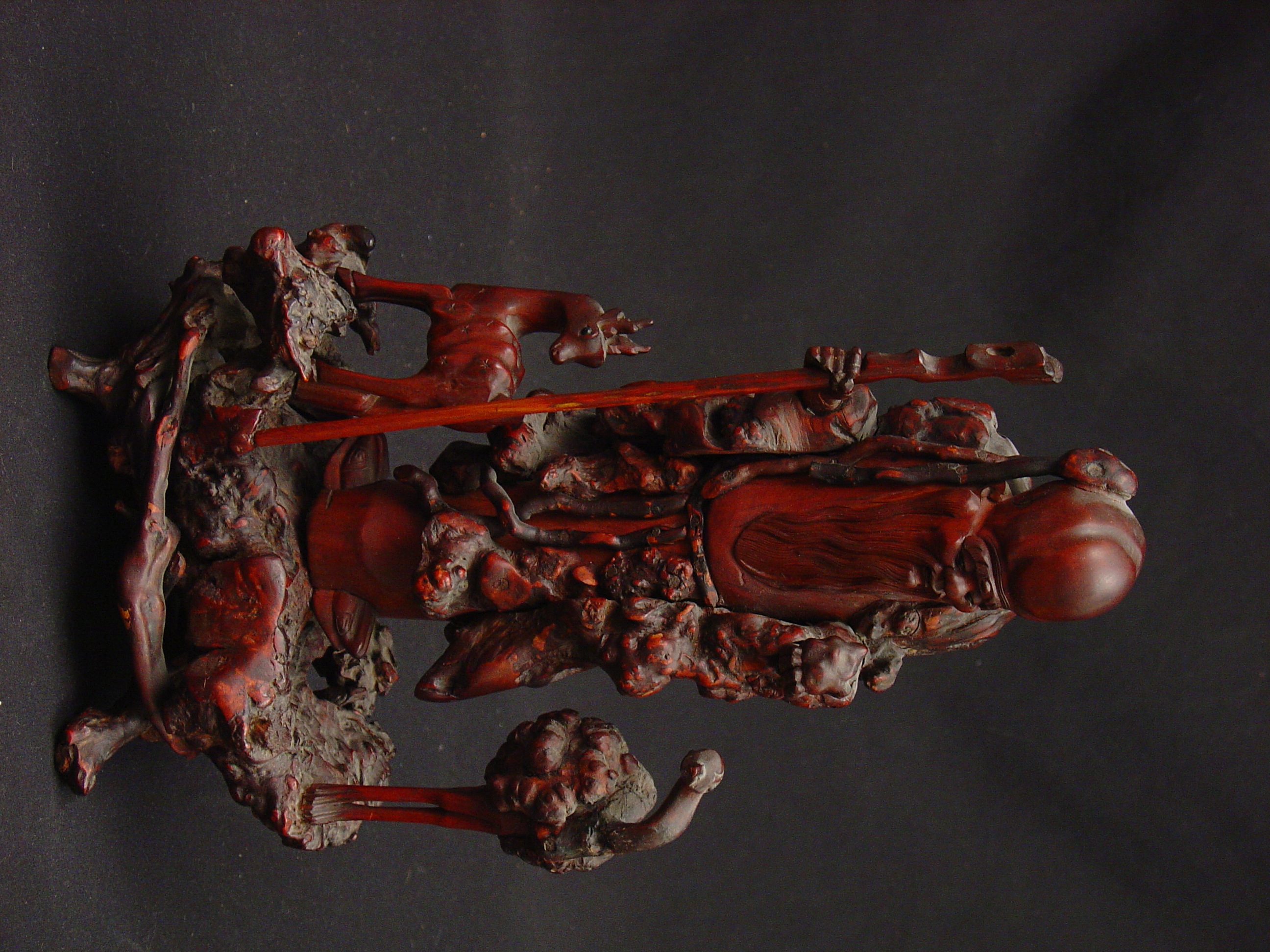
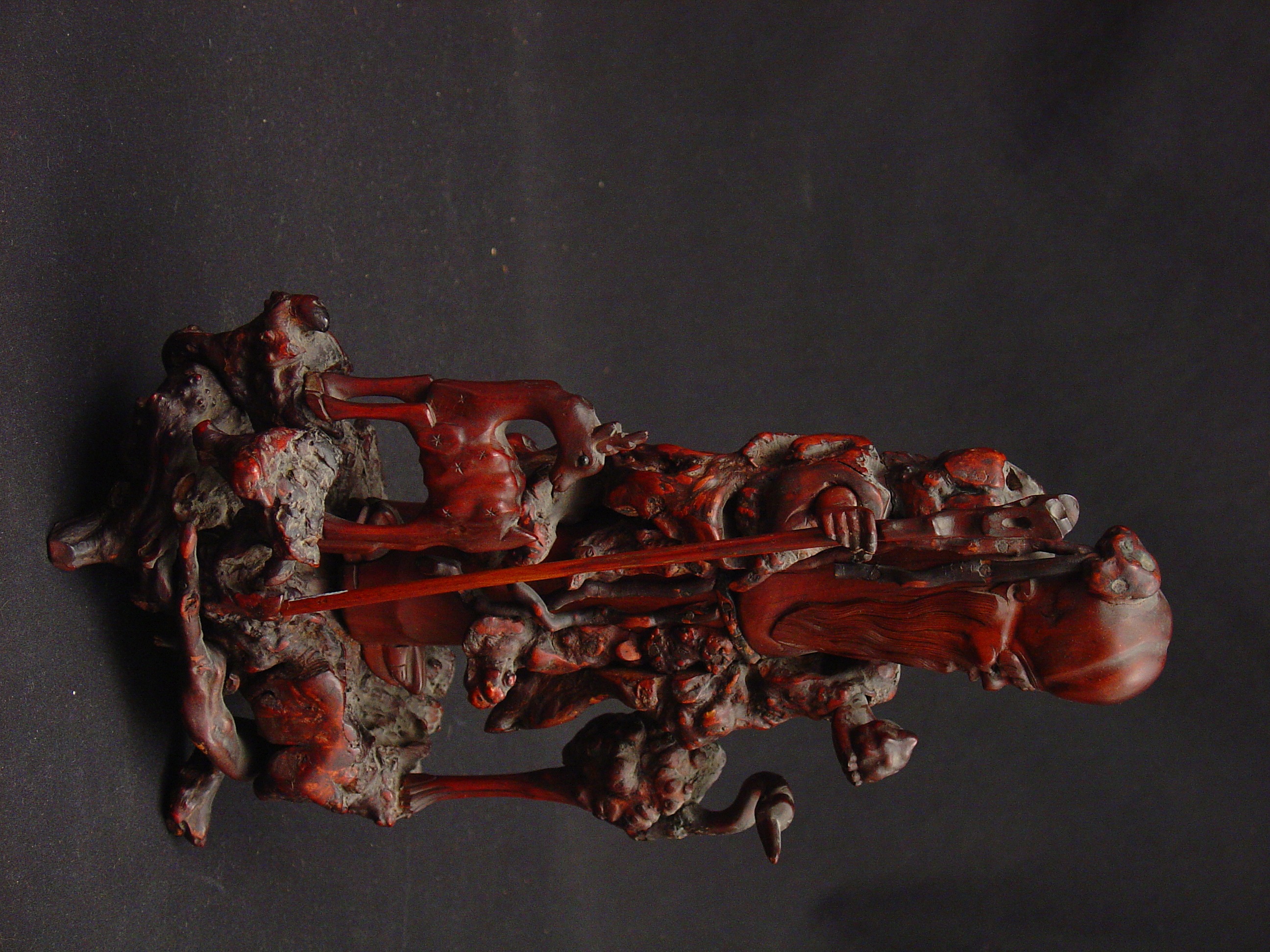
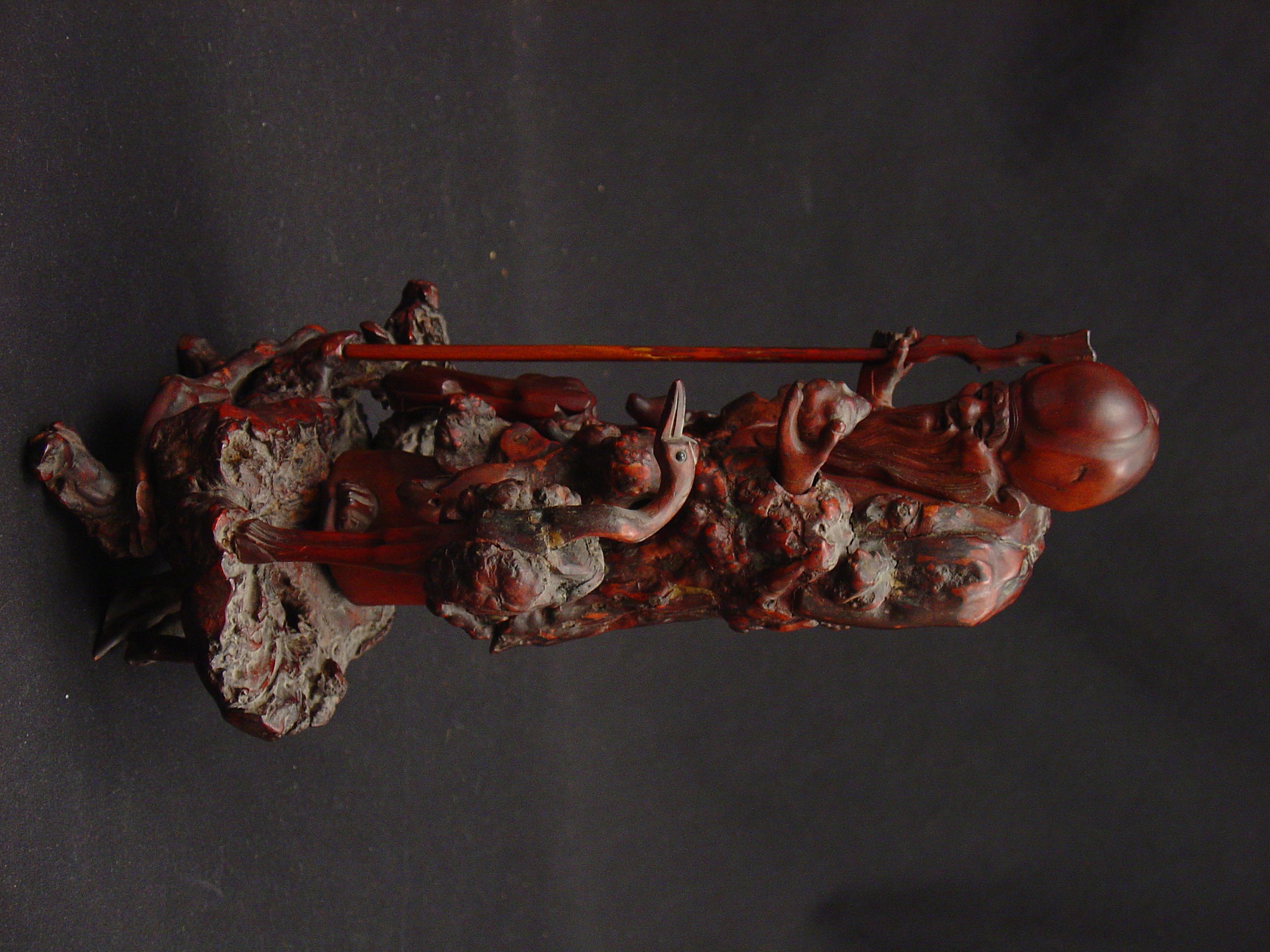
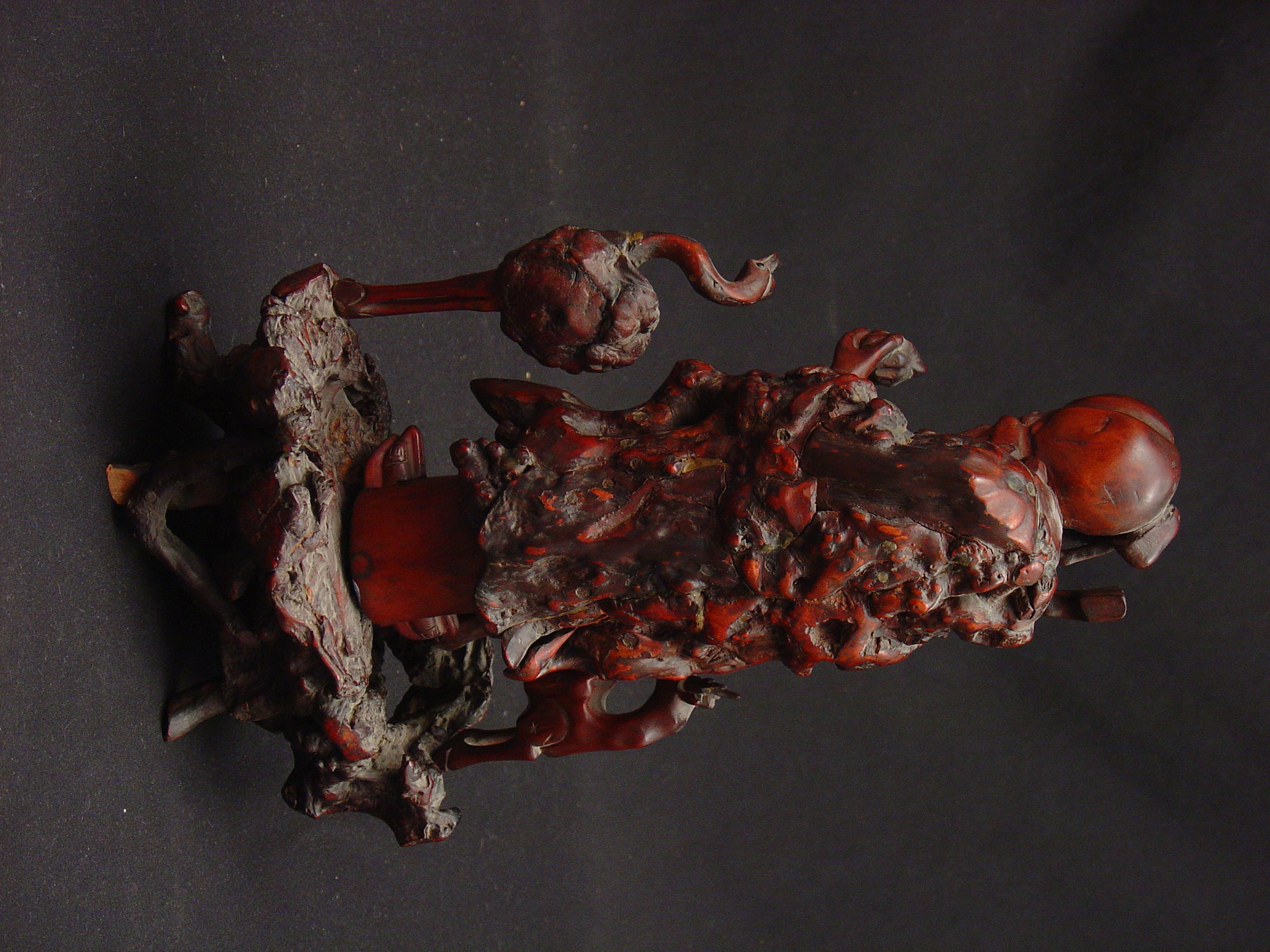
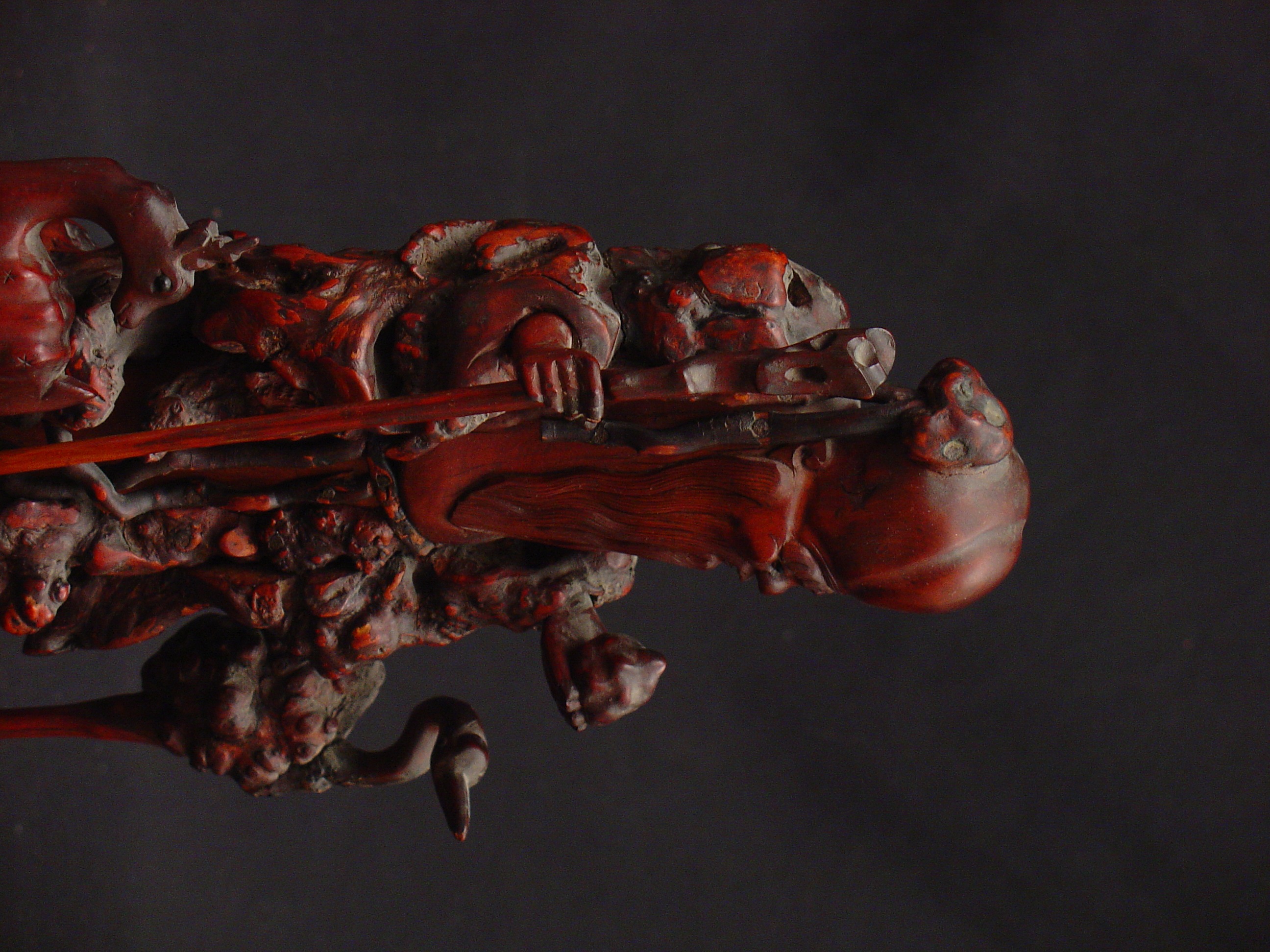
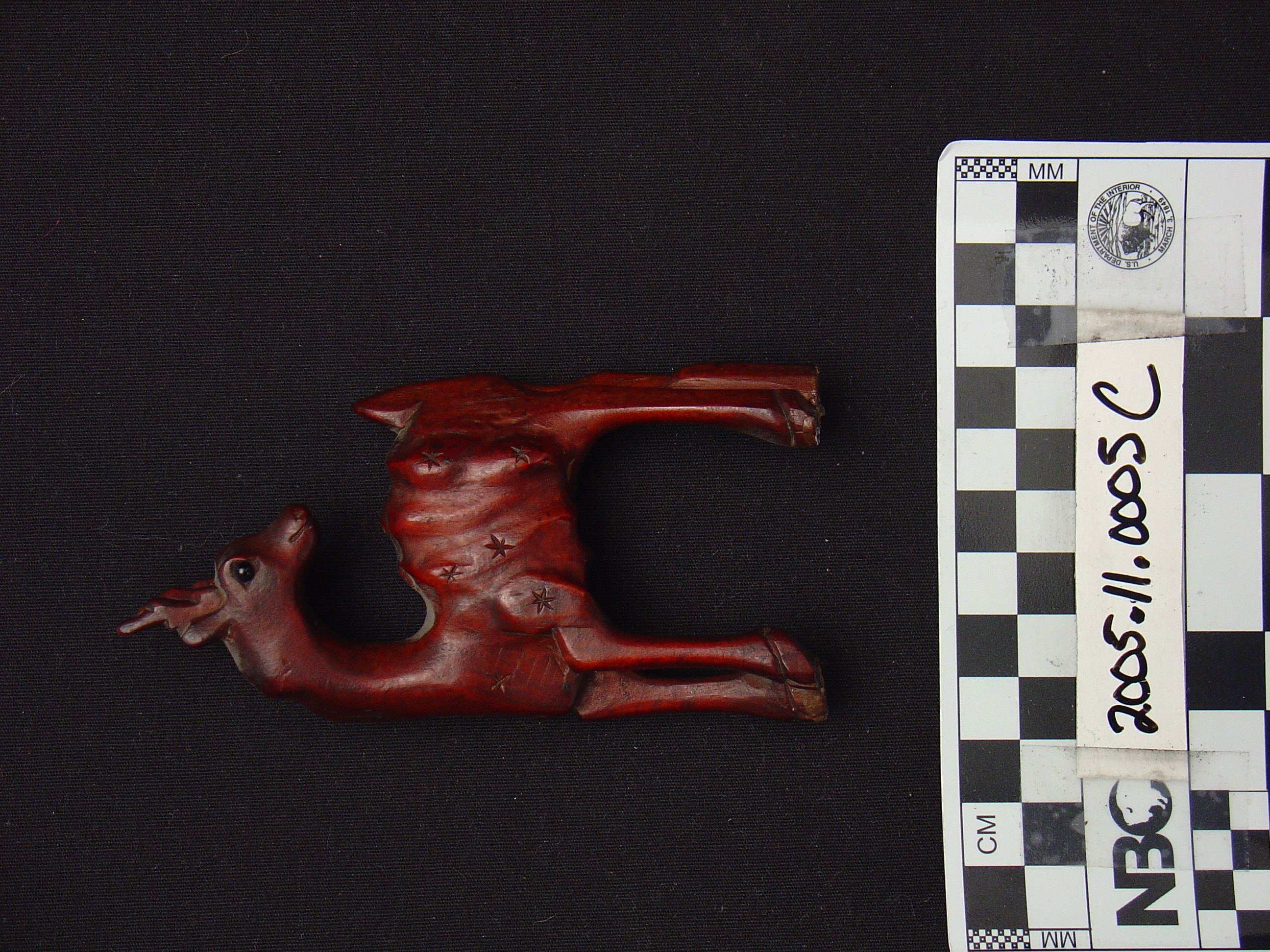
Figural Group: Shoulao, God of Longevity, Deer
2005.11.0005C
Detailed Images
Basic Information
| Artifact Identification | Figural Group: Shoulao, God of Longevity, Deer (2005.11.0005C) |
|---|---|
| Classification/ Nomenclature |
|
| Artist/Maker | Unknown |
| Geographic Location | |
| Period | Qing (Ch’ing) dynasty |
| Date | 18th Century |
| Culture | Chinese |
| Location | Not on Exhibit |
Physical Analysis
| Dimension 1 (Height) | 11 cm |
|---|---|
| Dimension 2 (Width) | 6 cm |
| Dimension 3 (Depth) | 2 cm |
| Weight | 32 g |
| Measuring Remarks | N/A |
| Materials | Plant--Wood |
| Manufacturing Processes | Carved |
Research Remarks
| Description | This is a carving of a deer which is a part of the display for the Chinese rootwood carving of Shoulao, the god of longevity. The deer, sometimes referred to as Shoulao's stag, is believed to live to a great age hence why it is symbolically tied to longevity and a frequent companion of Shaolao. Rootwood designed works were appealing to scholars because of their irregular shapes, enabling the viewer to form various interpretations on what the resulting carved images could be. Sculptures and furniture were also obtained by Chinese collectors as early as the Song Dynasty (960-1279). |
|---|---|
| Published Description | N/A |
| Bibliography | Dursum, Brian A. et al. China’s Last Empire: The Art and Culture of the Qing Dynasty, 1644-1911. Coral Gables: Lowe Art Museum, 2014. |
Artifact History
| Credit Line/Dedication | Fred A. Freund Collection |
|---|---|
| Reproduction | No |
Contact
All information about our collection is constantly reviewed and updated. Please contact Dery Martínez-Bonilla, Registrar, if there is any information you are looking for that isn't currently online.