
Lotus Ruyi, Scepter
2006.12.0013A
Detailed Images

Basic Information
| Artifact Identification | Lotus Ruyi, Scepter (2006.12.0013A) |
|---|---|
| Classification/ Nomenclature |
|
| Artist/Maker | Unknown |
| Geographic Location | |
| Period | Late Edo Period |
| Date | 1740 - 1868 |
| Culture | Japanese |
| Location | Not on Exhibit |
Physical Analysis
| Dimension 1 (Length) | 33.8 cm |
|---|---|
| Dimension 2 (Width) | 8.7 cm |
| Dimension 3 (Height) | 5.2 cm |
| Weight | 143 g |
| Measuring Remarks | N/A |
| Materials | Plant--Wood |
| Manufacturing Processes | Carved |
Research Remarks
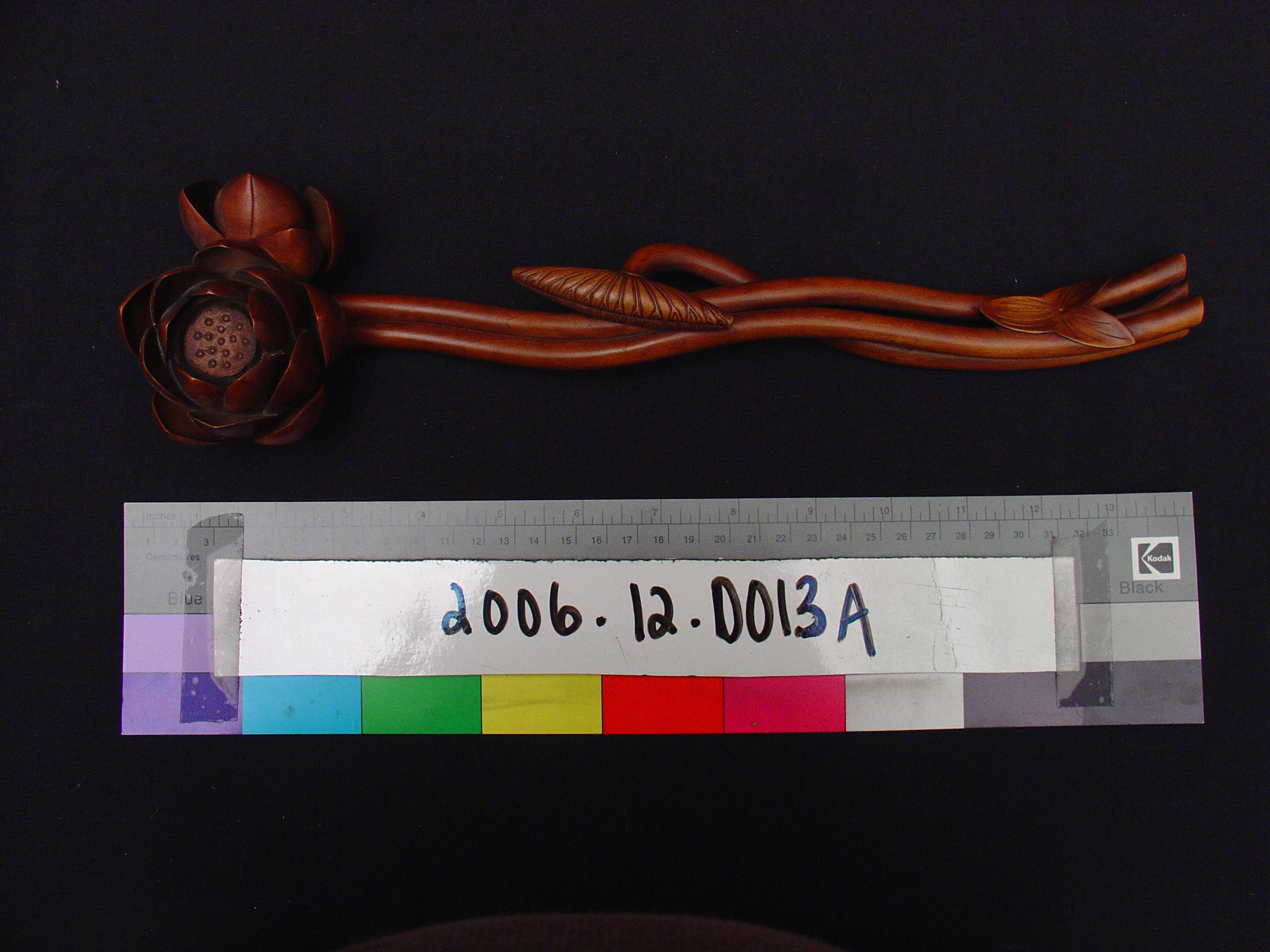
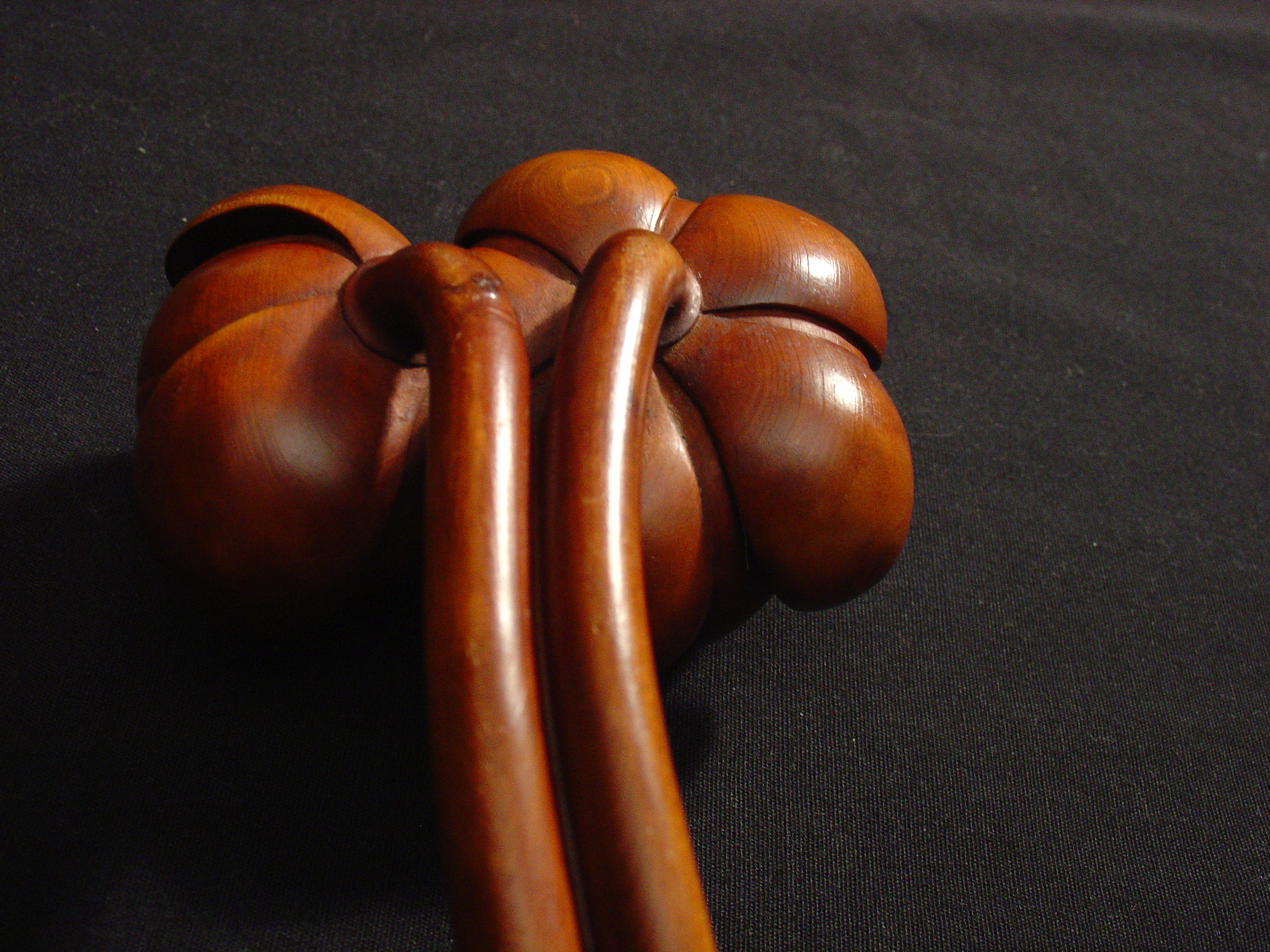
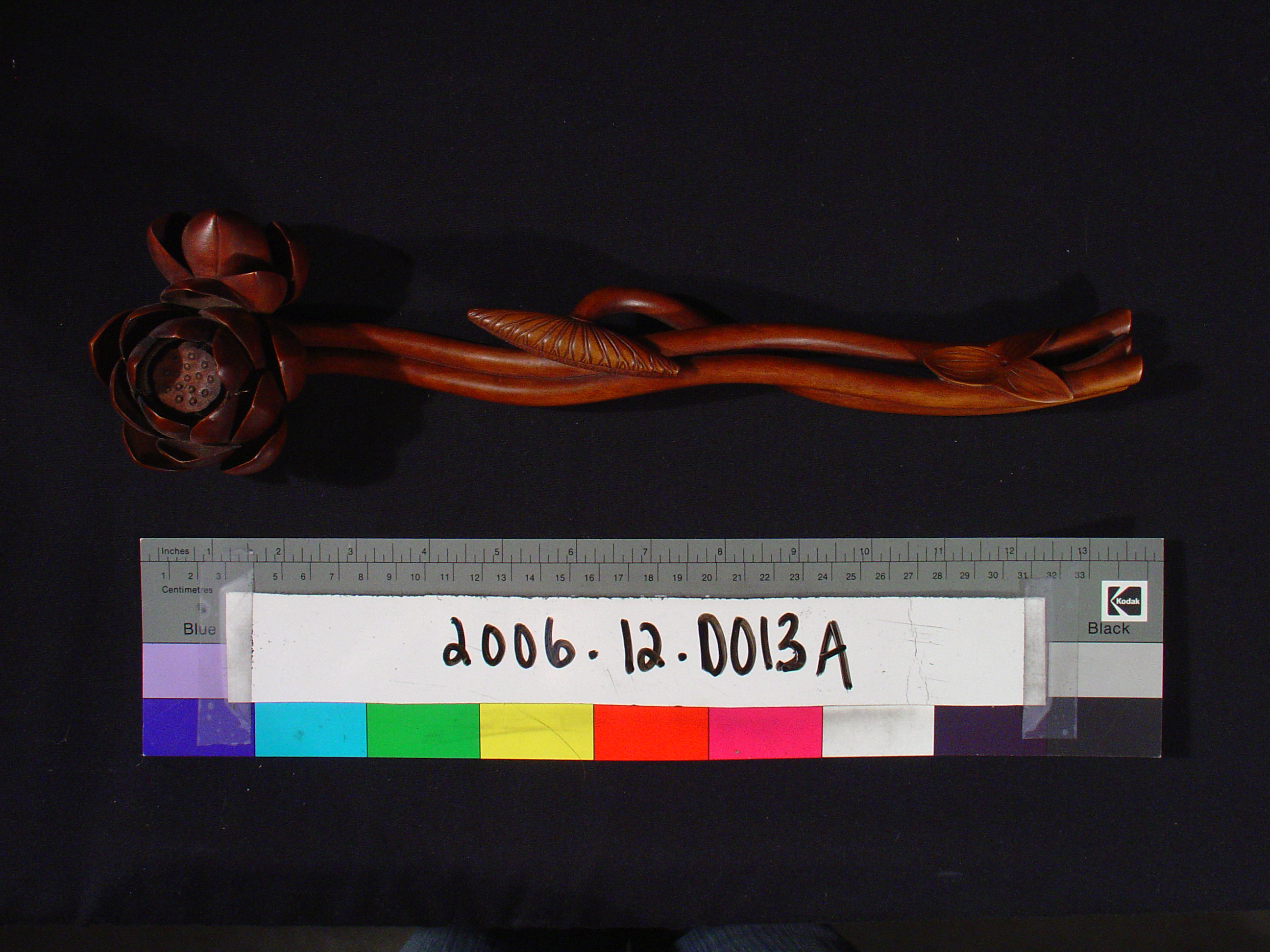
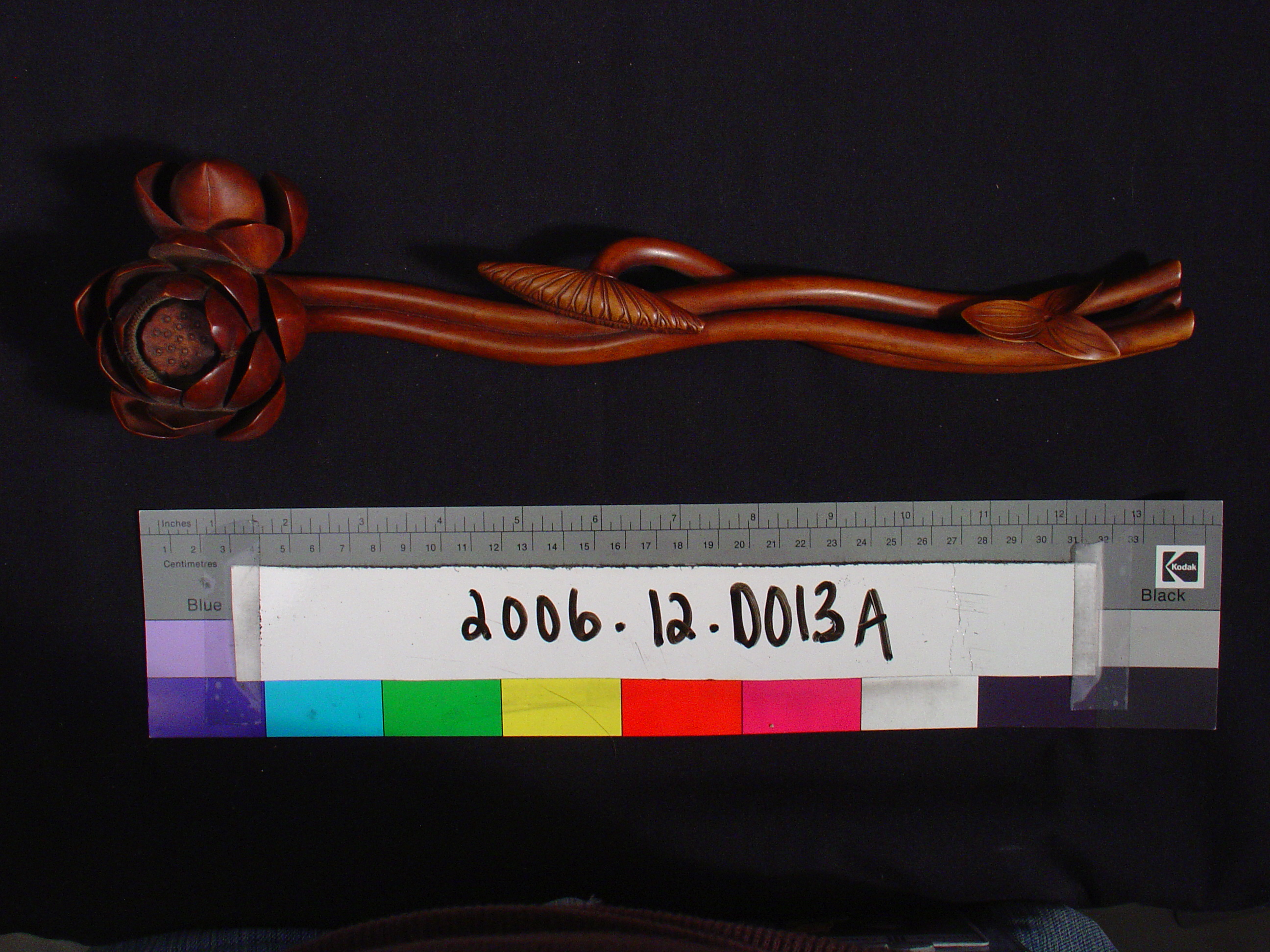
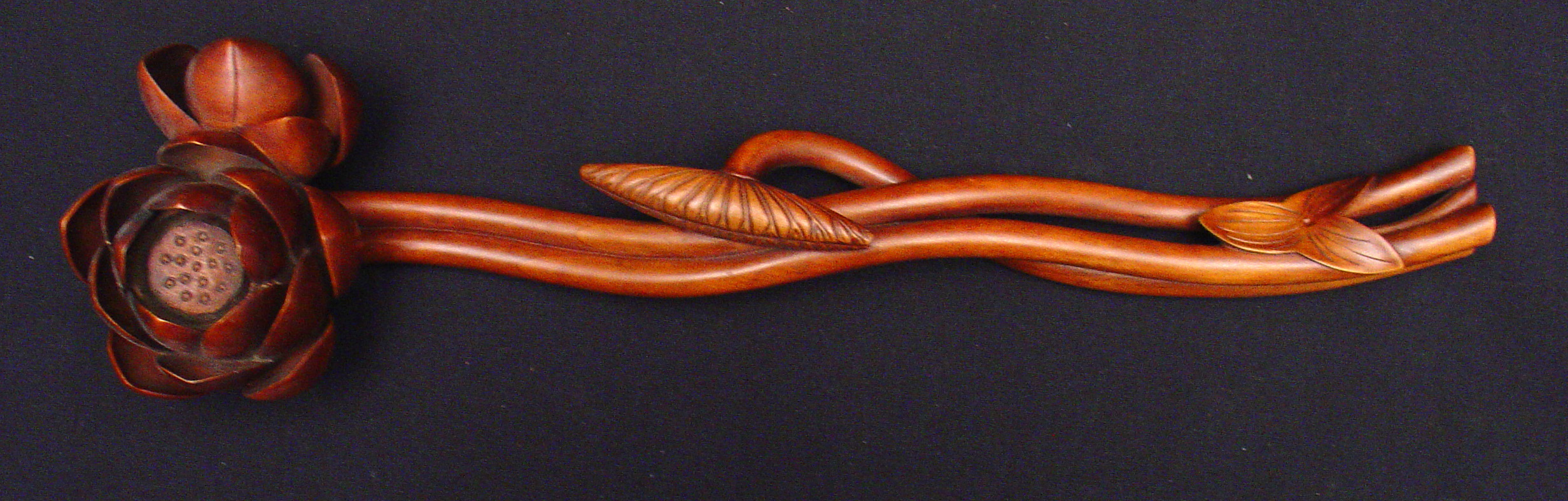
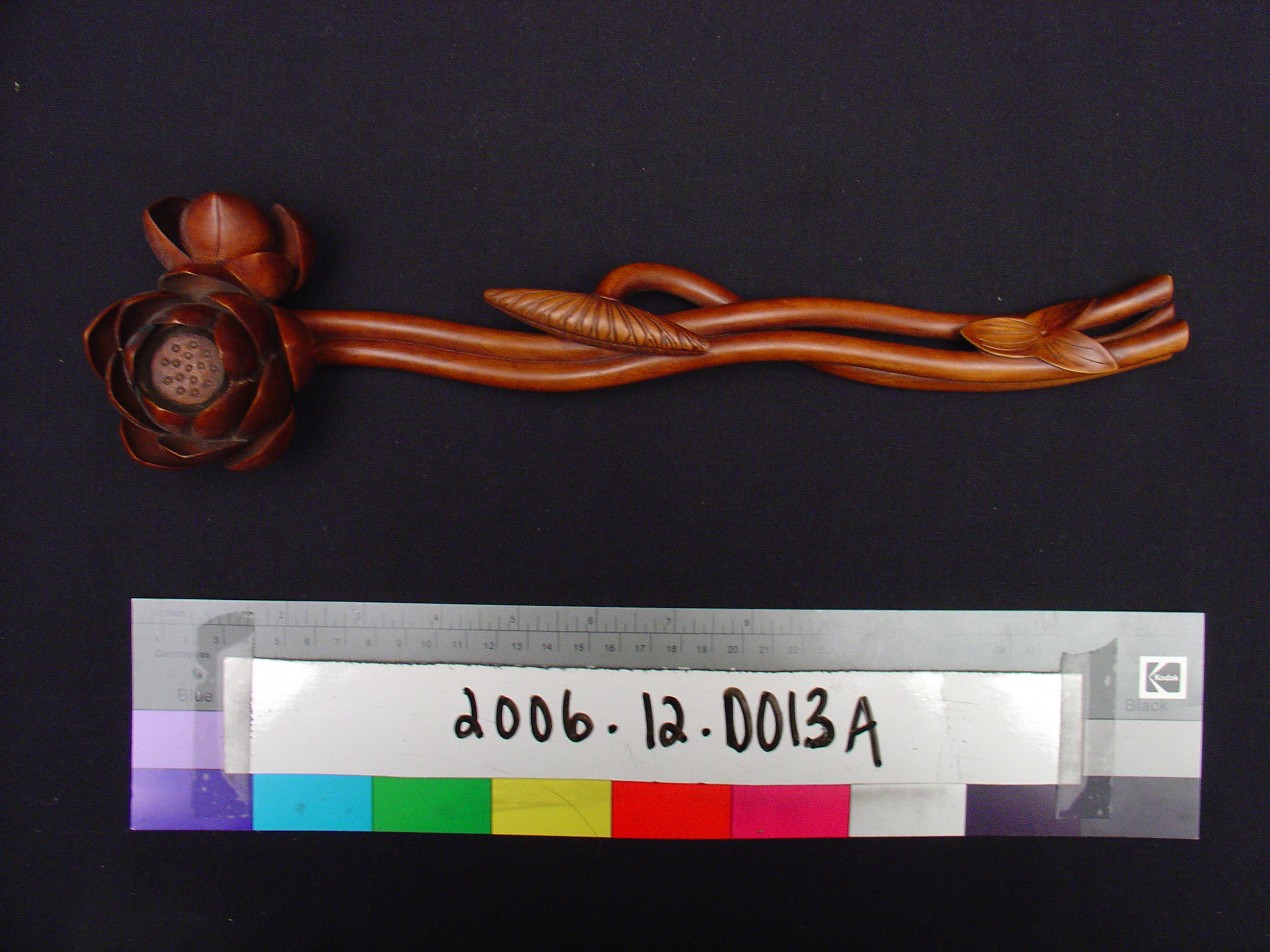
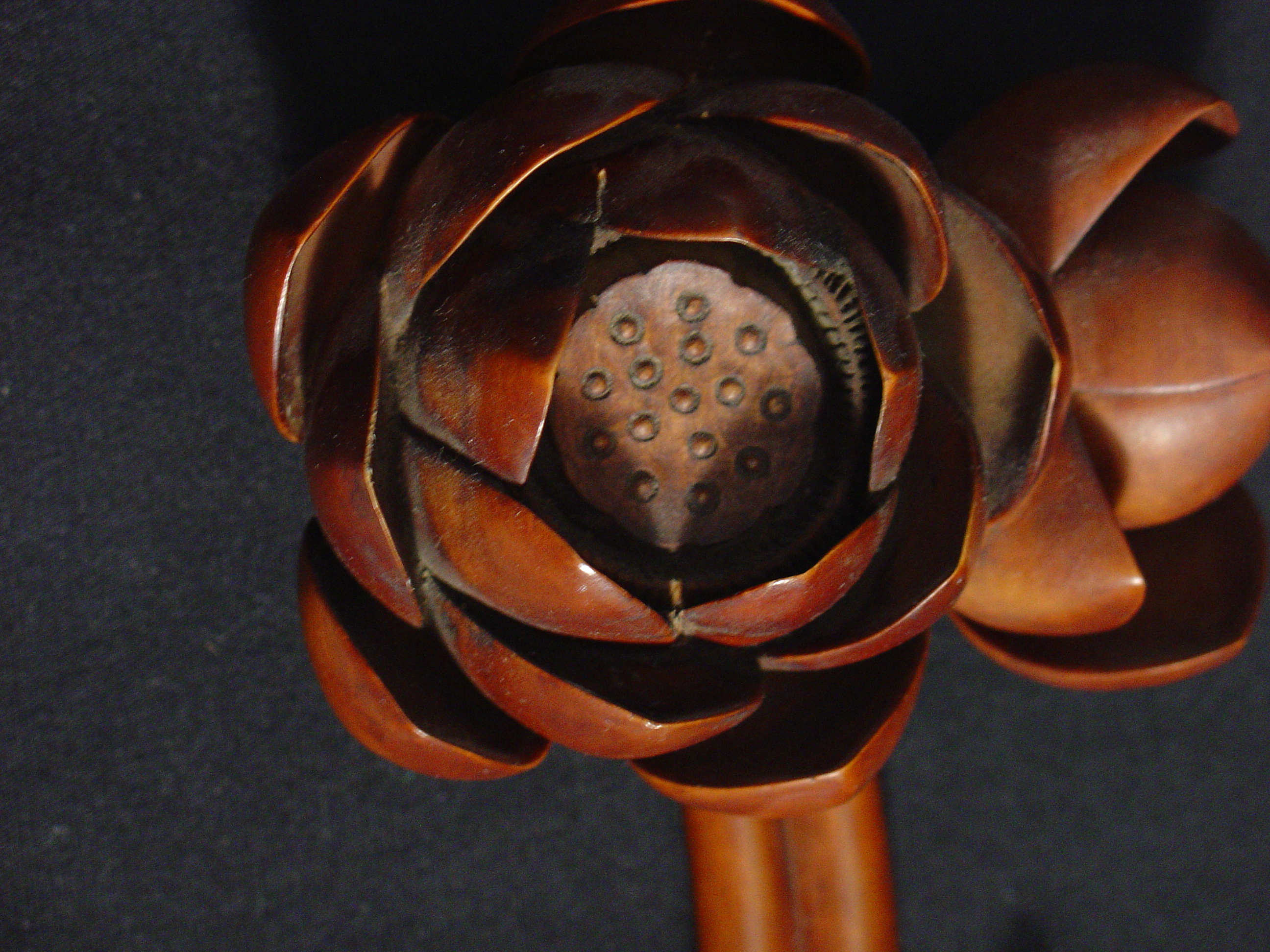
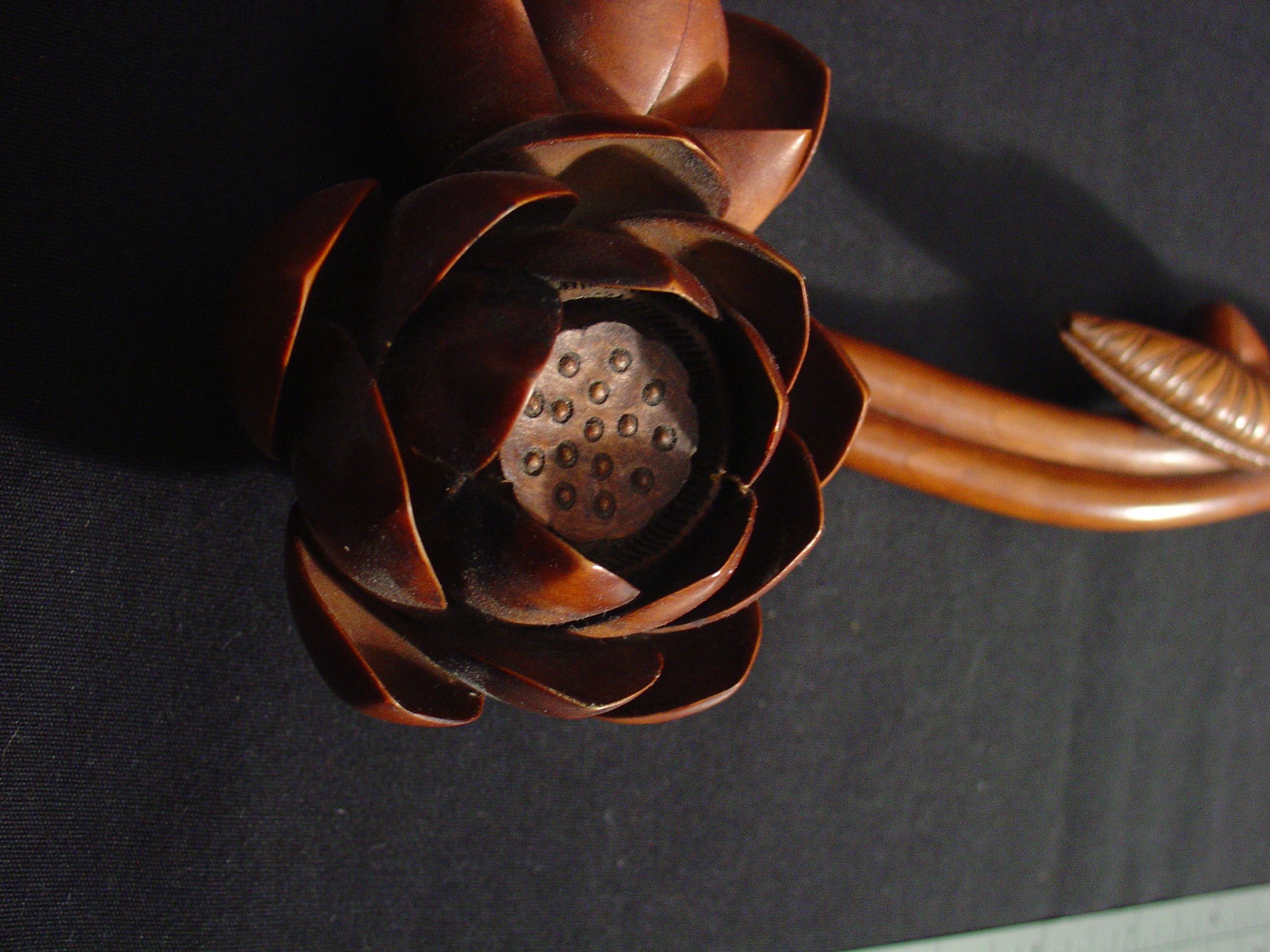
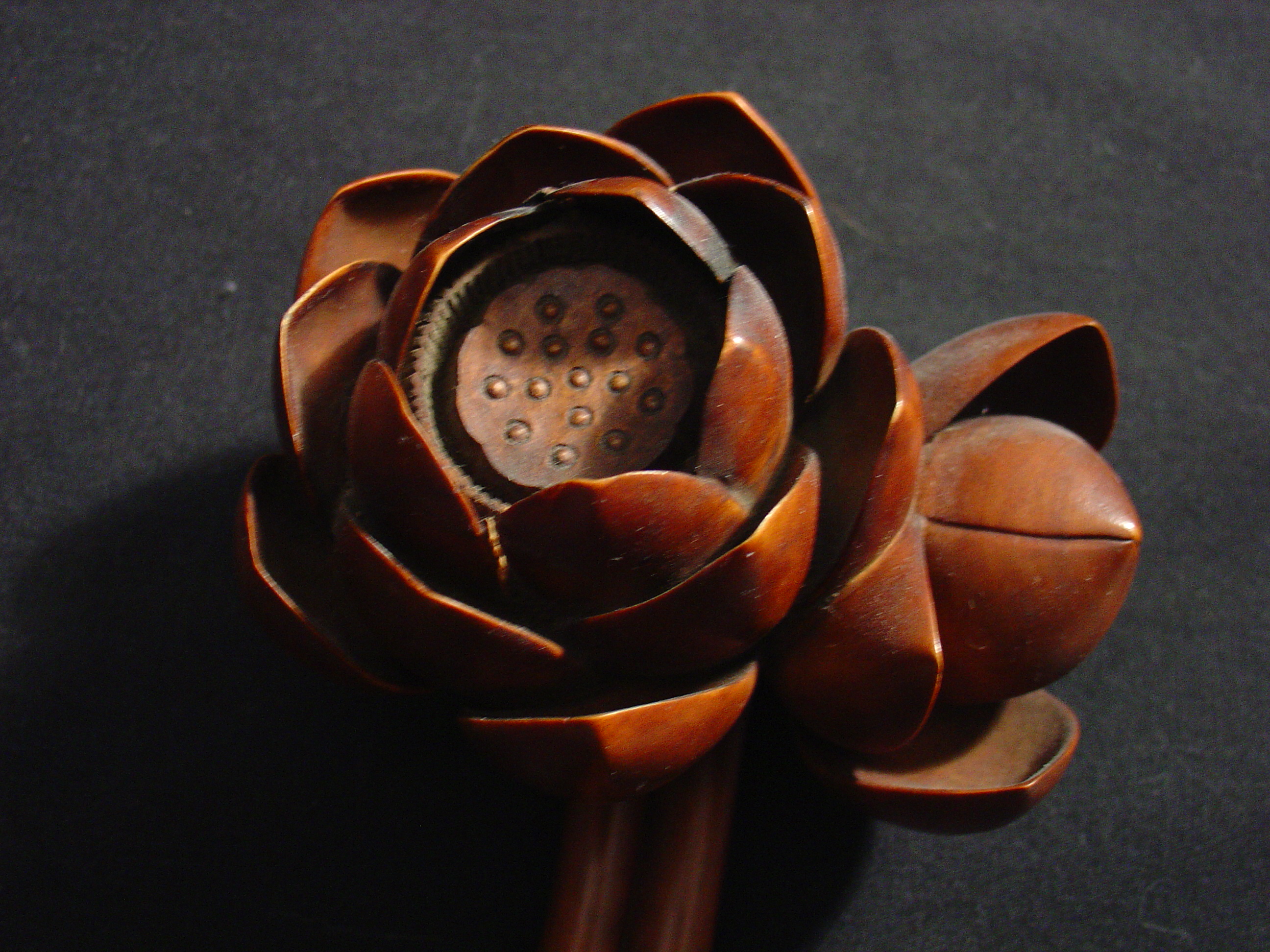
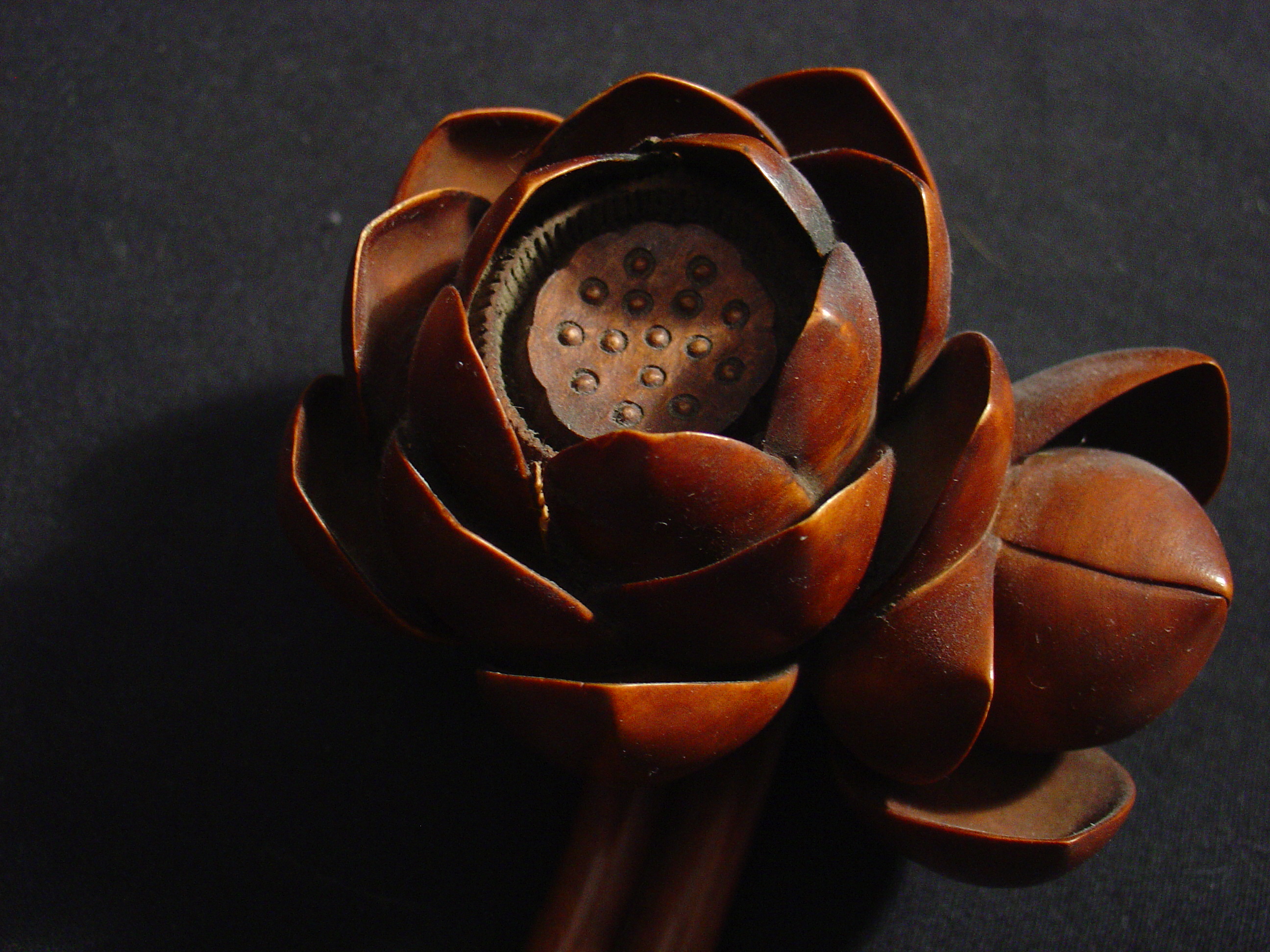
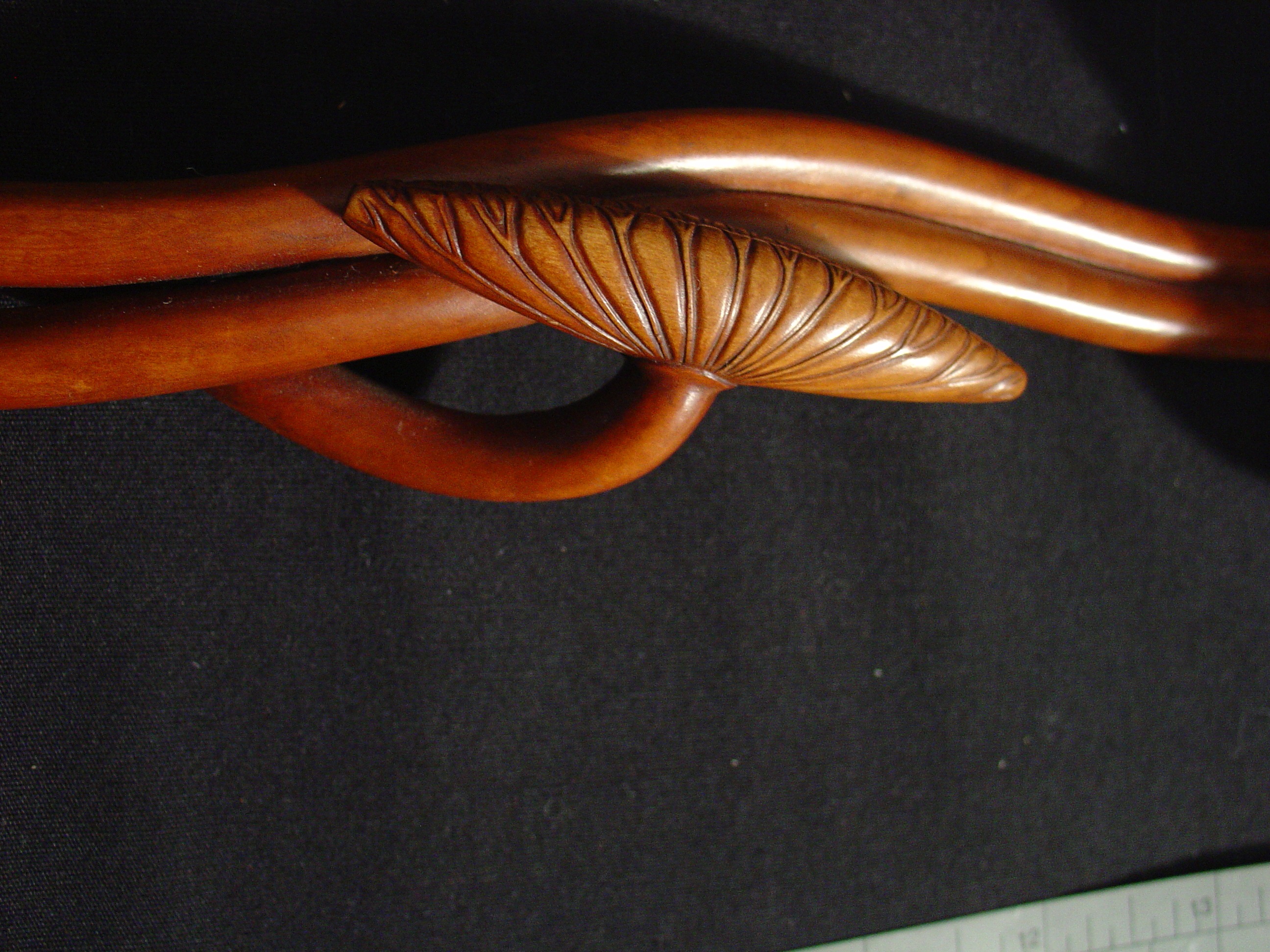
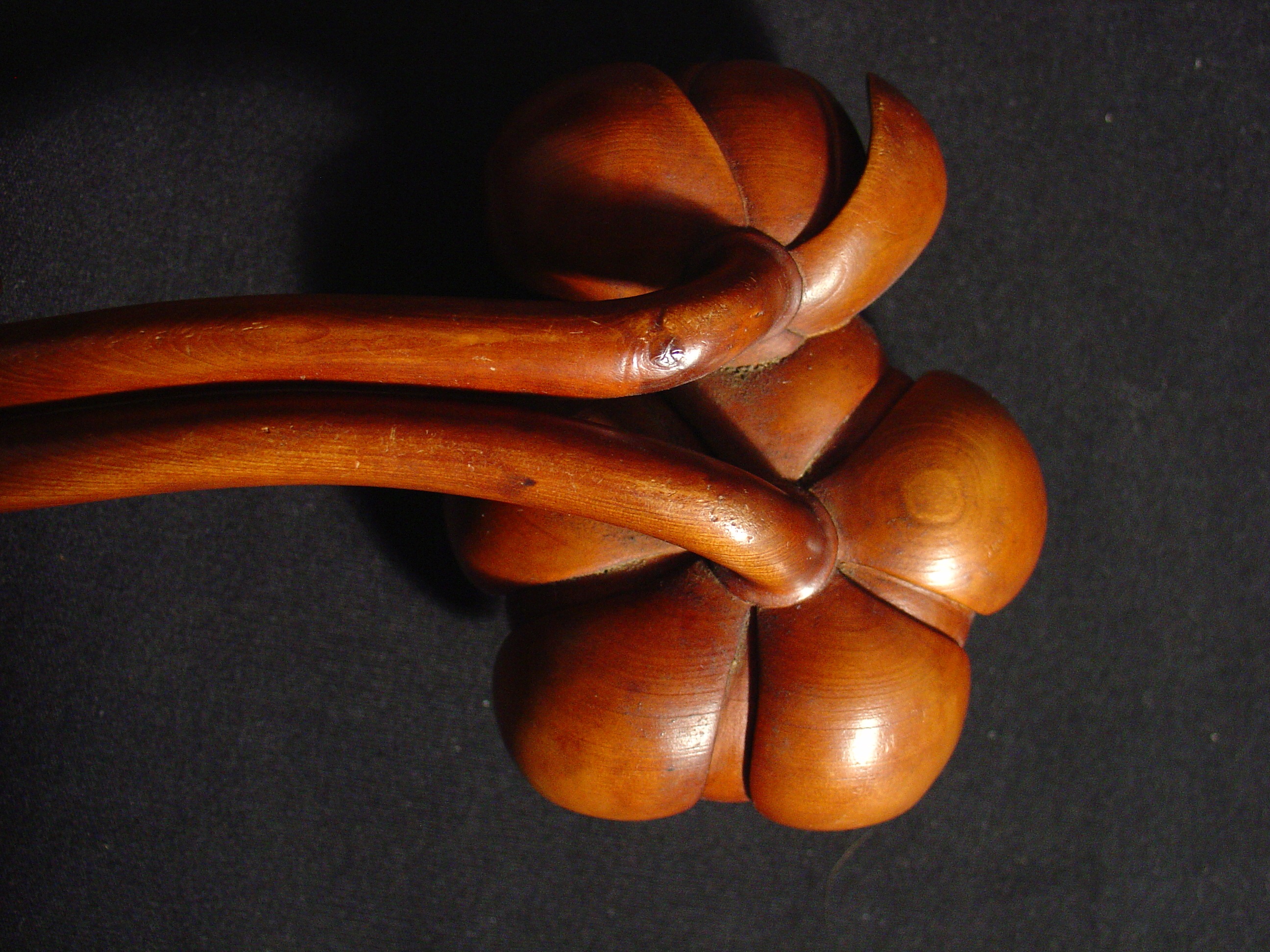
| Description | "A Japanese boxwood ruyi (scepter) with a network of seeds within the open lotus at the terminal of a long stalk, a second stalk with a closed lotus, and a third furled lotus emanating from a 3rd lower stalk, the stalks gently and gracefully curved, the lower section of the stalks with another leaf. Dating from the late Edo period, this rare 13.5” long scepter has a fitted wood storage box. The ruyi is termed the Plant of Long Life. It is a species of fungus, likely Poly porus lusidus, which grows at the roots of trees. When dried it becomes durable, and thus is considered as an emblem of long life and immortality. The ruyi is also a symbol of Buddha and his doctrines. It is used for the Sanskrit riddhi and riddhi-pada, in the sense of magical powers. The ruyi is also used for guarding against the unexpected, as well as for self defense and for pointing the way. In Buddhism it also represents the mystic Lotus, which is sometimes carved on the superior end." - Bernie McManus, Appraiser, Woodbury House, Connecticut, 08/29/2006 |
|---|---|
| Published Description | N/A |
| Bibliography | Under Review |
Artifact History
| Credit Line/Dedication | Fred A. Freund Collection |
|---|---|
| Reproduction | No |
Contact
All information about our collection is constantly reviewed and updated. Please contact Dery Martínez-Bonilla, Registrar, if there is any information you are looking for that isn't currently online.