
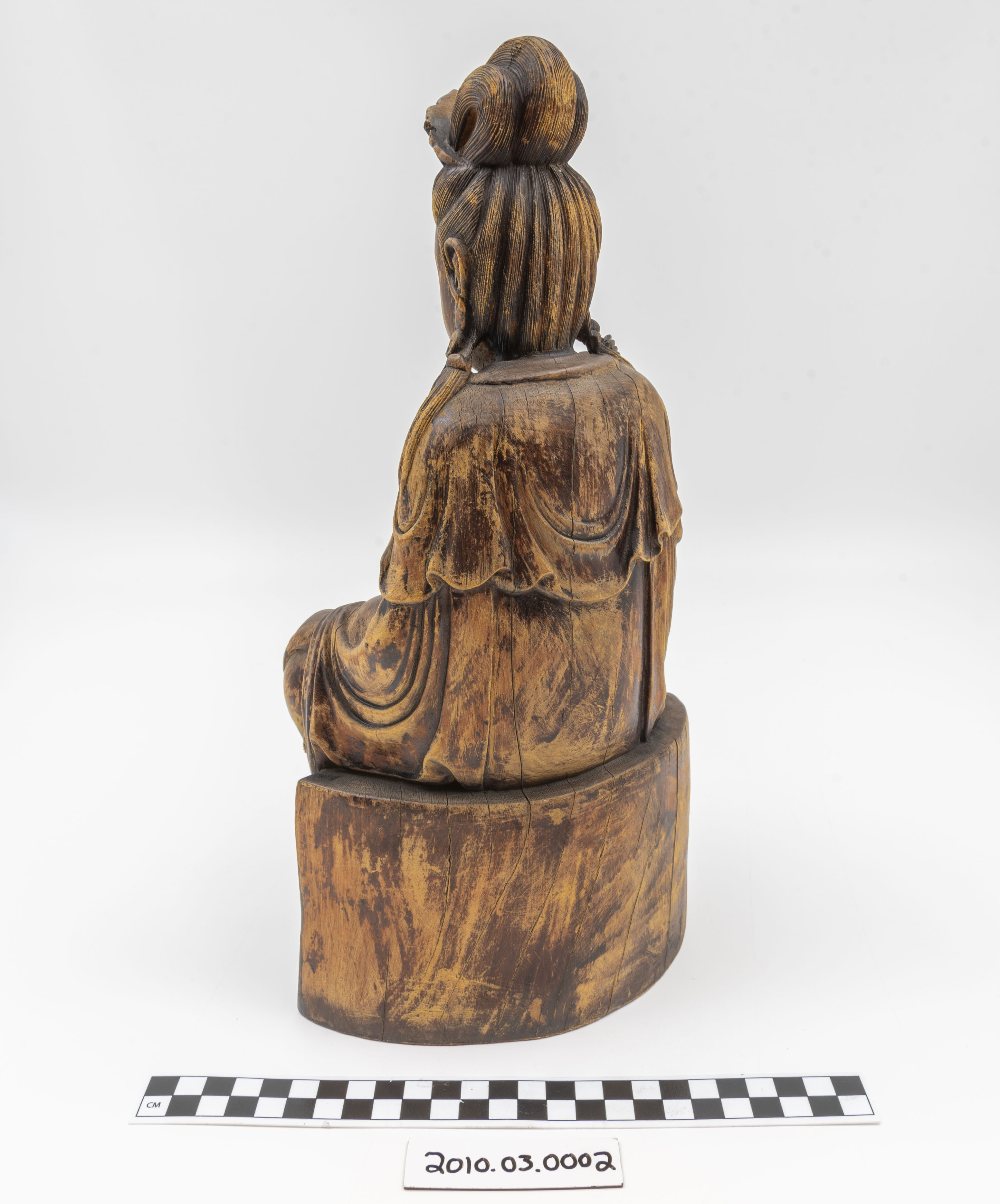
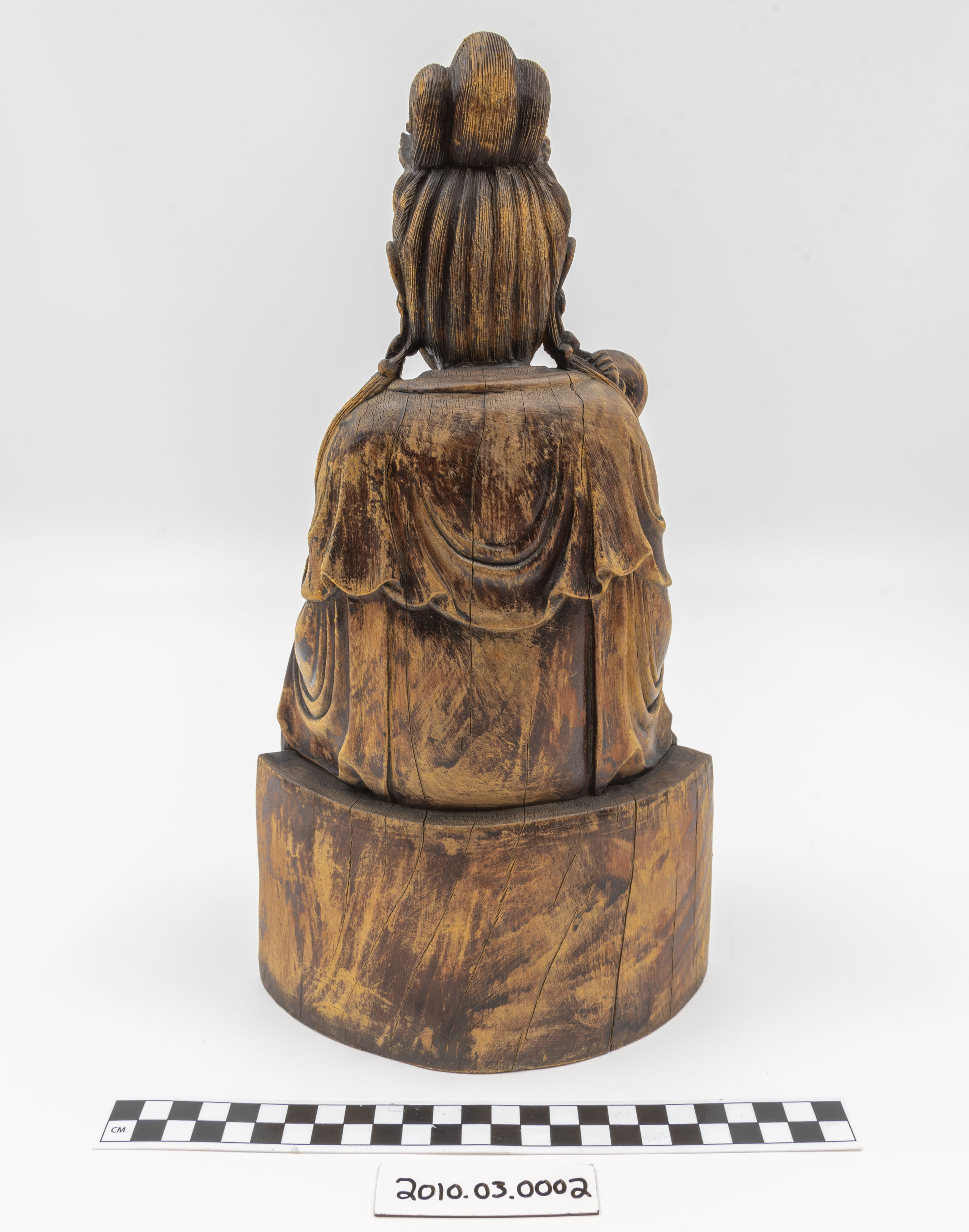
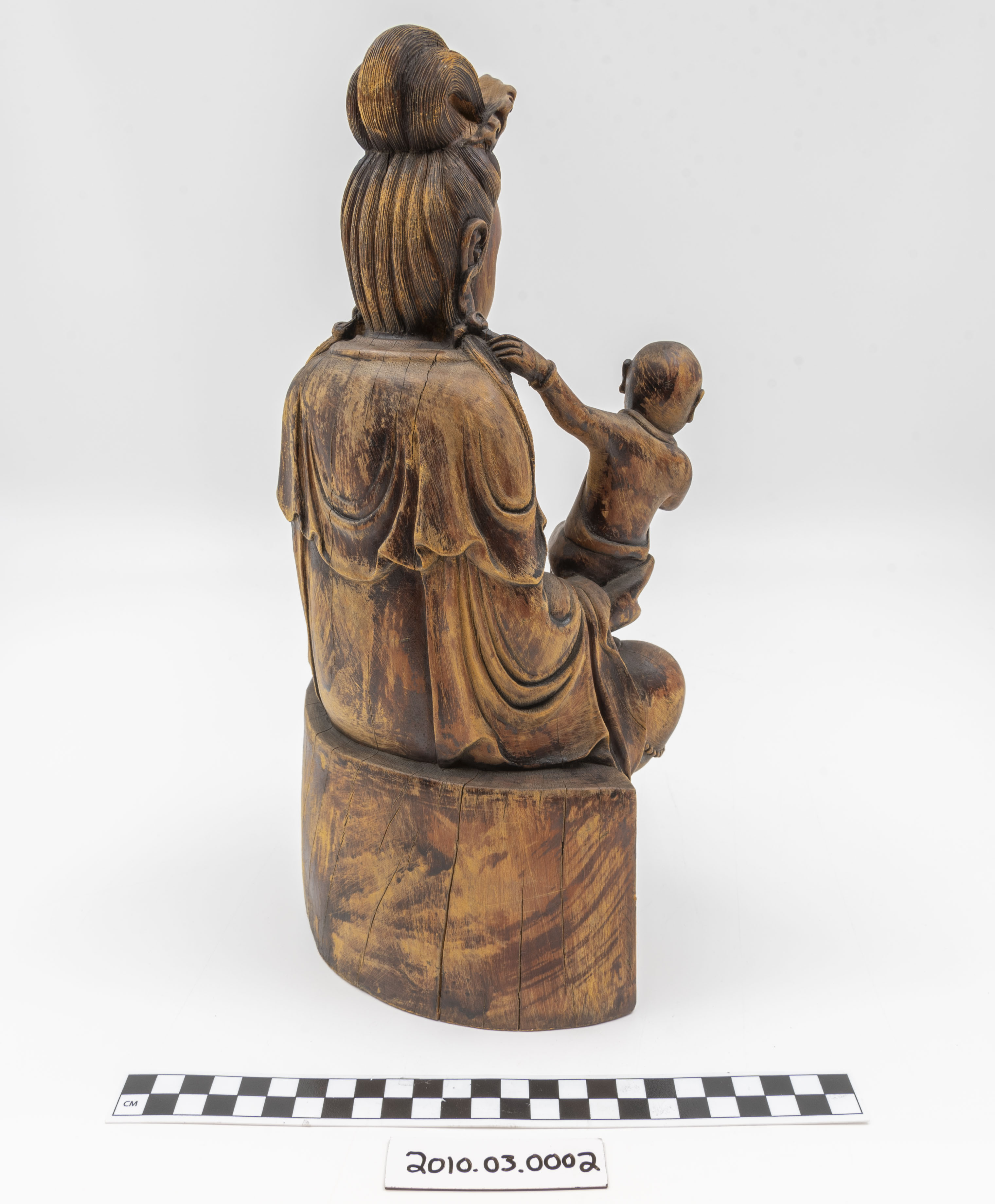
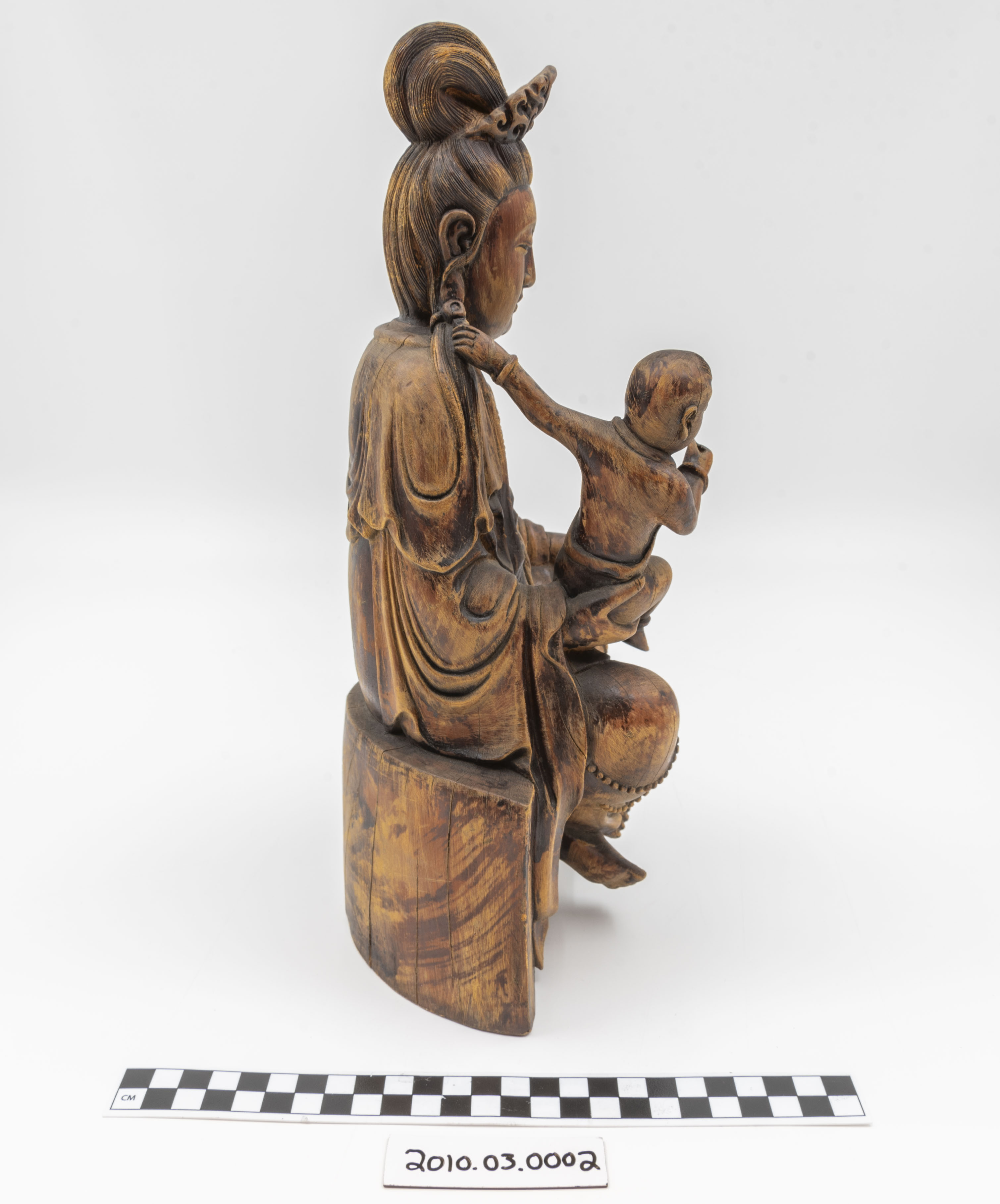
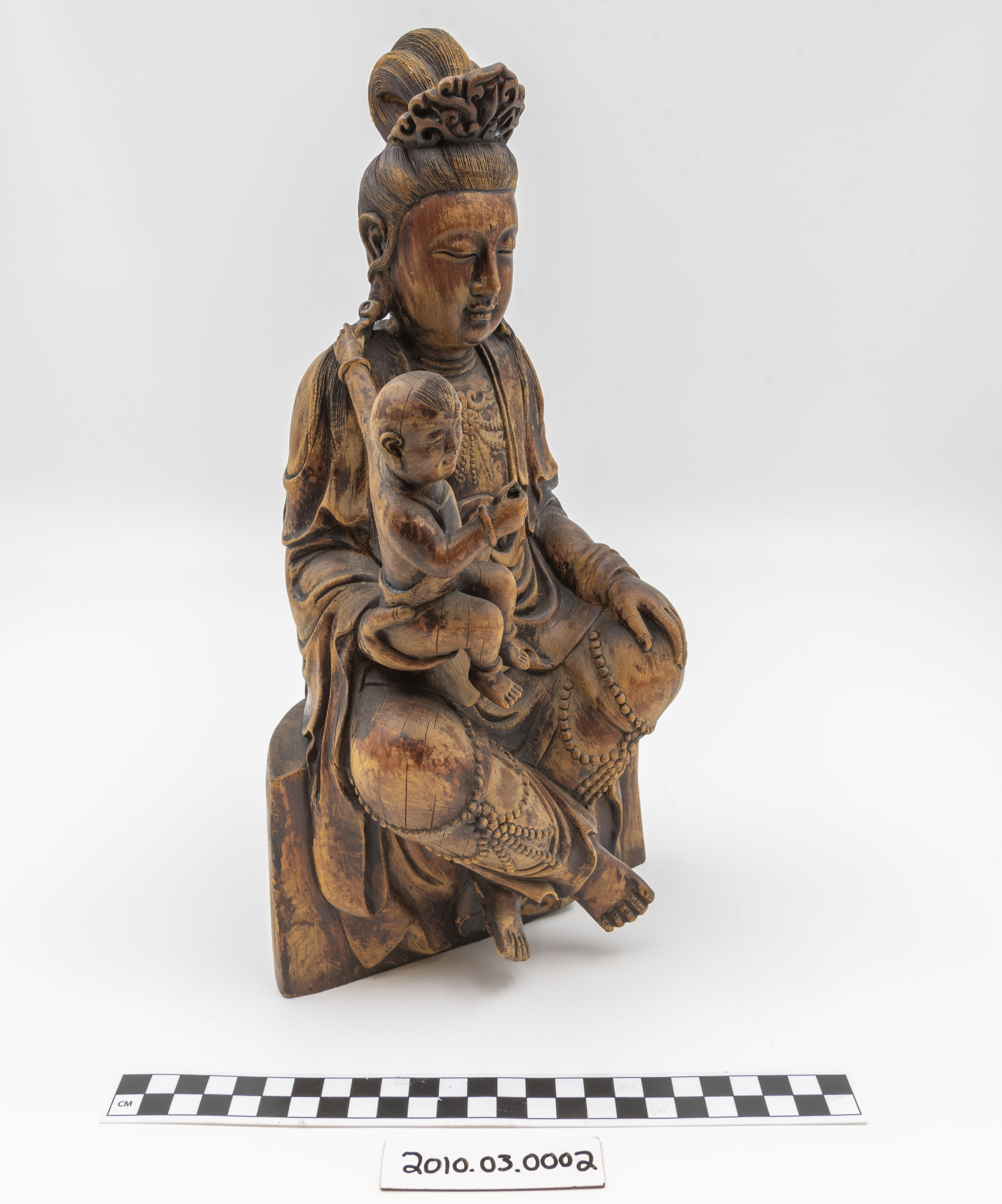
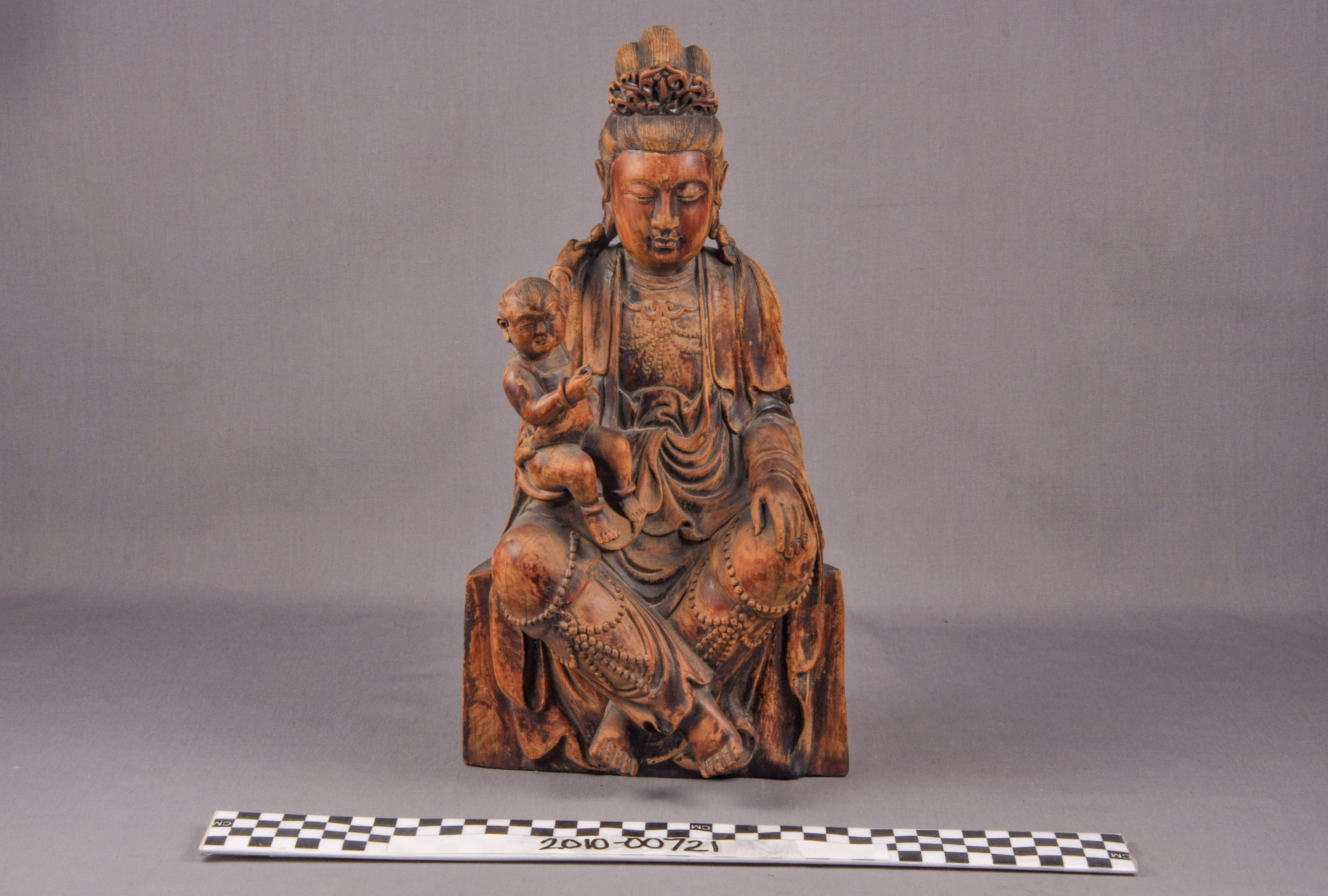
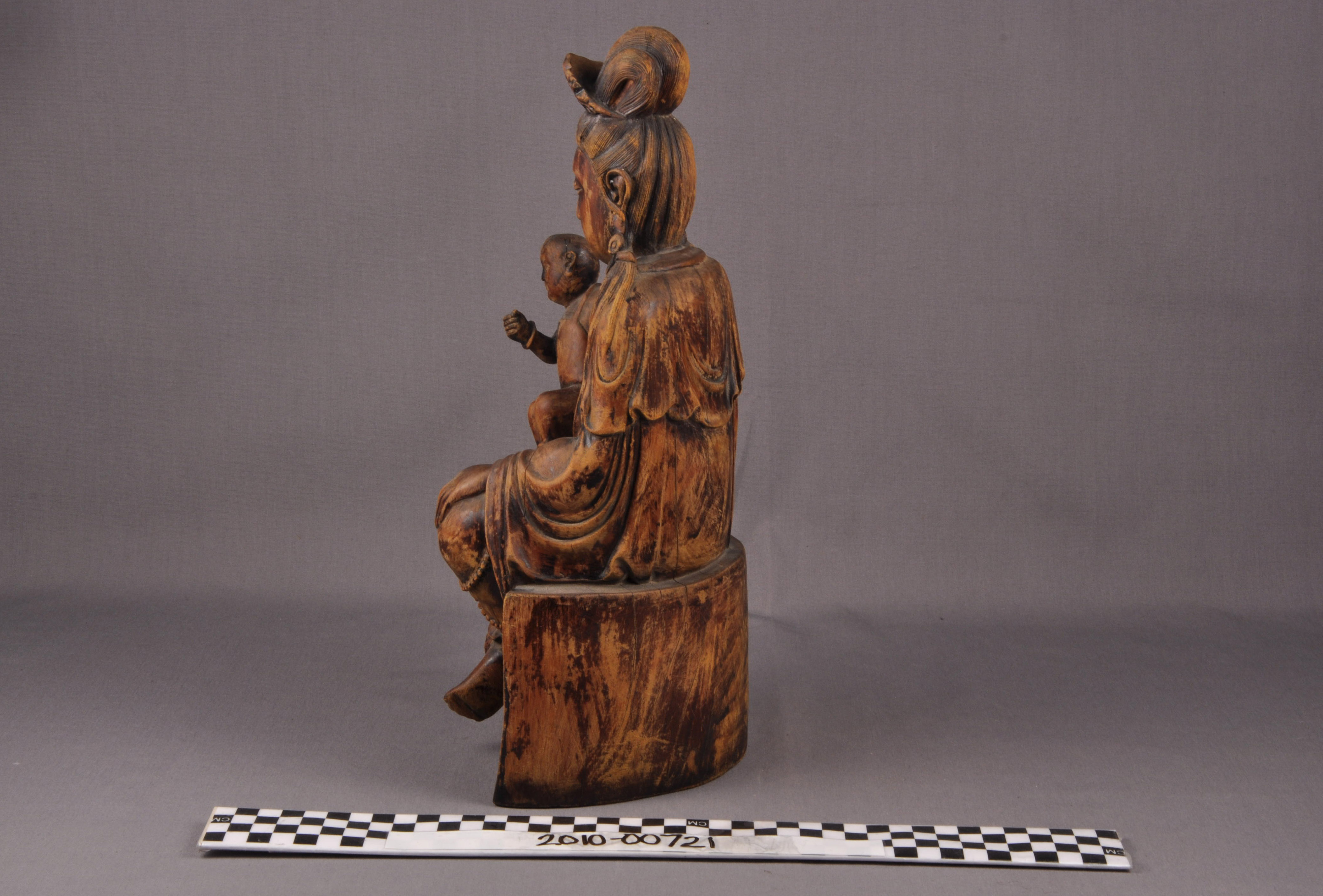
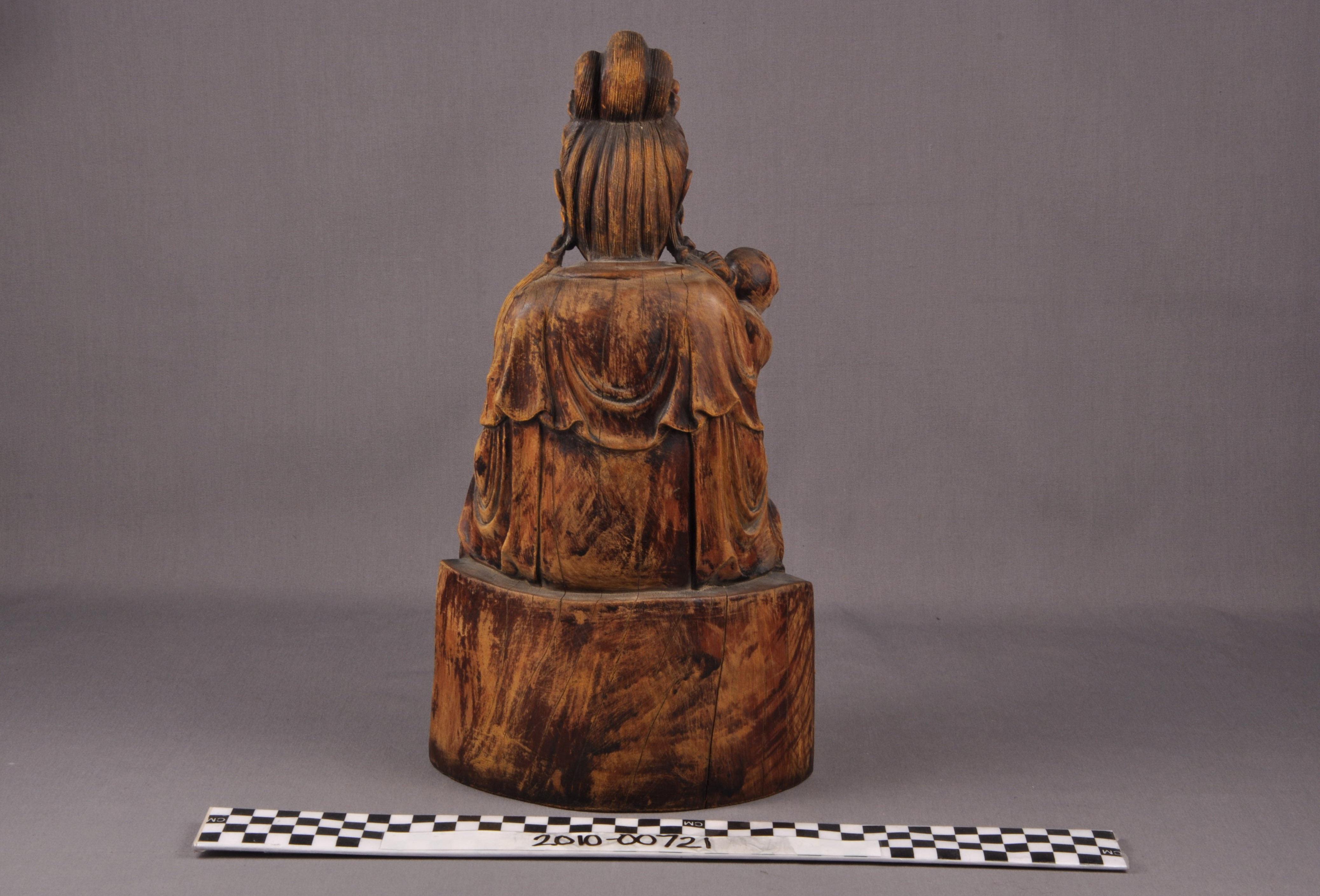
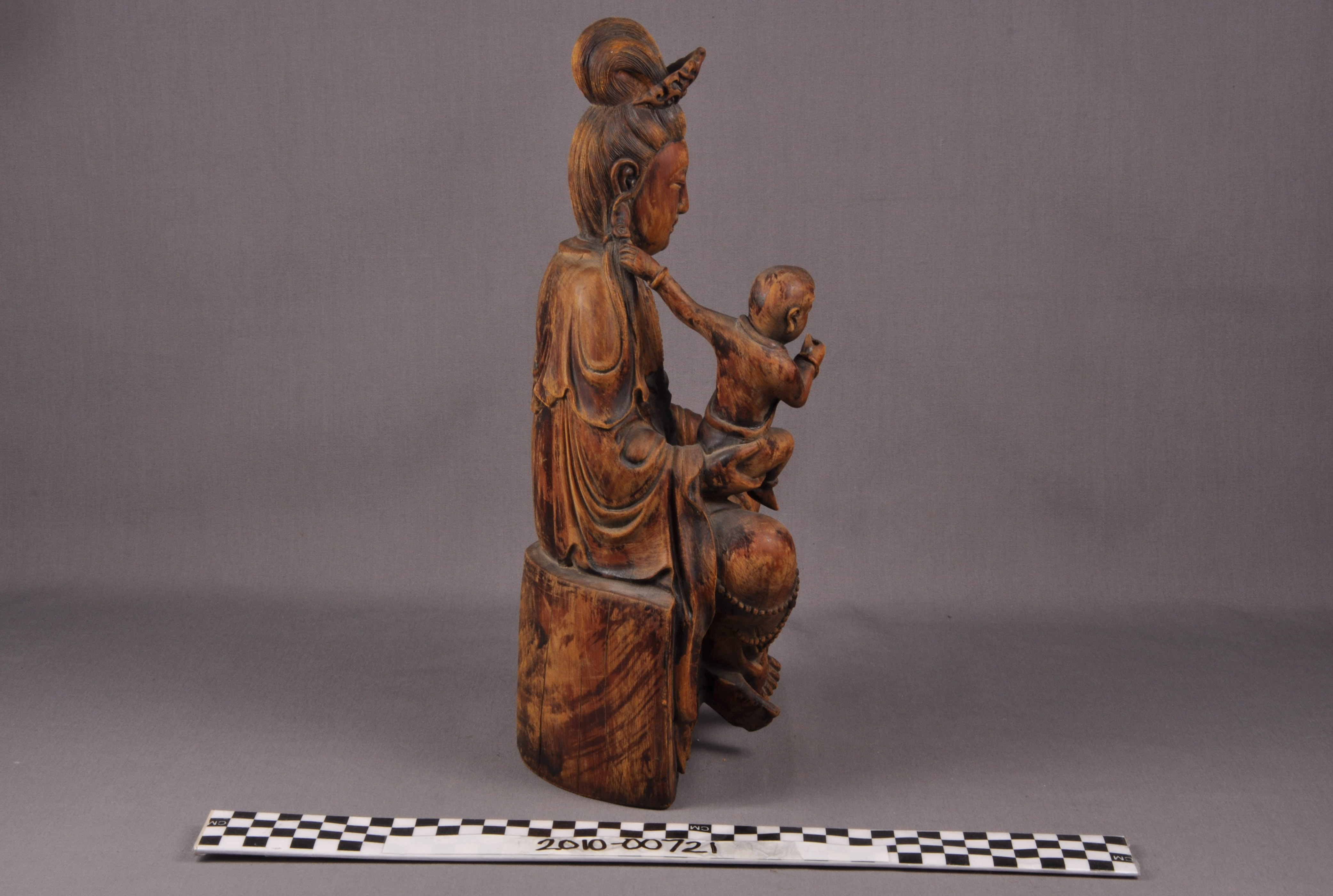
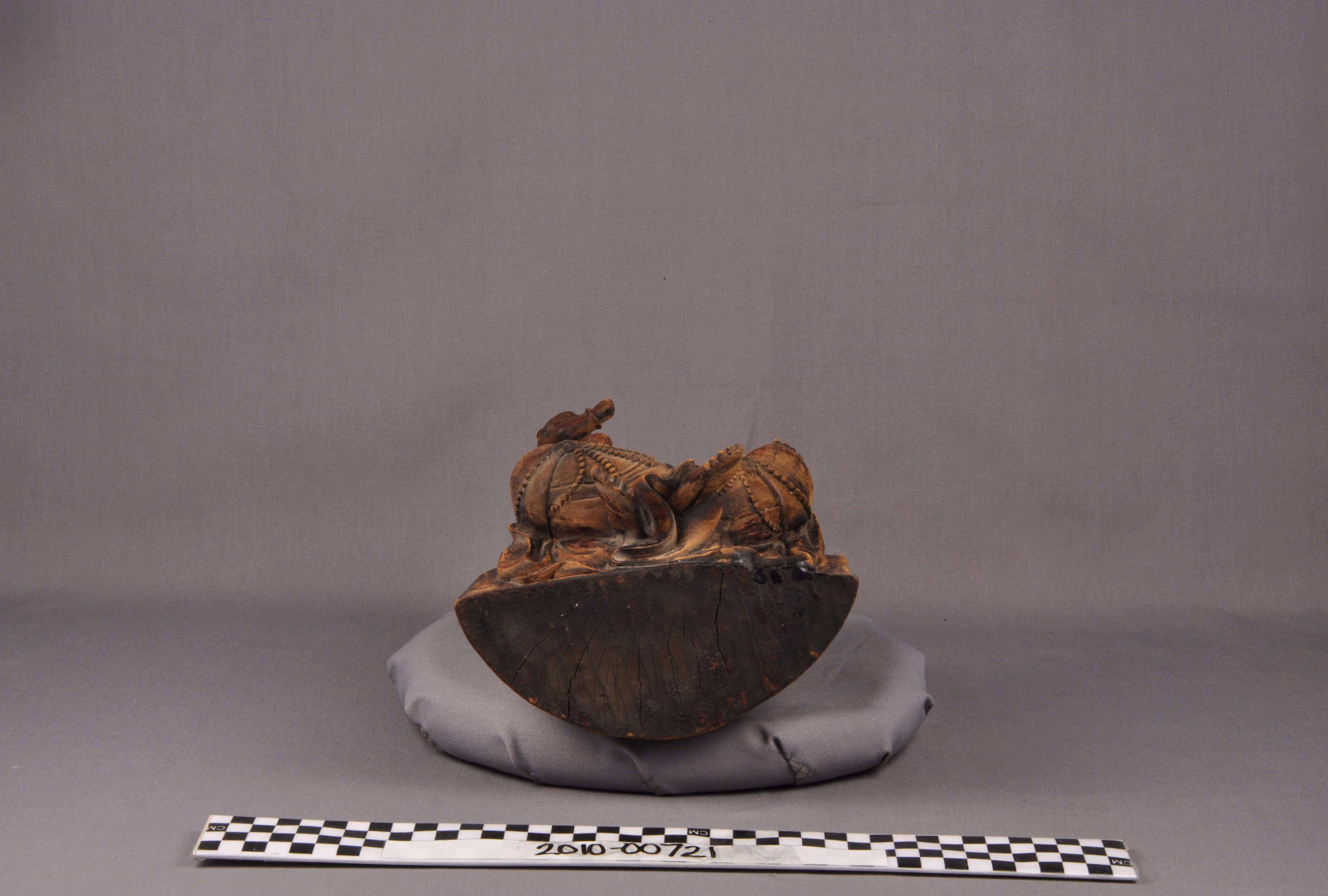
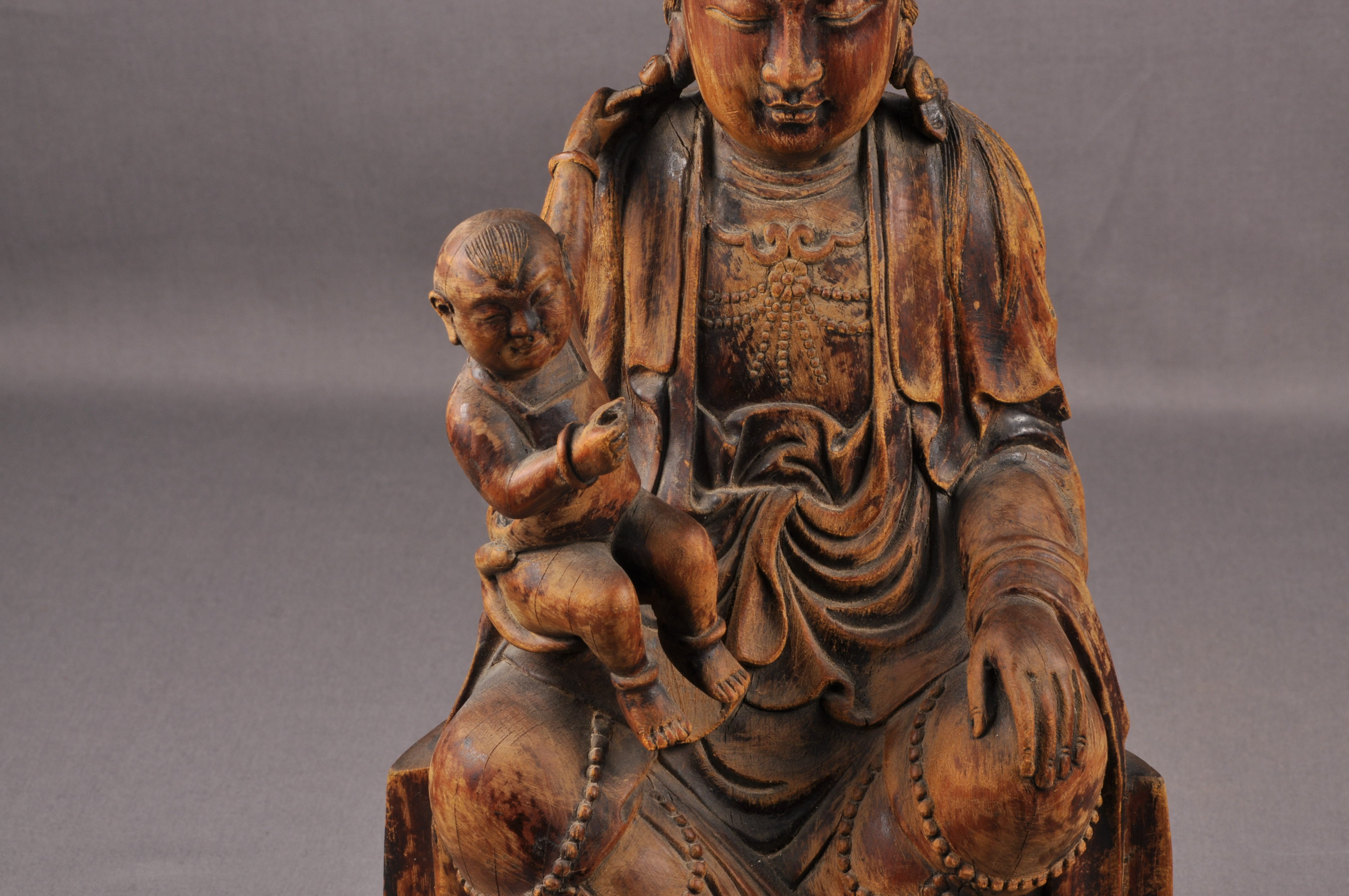
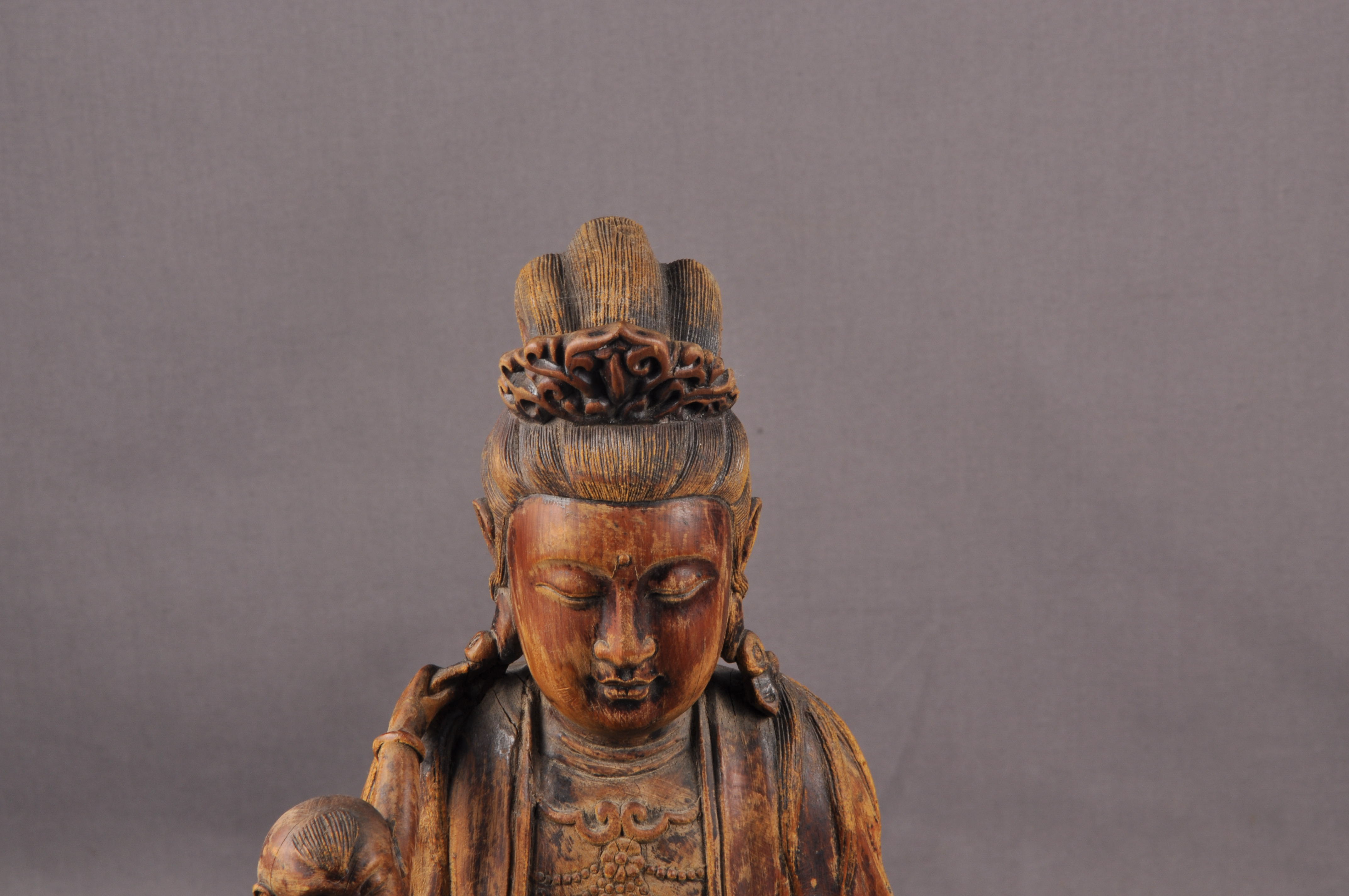
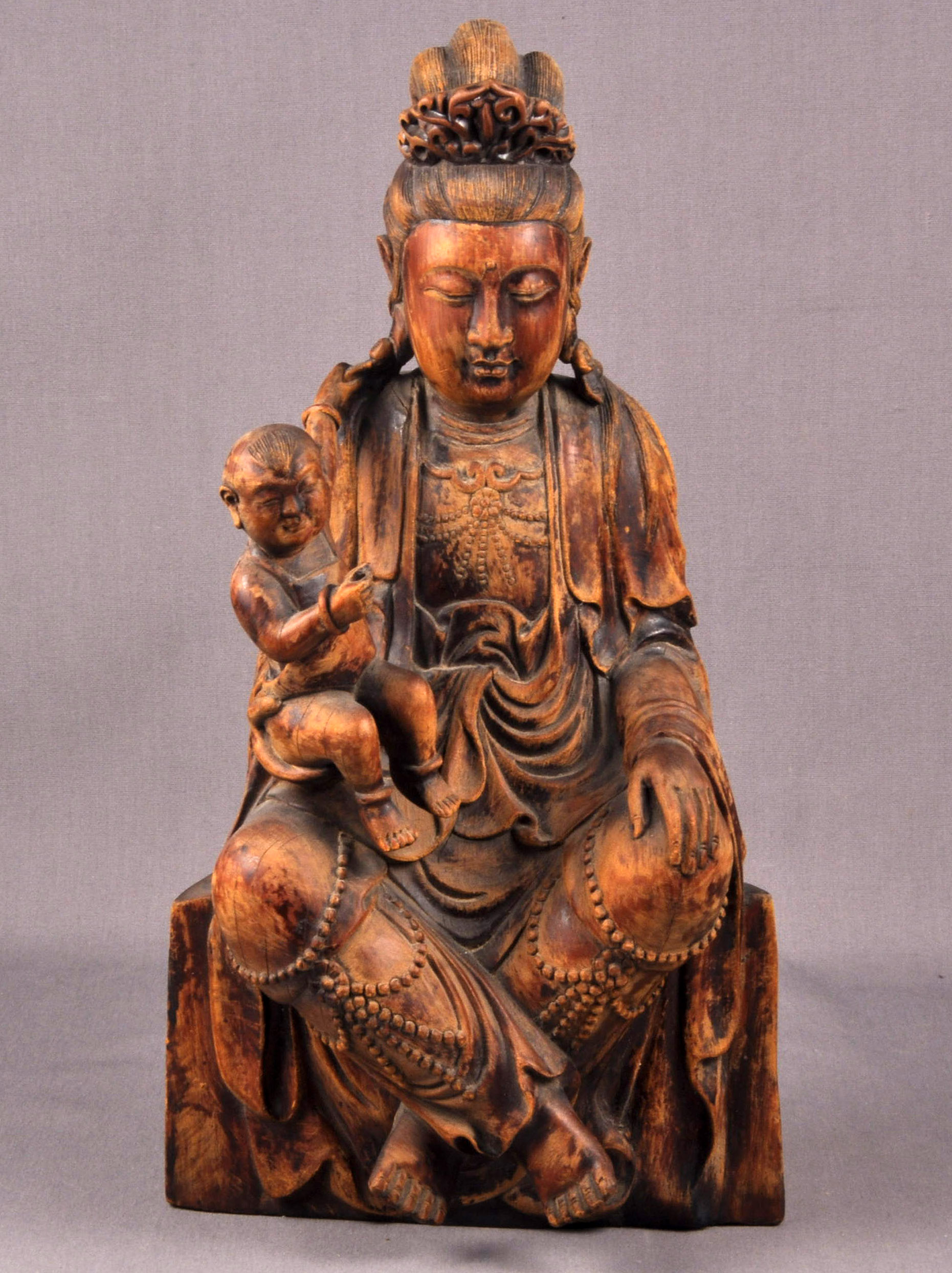
Carving: Guanyin (Kannon, Kuanyin, Avalokiteshvara) and Child
2010.03.0002
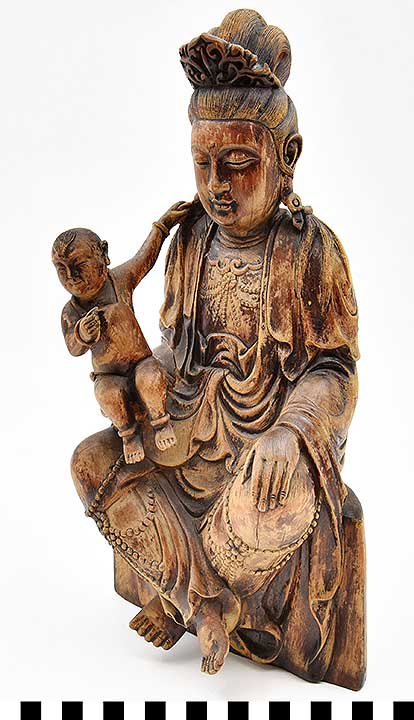
Detailed Images
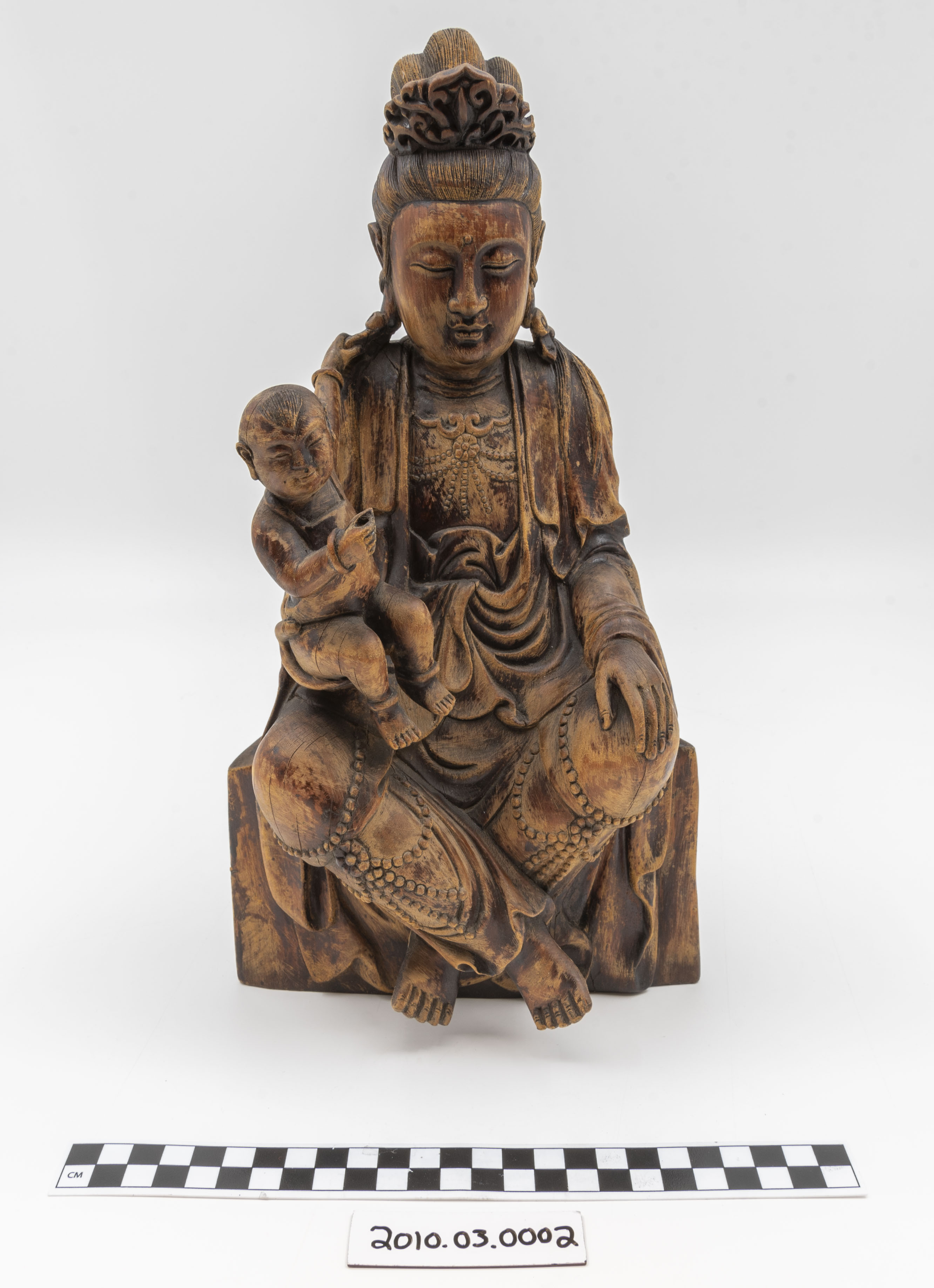
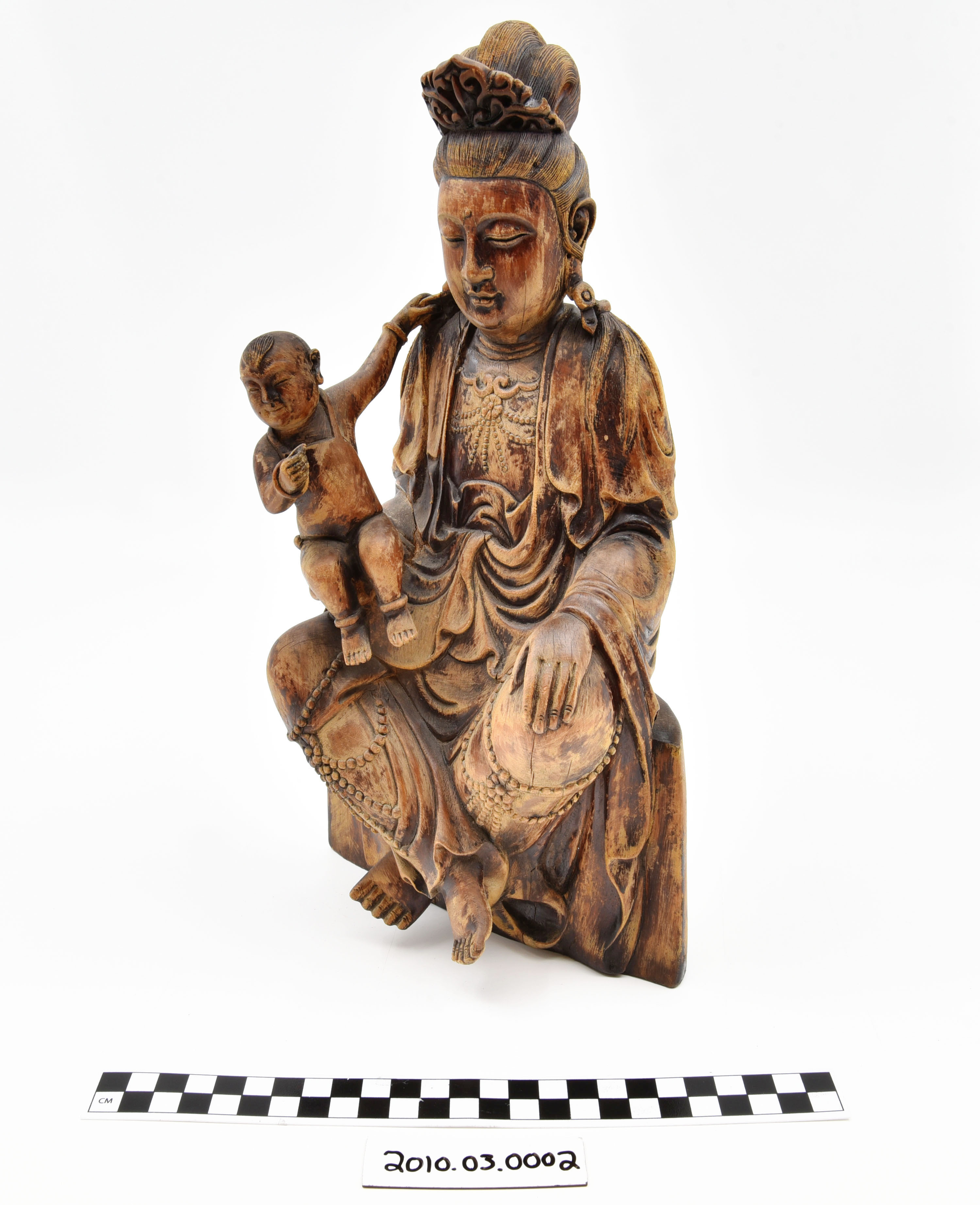
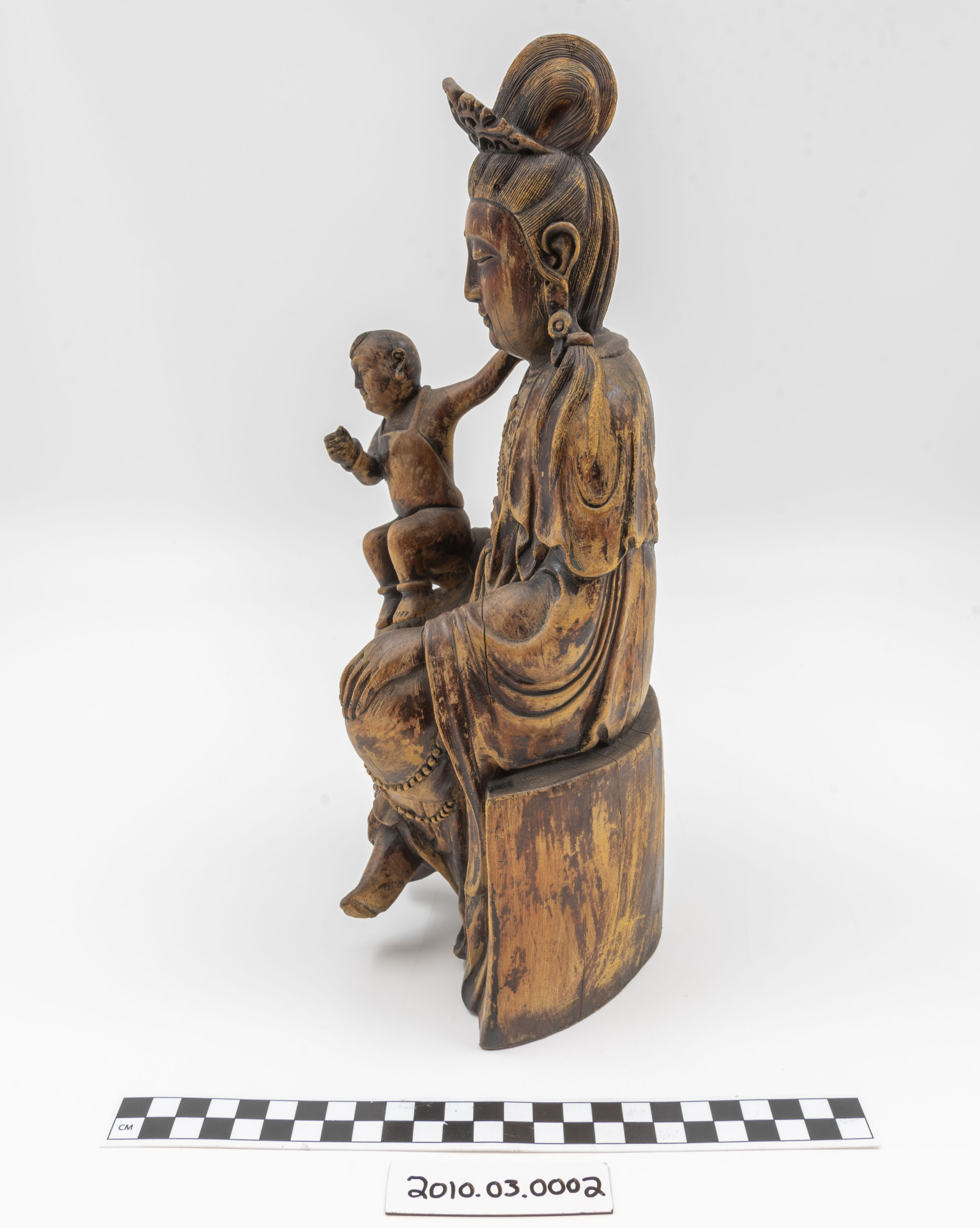
Basic Information
| Artifact Identification | Carving: Guanyin (Kannon, Kuanyin, Avalokiteshvara) and Child (2010.03.0002) |
|---|---|
| Classification/ Nomenclature |
|
| Artist/Maker | Unknown |
| Geographic Location | |
| Period | Ming Dynasty (1368-1644) |
| Date | 16th - 17th century |
| Culture | Chinese |
| Location | Not on Exhibit |
Physical Analysis
| Dimension 1 (Height) | 35 cm |
|---|---|
| Dimension 2 (Length) | 18.6 cm |
| Dimension 3 (Width) | 7.6 cm |
| Weight | 2054 g |
| Measuring Remarks | N/A |
| Materials | Varnish--Lacquer, Plant--Wood |
| Manufacturing Processes | Carved, Lacquered, |
Research Remarks
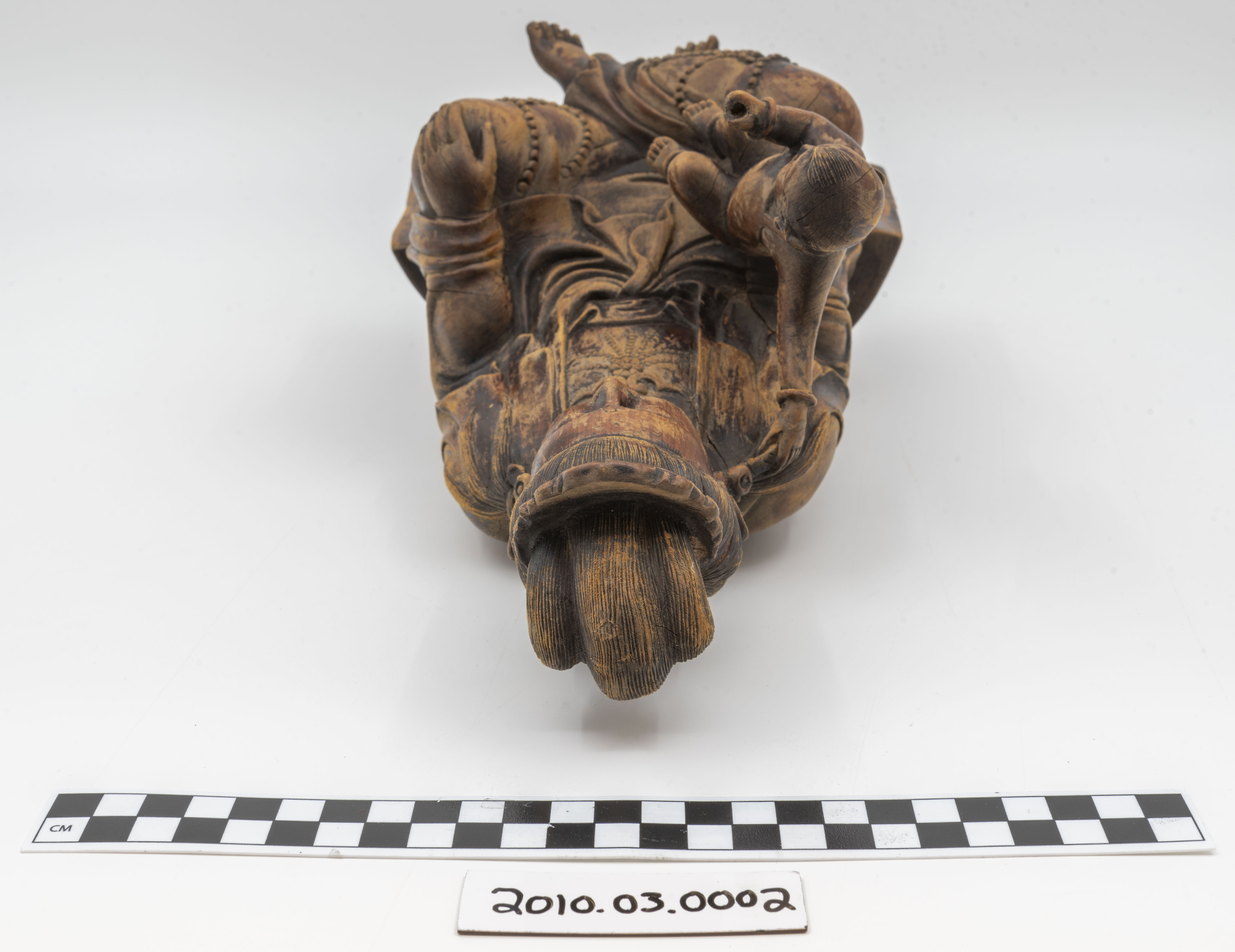
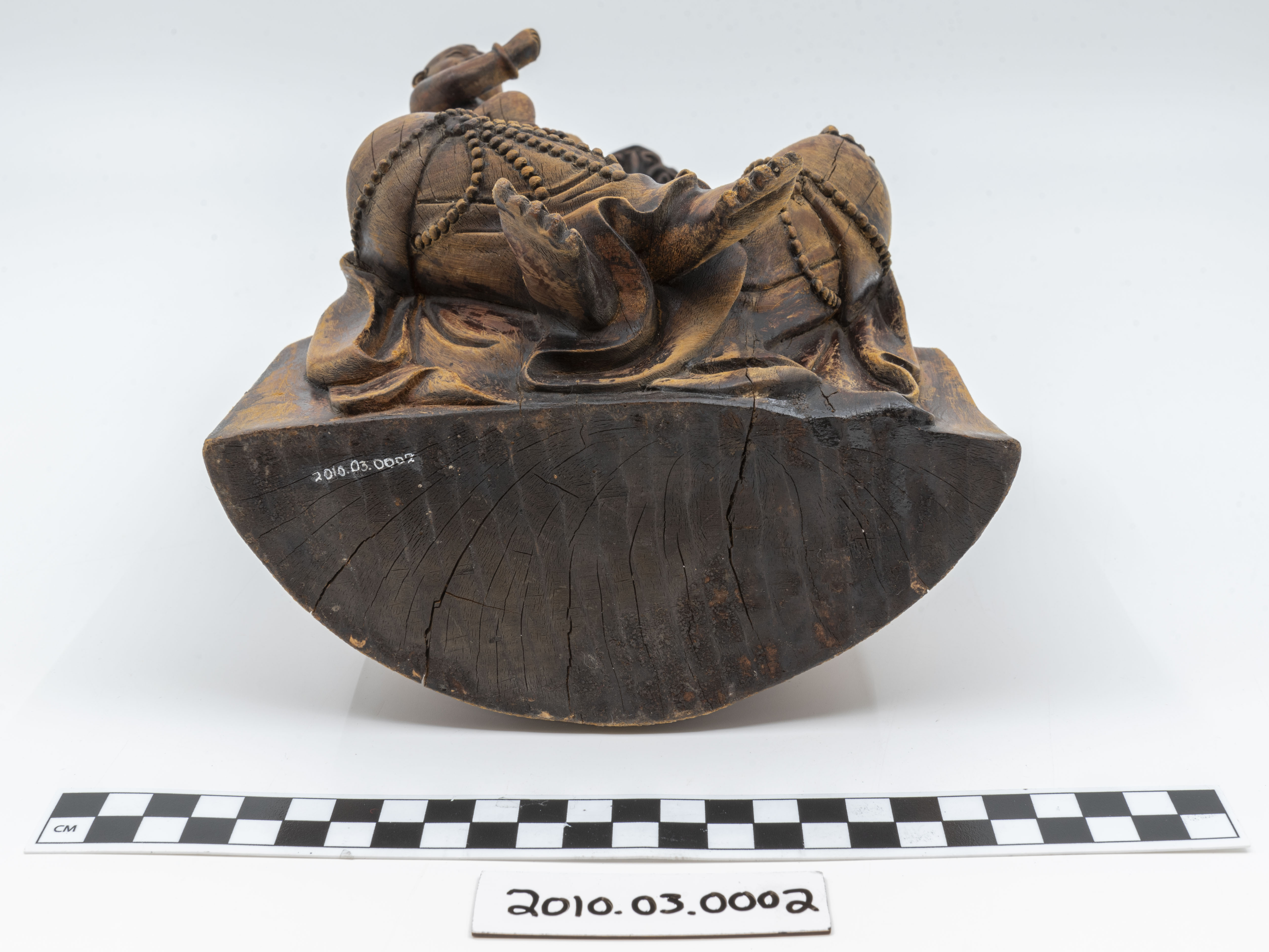
| Description | "A Ming Dynasty, 16th/17th century, Chinese cedar wood carving of the Bodhisattva Guanyin and child. This carving, which measures 14 inches high and 7 inches wide, was either painted and/or lacquered after it was carved. A Bodhisattva is a Buddhist saint who is on the road to Buddha-hood. This Bodhisattva reached Nirvana and achieved Enlightenment, but chose to remain on earth to soothe the pain of humankind and to lead them to Enlightenment. This deity is the only female Bodhisattva. However, she was not always female. As the god of compassion, this deity was Avalokitevara, and he was male until the 5th century, in China. During this time, the Chinese had difficulty relating to a male deity of compassion. Both Daoism and Buddhism merged their traditions (with regard to Guanyin ) and the Bodhisattva became female. Guanyin is often depicted in both Chinese fine and decorative arts holding a child in her arms because she is the Buddhist saint of barren women. This child is a symbol that shows that she hears their cries for children. The whiteness of her clothing is the symbol of purity. Sometimes she is depicted holding a mala (a string of beads or knots used for praying or meditating) in one hand. This symbolizes her devotion to Buddhism. When we see Guanyin with the lotus blossom we are reminded that though our lives might be surrounded by the mud of misery we can attain enlightenment. Chinese cedar (Cunninghamia lancelota), Nanmu in Chinese, is beautiful, light, soft, resinous, and durable, even when in contact with soil or moistures. Nanmu comes from a family of trees having aromatic, often red or red-tinged wood that in many cases is decay-resistant and insect-repellent. Nanmu has a small knot structure which is sound and tight and fragrant, was often pointed and /or lacquered." - Bernie McManus, Appraiser, Woodbury House, Connecticut, 7/22/2010 |
|---|---|
| Published Description | N/A |
| Bibliography | Twarog, Emily I. B. 2014. "Image 11." Embodying Compassion (blog). September 24, 2014. https://pages.vassar.edu/embodyingcompassion/2014/09/24/image-11/. |
Artifact History
| Credit Line/Dedication | Fred A. Freund Collection |
|---|---|
| Reproduction | No |
Contact
All information about our collection is constantly reviewed and updated. Please contact Dery Martínez-Bonilla, Registrar, if there is any information you are looking for that isn't currently online.