
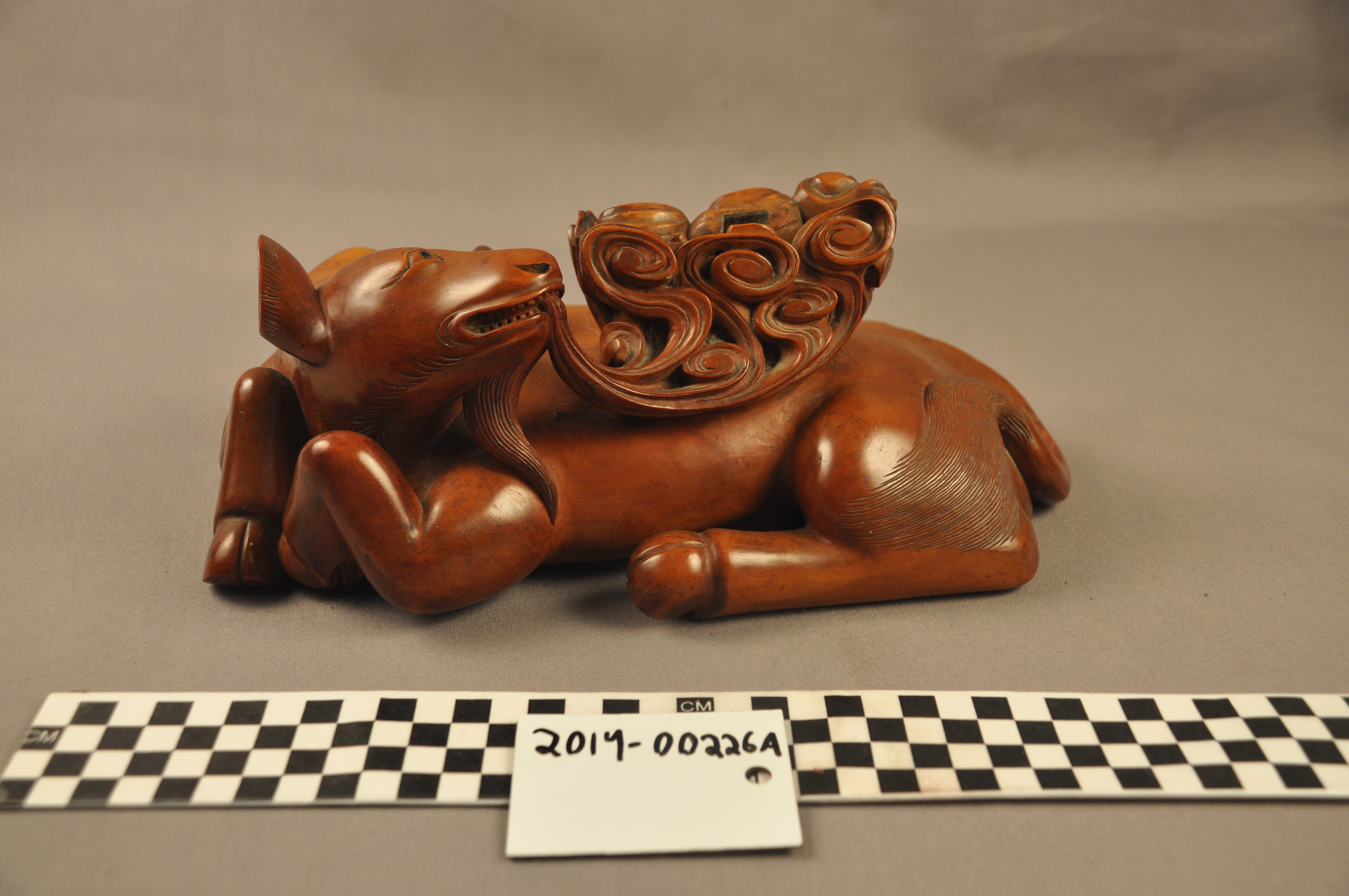
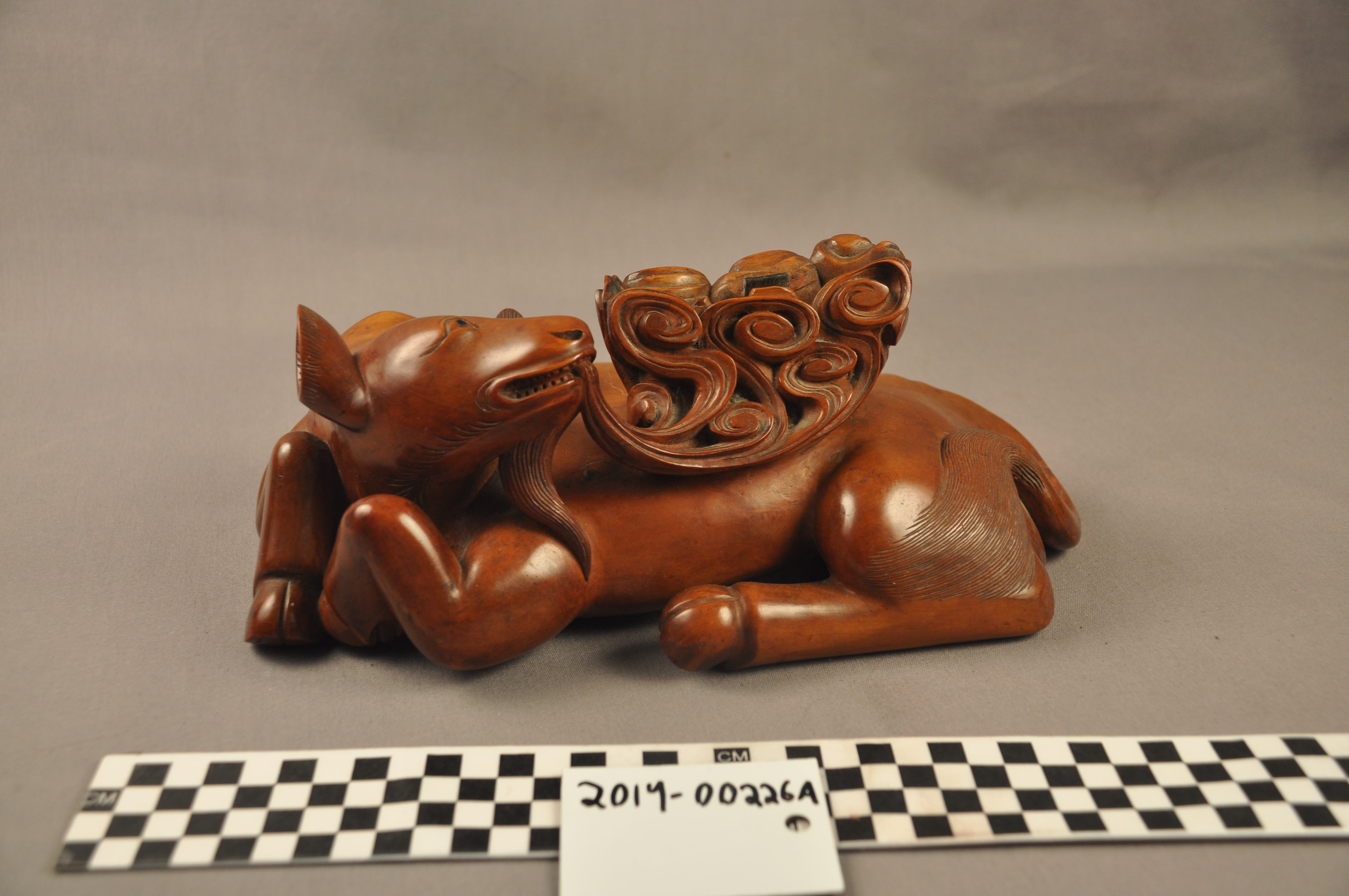
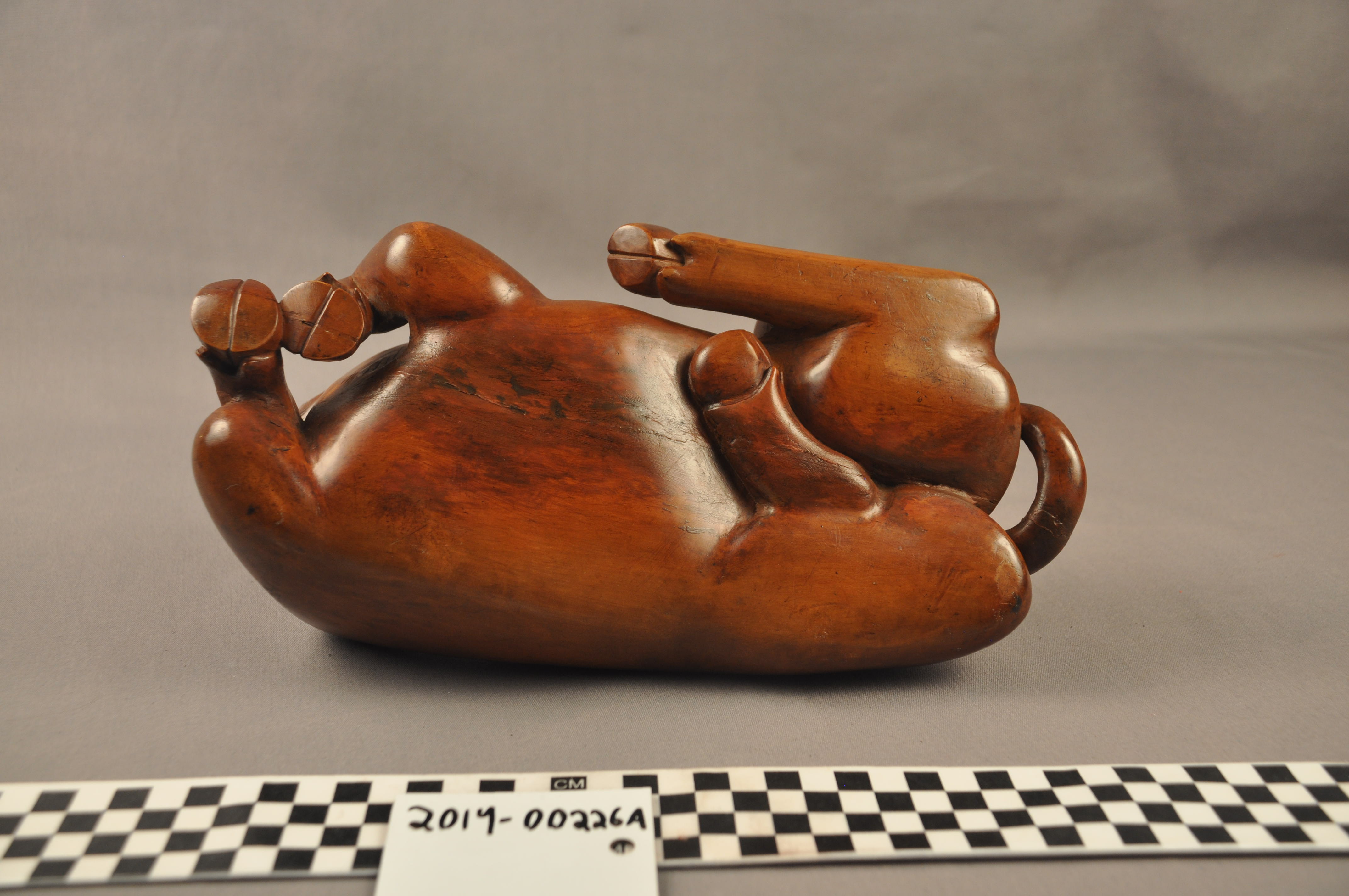
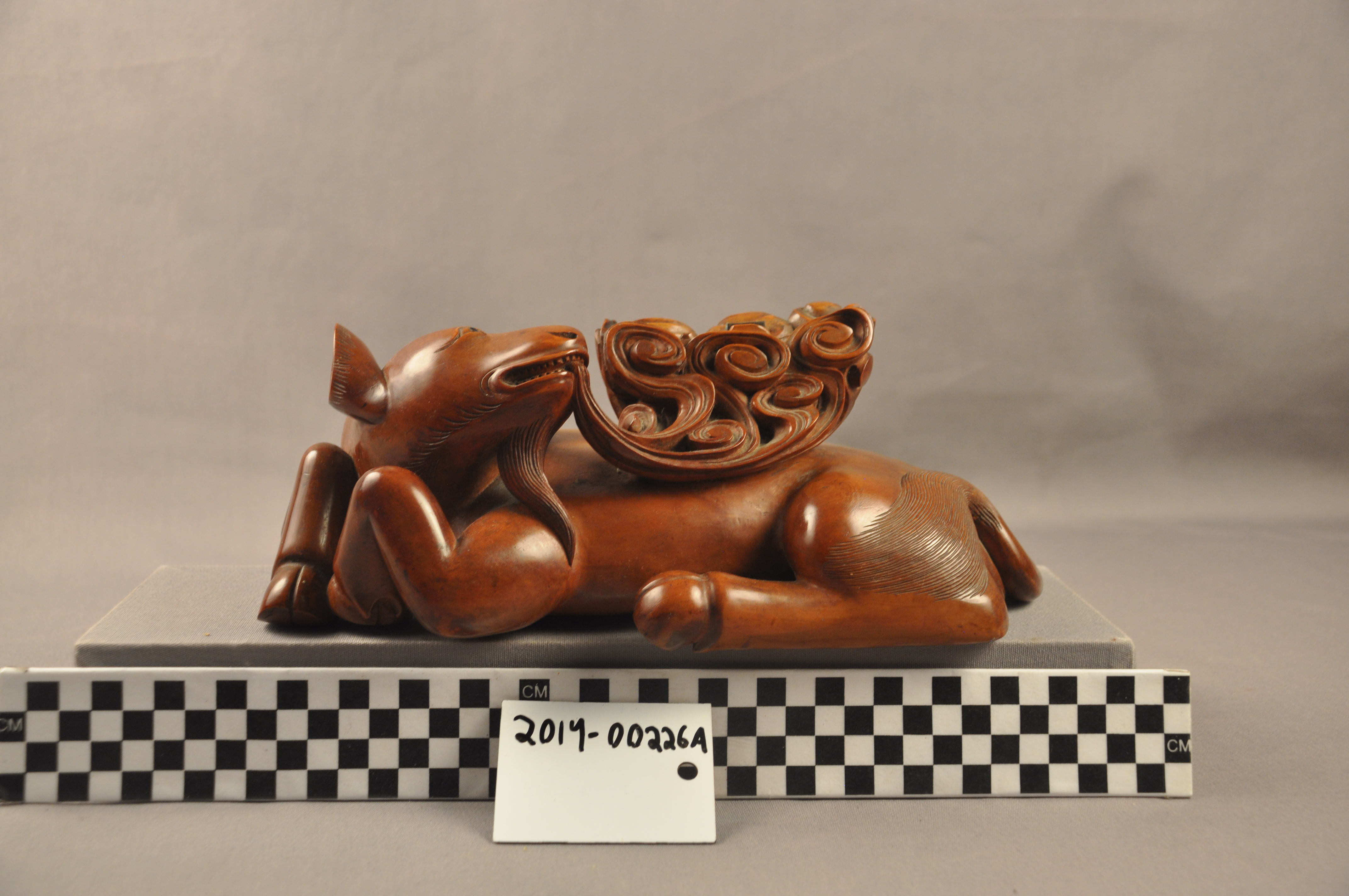
Bi Stand: Deer
2014.09.0005A
Detailed Images
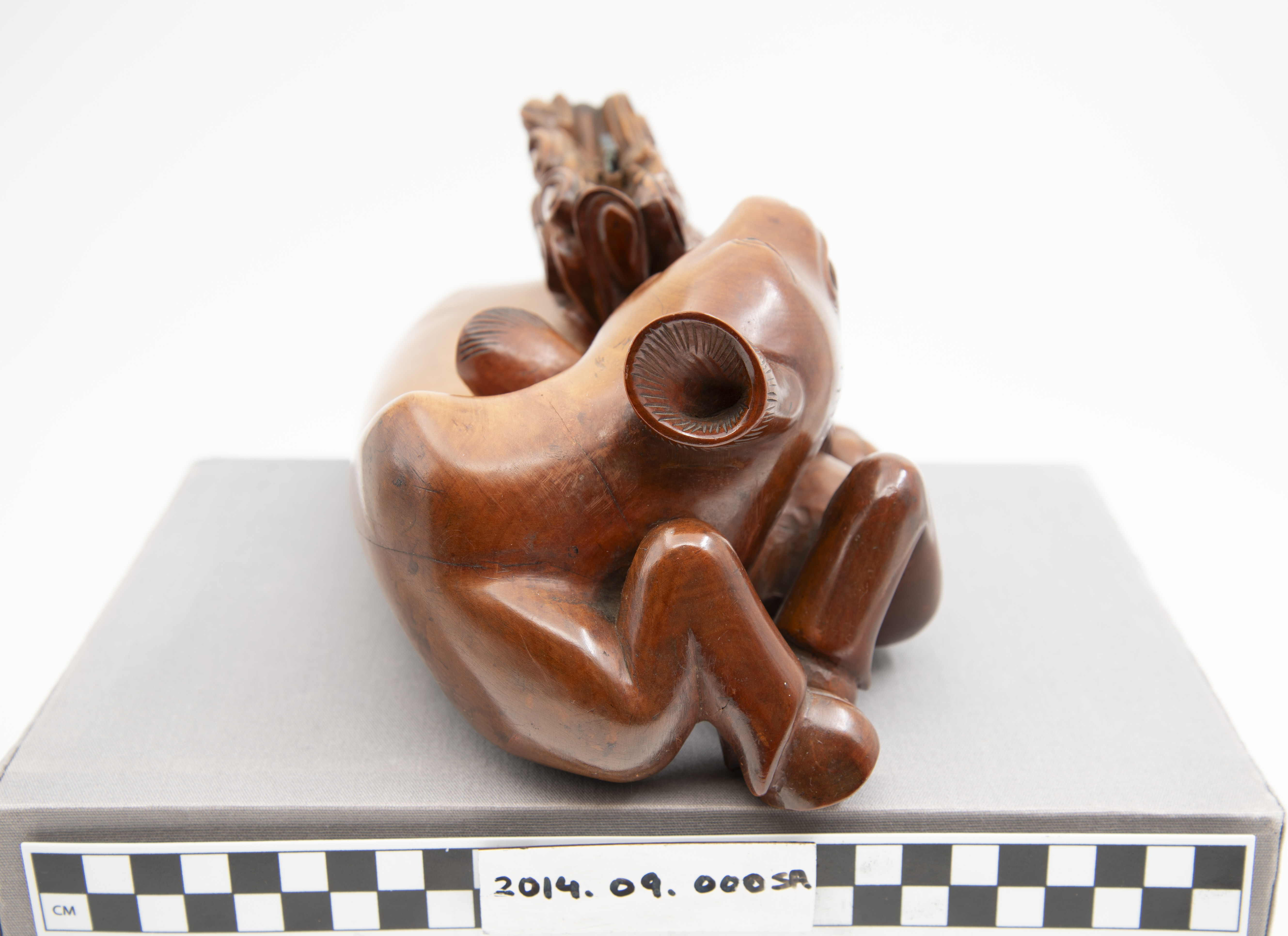
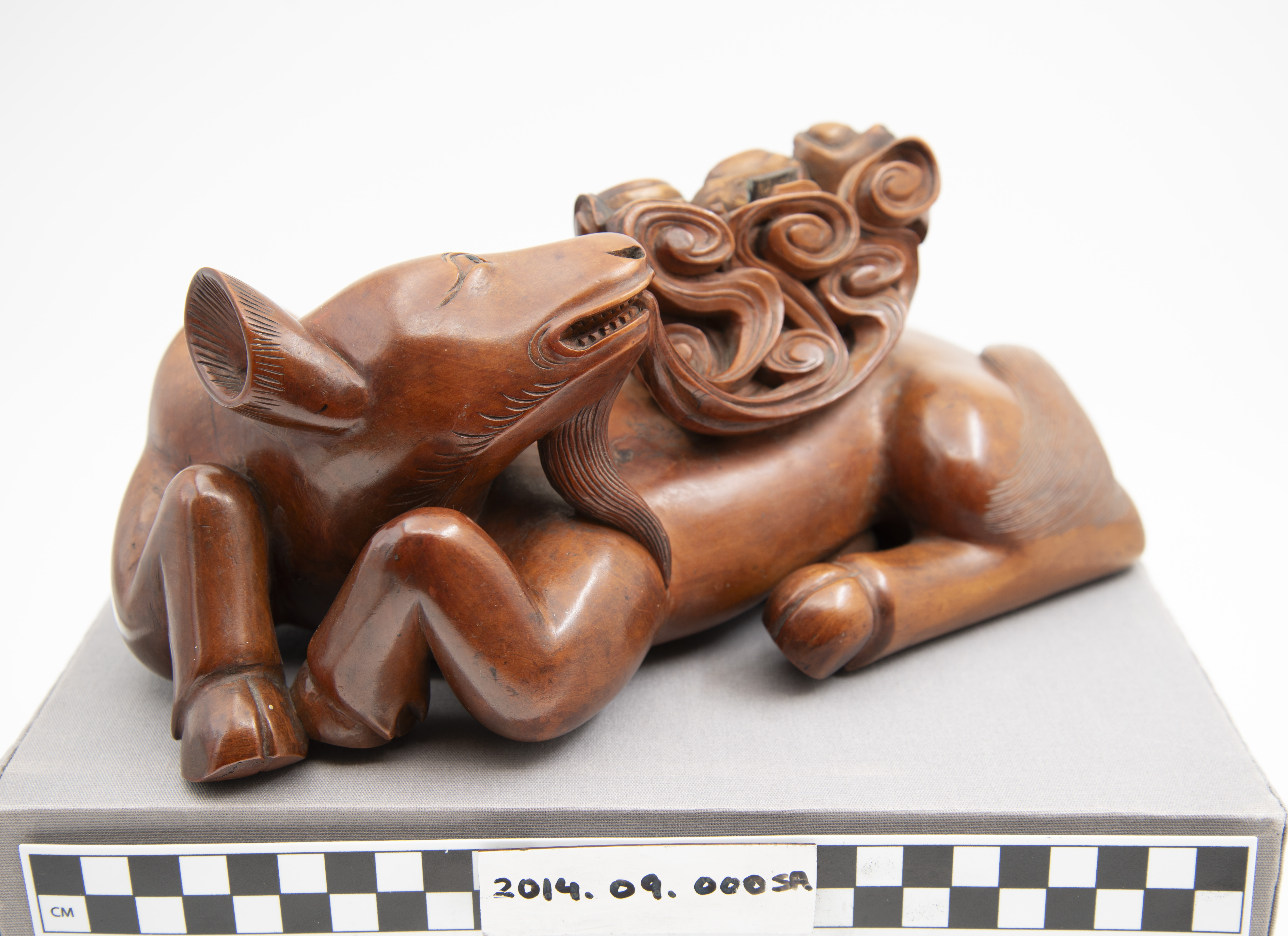
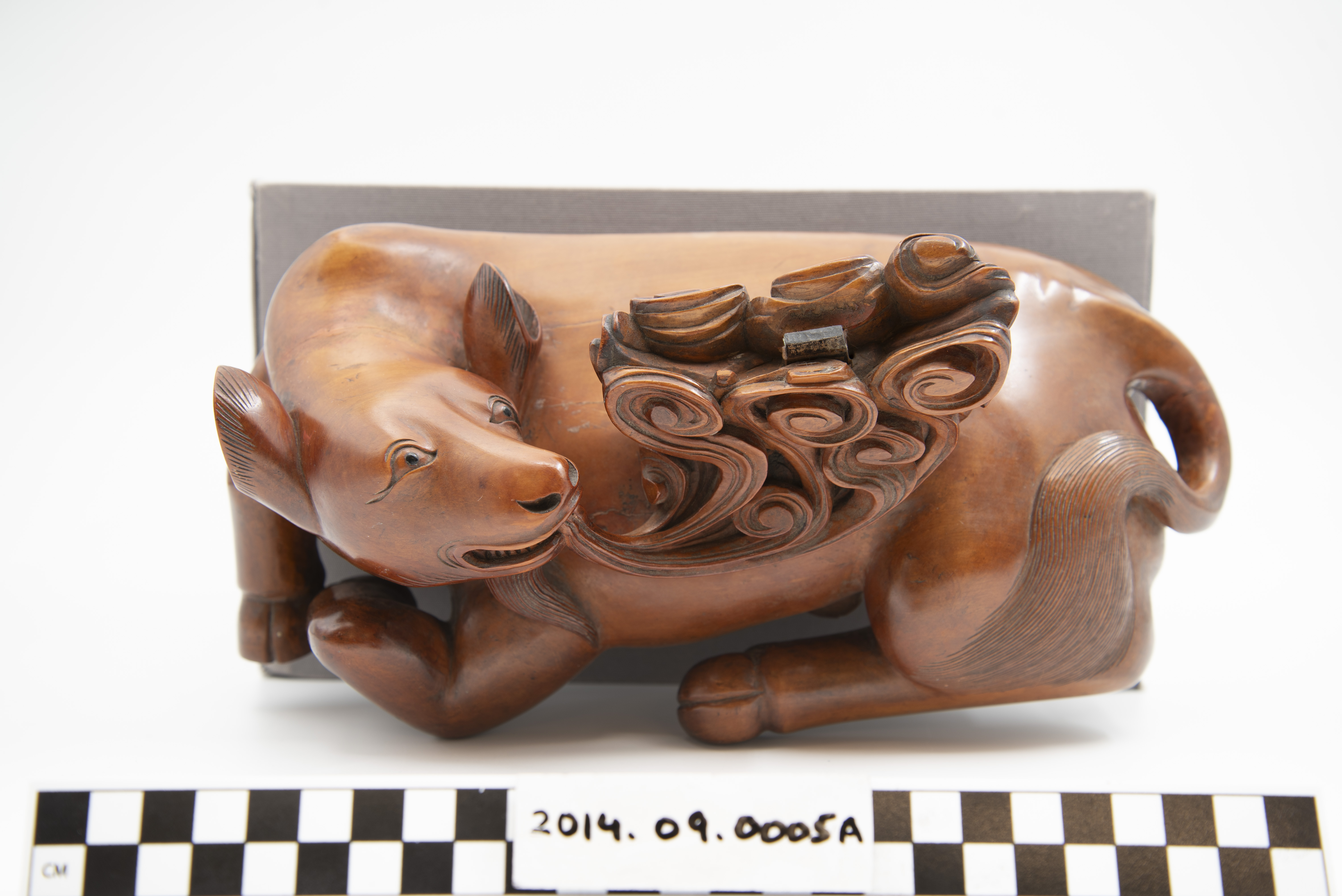
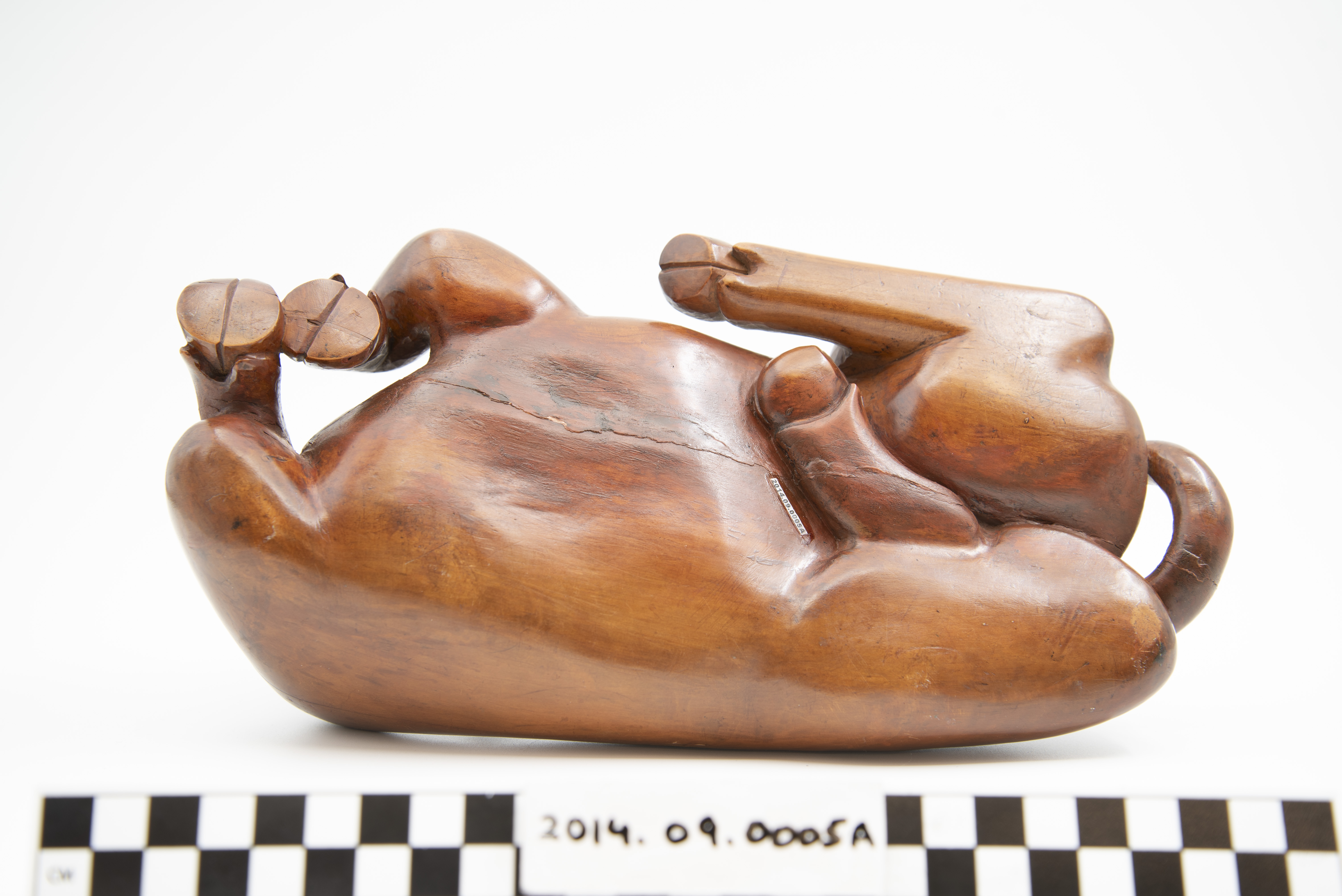
Basic Information
| Artifact Identification | Bi Stand: Deer (2014.09.0005A) |
|---|---|
| Classification/ Nomenclature |
|
| Artist/Maker | Unknown |
| Geographic Location | |
| Period | Ming Dynasty (1368-1644) |
| Date | 1368-1644 CE |
| Culture | Chinese |
| Location | Not on Exhibit |
Physical Analysis
| Dimension 1 (Length) | 29 cm |
|---|---|
| Dimension 2 (Depth) | 15 cm |
| Dimension 3 (Height) | 12.5 cm |
| Weight | 1632 g |
| Measuring Remarks | N/A |
| Materials | Plant--Wood |
| Manufacturing Processes | Carved |
Research Remarks
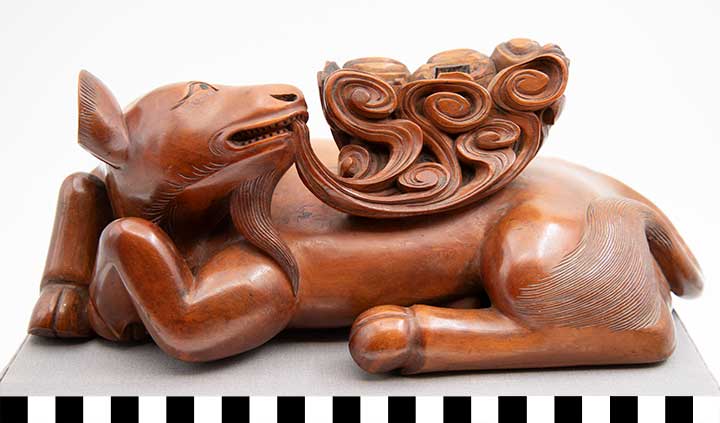
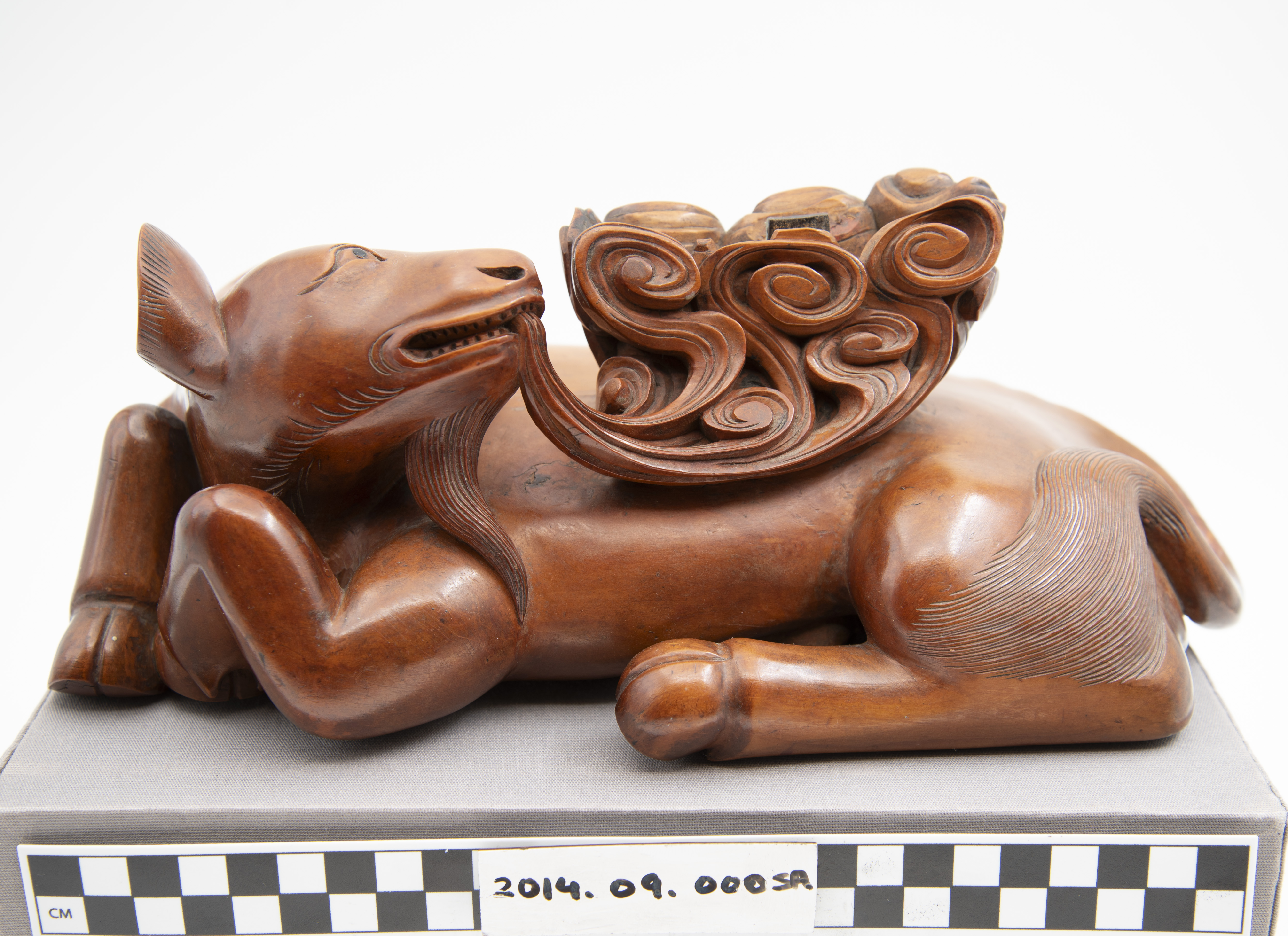
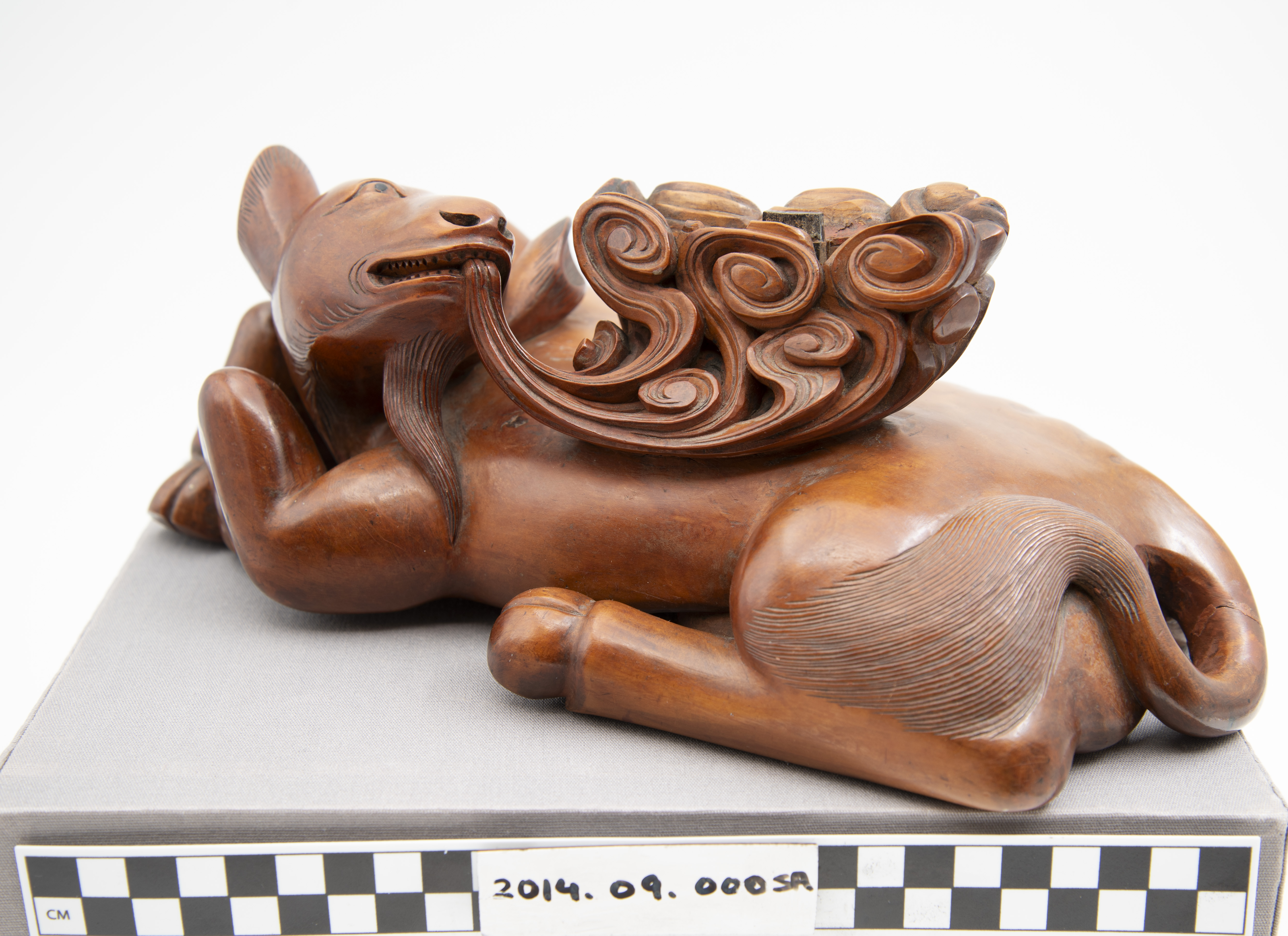
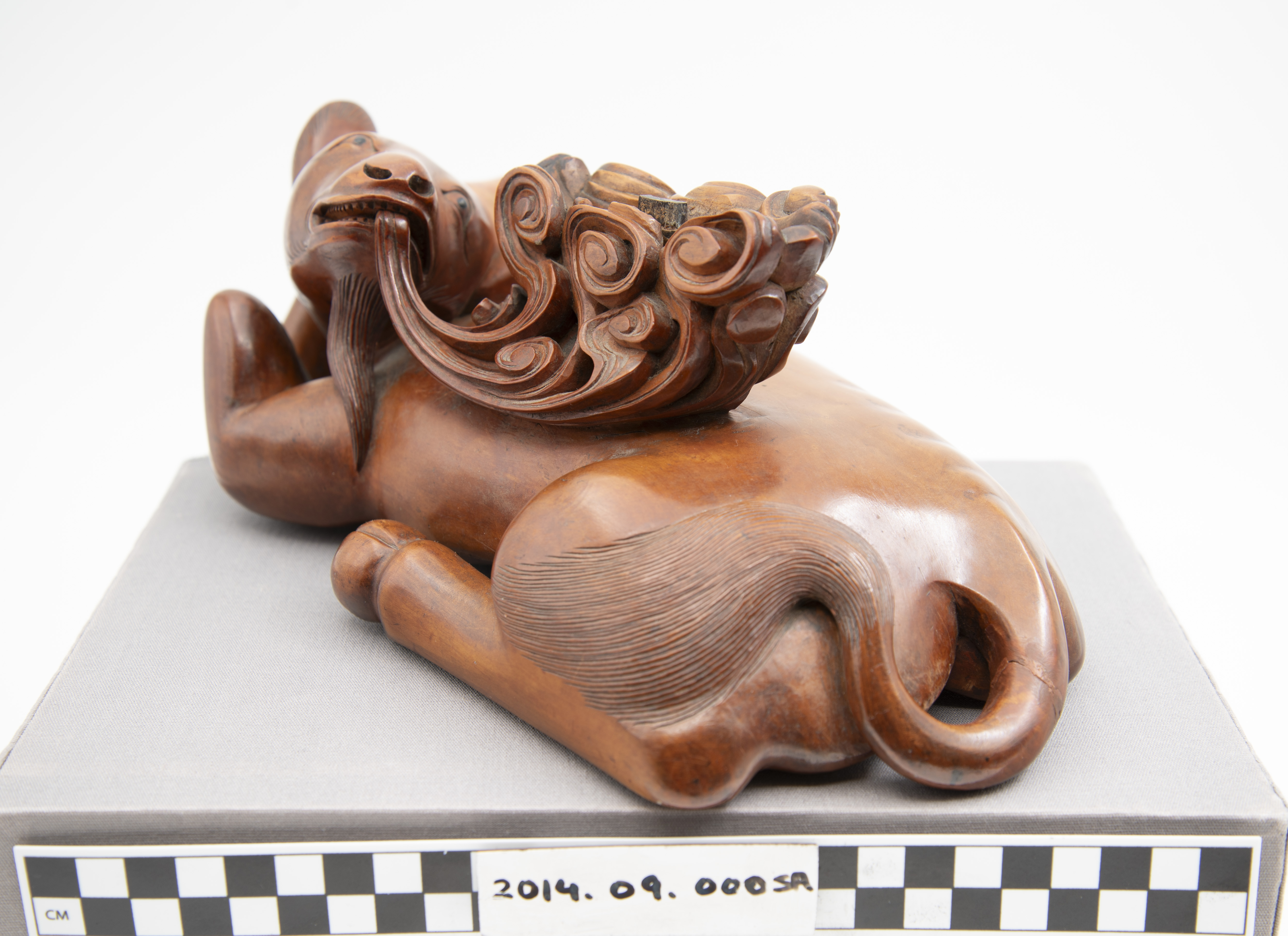
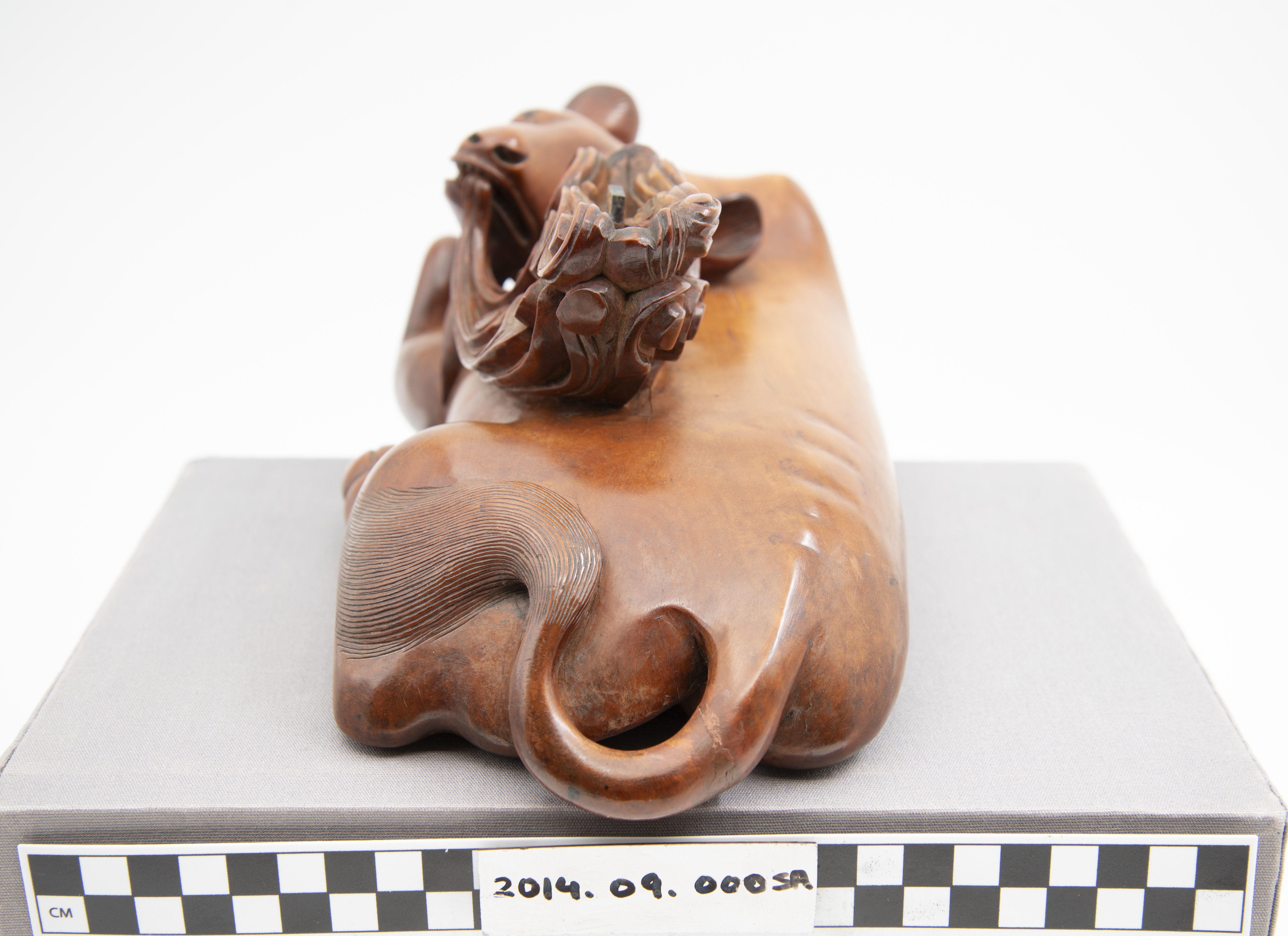
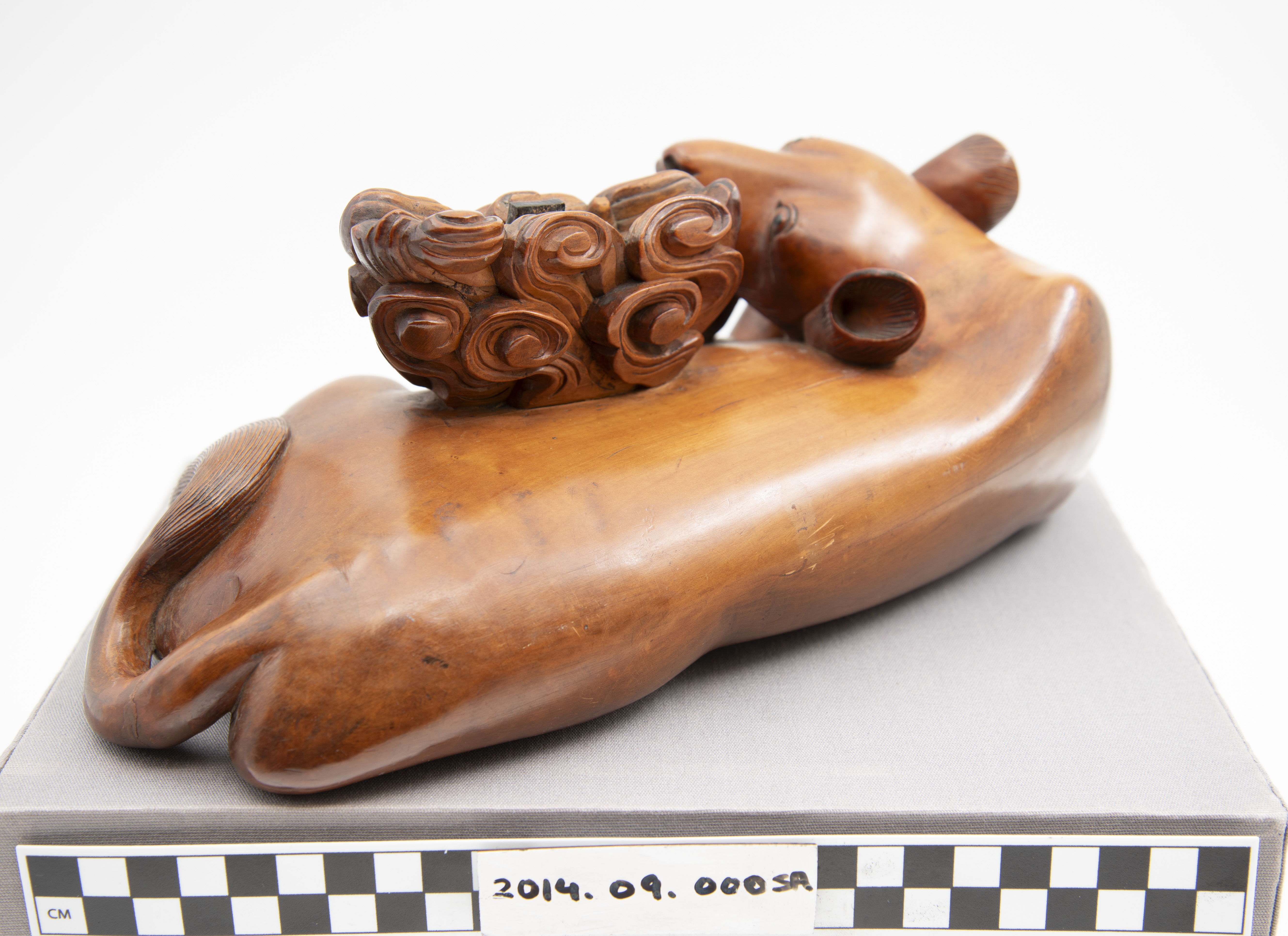
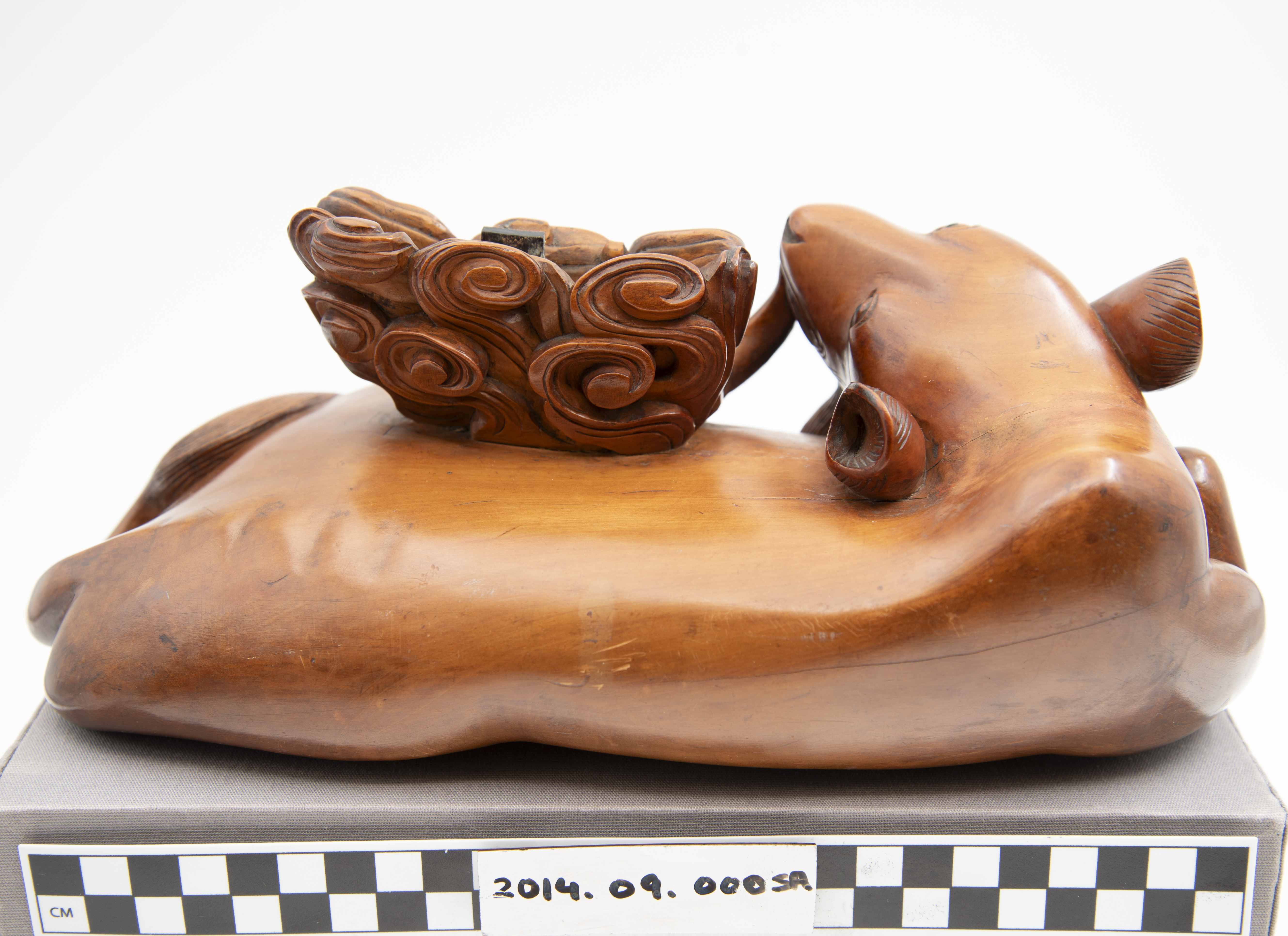
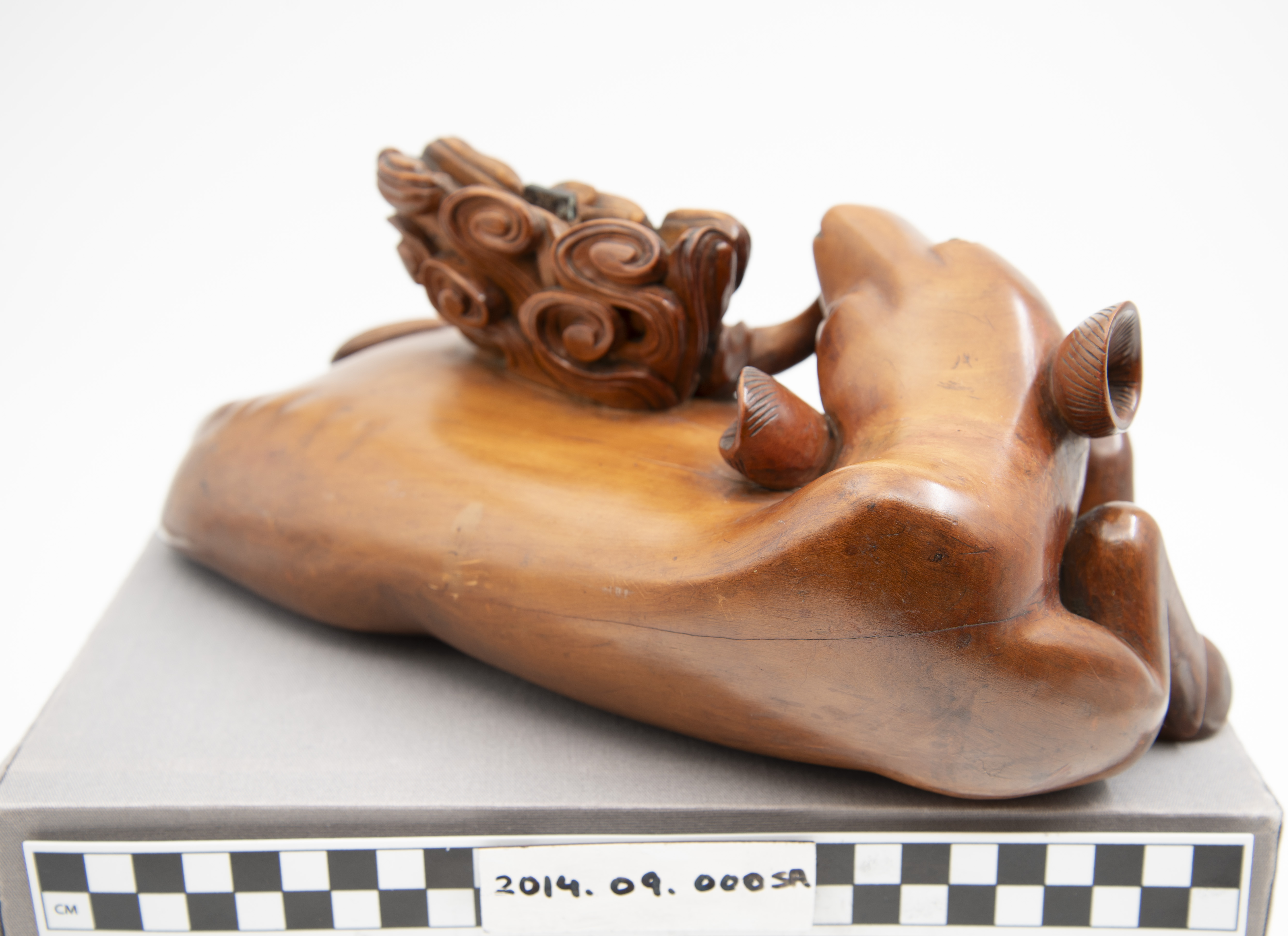
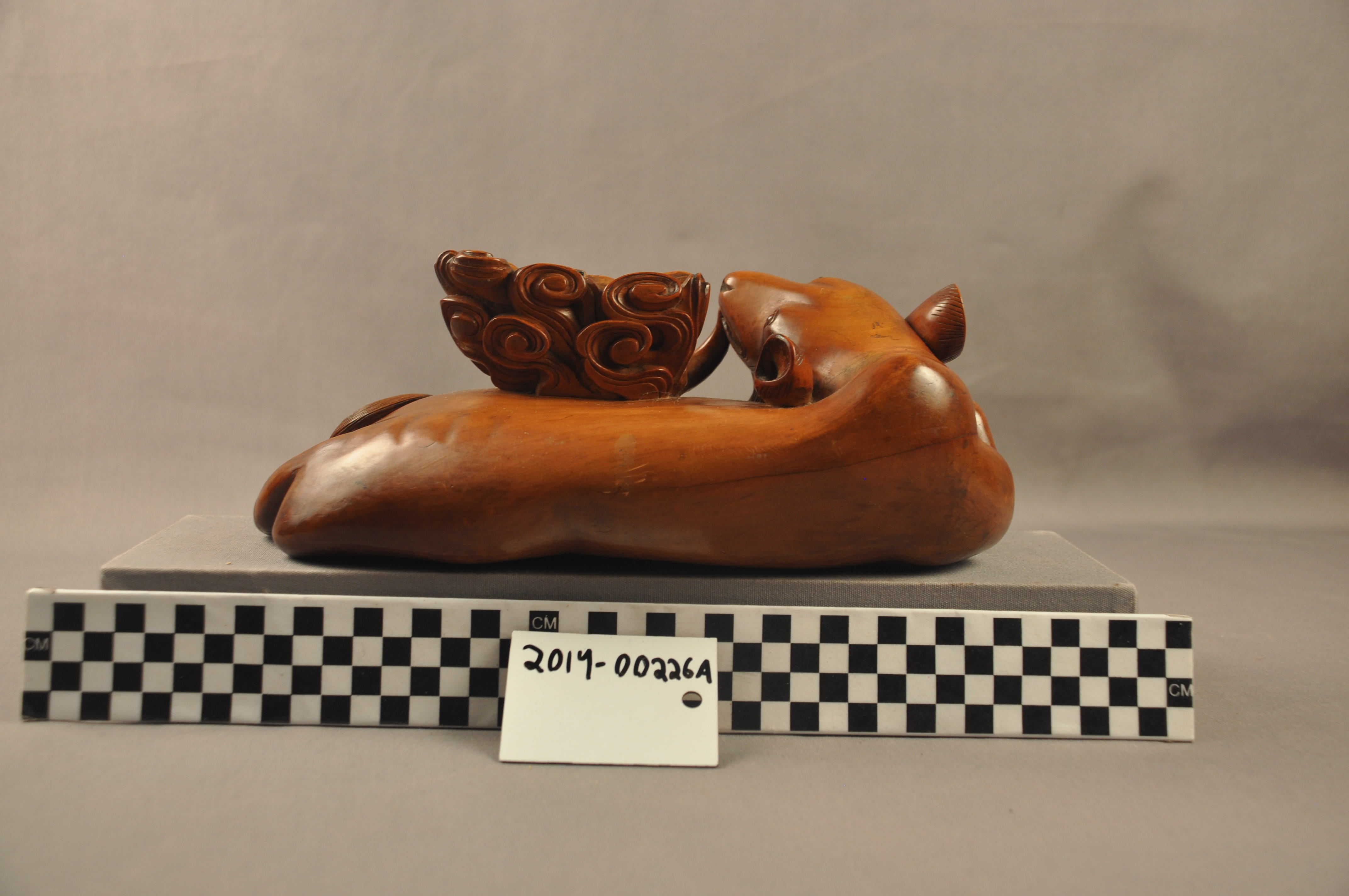
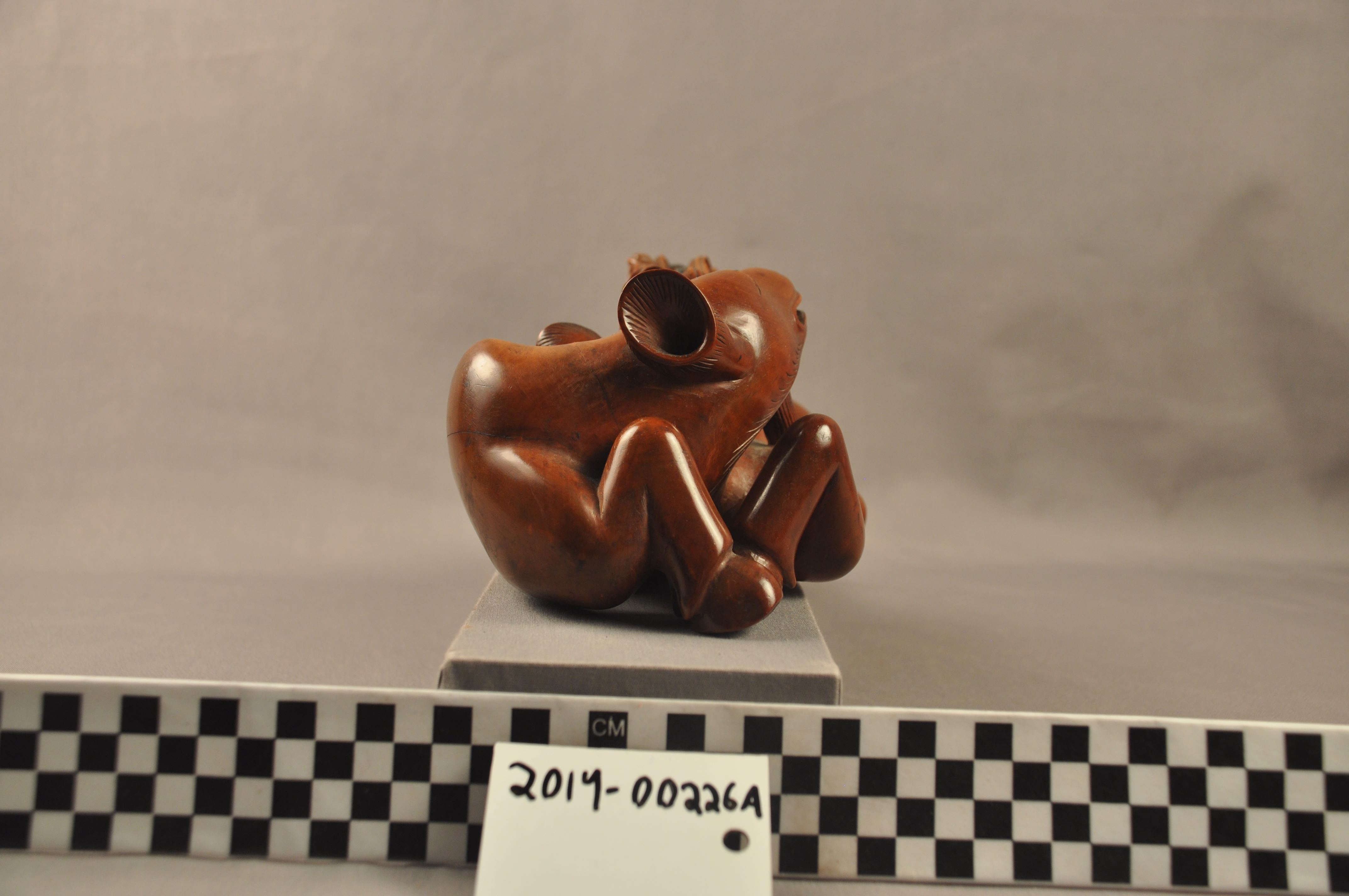
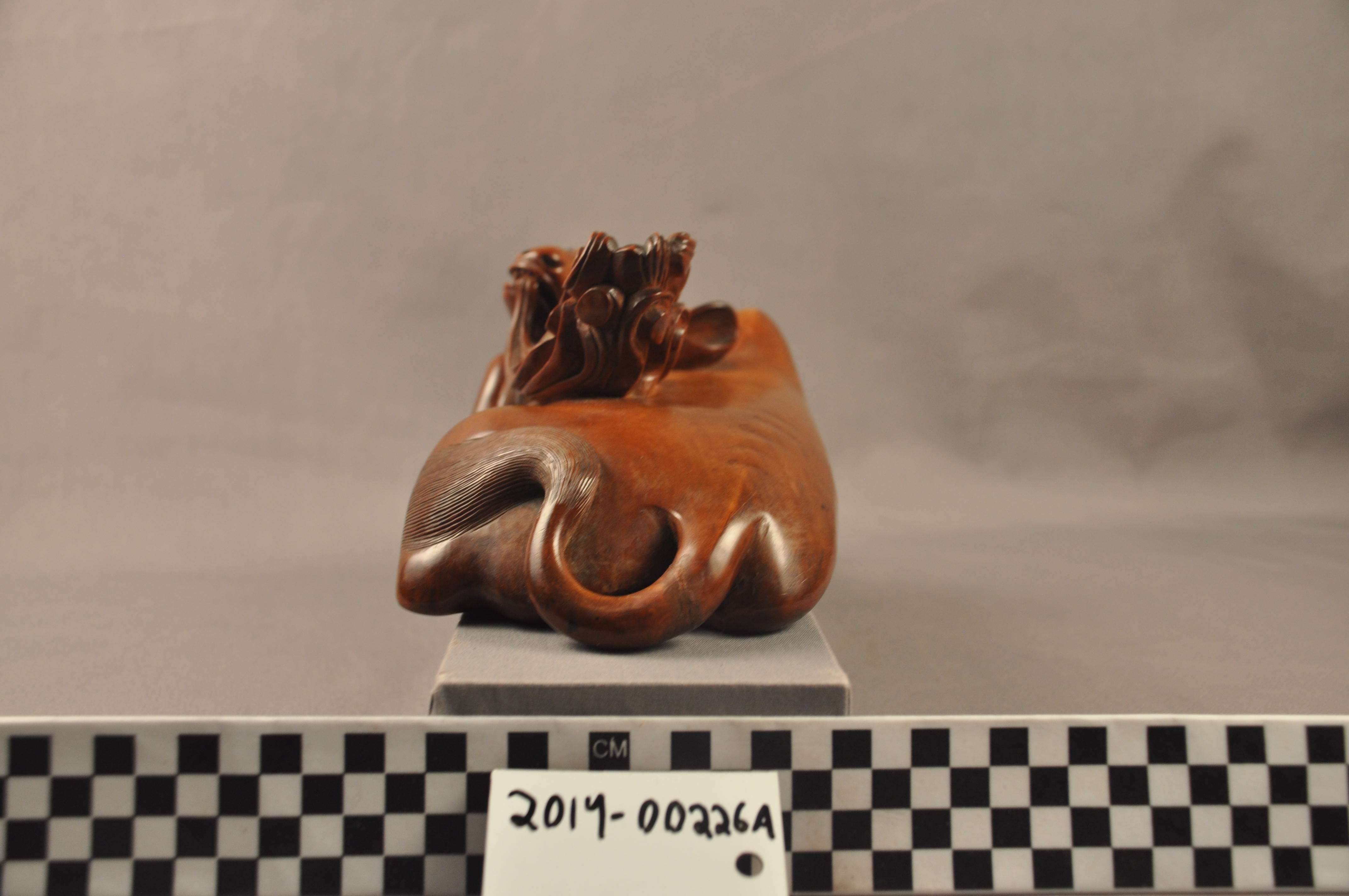
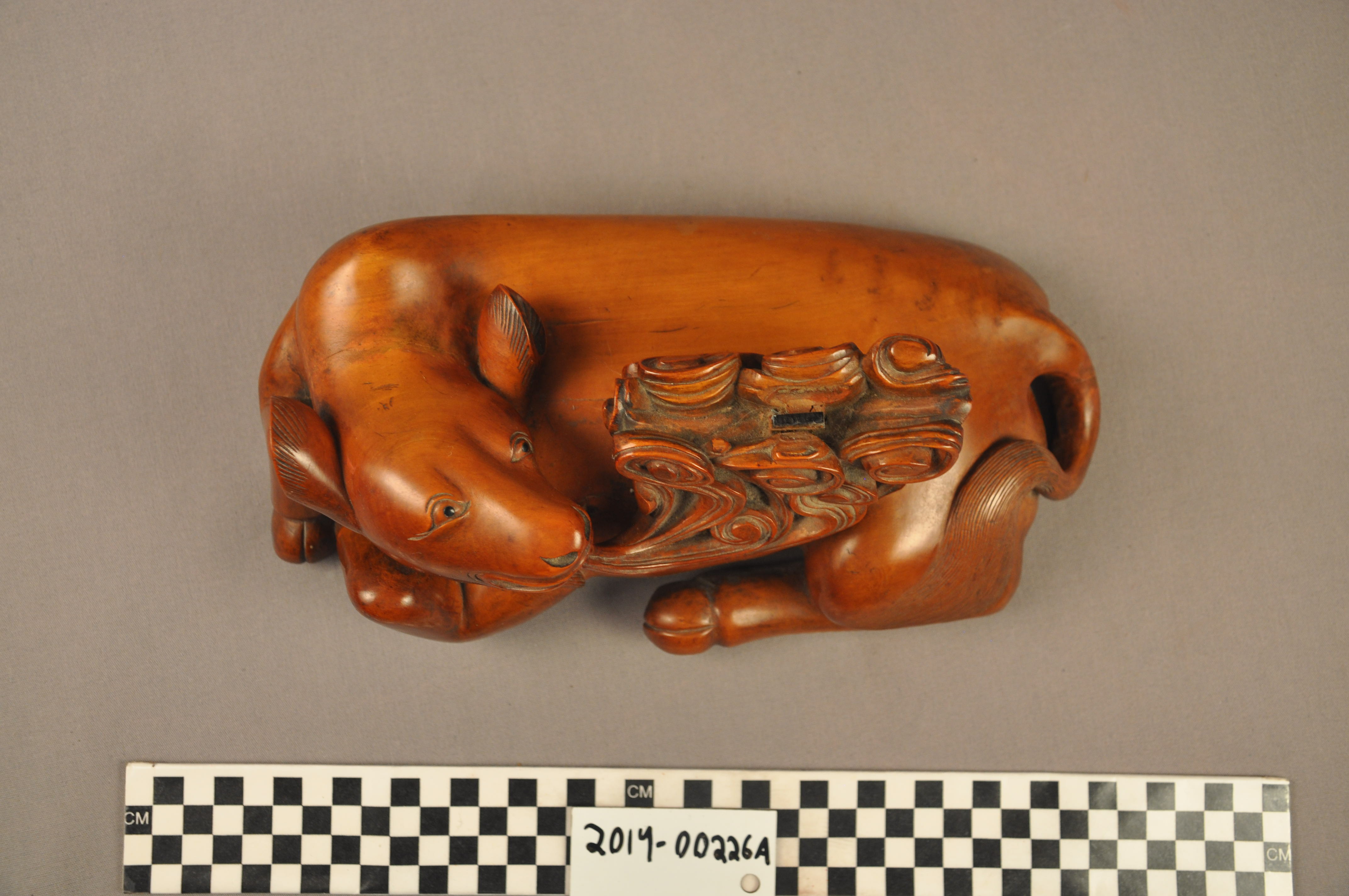
| Description | 7/9/2014: "A scarce Chinese Ming Dynasty (1368-1644) carved huangjumu (yellow Southern Elm) mirror stand (jingjia), in the form of a recumbent deer with its legs tucked under the body, the head turned toward the hind legs, and grasping a spray of lingzhi in its mouth, with crescent shaped mirror holder. The word for deer in Chinese is lu which translates to mean income. The deer is known for its endurance, grace, and long life, and is a Chinese symbol of longevity and prosperity. Consequently, the combined meanings represent a prosperous long life which is why, in Chinese art, the deer is depicted with court officials, signifying a long successful career, as well as fame and recognition. In Chinese mythology, it was believed that the deer was the only animal which was able to find the sacred fungus of longevity. Thus deer are often depicted, in Chinese decorative and fine arts holding the lingzhi in their mouth. |
|---|---|
| Published Description | N/A |
| Bibliography | Under Review |
Artifact History
| Credit Line/Dedication | Fred A. Freund Collection |
|---|---|
| Reproduction | No |
Contact
All information about our collection is constantly reviewed and updated. Please contact Dery Martínez-Bonilla, Registrar, if there is any information you are looking for that isn't currently online.