
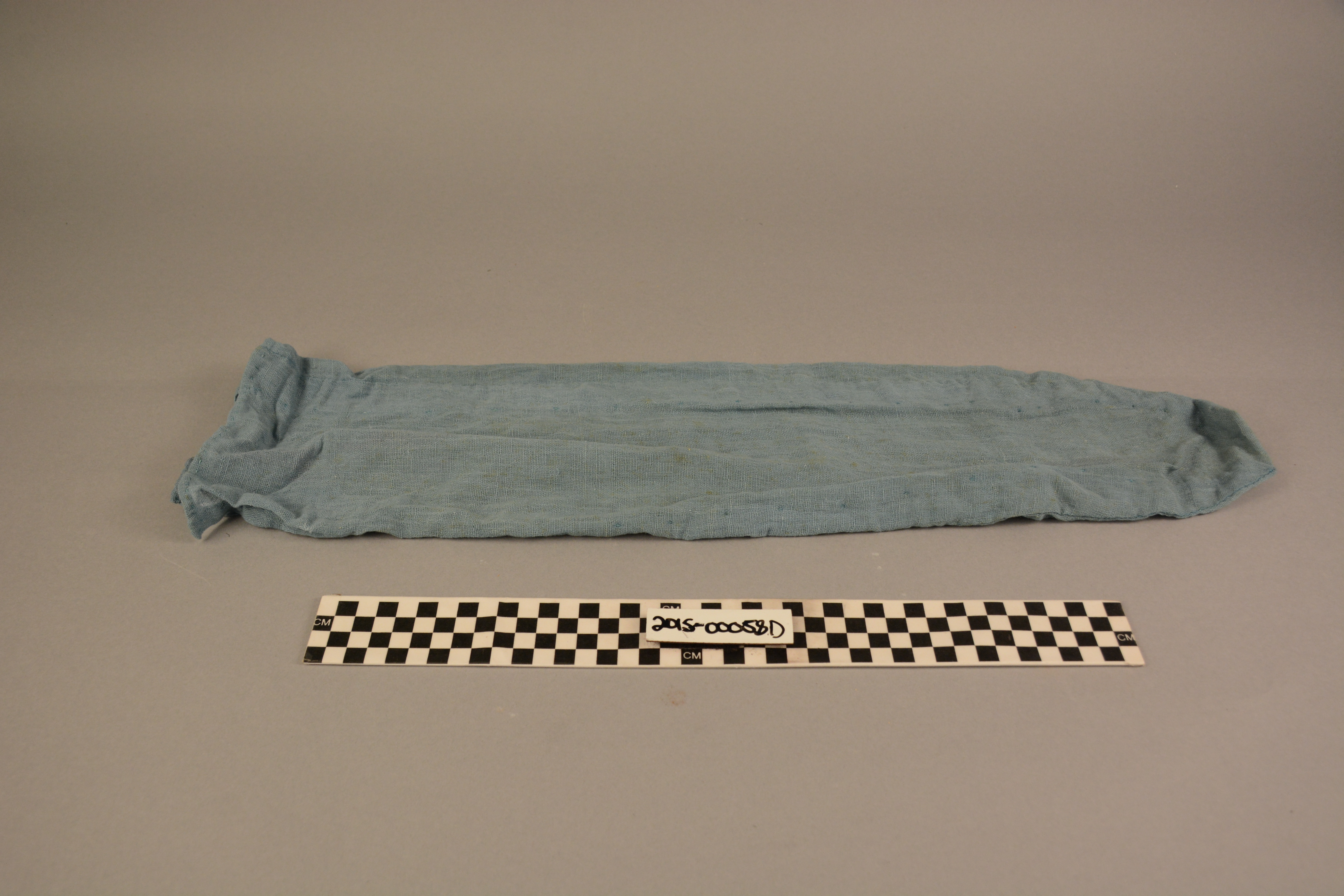
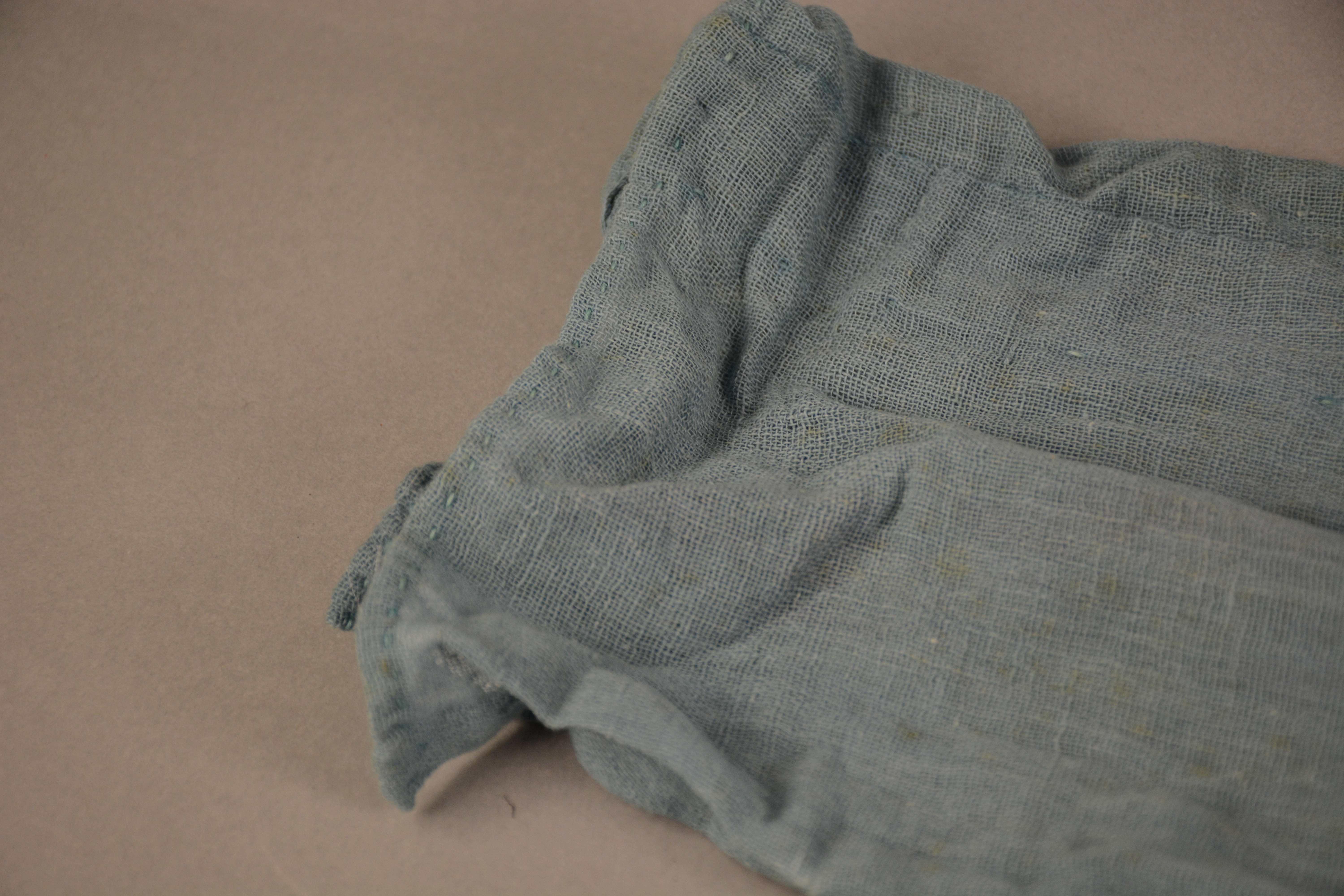
Tray Bag
2015.09.0002D
Detailed Images
Basic Information
| Artifact Identification | Tray Bag (2015.09.0002D) |
|---|---|
| Classification/ Nomenclature |
|
| Artist/Maker | Unknown |
| Geographic Location | |
| Period | Meiji Period (1868-1912) |
| Date | 1868 - 1899 CE |
| Culture | N/A |
| Location | Not on Exhibit |
Physical Analysis
| Dimension 1 (Length) | 61.5 cm |
|---|---|
| Dimension 2 (Width) | 15.5 cm |
| Dimension 3 (Depth) | .1 cm |
| Weight | 24 g |
| Measuring Remarks | N/A |
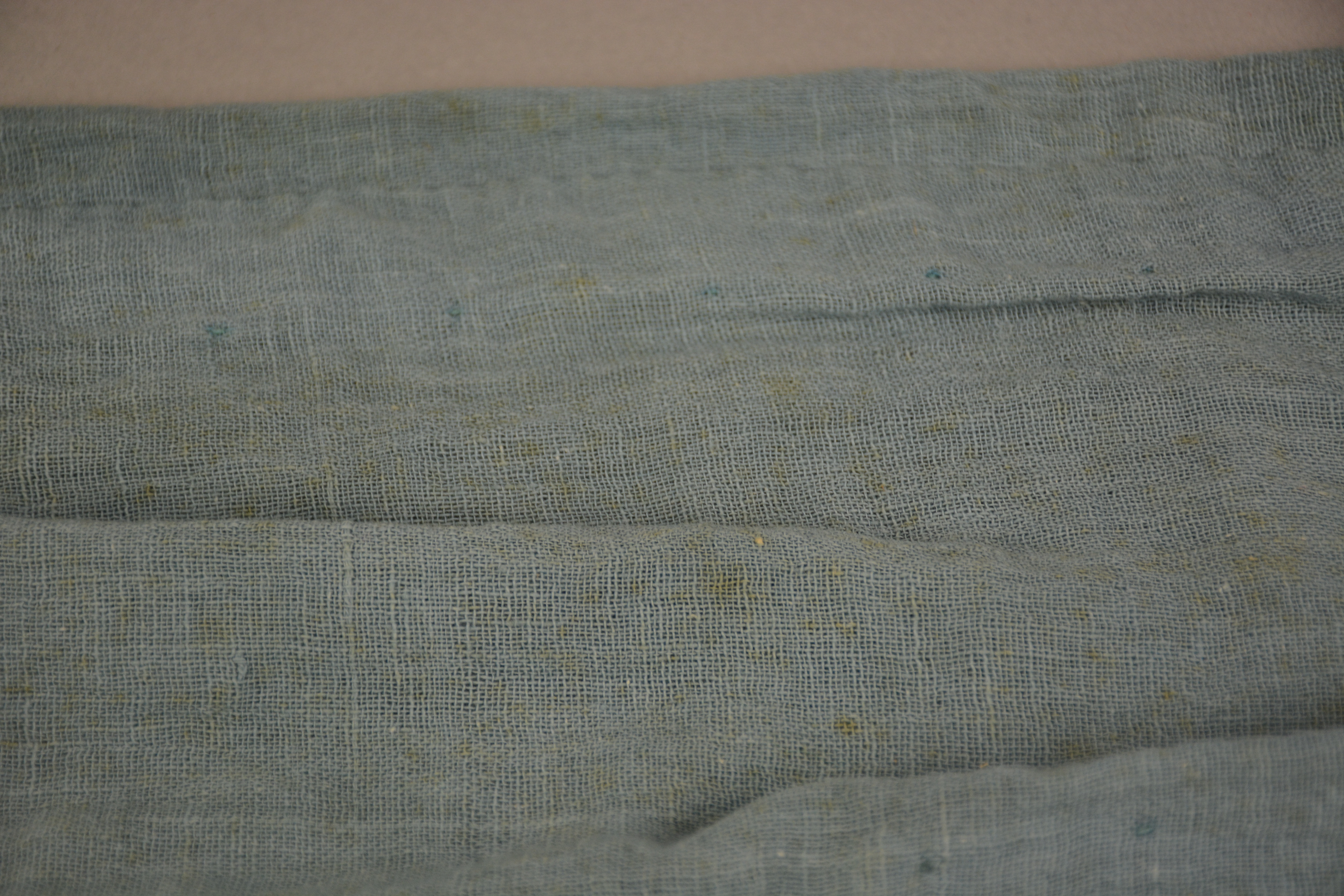
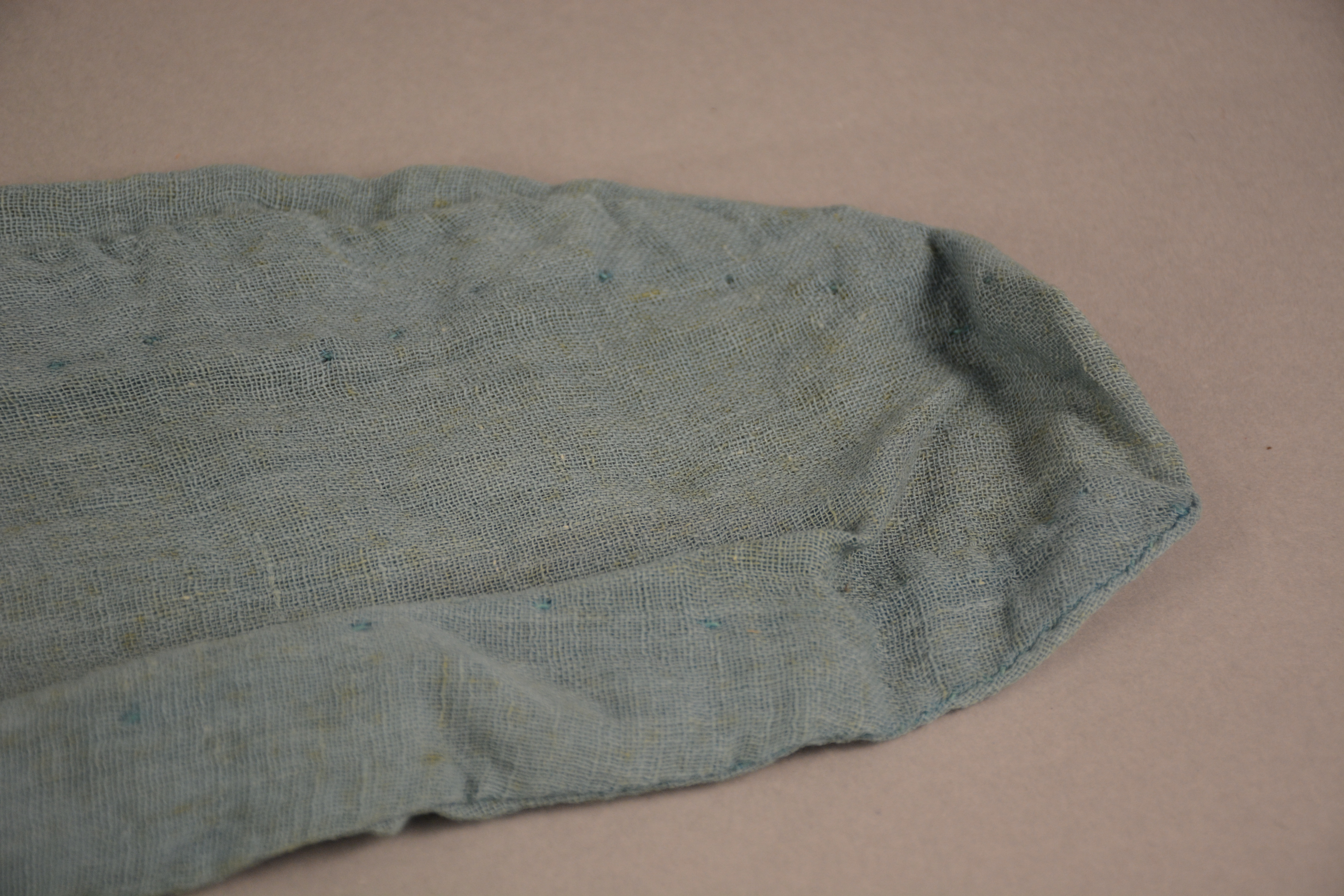
| Materials | Textile |
| Manufacturing Processes | Textile--Hand Spun Threads, Textile--Hand Sewn |
Research Remarks
| Description | "A Japanese boxwood fine, rare, naturalistically and intricately carved tray (kashiki), in the form of a banana leaf, carved from one section of wood, the edges and interior carved with openwork to show where the leaf was eaten by insects, with original wood tomobako (wood storage box). This tray was used in the sencha tea ceremony for seasonal display, as well as being used for the placement and serving of sweets (kashiki means sweet vessel, either ceramic, lacquer or wood, all of which are scarce), 21.5” long by 5.25” wide, 19th century Meiji period. |
|---|---|
| Published Description | N/A |
| Bibliography | Under Review |
Artifact History
| Credit Line/Dedication | Fred A. Freund Collection |
|---|---|
| Reproduction | N/A |
Contact
All information about our collection is constantly reviewed and updated. Please contact Dery Martínez-Bonilla, Registrar, if there is any information you are looking for that isn't currently online.