
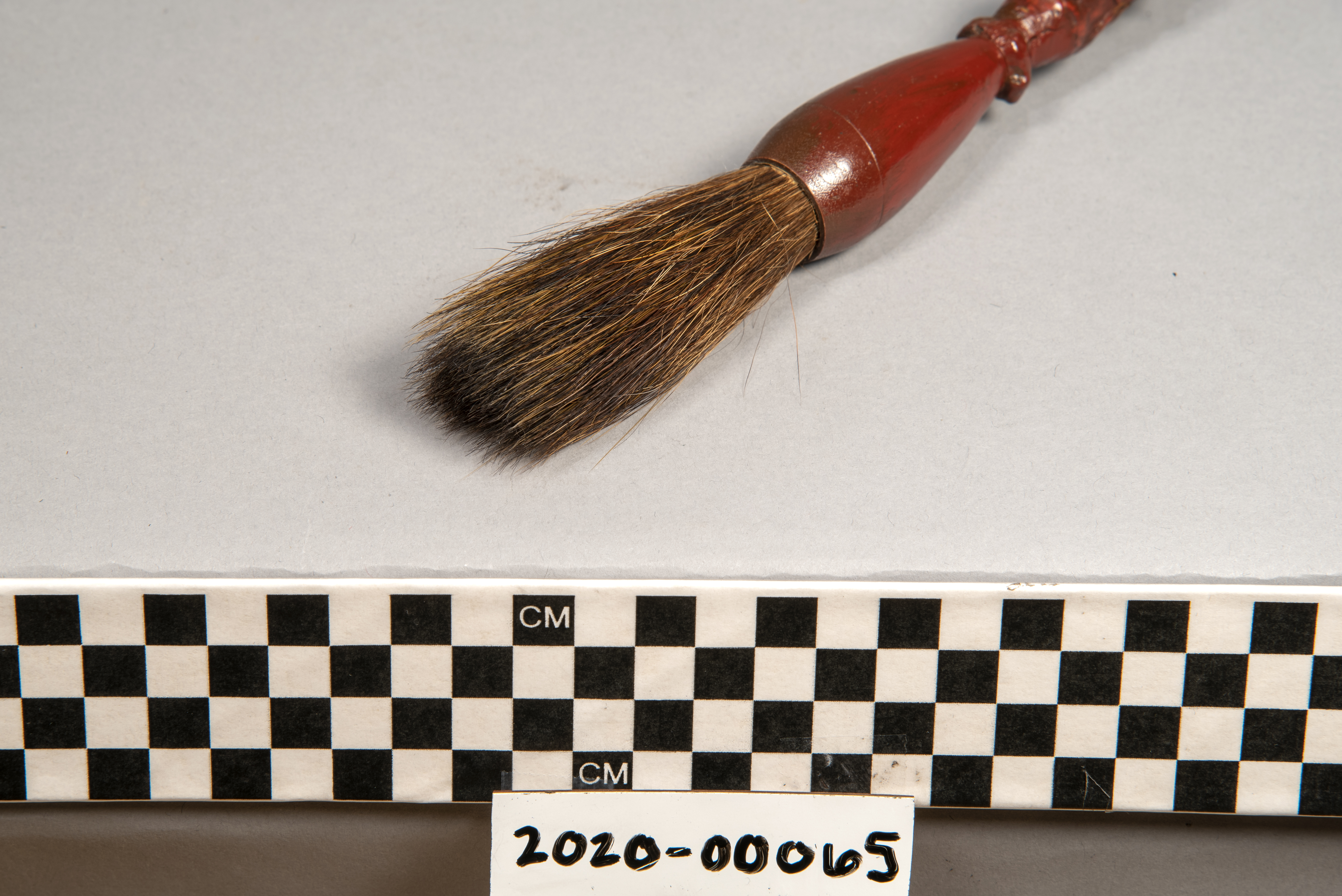
Calligraphy Brush
2020.06.0026

Detailed Images
Basic Information
| Artifact Identification | Calligraphy Brush (2020.06.0026) |
|---|---|
| Classification/ Nomenclature |
|
| Artist/Maker | Unknown |
| Geographic Location | |
| Period | Qing Dynasty |
| Date | 18th Century |
| Culture | Chinese |
| Location | Not on Exhibit |
Physical Analysis
| Dimension 1 (Length) | 39 cm |
|---|---|
| Dimension 2 (Width) | 3 cm |
| Dimension 3 (Height) | 2.5 cm |
| Weight | 66 g |
| Measuring Remarks | Under Review |
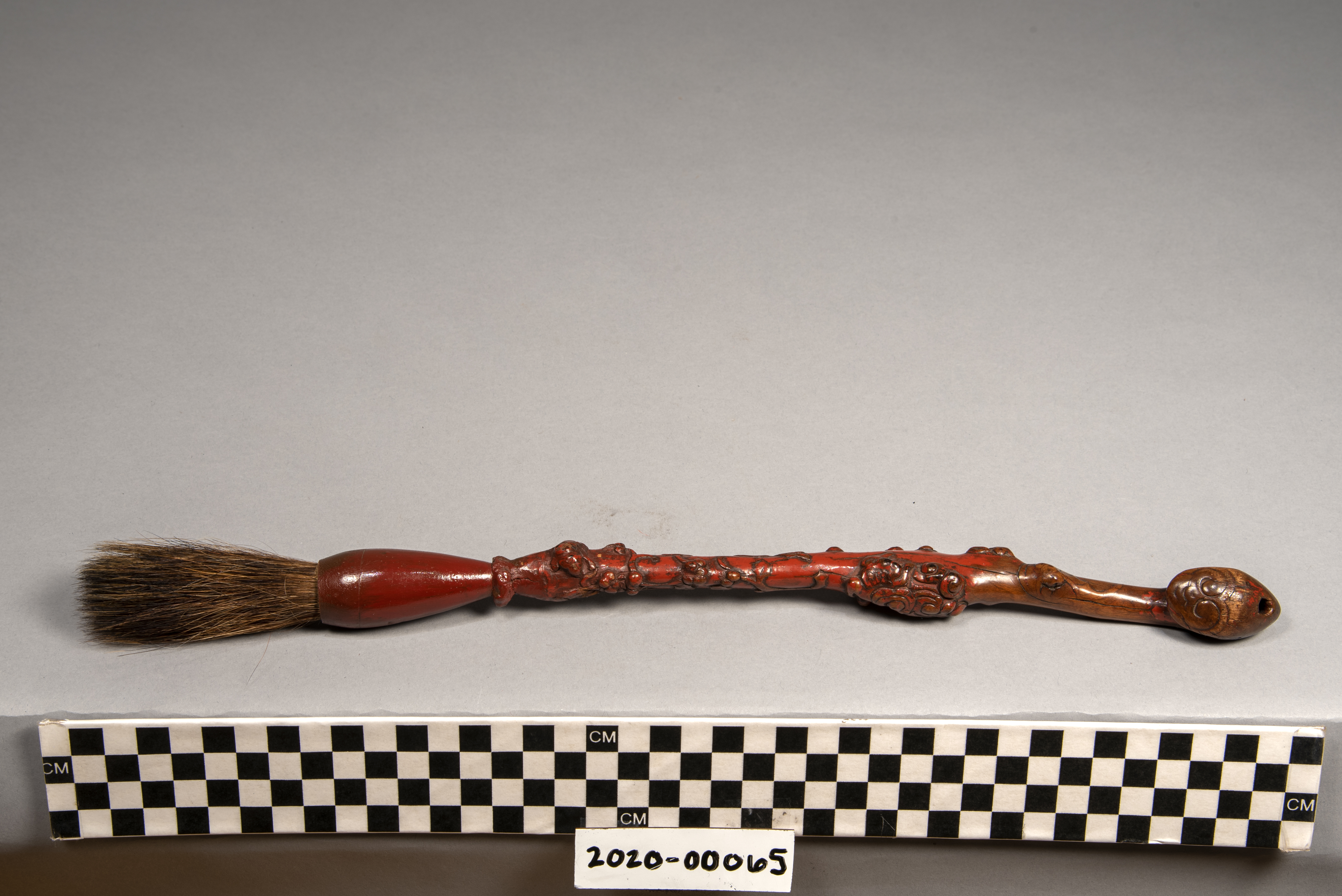
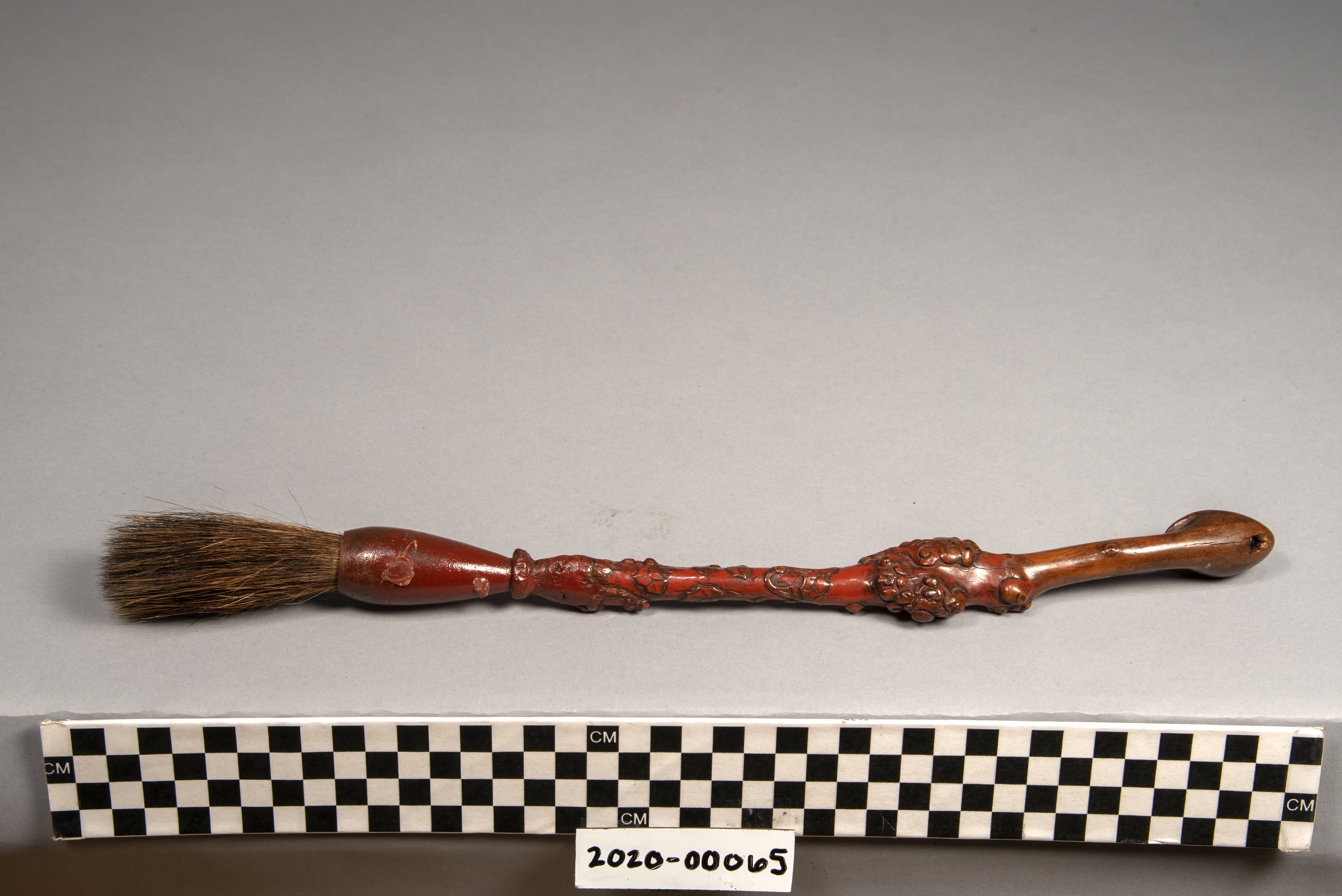
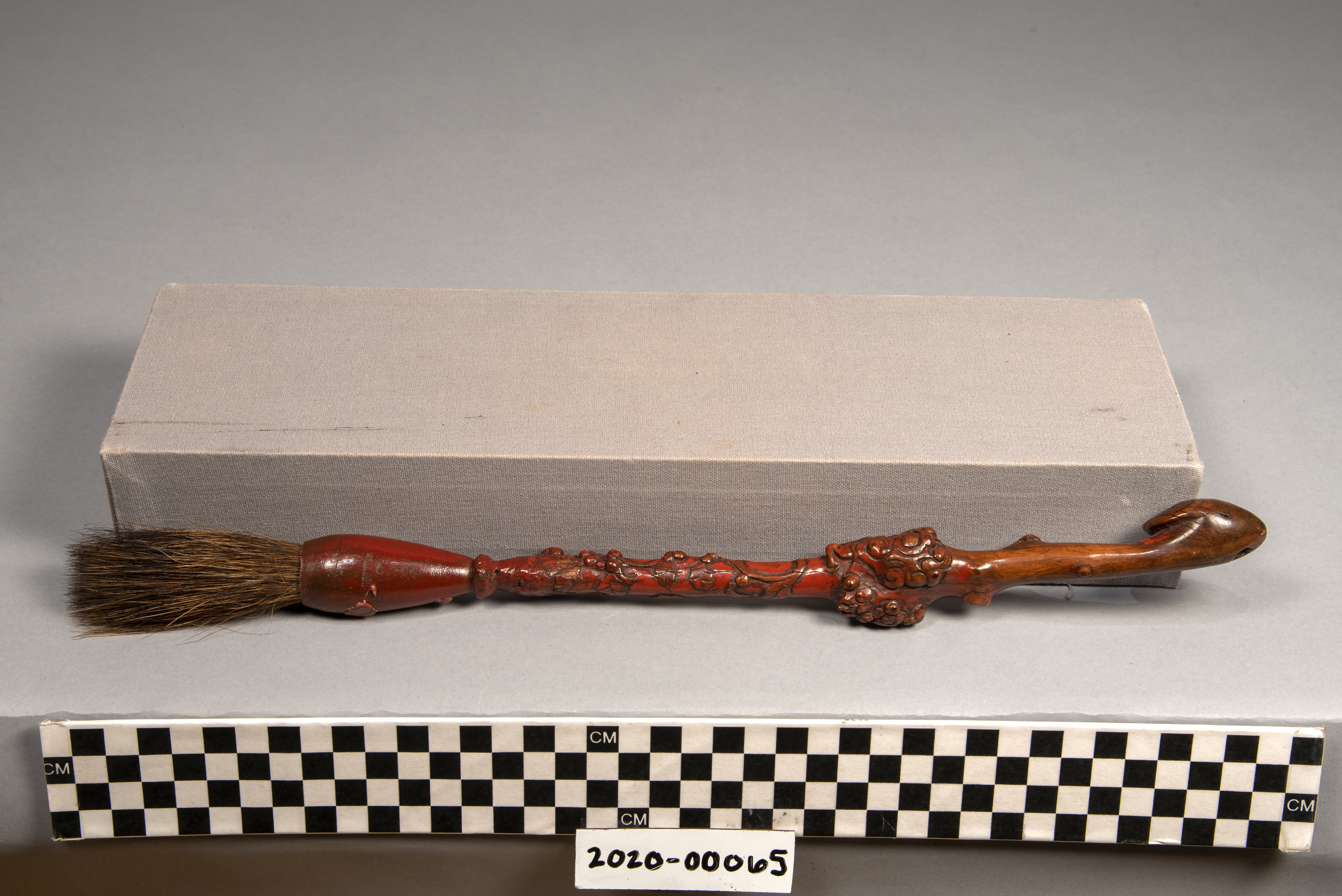
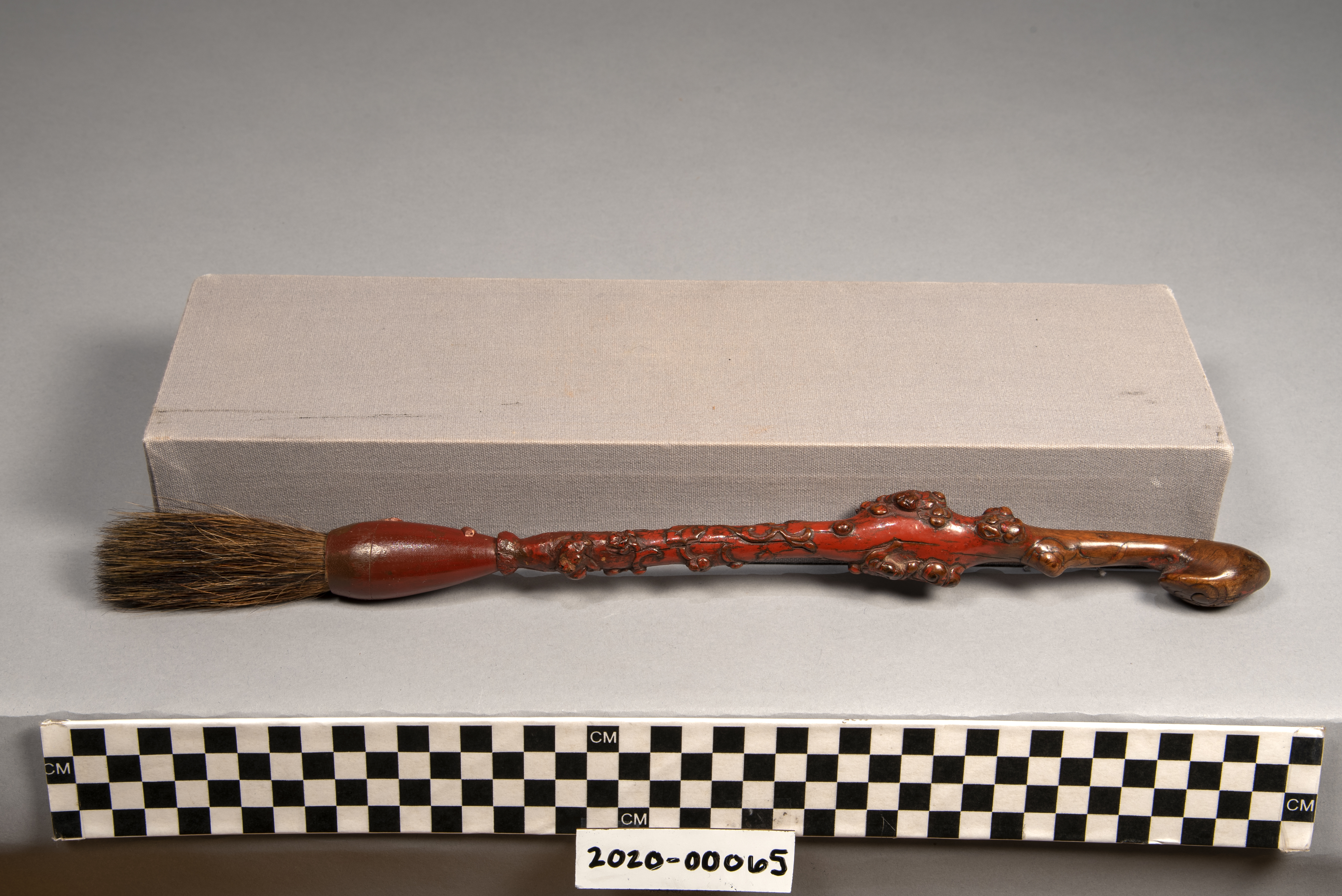
| Materials | Plant--Wood, Plant--Fiber |
| Manufacturing Processes | Carved |
Research Remarks
| Description | Brushes of the Qing Dynasty (1644-1911) were treasured items for interior design, particularly the scholar's desk layout. During the Song Dynasty (960-1279), the concept of the "four treasures" (inkstone, ink, brush, and paper) of a scholar's study became an appreciated facet of desk decoration, fomenting an appreciation of the desk's additional items for interested consumers. The brush is among the rarer items for the scholar's desk and is an essential tool for calligraphers and painters. The bristles can be made with a variety of animal hair including goat, fox, wolf, badger, and deer. This artifact also has a Ruyi (Jui), a curved and scepter-like emblem of rank which was used in court ceremonies and appears in Buddhist iconography as a symbol of religious dialogue. |
|---|---|
| Published Description | N/A |
| Bibliography | Hutt, Julia. Understanding Far Eastern Art: A Complete Guide to the Arts of China, Japan and Korea - Ceramics, Sculpture, Painting, Prints, Lacquer, Textiles and Metalwork. New York: E.P. Dutton, 1987. |
Artifact History
| Credit Line/Dedication | Fred A. Freund Collection |
|---|---|
| Reproduction | No |
Contact
All information about our collection is constantly reviewed and updated. Please contact Dery Martínez-Bonilla, Registrar, if there is any information you are looking for that isn't currently online.