
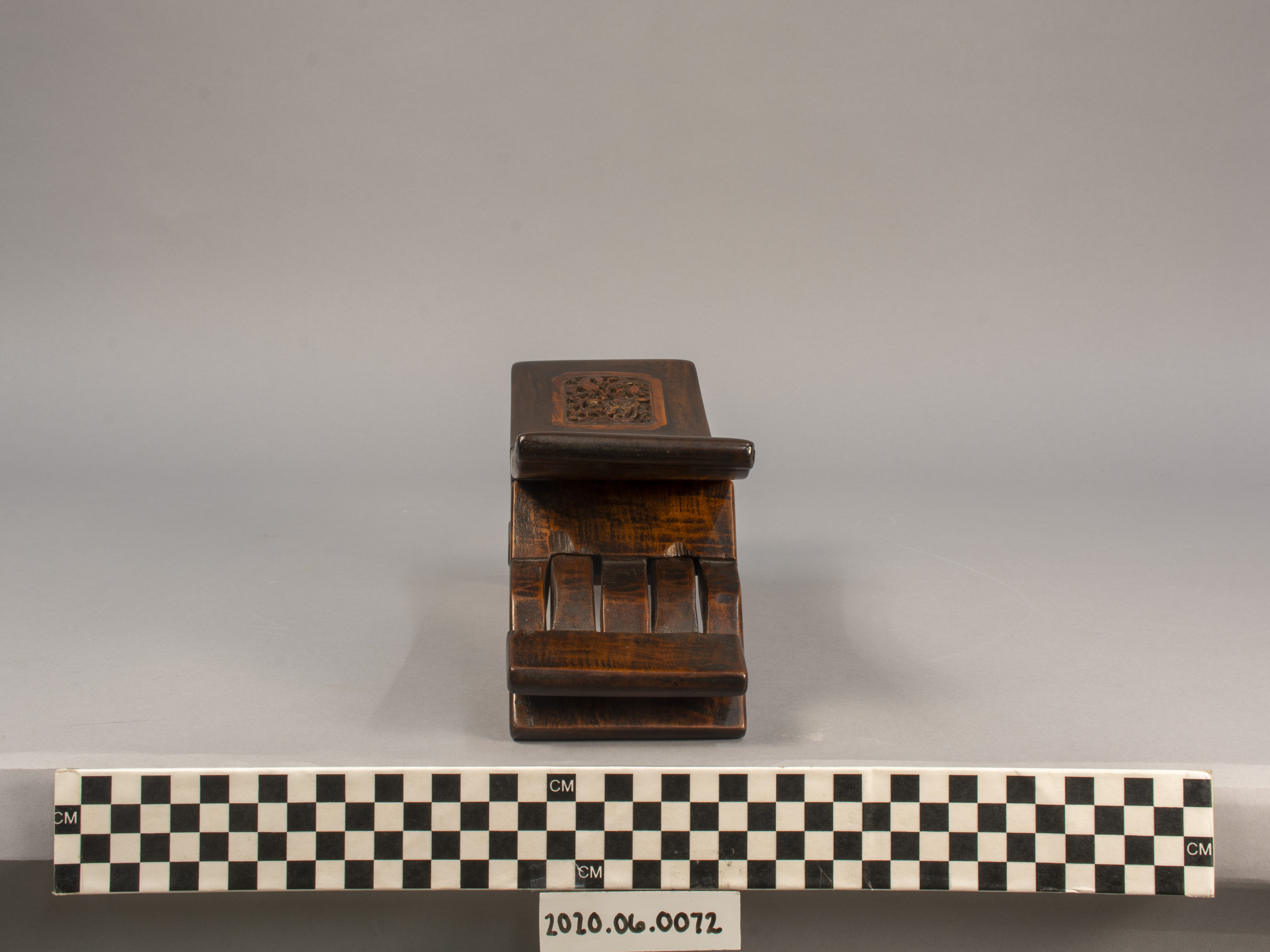
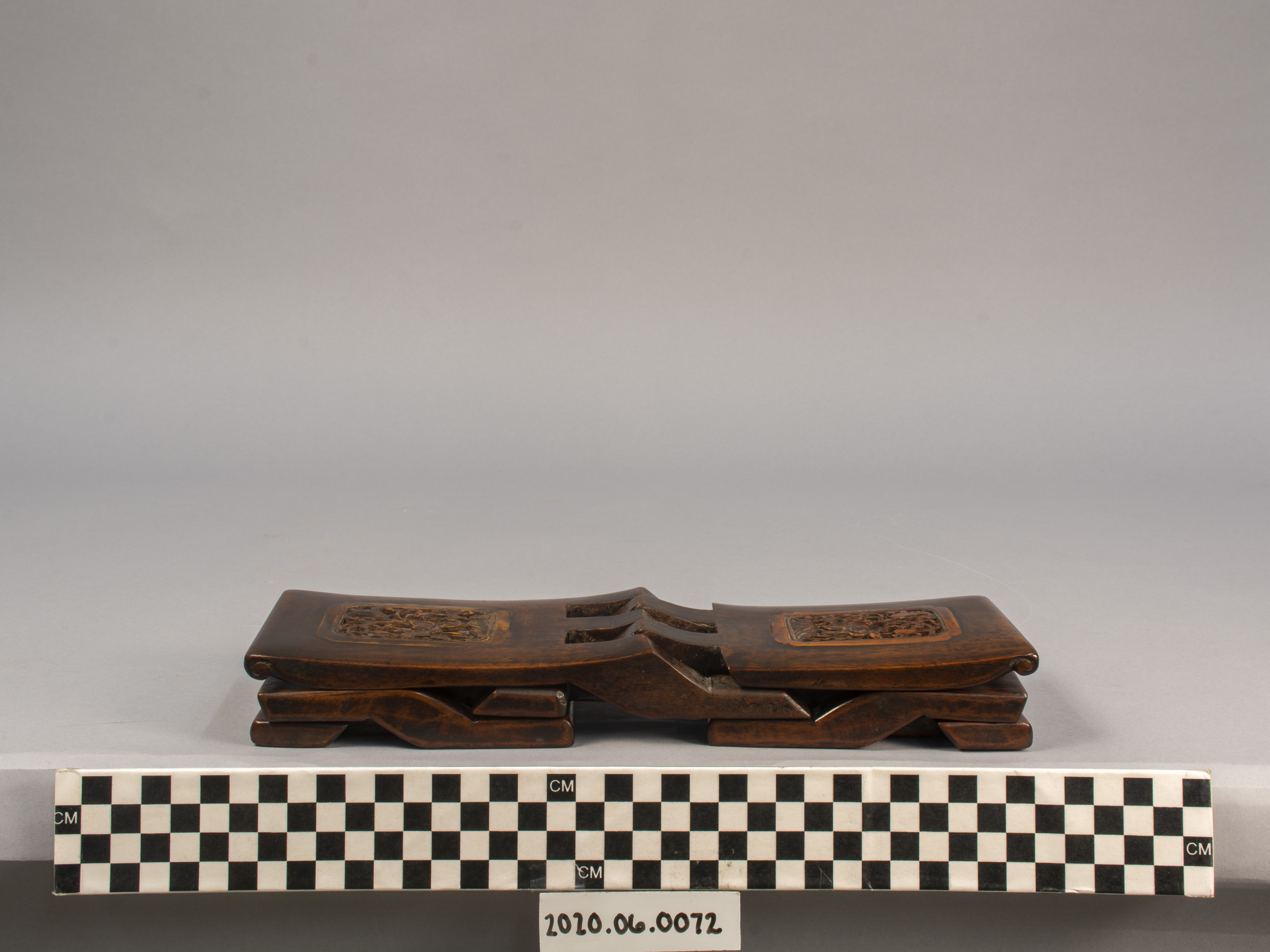
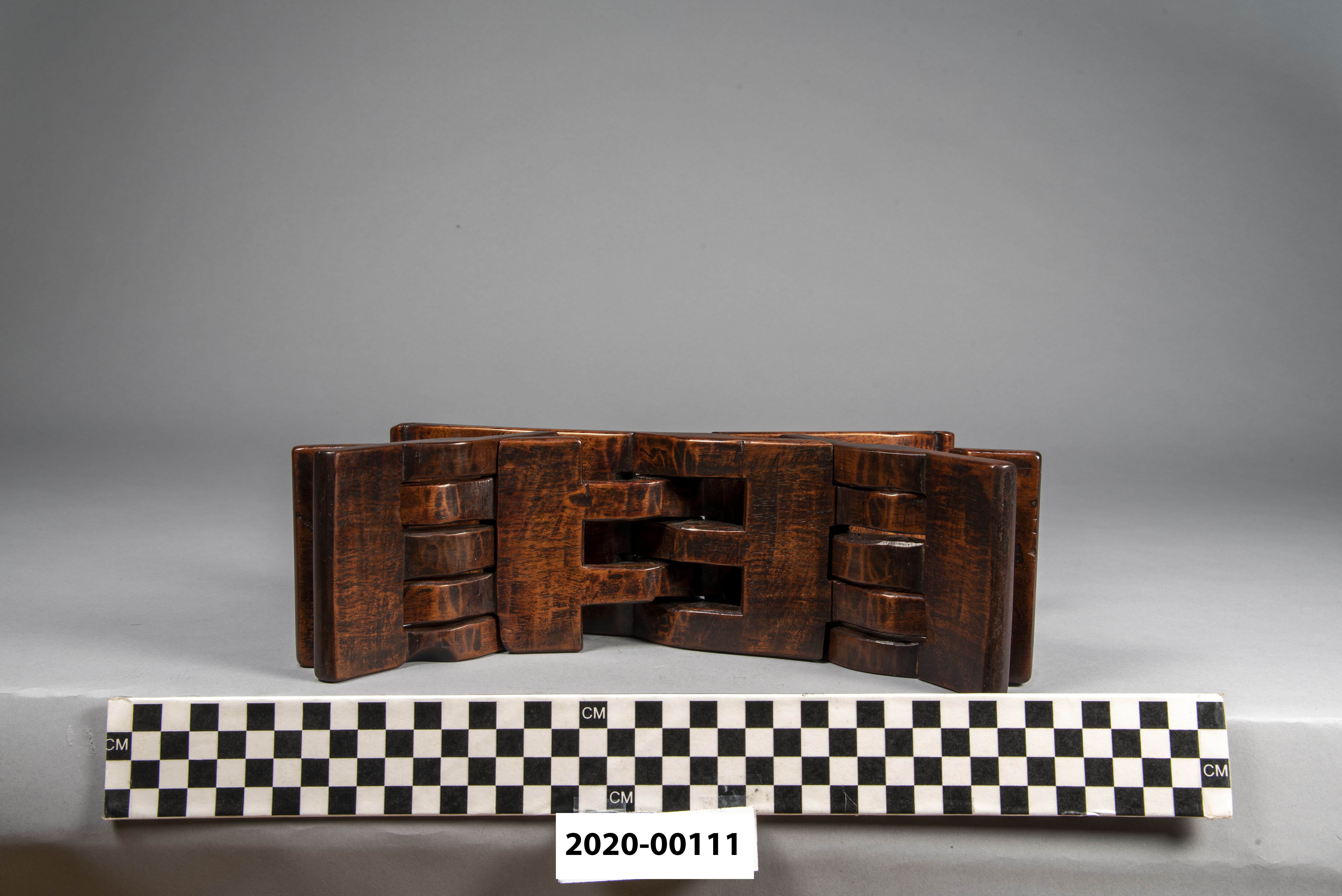
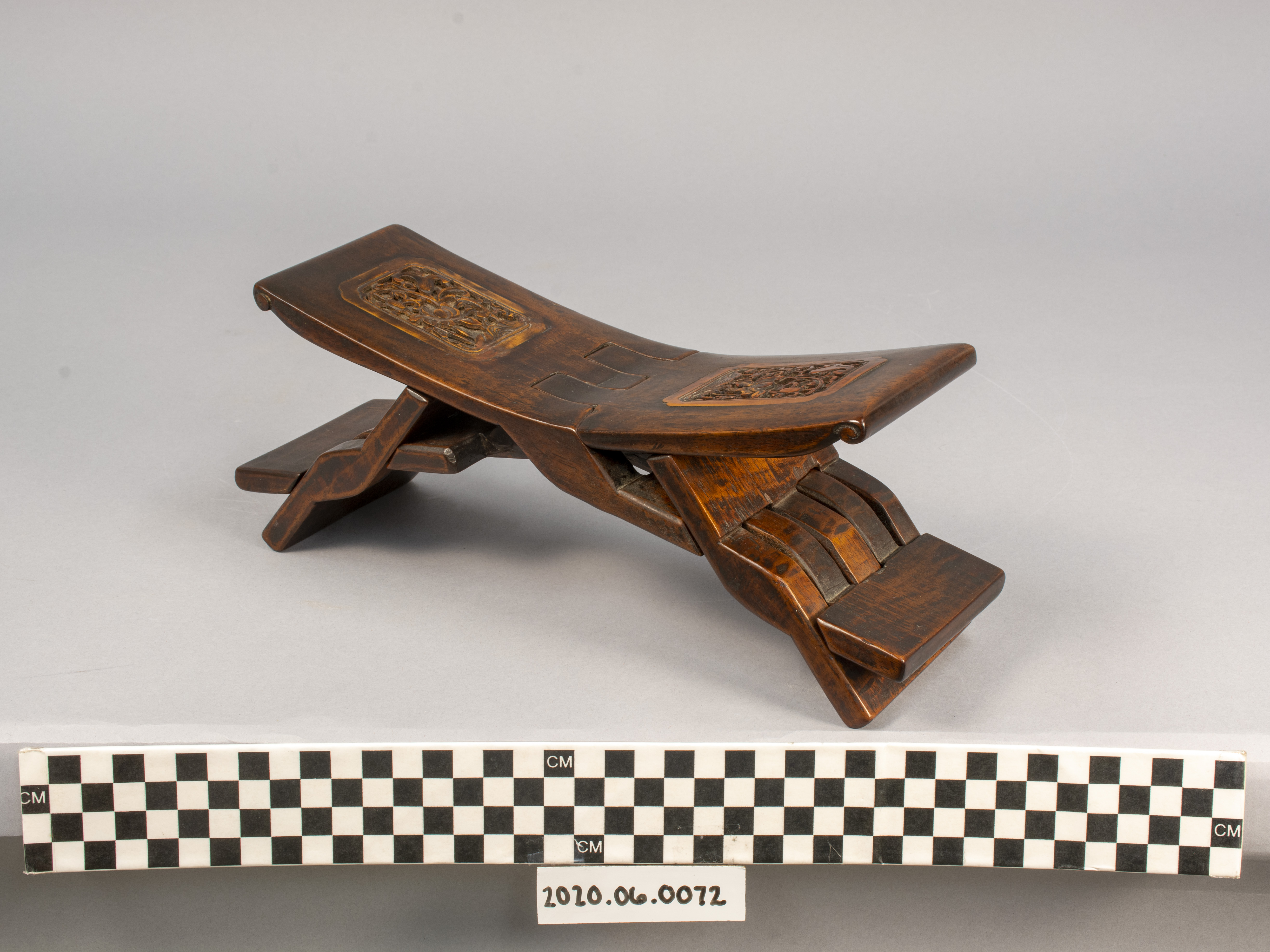
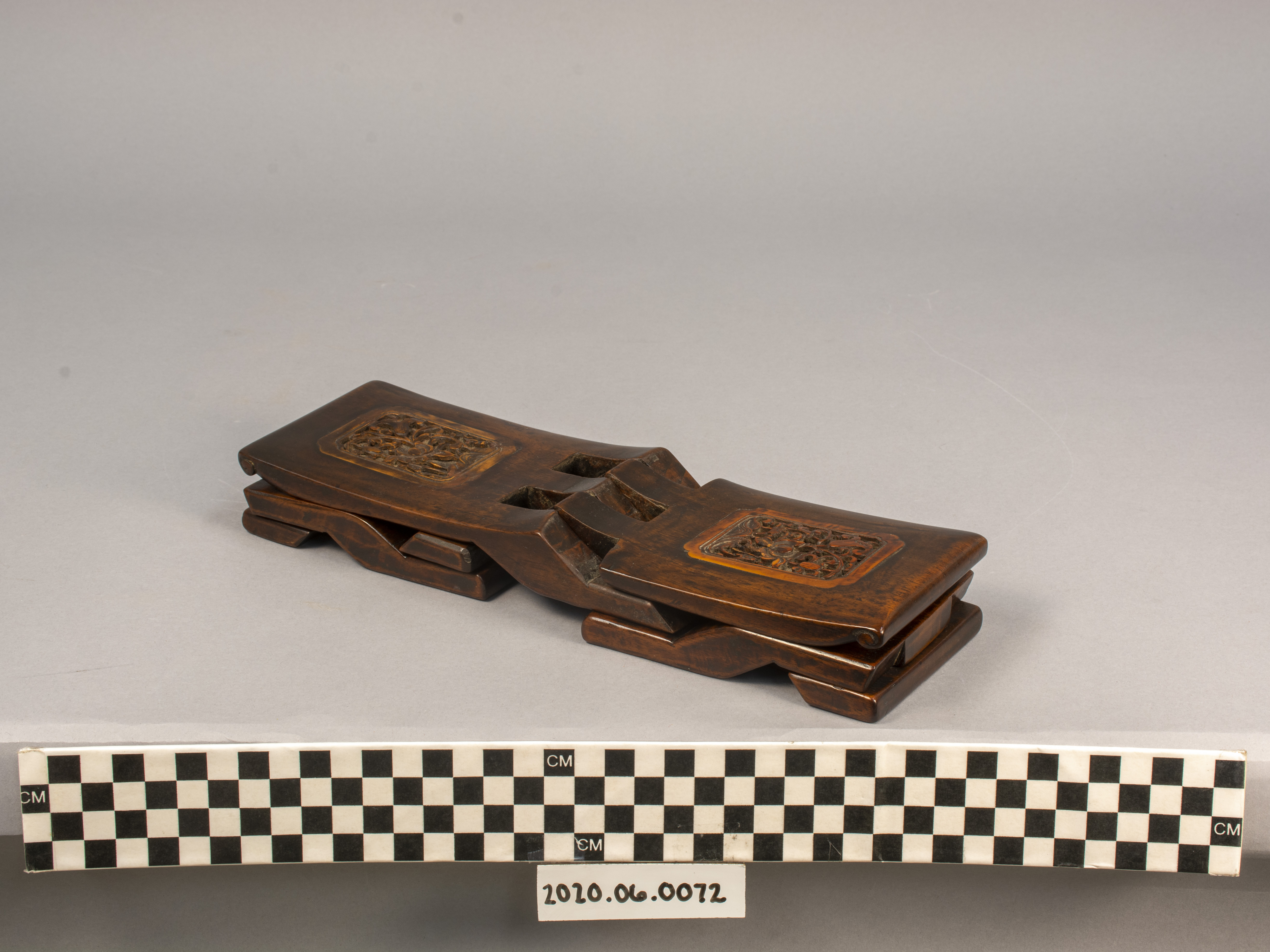
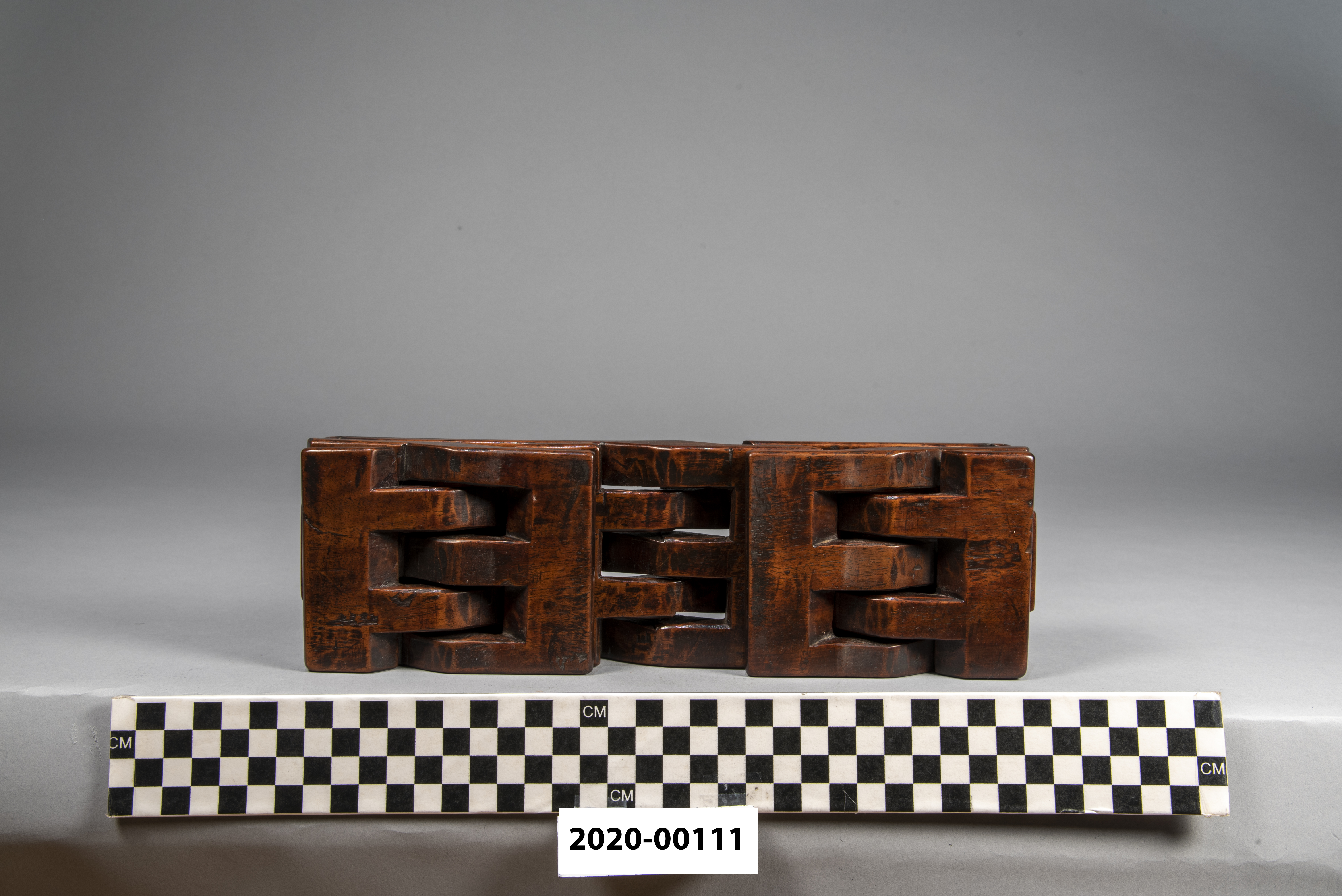
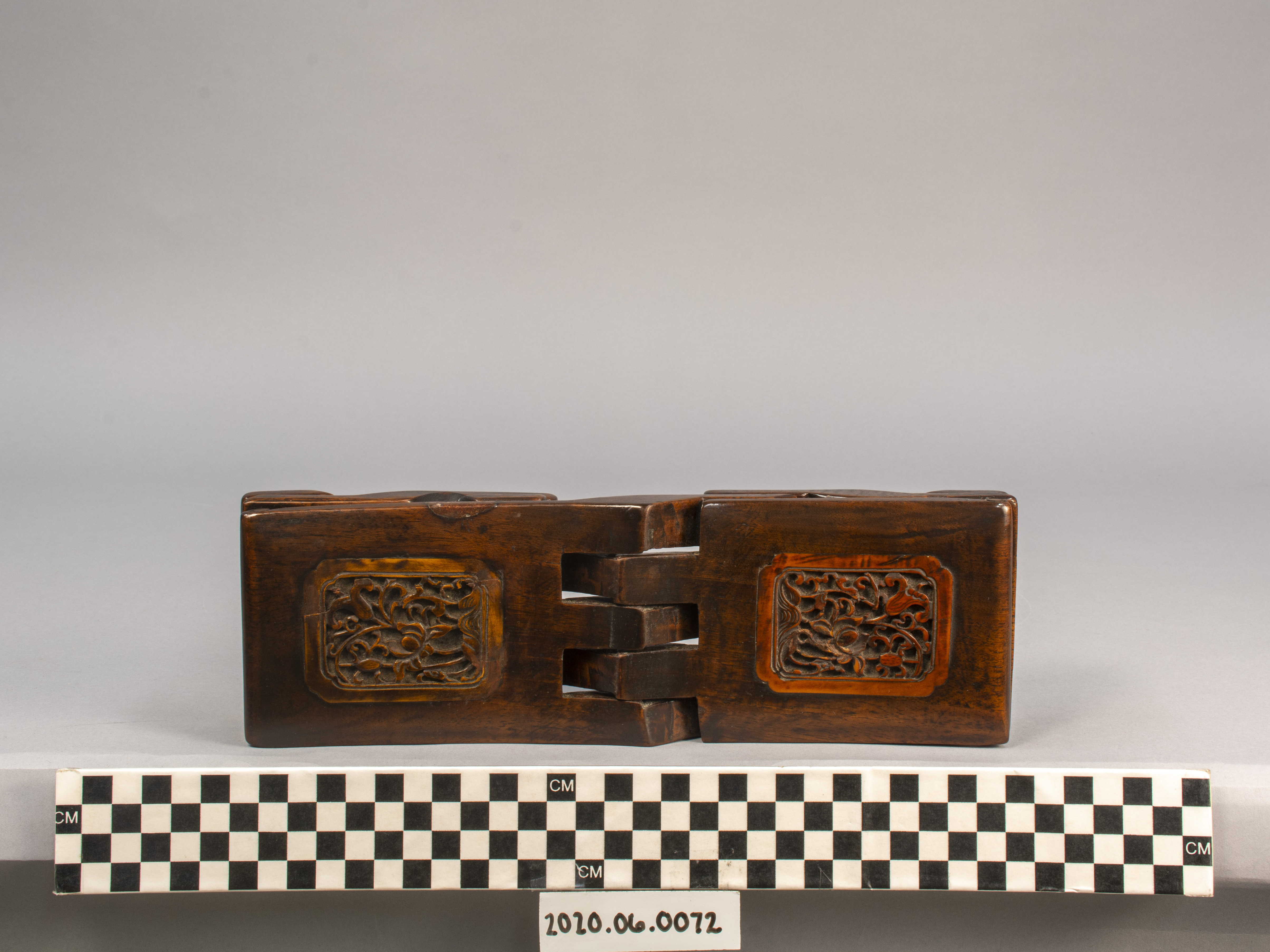
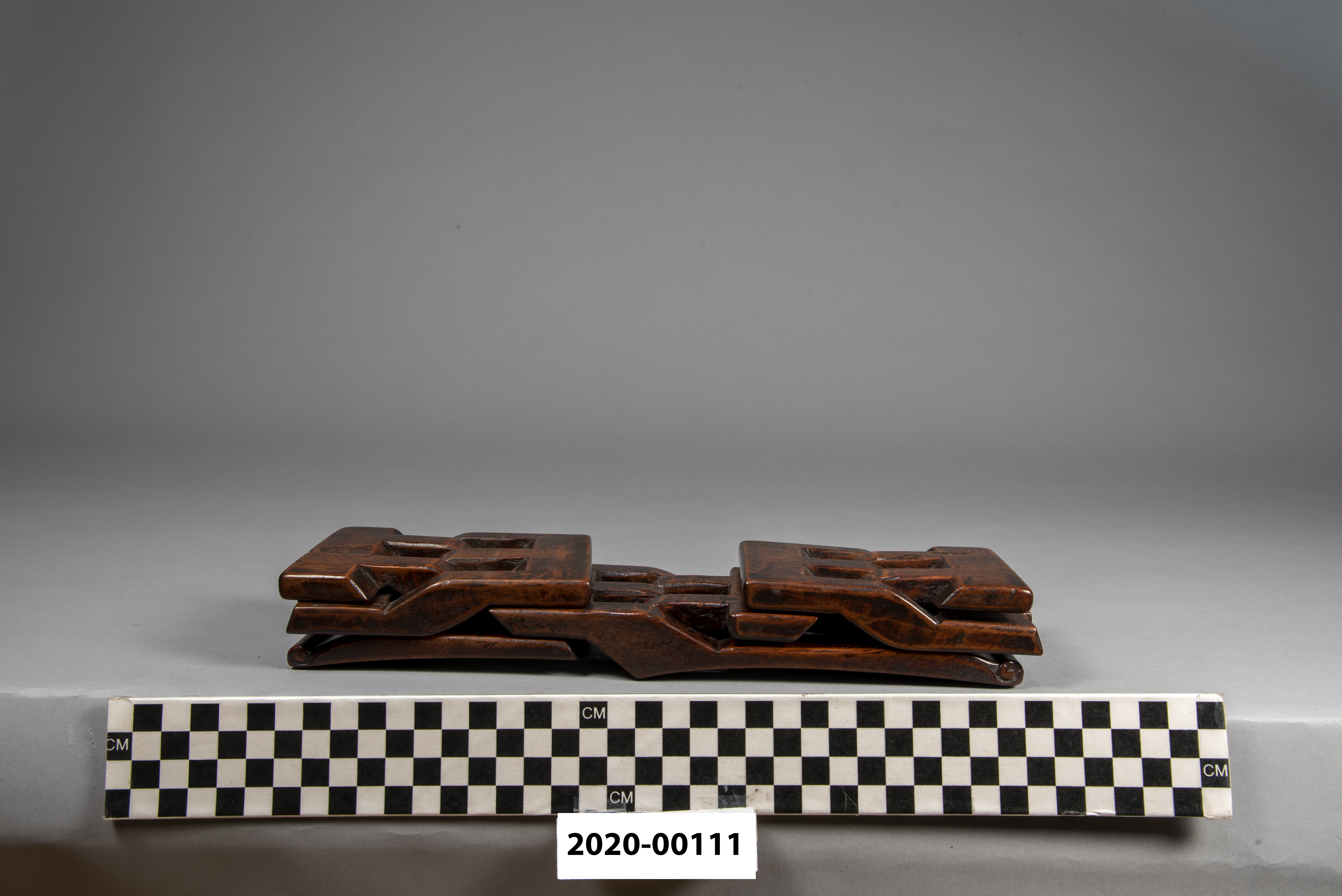
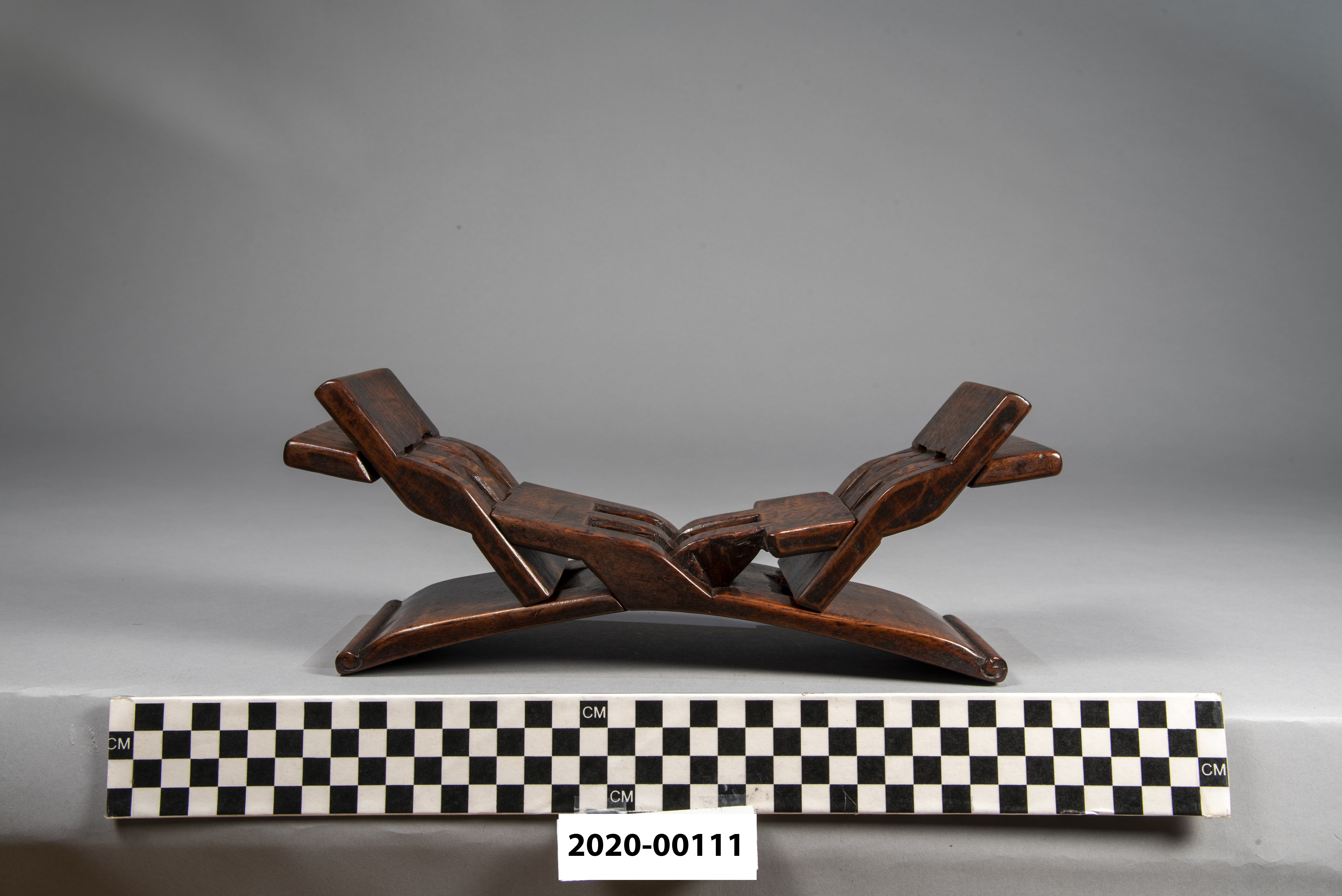
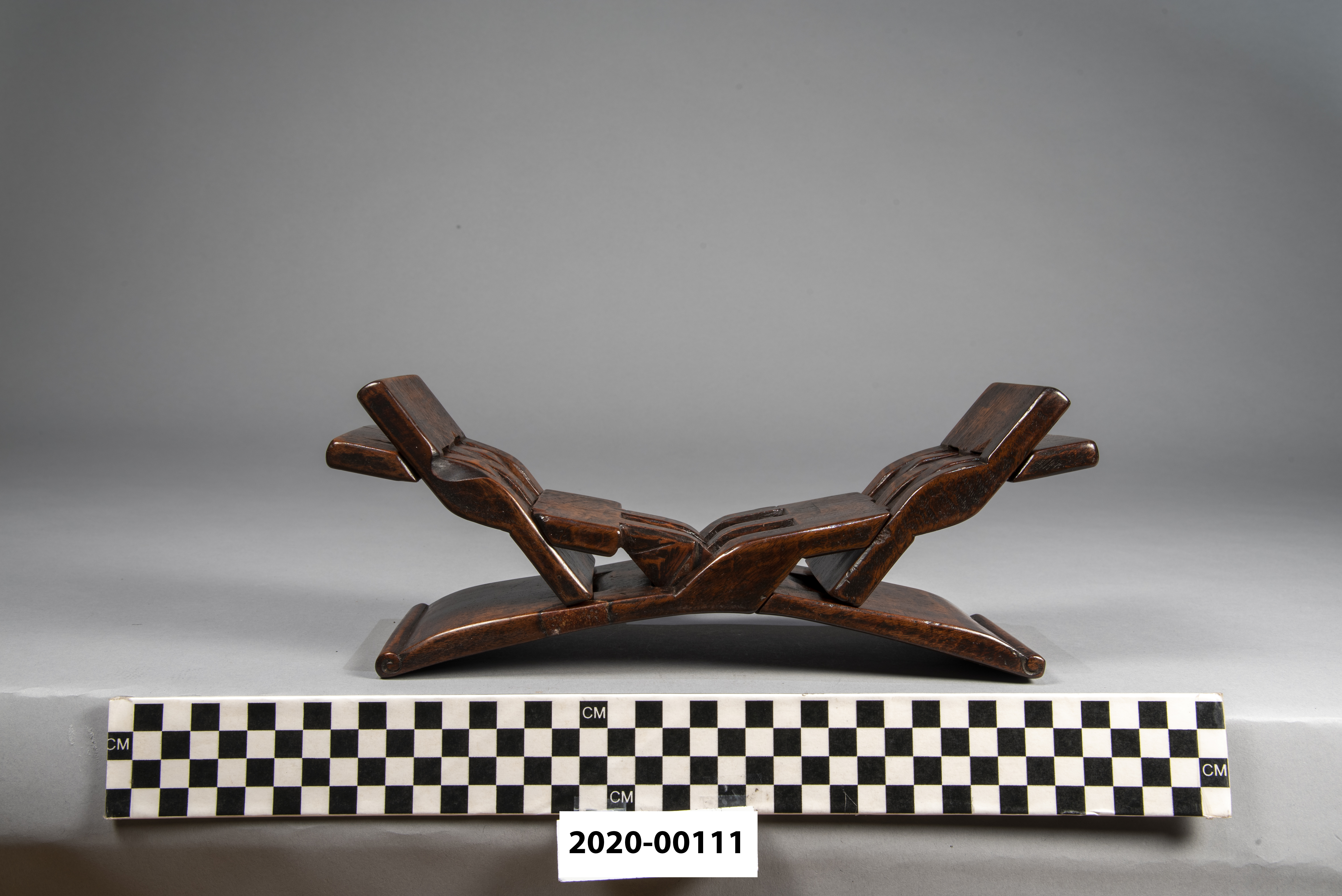
Foldable Pillow
2020.06.0072
Detailed Images
Basic Information
| Artifact Identification | Foldable Pillow (2020.06.0072) |
|---|---|
| Classification/ Nomenclature |
|
| Artist/Maker | Unknown |
| Geographic Location | |
| Period | Late Qing |
| Date | Late 17th - 18th century |
| Culture | Chinese |
| Location | Not on Exhibit |
Physical Analysis
| Dimension 1 (Length) | 29.5 cm |
|---|---|
| Dimension 2 (Height) | 13 cm |
| Dimension 3 (Width) | 9 cm |
| Weight | 470 g |
| Measuring Remarks | Under Review |
| Materials | Plant--Wood, Plant--Yumu, Northern Elm |
| Manufacturing Processes | Carved |
Research Remarks
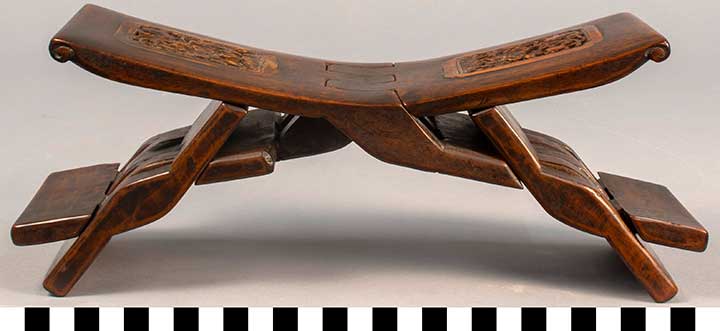
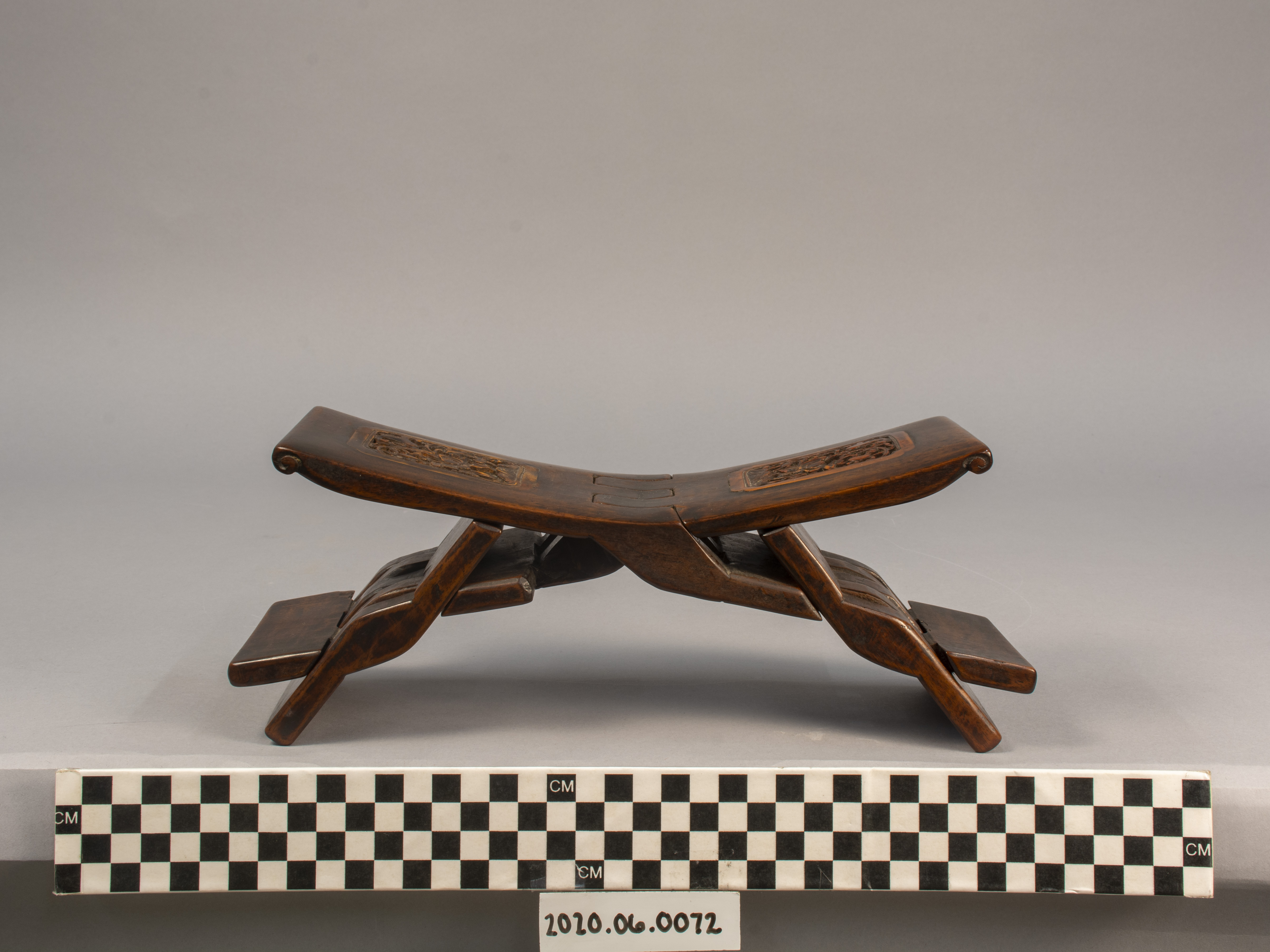
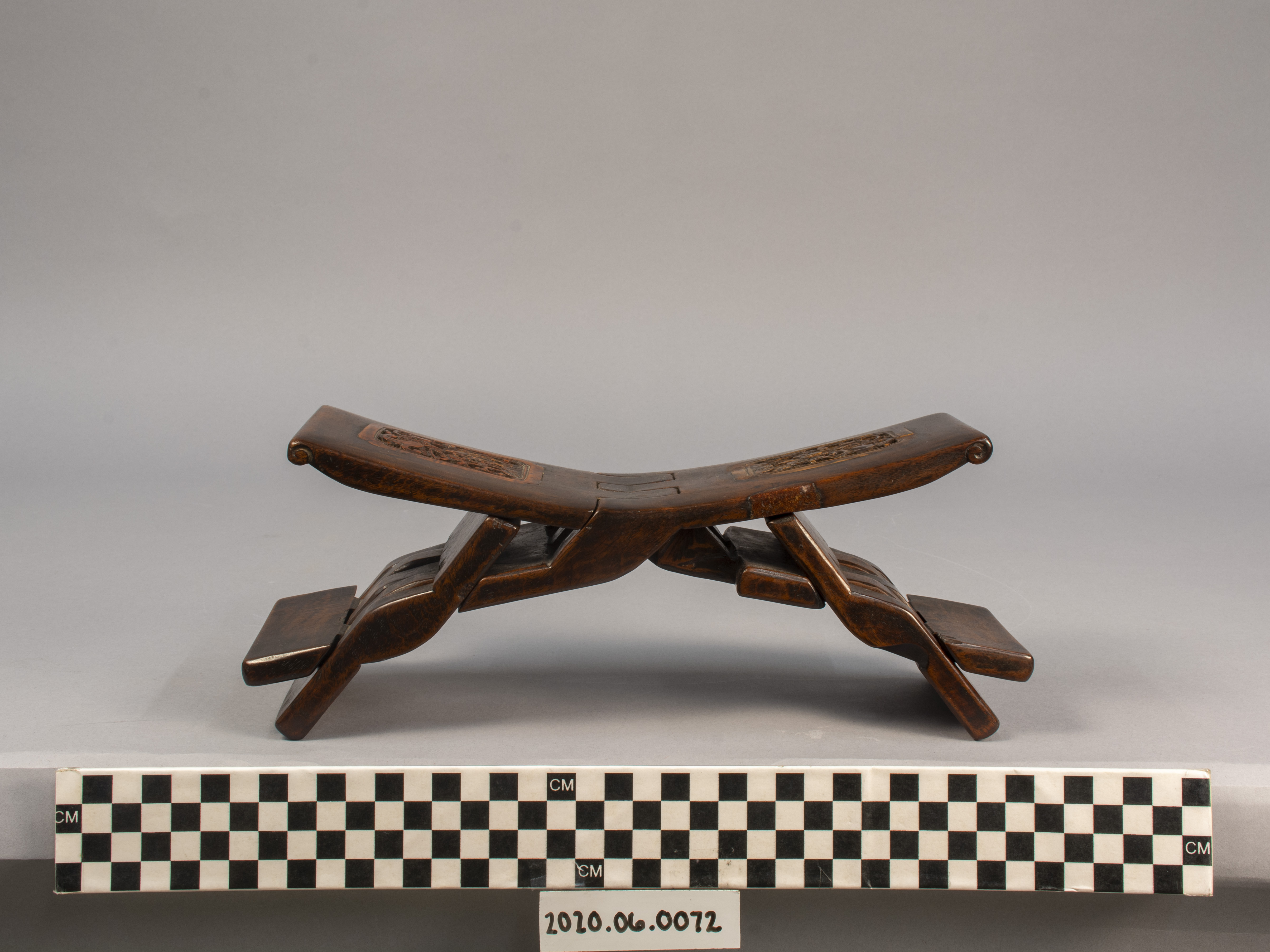
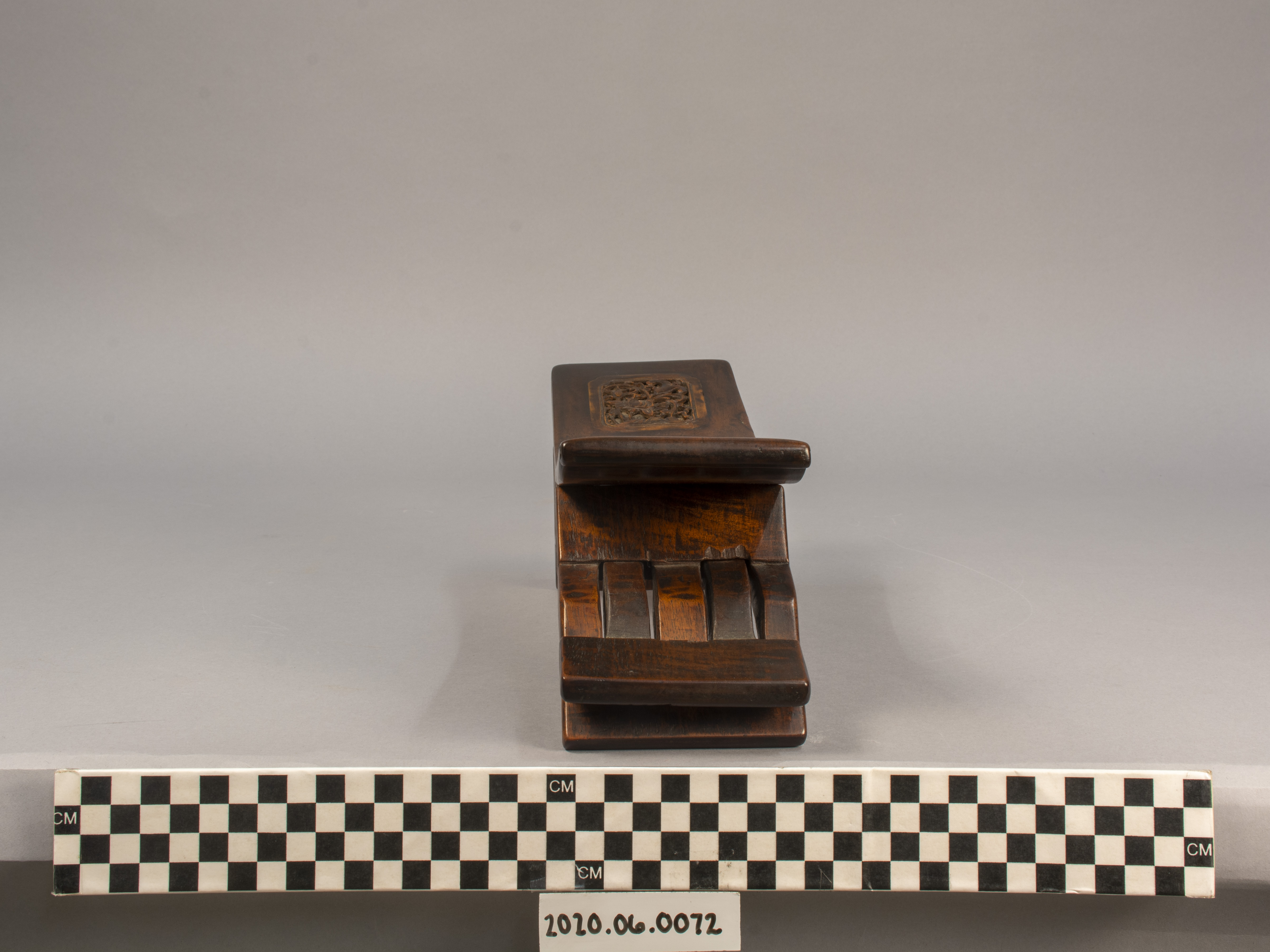
| Description | This is a Chinese wood carving of a hard pillow or a head rest. Soft substances were believed to take energy and vitality from the body and were bad for blood circulation. In addition, they were ineffective at driving away demons. It was also believed that headrests had the power to influence dreams and illusions, which could explain why they were often detailed with a lacquered finish. The carving technique of Chinese lacquer, due to the complicated drying process, was not perfected until relatively late in history. The raw lacquer sap taken from the rhus tree species, particularly Rhus verniciflua, would not harden if applied too thickly, which meant that lacquer painting required a lengthy layering technique. Carved items of the commonly-used red lacquer style (ti hong) were not created until the Yuan Dynasty (1279-1368), and the lacquer manufacturing procedures are recorded for both the Yuan and early Ming periods. A wooden base was covered with a thick layer of black lacquer (mixed with ash to promote hardening) which served as a smooth surface for the additional layers. A mixture of red and yellow layers, usually between 100 to 200, were then applied, and the artist then carved into these layers to produce a desired design. In order to indicate when the artist had to stop carving, several black layers would have been added as markers at an earlier point of the layering process. |
|---|---|
| Published Description | N/A |
| Bibliography | Hutt, Julia. Understanding Far Eastern Art: A Complete Guide to the Arts of China, Japan and Korea - Ceramics, Sculpture, Painting, Prints, Lacquer, Textiles and Metalwork. New York: E.P. Dutton, 1987. |
Artifact History
| Credit Line/Dedication | Fred A. Freund Collection |
|---|---|
| Reproduction | No |
Contact
All information about our collection is constantly reviewed and updated. Please contact Dery Martínez-Bonilla, Registrar, if there is any information you are looking for that isn't currently online.