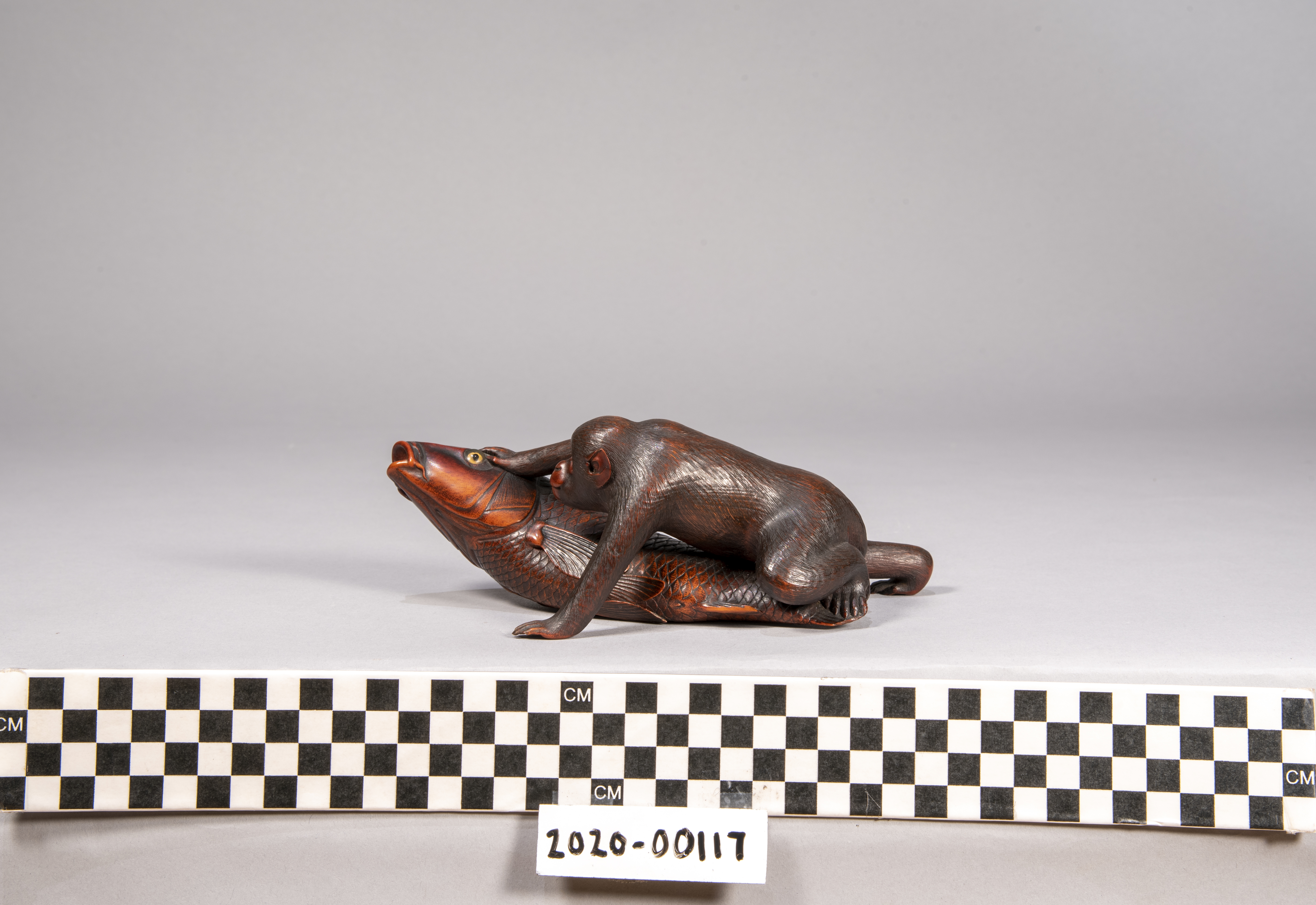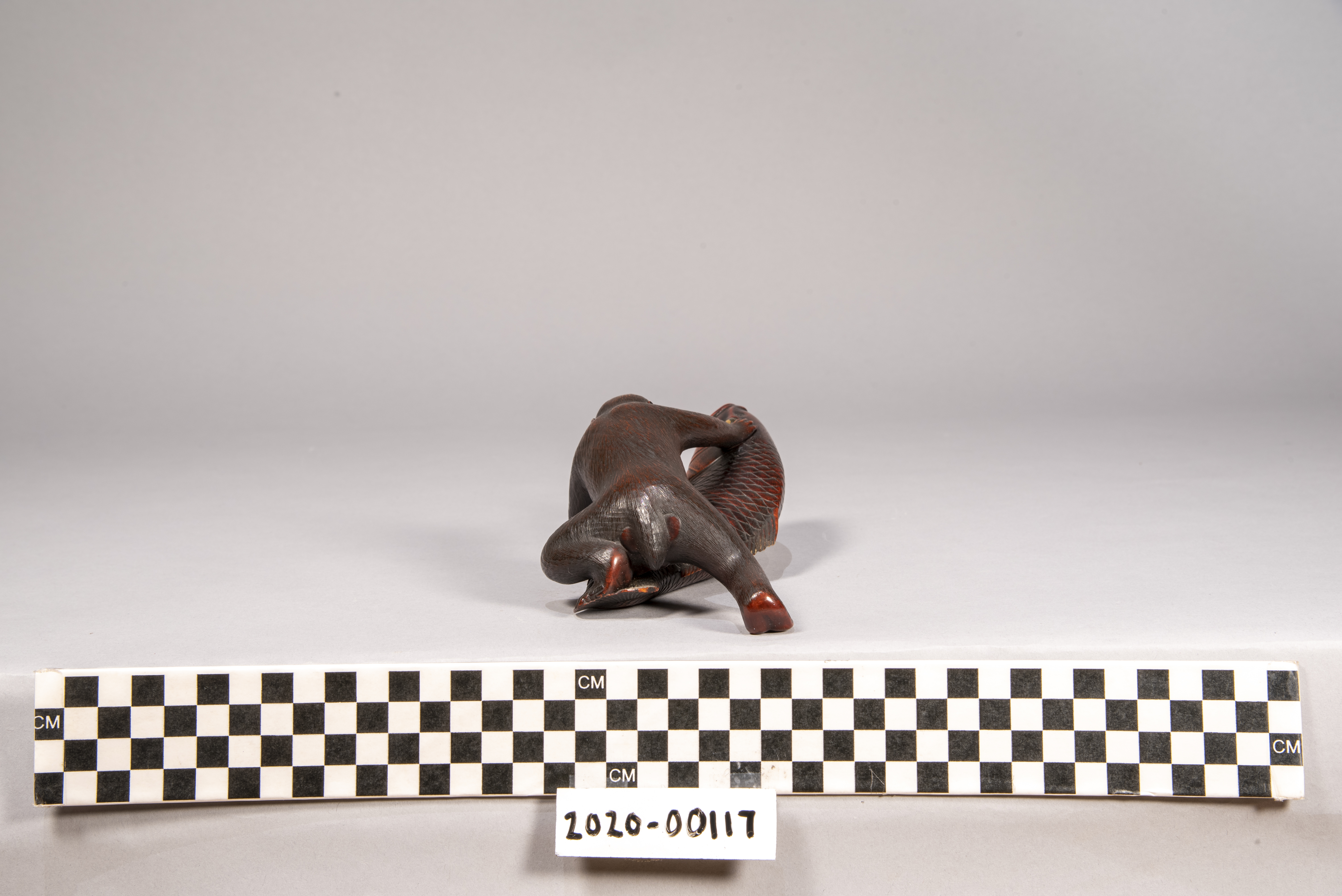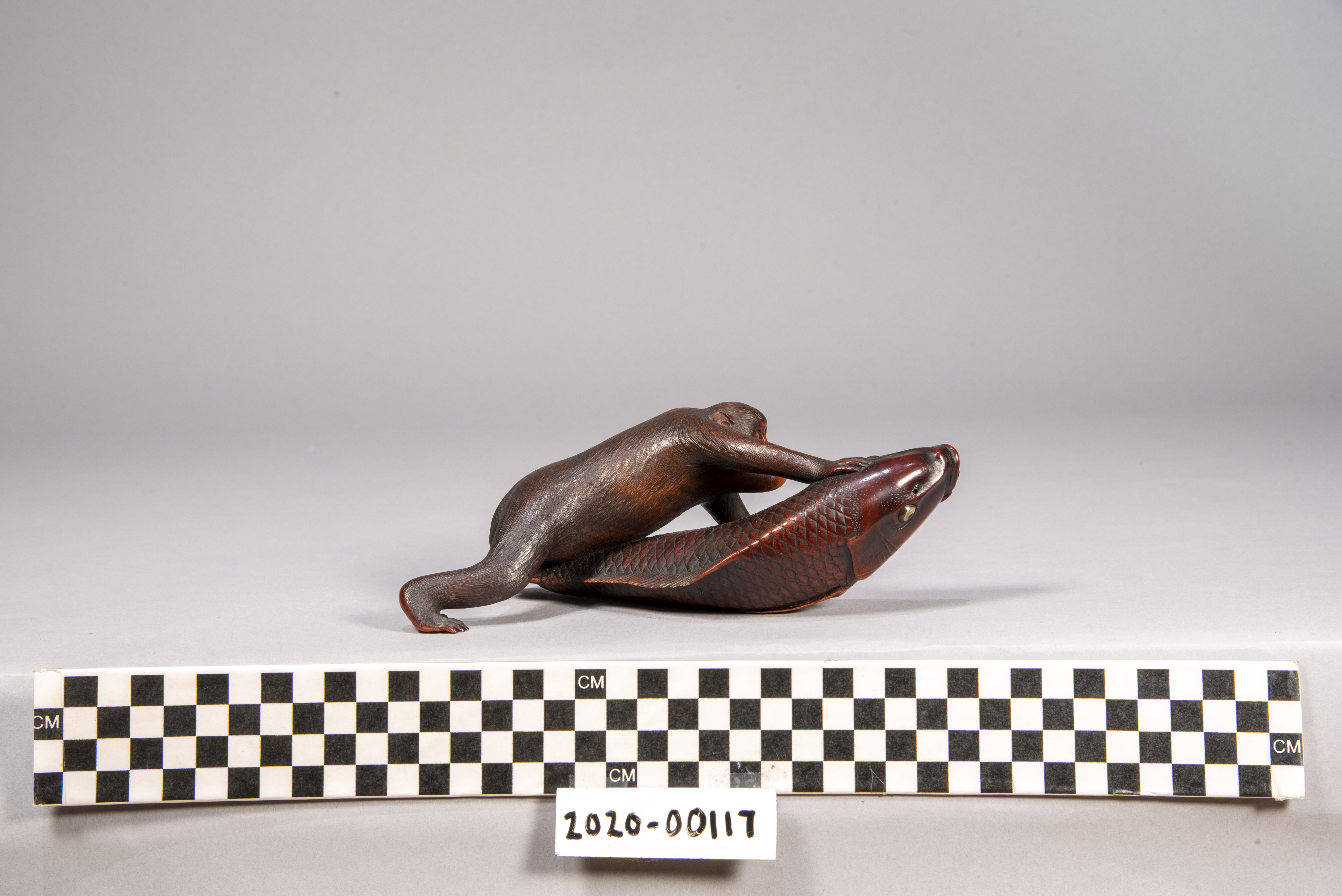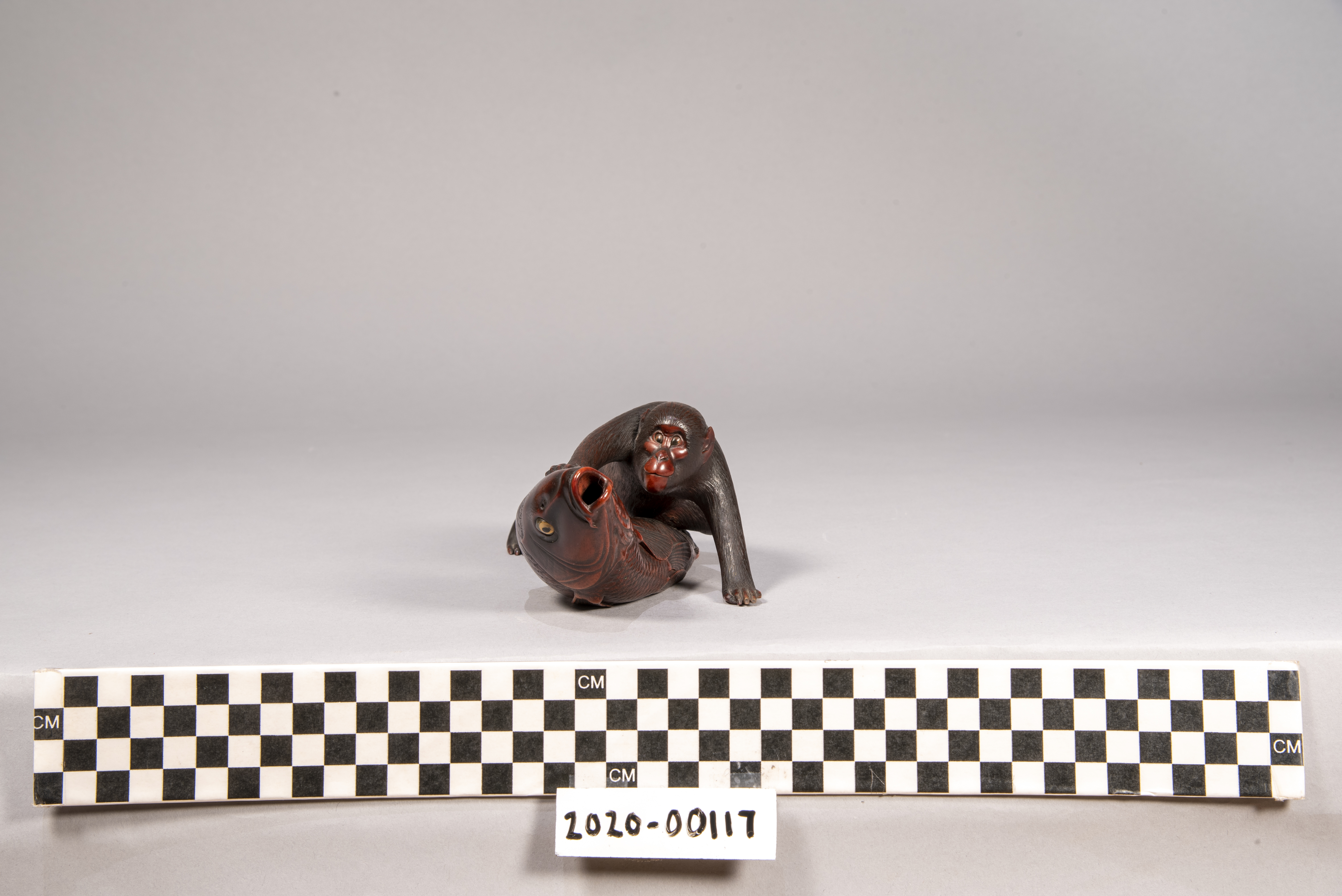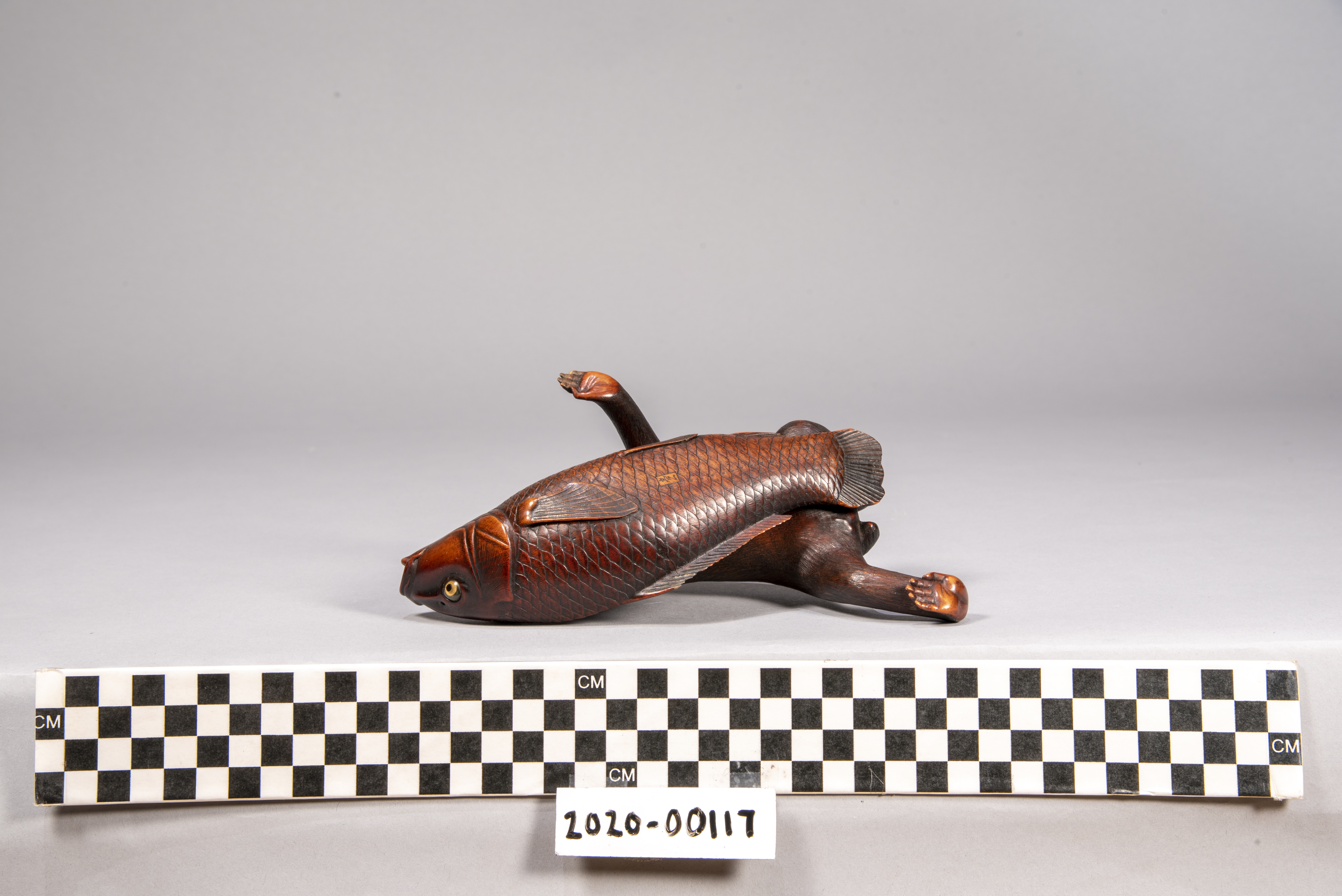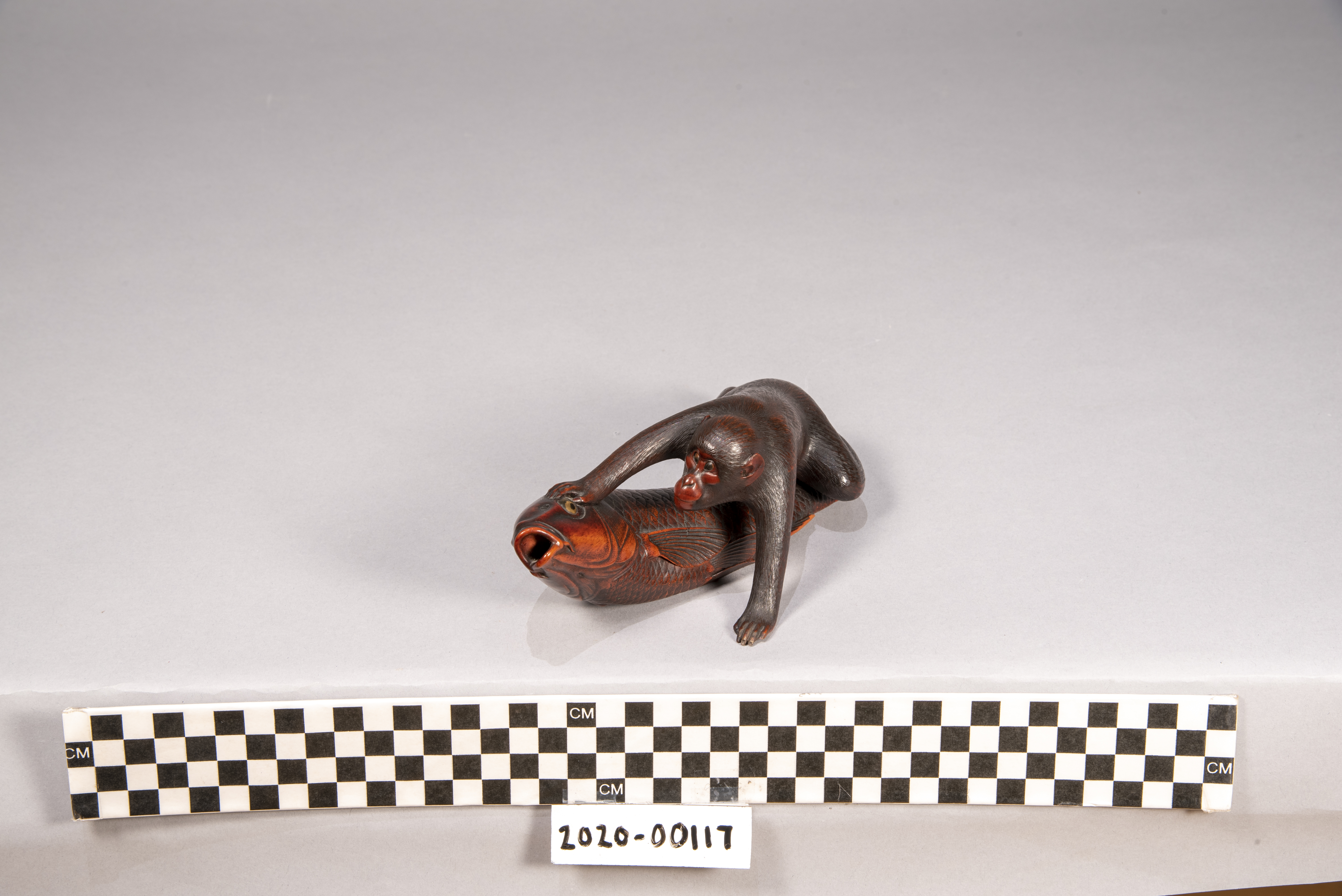
Monkey Subduing Namzu, Giant Catfish

2020.06.0078
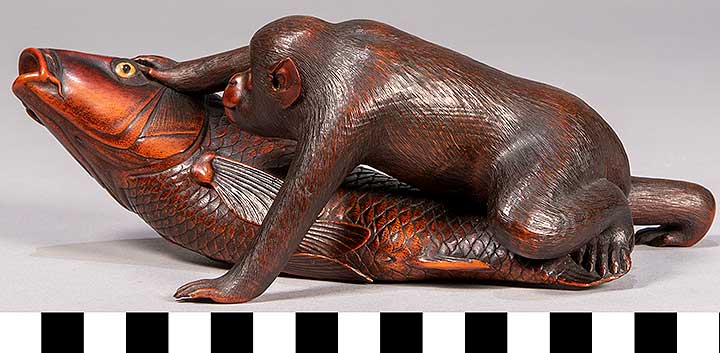
Thumbnail of Monkey Subduing Namzu, Giant Catfish (2020.06.0078)

Detailed Images

Basic Information

Artifact Identification Monkey Subduing Namzu, Giant Catfish   (2020.06.0078)
Classification/
Nomenclature
  1. Communication Artifacts
  2. :
  3. Art
  4. :
  5. N/A
Artist/Maker Signed Ryoichi (alternate reading Yoshikazu), Suke-Kazee
Geographic Location
Period Meiji Period
Date Late 19th century
Culture Japanese
Location Not on Exhibit

Physical Analysis

Dimension 1 (Length) 20 cm
Dimension 2 (Width) 11.5 cm
Dimension 3 (Height) 7.6 cm
Weight 250 g
Measuring Remarks Under Review
Materials Plant--Wood, Plant--Boxwood
Manufacturing Processes Carved

Research Remarks

Description

This is a Japanese boxwood okimono carving of a monkey (saru) subduing the namzu, a giant catfish that causes earthquakes and is usually restrained by the god Kashima.

The okimono, meaning “object of display,” is a Japanese model or free-standing figure that developed from the smaller netsukes, which were clothing fasteners that appeared as three-dimensional carved figures or flattened and engraved buttons or boxes. As okimono were ornamental pieces, they were frequent exports for western markets. They took on various sizes and were typically carved from wood or ivory.

Common muses for okimonos, particularly for western audiences, included entertainers, Samurai heroes, bijin (beautiful ladies), animals, mythological figures of legend and folklore, and any other figure that embodied traditional Japanese life.

Japanese art exports helped to finance the cost of modernization programs implemented by the Meiji government. Osaka was the center of commerce of the Edo period due to its remoteness from the Tokugawa shogunate. As artistic expression had stagnated in Japan due to government controls over art forms, the merchant class of this city was eager for the dramatic joruji and kabuki theater styles. These performances also spread to Edo (now Tokyo) after it was rebuilt following a fire in 1657, particularly in the entertainment and brothel district (Yoshiwara). The proliferation of the theater arts popularized performer dress like kimonos and, as a result, contributed to the development of clothing items like the inro and netsuke.

After the establishment of the Meiji government (1868) and the abolition of the samurai class (1876), artisans lost their traditional patrons and sought out new work for their skill sets. This was also the time when art and industry exhibitions were popularized, and the commercial success of Japanese art convinced the government to establish enterprises that commissioned professional artists. One of the prestigious occupations that was established by this trend was the Teishitsu Gigei'in (Imperial Court Artist) who, in name, worked under the patronage of the imperial family. It was through these efforts that Japanese art gained world popularity.

Published Description N/A
Bibliography Under Review

Artifact History

Credit Line/Dedication Fred A. Freund Collection
Reproduction N/A

Contact

All information about our collection is constantly reviewed and updated. Please contact Dery Martínez-Bonilla, Registrar, if there is any information you are looking for that isn't currently online.