
Search Results
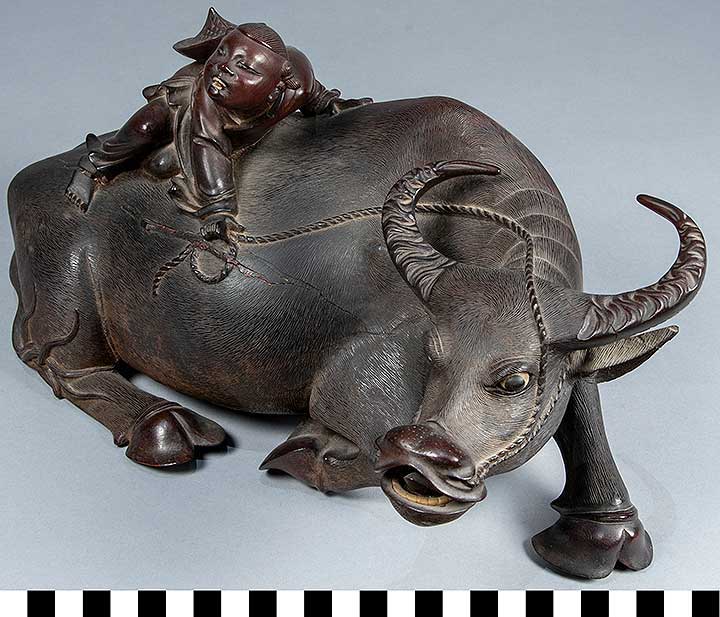
Okimono: Ox2020.06.0007A (2020.06.0007A)
34.5 x 18.7 x 18.2 cm (2387 g)
Location: Asia, East: China
Period: Qing Dynasty, Cheng Lung Period (1736-1795); 1736-1795
Classification/Nomenclature: Communication Artifacts : Art
Description: This is a Chinese okimono of an ox with a child on its back. The ox is one of the twelve animals of the duodenary cycle and is associated with agriculture and spring...
Period: Qing Dynasty, Cheng Lung Period (1736-1795); 1736-1795
Classification/Nomenclature: Communication Artifacts : Art
Description: This is a Chinese okimono of an ox with a child on its back. The ox is one of the twelve animals of the duodenary cycle and is associated with agriculture and spring...
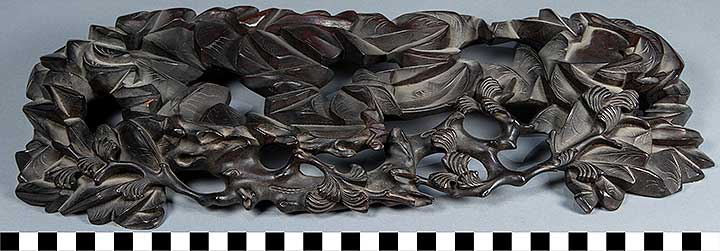
Okimono: Base2020.06.0007B (2020.06.0007B)
43 x 21 x 5 cm (904 g)
Location: Asia, East: China
Period: Qing Dynasty, Cheng Lung Period (1736-1795); 1736-1795
Classification/Nomenclature: Furnishings : Furniture : Support Furniture
Description: This is the base of a Chinese okimono of an ox with a child on its back. The ox is one of the twelve animals of the duodenary cycle and is associated with agriculture and spring...
Period: Qing Dynasty, Cheng Lung Period (1736-1795); 1736-1795
Classification/Nomenclature: Furnishings : Furniture : Support Furniture
Description: This is the base of a Chinese okimono of an ox with a child on its back. The ox is one of the twelve animals of the duodenary cycle and is associated with agriculture and spring...
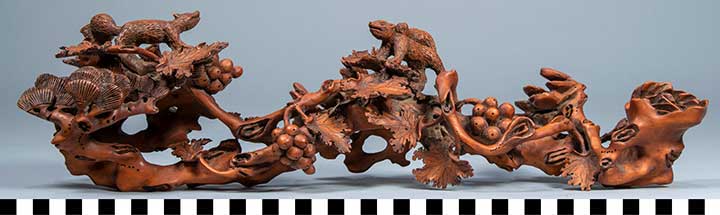
Carving: Pine Branch and Grape Vine with Squirrels2020.06.0008 (2020.06.0008)
46.2 x 13.6 x 12.2 cm (543 g)
Location: Asia, East: China
Period: Late Qing Period or Early Republic Period; Early 20th Century
Classification/Nomenclature: Communication Artifacts : Art
Description: This is a Chinese carving of a grape vine with three squirrels. The grapes and squirrels motif is generally found in ceramic works and is rare to find in wood...
Period: Late Qing Period or Early Republic Period; Early 20th Century
Classification/Nomenclature: Communication Artifacts : Art
Description: This is a Chinese carving of a grape vine with three squirrels. The grapes and squirrels motif is generally found in ceramic works and is rare to find in wood...
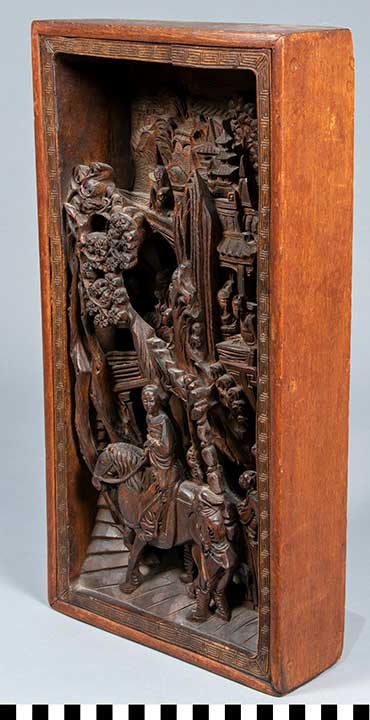
Framed Carving: Landscape
2020.06.0009 (2020.06.0009)
42.7 x 21.5 x 8.2 cm (2440 g)
Location: Asia, East: China
Period: Post Cultural Revolution; Post 1977
Classification/Nomenclature: Communication Artifacts : Art
Period: Post Cultural Revolution; Post 1977
Classification/Nomenclature: Communication Artifacts : Art
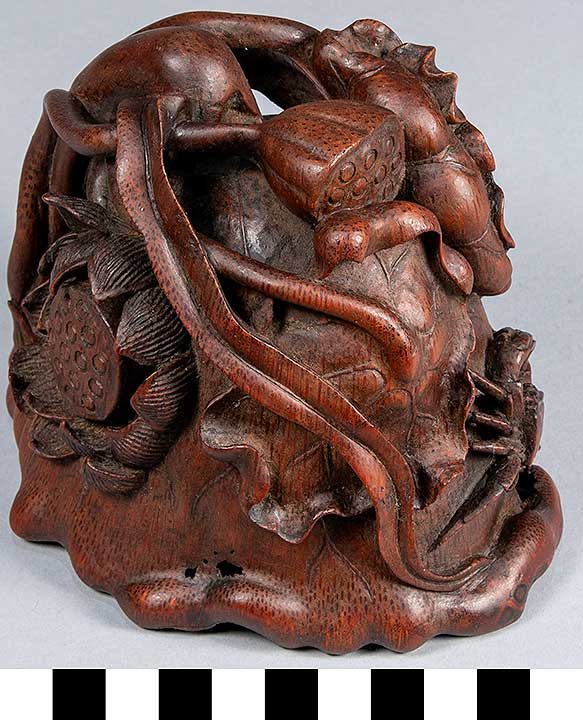
Libation Cup, Flower with Crab2020.06.0010 (2020.06.0010)
11.9 x 11.5 cm (150 g)
Location: Asia, East: China
Period: 18th century
Classification/Nomenclature: Communication Artifacts : Art
Period: 18th century
Classification/Nomenclature: Communication Artifacts : Art
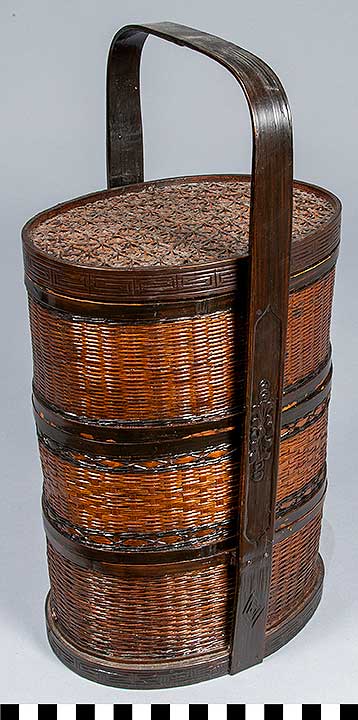
Wedding Basket2020.06.0011A (2020.06.0011A)
33 x 17.7 x 14.2 cm (134 g)
Location: Asia, East: Japan or China
Period: Edo Period or Republic of China (1912-1949); 19th - Early 20th century
Classification/Nomenclature: Furnishings : Household Accessories : Storage & Display Accessories
Period: Edo Period or Republic of China (1912-1949); 19th - Early 20th century
Classification/Nomenclature: Furnishings : Household Accessories : Storage & Display Accessories
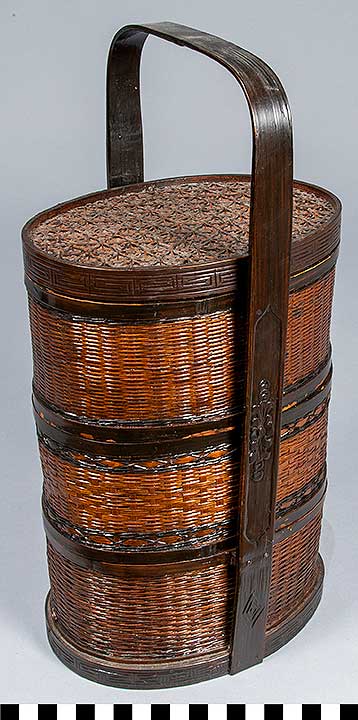
Wedding Basket: Middle Section2020.06.0011B (2020.06.0011B)
17 x 12.3 x 8 cm (63 g)
Location: Asia, East: Japan or China
Period: Edo Period or Republic of China (1912-1949); 19th - Early 20th century
Classification/Nomenclature: Furnishings : Household Accessories : Storage & Display Accessories
Period: Edo Period or Republic of China (1912-1949); 19th - Early 20th century
Classification/Nomenclature: Furnishings : Household Accessories : Storage & Display Accessories
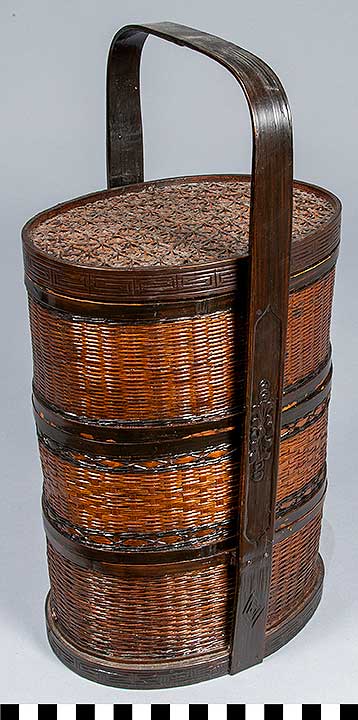
Wedding Basket: Top2020.06.0011C (2020.06.0011C)
17 x 12.3 x 8 cm (62 g)
Location: Asia, East: Japan or China
Period: Edo Period or Republic of China (1912-1949); 19th - Early 20th century
Classification/Nomenclature: Furnishings : Household Accessories : Storage & Display Accessories
Period: Edo Period or Republic of China (1912-1949); 19th - Early 20th century
Classification/Nomenclature: Furnishings : Household Accessories : Storage & Display Accessories
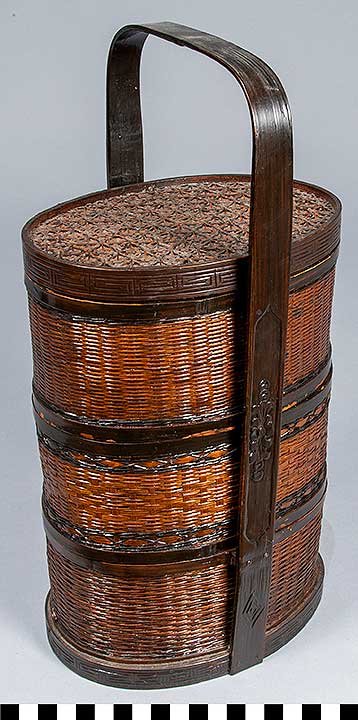
Wedding Basket: Lid2020.06.0011D (2020.06.0011D)
17 x 12.3 x 1.5 cm (42 g)
Location: Asia, East: Japan or China
Period: Edo Period or Republic of China (1912-1949); 19th - Early 20th century
Classification/Nomenclature: Furnishings : Household Accessories : Storage & Display Accessories
Period: Edo Period or Republic of China (1912-1949); 19th - Early 20th century
Classification/Nomenclature: Furnishings : Household Accessories : Storage & Display Accessories
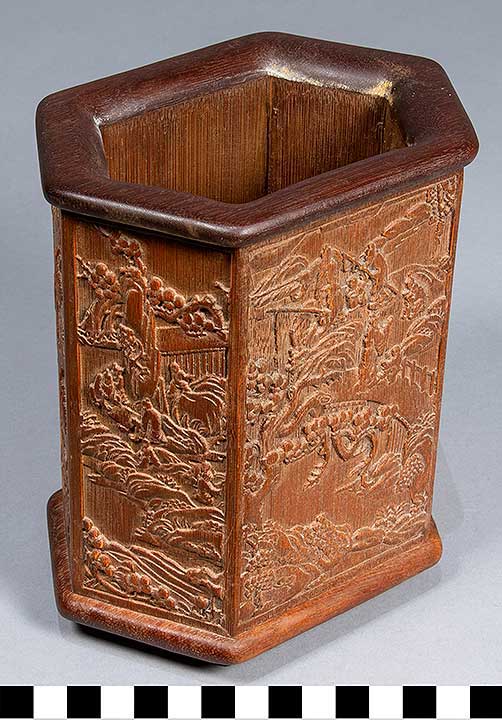
Hexagonal Container with Carved Scenes2020.06.0012 (2020.06.0012)
16.4 x 14.5 x 10.4 cm (547 g)
Location: Asia, East: Japan
Classification/Nomenclature: Furnishings : Household Accessories : Storage & Display Accessories
Classification/Nomenclature: Furnishings : Household Accessories : Storage & Display Accessories
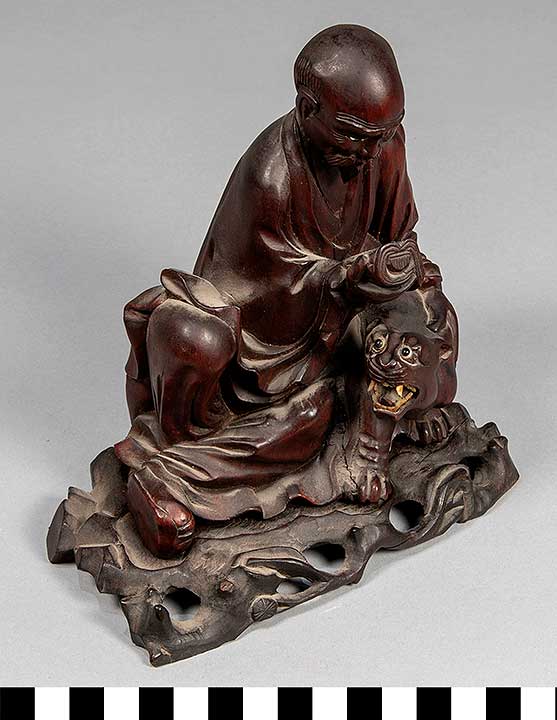
Okimono: Lohan with Tiger2020.06.0013A (2020.06.0013A)
15.6 x 12.1 x 9.3 cm (425 g)
Location: Asia, East: China
Period: Late 19th century
Classification/Nomenclature: Communication Artifacts : Art
Description: This is a Japanese okimono of a Lohan, one of the 500 Buddhist disciples to achieve enlightenment, who is sat next to a tiger...
Period: Late 19th century
Classification/Nomenclature: Communication Artifacts : Art
Description: This is a Japanese okimono of a Lohan, one of the 500 Buddhist disciples to achieve enlightenment, who is sat next to a tiger...
Okimono: Base2020.06.0013B (2020.06.0013B)
15.6 x 11 x 1.6 cm (147 g)
Location: Asia, East: China
Period: Late 19th century
Classification/Nomenclature: Furnishings : Furniture : Support Furniture
Description: This is the base of a Japanese okimono of a Lohan, one of the 500 Buddhist disciples to achieve enlightenment, who is sat next to a tiger...
Period: Late 19th century
Classification/Nomenclature: Furnishings : Furniture : Support Furniture
Description: This is the base of a Japanese okimono of a Lohan, one of the 500 Buddhist disciples to achieve enlightenment, who is sat next to a tiger...
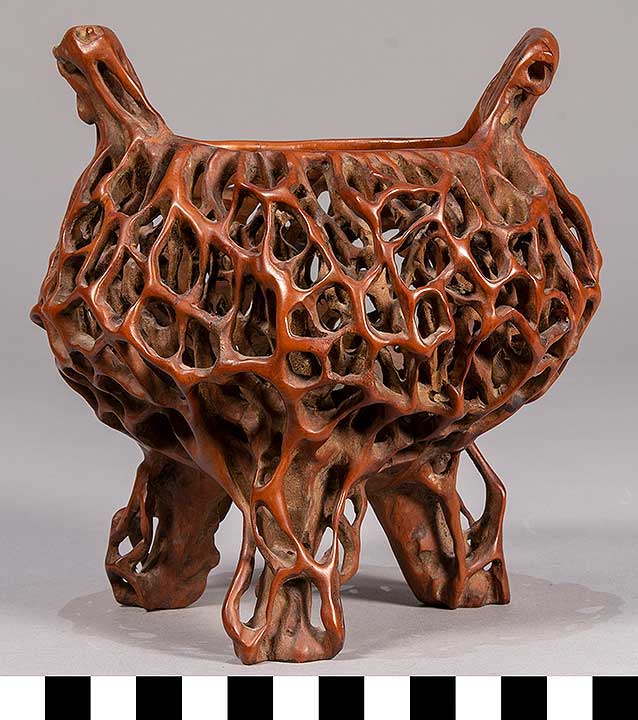
Censer or Perfumier2020.06.0014 (2020.06.0014)
42 x 15 x 12.3 cm (203 g)
Location: Asia, East: China
Period: Qing Dynasty; 18th or 19th century
Classification/Nomenclature: Furnishings : Household Accessories : Storage & Display Accessories
Description: This is a Chinese wood carving of a boxwood censer or perfumier. It stands as a tripod and is designed to resemble a bronze vessel...
Period: Qing Dynasty; 18th or 19th century
Classification/Nomenclature: Furnishings : Household Accessories : Storage & Display Accessories
Description: This is a Chinese wood carving of a boxwood censer or perfumier. It stands as a tripod and is designed to resemble a bronze vessel...
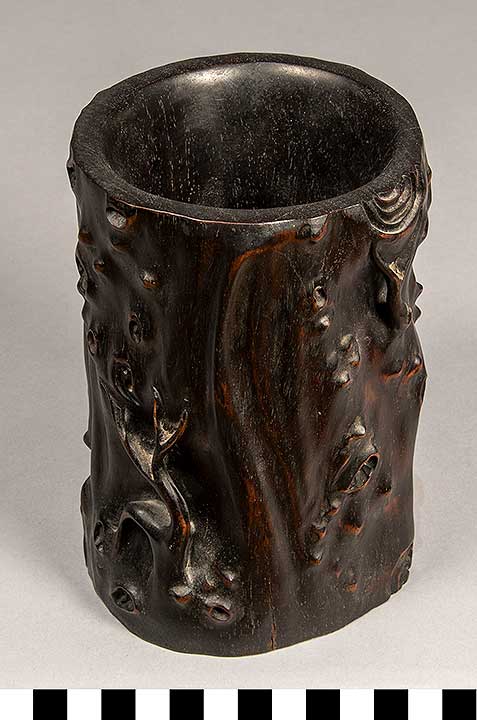
Bitong, Brush Pot2020.06.0015 (2020.06.0015)
33 x 15.3 x 10.2 cm (937 g)
Location: Asia, East: Japan
Period: 19th Century
Classification/Nomenclature: Communication Artifacts : Art
Period: 19th Century
Classification/Nomenclature: Communication Artifacts : Art
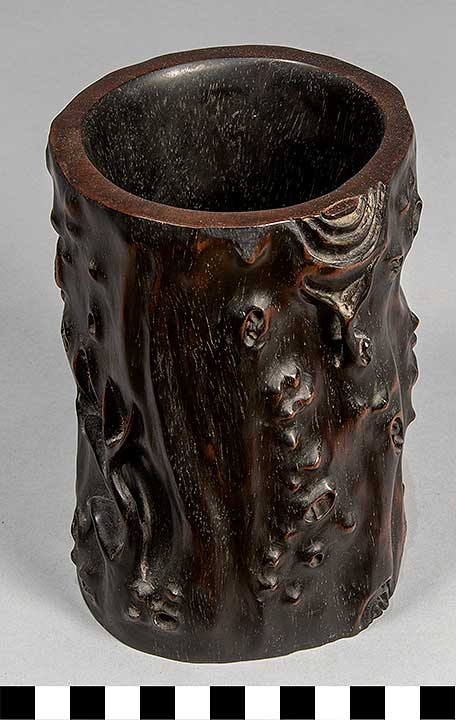
Bitong, Brush Pot2020.06.0016 (2020.06.0016)
33 x 15.4 x 10 cm (919 g)
Location: Asia, East: Japan
Period: 19th Century
Classification/Nomenclature: Communication Artifacts : Art
Period: 19th Century
Classification/Nomenclature: Communication Artifacts : Art
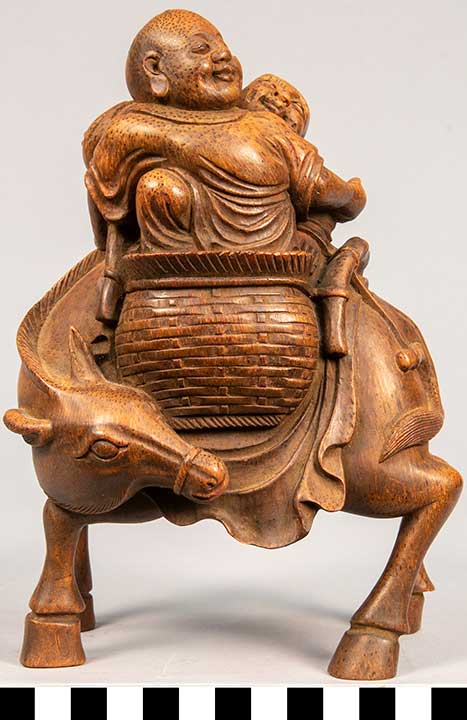
Carving: Erh Hsien, Ho Ho2020.06.0017A (2020.06.0017A)
20 x 12.5 x 10.7 cm (438 g)
Location: Asia, East: China
Period: Republic Period or Early People's Republic; 19th century
Classification/Nomenclature: Communication Artifacts : Art
Period: Republic Period or Early People's Republic; 19th century
Classification/Nomenclature: Communication Artifacts : Art
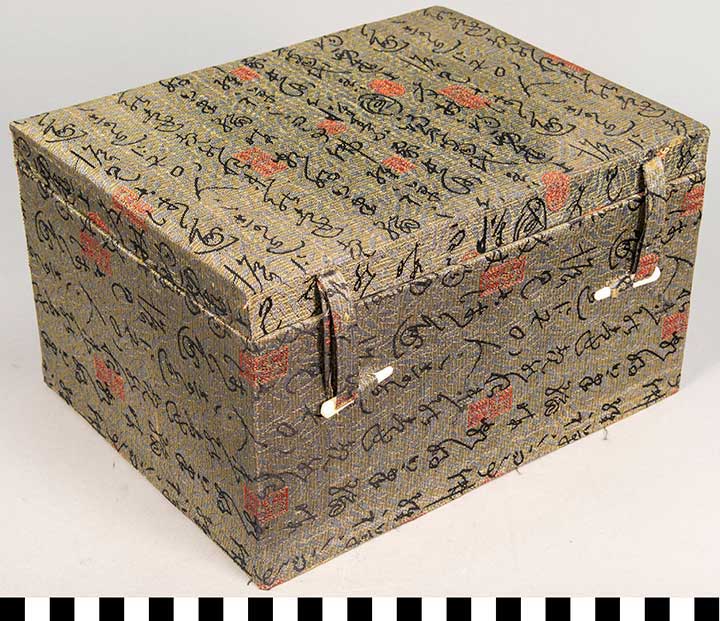
Box for Carving of Erh Hsien, Ho Ho2020.06.0017B (2020.06.0017B)
25 x 19.5 x 14.5 cm (731 g)
Location: Asia, East: China
Period: Republic Period or Early People's Republic; 19th century
Classification/Nomenclature: Furnishings : Furniture : Support Furniture
Period: Republic Period or Early People's Republic; 19th century
Classification/Nomenclature: Furnishings : Furniture : Support Furniture
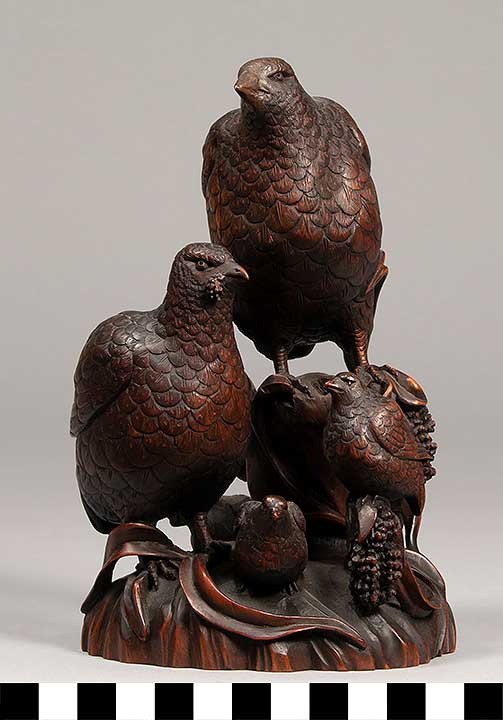
Okimono: Quails2020.06.0018 (2020.06.0018)
108 x 18 x 9 cm (440 g)
Location: Asia, East: Japan
Period: 19th century
Classification/Nomenclature: Communication Artifacts : Art
Description: This is a Japanese okimono of five quails in a natural scene. The okimono, meaning “object of display,” is a Japanese model or free-standing figure that developed from the smaller netsukes, which were clothing fasteners that appeared as three-dimensional carved figures or flattened and engraved buttons or boxes...
Period: 19th century
Classification/Nomenclature: Communication Artifacts : Art
Description: This is a Japanese okimono of five quails in a natural scene. The okimono, meaning “object of display,” is a Japanese model or free-standing figure that developed from the smaller netsukes, which were clothing fasteners that appeared as three-dimensional carved figures or flattened and engraved buttons or boxes...
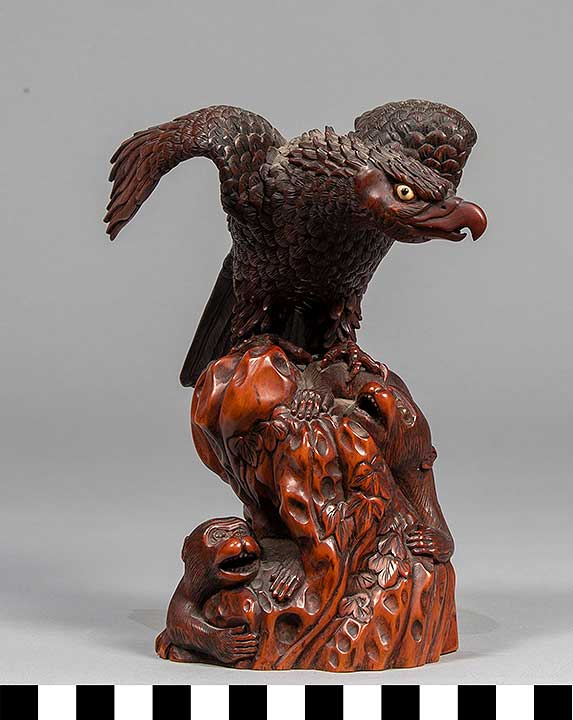
Okimono: Eagle Attacking Monkey Protecting Her Young2020.06.0019 (2020.06.0019)
16.3 x 15 x 10.5 cm (466 g)
Location: Asia, East: Japan
Period: Late Meiji Period
Classification/Nomenclature: Communication Artifacts : Art
Description: This is a Japanese boxwood okimono of a monkey (saru) defending her young from an eagle. The Saru is one of the Zodiac and frequently plays a role in legend...
Period: Late Meiji Period
Classification/Nomenclature: Communication Artifacts : Art
Description: This is a Japanese boxwood okimono of a monkey (saru) defending her young from an eagle. The Saru is one of the Zodiac and frequently plays a role in legend...
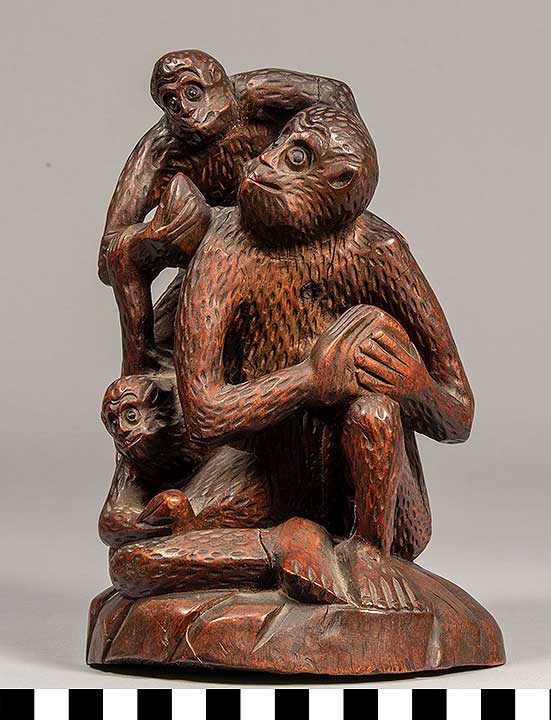
Okimono: Three Monkeys2020.06.0020 (2020.06.0020)
21.3 x 13.7 x 13 cm ( g)
Location: Asia, East: Japan
Period: 19th Century
Classification/Nomenclature: Communication Artifacts : Art
Description: This Japanese boxwood okimono depicts three monkeys representing Sambiki Saru (Wise Monkeys). The Saru is one of the Zodiac and frequently plays a role in legend...
Period: 19th Century
Classification/Nomenclature: Communication Artifacts : Art
Description: This Japanese boxwood okimono depicts three monkeys representing Sambiki Saru (Wise Monkeys). The Saru is one of the Zodiac and frequently plays a role in legend...
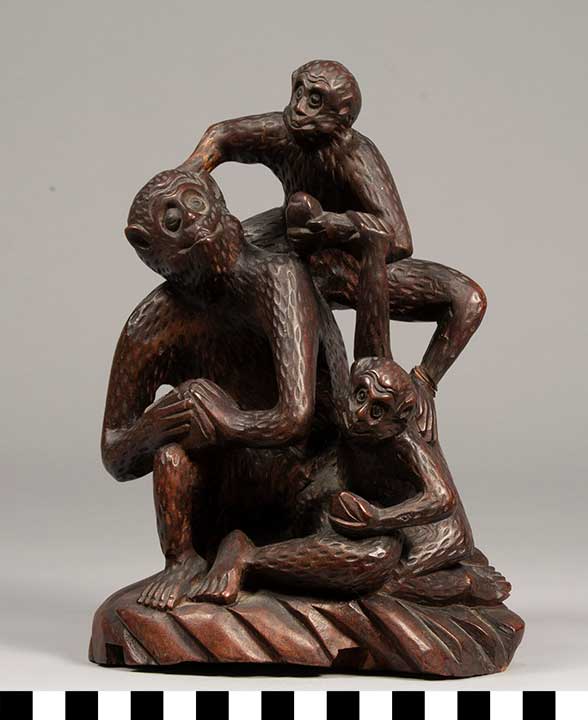
Okimono: Three Monkeys2020.06.0021 (2020.06.0021)
21.3 x 15.2 x 12 cm (9294 g)
Location: Asia, East: Japan
Period: 19th Century
Classification/Nomenclature: Communication Artifacts : Art
Description: This Japanese boxwood okimono depicts three monkeys representing Sambiki Saru (Wise Monkeys). The Saru is one of the Zodiac and frequently plays a role in legend...
Period: 19th Century
Classification/Nomenclature: Communication Artifacts : Art
Description: This Japanese boxwood okimono depicts three monkeys representing Sambiki Saru (Wise Monkeys). The Saru is one of the Zodiac and frequently plays a role in legend...
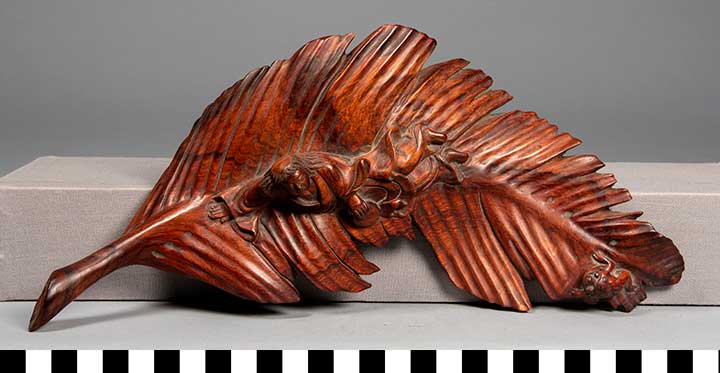
Okimono: Liu Hai with 3 Legged Toad2020.06.0022 (2020.06.0022)
28.4 x 4.8 x 4.5 cm (169 g)
Location: Asia, East: China
Period: Qing Dynasty; 18th Century
Classification/Nomenclature: Communication Artifacts : Art
Description: This Japanese okimono depicts Liu Hai, a Daoist immortal representing prosperity and wealth, with a three-legged toad...
Period: Qing Dynasty; 18th Century
Classification/Nomenclature: Communication Artifacts : Art
Description: This Japanese okimono depicts Liu Hai, a Daoist immortal representing prosperity and wealth, with a three-legged toad...
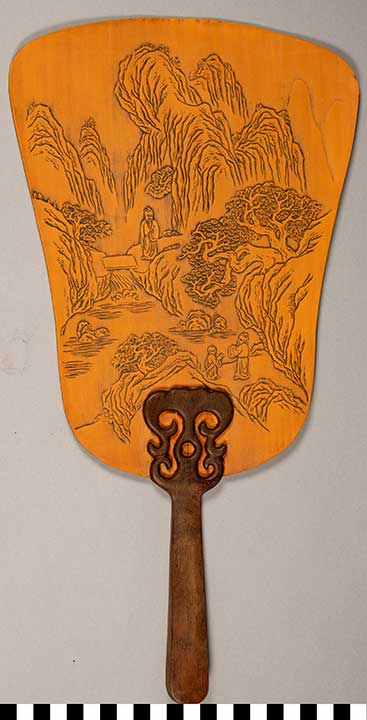
Fan: Mountain Scape and Inscription2020.06.0023 (2020.06.0023)
42.5 x 22.4 x 1 cm (150 g)
Location: Asia, East: China
Period: Early 20th century
Classification/Nomenclature: Personal Artifacts : Personal Gear : Personal Assistive Artifacts
Period: Early 20th century
Classification/Nomenclature: Personal Artifacts : Personal Gear : Personal Assistive Artifacts
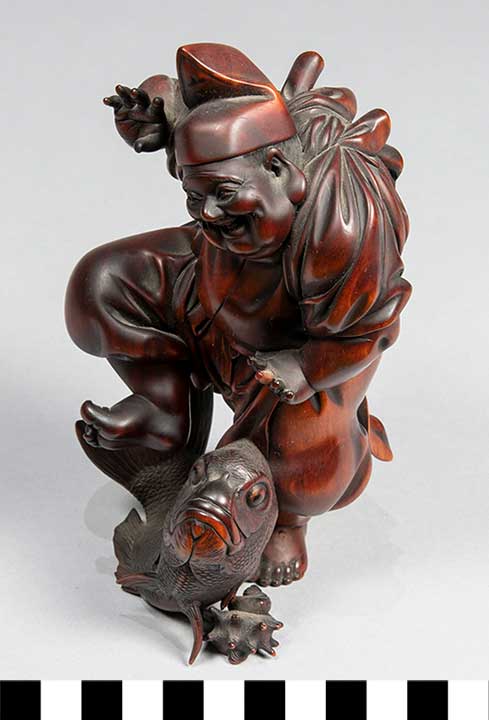
Okimono: Ebisu Riding a Tai, Sea Breem, Fish2020.06.0024 (2020.06.0024)
17.1 x 9.6 x 8.5 cm (297 g)
Location: Asia, East: Japan
Period: Late Edo Period
Classification/Nomenclature: Communication Artifacts : Art
Description: This Japanese okimono depicts Ebisu, a Japanese god of merchants, fishermen, and prosperity, riding on a large tai (sea bream)...
Period: Late Edo Period
Classification/Nomenclature: Communication Artifacts : Art
Description: This Japanese okimono depicts Ebisu, a Japanese god of merchants, fishermen, and prosperity, riding on a large tai (sea bream)...
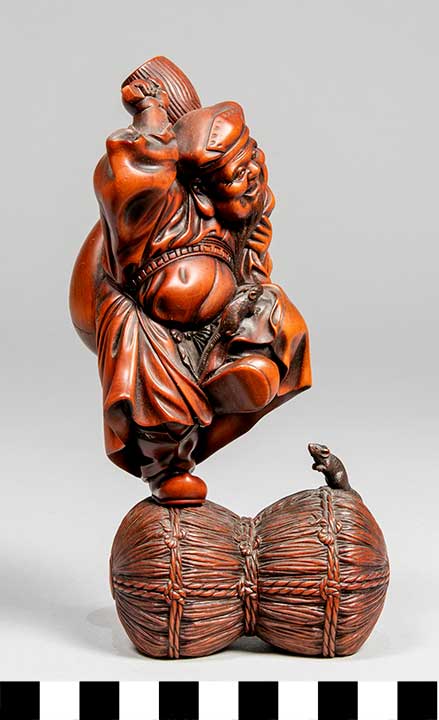
Okimono: Daikoku, One of Seven Japanese Household Gods of Good Luck2020.06.0025 (2020.06.0025)
16.3 x 7.2 x 7 cm (227 g)
Location: Asia, East: Japan
Period: Meiji Period; c. 1890
Classification/Nomenclature: Communication Artifacts : Art
Description: This is a Japanese boxwood okimono of Daikoku, dressed in a decorative robe, balancing on a double gourd rice bale with rats accompanying him...
Period: Meiji Period; c. 1890
Classification/Nomenclature: Communication Artifacts : Art
Description: This is a Japanese boxwood okimono of Daikoku, dressed in a decorative robe, balancing on a double gourd rice bale with rats accompanying him...
Search Examples
Explore More
Access the public portions of the catalog records for the approximately 50,000 cultural and ethnographic objects in the Museum's Artifact Collection.