
Search Results
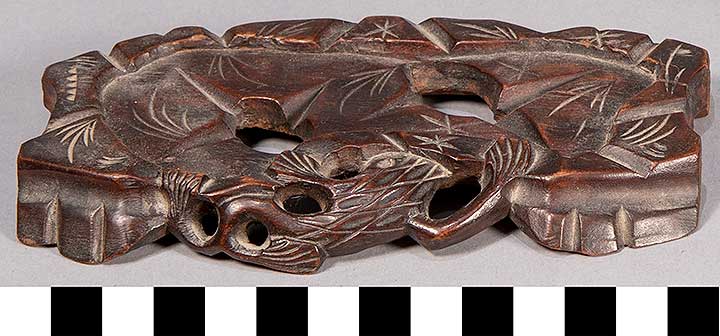
Base2020.06.0045B (2020.06.0045B)
14.2 x 7.5 x 2 cm (77 g)
Location: Asia, East: China
Classification/Nomenclature: Furnishings : Furniture : Support Furniture
Classification/Nomenclature: Furnishings : Furniture : Support Furniture
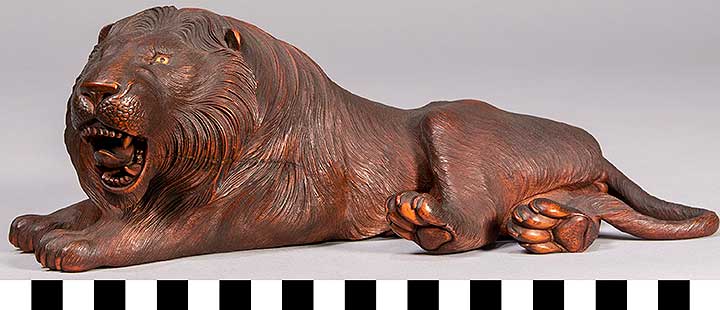
Okimono: Lion2020.06.0046 (2020.06.0046)
26 x 10.8 x 9.4 cm (623 g)
Location: Asia, East: Japan
Period: c. 1870
Classification/Nomenclature: Communication Artifacts : Art
Description: This is a Japanese okimono of a recumbent lion. Like the tiger, the lion is an animal revered in Asian culture as a symbol of strength and courage...
Period: c. 1870
Classification/Nomenclature: Communication Artifacts : Art
Description: This is a Japanese okimono of a recumbent lion. Like the tiger, the lion is an animal revered in Asian culture as a symbol of strength and courage...
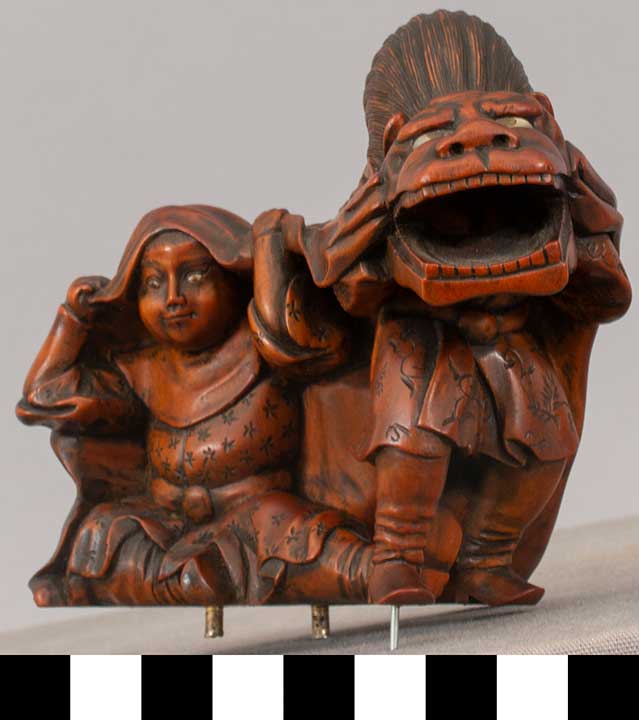
Okimono: Karako, Tang Children, Chinese Children in Shishi-Mai, Lion Dance, Costume2020.06.0047A (2020.06.0047A)
11.5 x 10.5 x 7 cm (280 g)
Location: Asia, East: Japan
Period: Meiji Period; c. 1880
Classification/Nomenclature: Communication Artifacts : Art
Description: This is a Japanese boxwood okimono of two boys dressed in a shishi-mai (lion dance) costume. This dance became a custom in Japanese festivals after the eighth century as a form of entertainment, a means of warding off evil spirits, and a ritual to pray for peace and a bountiful harvest...
Period: Meiji Period; c. 1880
Classification/Nomenclature: Communication Artifacts : Art
Description: This is a Japanese boxwood okimono of two boys dressed in a shishi-mai (lion dance) costume. This dance became a custom in Japanese festivals after the eighth century as a form of entertainment, a means of warding off evil spirits, and a ritual to pray for peace and a bountiful harvest...
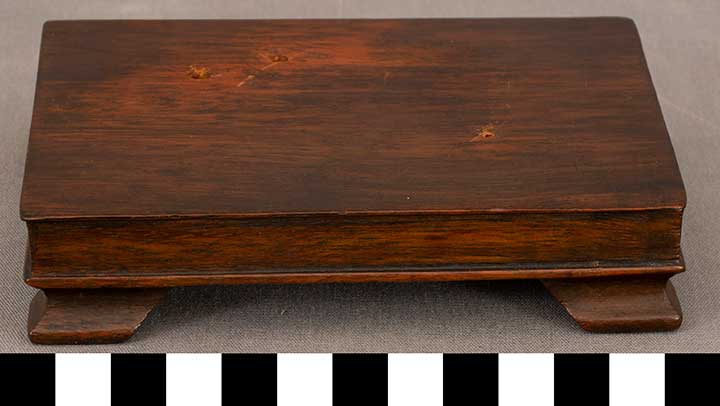
Base for Okimono2020.06.0047B (2020.06.0047B)
12.8 x 9.5 x 2.8 cm (280 g)
Location: Asia, East: Japan
Period: Meiji Period; c. 1880
Classification/Nomenclature: Furnishings : Furniture : Support Furniture
Description: This is the base of a Japanese boxwood okimono of two boys dressed in a shishi-mai (lion dance) costume...
Period: Meiji Period; c. 1880
Classification/Nomenclature: Furnishings : Furniture : Support Furniture
Description: This is the base of a Japanese boxwood okimono of two boys dressed in a shishi-mai (lion dance) costume...
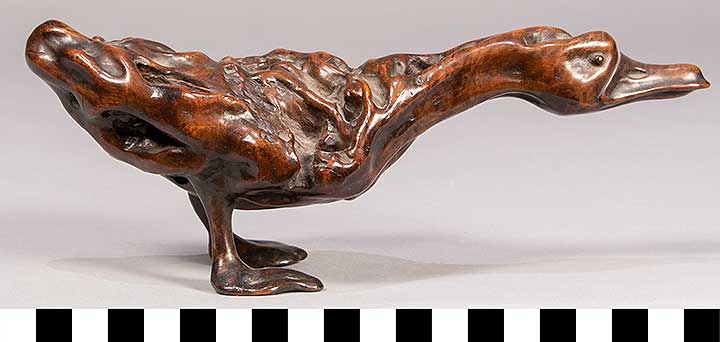
Okimono: Goose2020.06.0048 (2020.06.0048)
20 x 7.5 x 6 cm (136 g)
Location: Asia, East: Japan
Period: Meiji Period; Circa 1904-1910
Classification/Nomenclature: Communication Artifacts : Art
Description: This is a Japanese okimono of a goose. This was produced by Okaji and Co. Osaka and displayed at the Japan-British Exhibition in 1910...
Period: Meiji Period; Circa 1904-1910
Classification/Nomenclature: Communication Artifacts : Art
Description: This is a Japanese okimono of a goose. This was produced by Okaji and Co. Osaka and displayed at the Japan-British Exhibition in 1910...
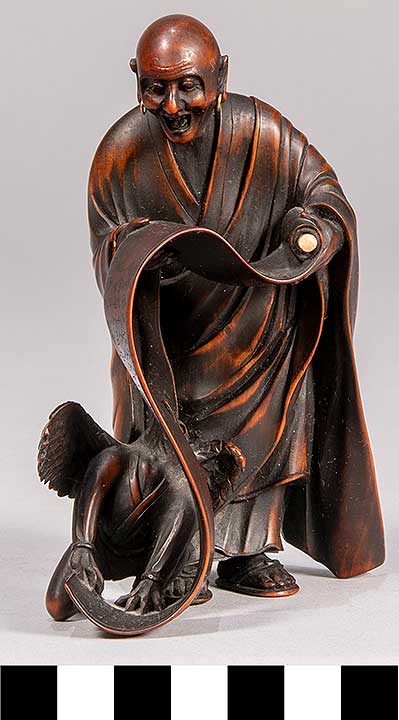
Okimono: Arhat, Rakan Reading Sutra to a Tengu2020.06.0049 (2020.06.0049)
11.7 x 8.4 x 7.4 cm (86 g)
Location: Asia, East: Japan
Period: Late Meiji Period; C. 1890
Classification/Nomenclature: Communication Artifacts : Art
Description: This is a Japanese okimono of an Arhat or Rakan, a Buddhist holy figure, who is reading a sutra to a tengu, a forest and mountain goblin...
Period: Late Meiji Period; C. 1890
Classification/Nomenclature: Communication Artifacts : Art
Description: This is a Japanese okimono of an Arhat or Rakan, a Buddhist holy figure, who is reading a sutra to a tengu, a forest and mountain goblin...
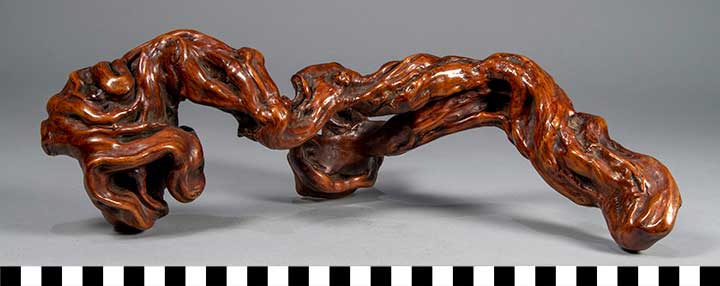
Scholar's Object: Branch2020.06.0050 (2020.06.0050)
35 x 18 x 12.5 cm (369 g)
Location: Asia, East: China
Period: Late Qing - Republic Period
Classification/Nomenclature: Communication Artifacts : Art
Description: Ornamental objects were items of interest for the Chinese scholar's desk. The concept of the "four treasures" (inkstone, ink, brush, and paper) of a scholar's study became an appreciated facet of interior design during the Song Dynasty (960-1279)...
Period: Late Qing - Republic Period
Classification/Nomenclature: Communication Artifacts : Art
Description: Ornamental objects were items of interest for the Chinese scholar's desk. The concept of the "four treasures" (inkstone, ink, brush, and paper) of a scholar's study became an appreciated facet of interior design during the Song Dynasty (960-1279)...
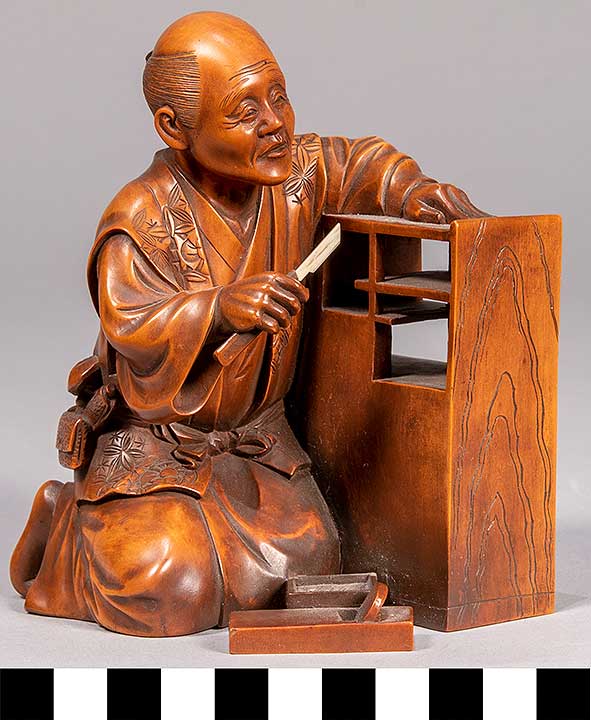
Figure: Carpenter2020.06.0051 (2020.06.0051)
13.2 x 10.8 x 8.7 cm (280 g)
Location: Asia, East: Japan
Period: Meiji Period (1868-1912); c. 1868-1912
Classification/Nomenclature: Communication Artifacts : Art
Period: Meiji Period (1868-1912); c. 1868-1912
Classification/Nomenclature: Communication Artifacts : Art
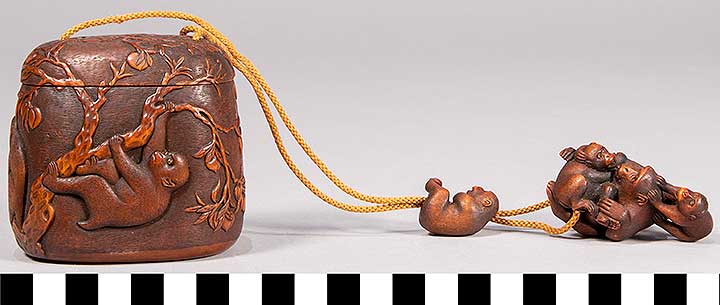
Tonkotsu, Tobacco Box, Netsuke and Ojime: Monkeys2020.06.0052 (2020.06.0052)
36 x 7.5 x 6 cm (177 g)
Location: Asia, East: Japan
Period: Edo Period (1615-1868); 19th Century
Classification/Nomenclature: Furnishings : Household Accessories : Storage & Display Accessories
Description: This Japanese clothing artifact is a connected tonkotsu (tobacco box), netsuke, and ojime, all containing the motifs of monkeys...
Period: Edo Period (1615-1868); 19th Century
Classification/Nomenclature: Furnishings : Household Accessories : Storage & Display Accessories
Description: This Japanese clothing artifact is a connected tonkotsu (tobacco box), netsuke, and ojime, all containing the motifs of monkeys...
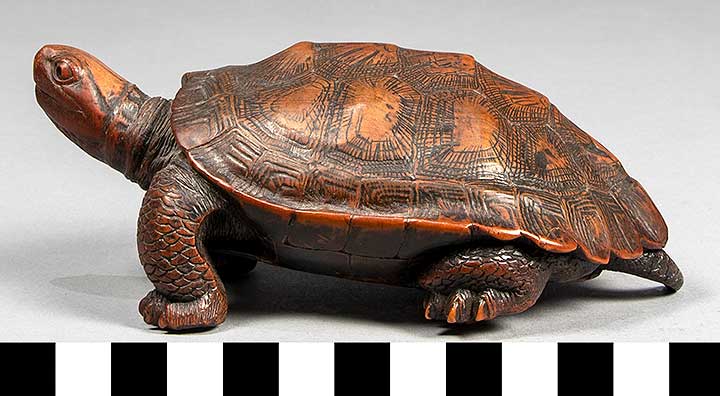
Okimono: Tortoises2020.06.0053A (2020.06.0053A)
13.5 x 7.8 x 5 cm (152 g)
Location: Asia, East: Japan
Period: Late Edo Period; Circa 1850
Classification/Nomenclature: Communication Artifacts : Art
Description: This is a Japanese okimono of tortoises (kame), with the smaller tortoise on the base portion. Given that the shell often represents a suit of armor, the animal has often been referred to as the Dark Warrior...
Period: Late Edo Period; Circa 1850
Classification/Nomenclature: Communication Artifacts : Art
Description: This is a Japanese okimono of tortoises (kame), with the smaller tortoise on the base portion. Given that the shell often represents a suit of armor, the animal has often been referred to as the Dark Warrior...
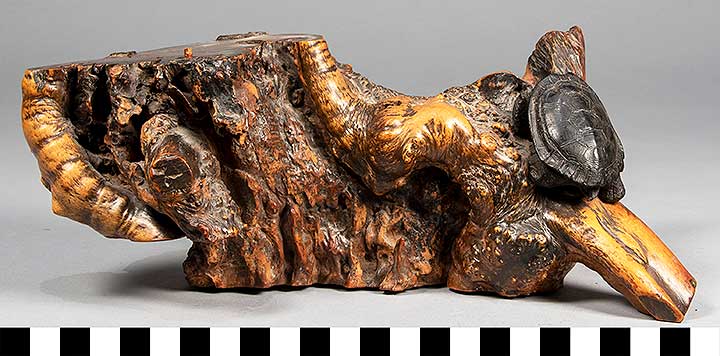
Okimono Base2020.06.0053B (2020.06.0053B)
25.5 x 11 x 9.2 cm (734 g)
Location: Asia, East: Japan
Period: Late Edo Period; Circa 1850
Classification/Nomenclature: Furnishings : Furniture : Support Furniture
Description: This is the base for a Japanese okimono of tortoises (kame), with the smaller tortoise on this base portion...
Period: Late Edo Period; Circa 1850
Classification/Nomenclature: Furnishings : Furniture : Support Furniture
Description: This is the base for a Japanese okimono of tortoises (kame), with the smaller tortoise on this base portion...
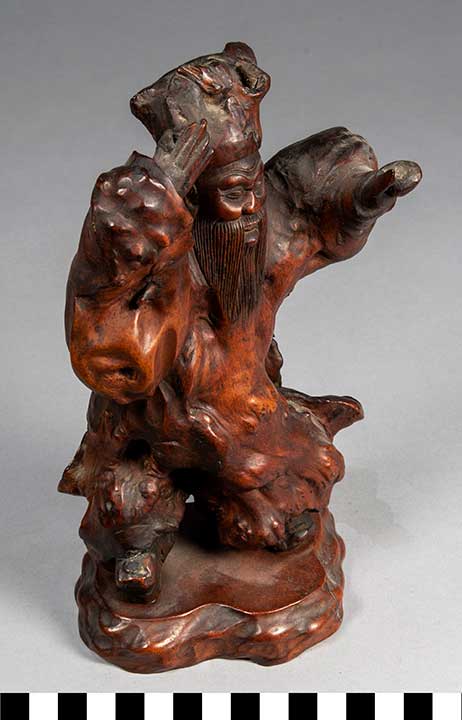
Figure: Scholar2020.06.0054 (2020.06.0054)
23 x 14 x 10.4 cm (513 g)
Location: Asia, East: China
Period: Qing Dynasty; 18th Century - Early 19th Century
Classification/Nomenclature: Communication Artifacts : Art
Description: The Spurlock museum holds a variety of Chinese lacquer figures created during the Qing Dynasty (1644-1911), and they serve as representations of regional beliefs and ethics, cultural figureheads, and the human condition...
Period: Qing Dynasty; 18th Century - Early 19th Century
Classification/Nomenclature: Communication Artifacts : Art
Description: The Spurlock museum holds a variety of Chinese lacquer figures created during the Qing Dynasty (1644-1911), and they serve as representations of regional beliefs and ethics, cultural figureheads, and the human condition...

Chopsticks Box2020.06.0055A (2020.06.0055A)
25.6 x 4 x 1.8 cm (78 g)
Location: Asia, East: Japan
Classification/Nomenclature: Materials T&E : Food Service T&E : Serving Vessels
Classification/Nomenclature: Materials T&E : Food Service T&E : Serving Vessels

Chopsticks Box Lid2020.06.0055B (2020.06.0055B)
25.1 x 3 x .4 cm (27 g)
Location: Asia, East: Japan
Classification/Nomenclature: Materials T&E : Food Service T&E : Serving Vessels
Classification/Nomenclature: Materials T&E : Food Service T&E : Serving Vessels

Chopstick2020.06.0055C (2020.06.0055C)
24 x cm (8 g)
Location: Asia, East: Japan
Classification/Nomenclature: Materials T&E : Food Service T&E : Food Service Accessories
Classification/Nomenclature: Materials T&E : Food Service T&E : Food Service Accessories

Chopstick2020.06.0055D (2020.06.0055D)
24 x cm (8 g)
Location: Asia, East: Japan
Classification/Nomenclature: Materials T&E : Food Service T&E : Food Service Accessories
Classification/Nomenclature: Materials T&E : Food Service T&E : Food Service Accessories

Chopstick2020.06.0055E (2020.06.0055E)
24 x cm (8 g)
Location: Asia, East: Japan
Classification/Nomenclature: Materials T&E : Food Service T&E : Food Service Accessories
Classification/Nomenclature: Materials T&E : Food Service T&E : Food Service Accessories

Chopstick2020.06.0055F (2020.06.0055F)
24 x cm (8 g)
Location: Asia, East: Japan
Classification/Nomenclature: Materials T&E : Food Service T&E : Food Service Accessories
Classification/Nomenclature: Materials T&E : Food Service T&E : Food Service Accessories

Kiseruzutsu, Pipe Set: Pipe2020.06.0056A (2020.06.0056A)
21.7 x 1.8 x 1.3 cm (28 g)
Location: Asia, East: Japan
Period: Late Edo Period
Classification/Nomenclature: Personal Artifacts : Personal Gear : Smoking & Drug Equipment
Period: Late Edo Period
Classification/Nomenclature: Personal Artifacts : Personal Gear : Smoking & Drug Equipment
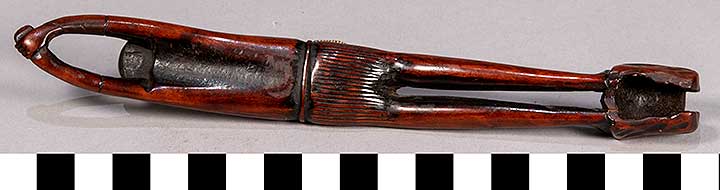
Kiseruzutsu, Pipe Set: Pipe Holder2020.06.0056B (2020.06.0056B)
20.5 x 3.9 x 2.7 cm (40 g)
Location: Asia, East: Japan
Period: Late Edo Period
Classification/Nomenclature: Personal Artifacts : Personal Gear : Smoking & Drug Equipment
Period: Late Edo Period
Classification/Nomenclature: Personal Artifacts : Personal Gear : Smoking & Drug Equipment

Kiseruzutsu, Pipe Set: Pipe2020.06.0057A (2020.06.0057A)
19.4 x 1.8 x 1.2 cm (25 g)
Location: Asia, East: Japan
Period: Late Meiji Period; 19th Century
Classification/Nomenclature: Personal Artifacts : Personal Gear : Smoking & Drug Equipment
Period: Late Meiji Period; 19th Century
Classification/Nomenclature: Personal Artifacts : Personal Gear : Smoking & Drug Equipment

Kiseruzutsu, Pipe Set: Pipe Holder2020.06.0057B (2020.06.0057B)
22.7 x 2.6 x 2.3 cm (52 g)
Location: Asia, East: Japan
Period: Late Meiji Period; 19th Century
Classification/Nomenclature: Personal Artifacts : Personal Gear : Smoking & Drug Equipment
Period: Late Meiji Period; 19th Century
Classification/Nomenclature: Personal Artifacts : Personal Gear : Smoking & Drug Equipment
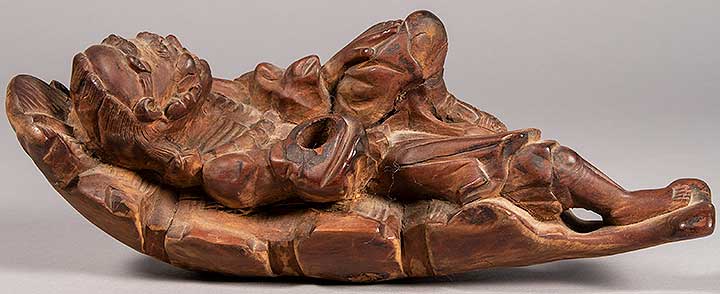
Figurine: Panthaka2020.06.0058 (2020.06.0058)
21.5 x 13 x 10 cm (817 g)
Location: Asia, East: China
Period: 18th century
Classification/Nomenclature: Communication Artifacts : Art
Period: 18th century
Classification/Nomenclature: Communication Artifacts : Art
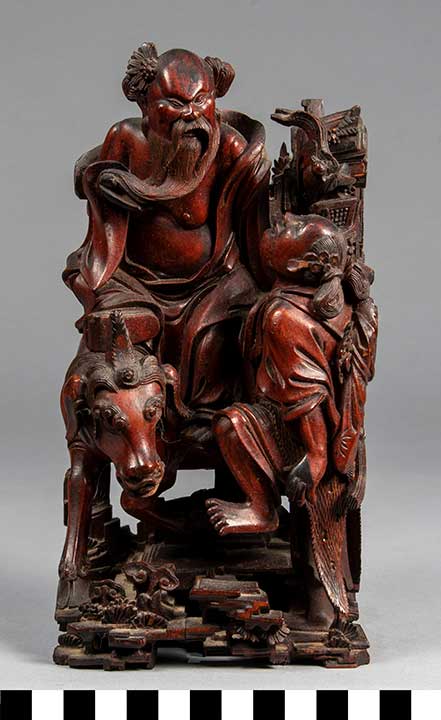
Figure Riding Unicorn Oxen2020.06.0059 (2020.06.0059)
21.6 x 11.5 x 8 cm (392 g)
Location: Asia, East: Japan
Classification/Nomenclature: Communication Artifacts : Art
Classification/Nomenclature: Communication Artifacts : Art
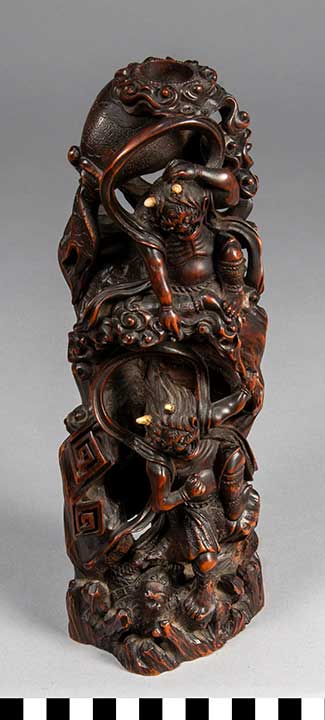
Okimono: Two Oni2020.06.0060 (2020.06.0060)
26 x 9.5 x 7.9 cm (571 g)
Location: Asia, East: Japan
Period: Late Meiji, Early Taisho; Early 20th century
Classification/Nomenclature: Communication Artifacts : Art
Description: This is a Japanese okimono of two oni (demons) on a mountainous landscape. They are surrounded by vines which are reminiscent of stylized ruyi, a scepter-like emblem used in Buddhist ceremonies...
Period: Late Meiji, Early Taisho; Early 20th century
Classification/Nomenclature: Communication Artifacts : Art
Description: This is a Japanese okimono of two oni (demons) on a mountainous landscape. They are surrounded by vines which are reminiscent of stylized ruyi, a scepter-like emblem used in Buddhist ceremonies...
Search Examples
Explore More
Access the public portions of the catalog records for the approximately 50,000 cultural and ethnographic objects in the Museum's Artifact Collection.