
Search Results
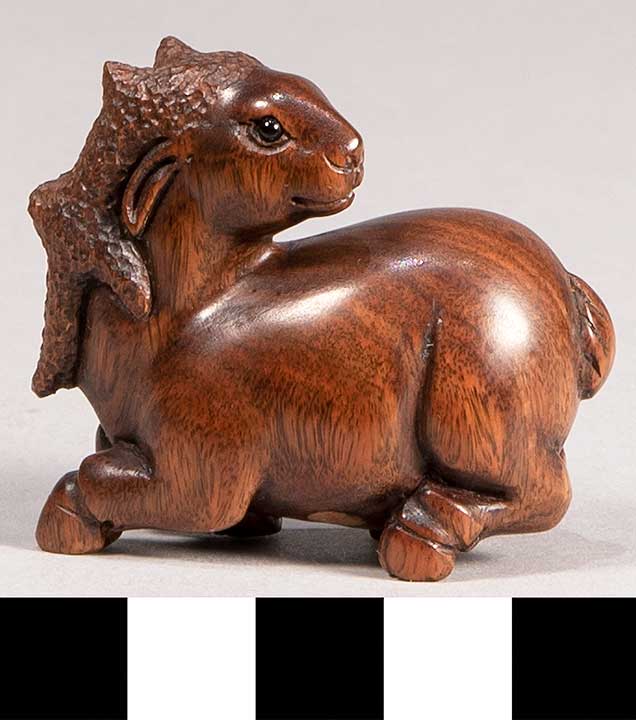
Netsuke: Deer2020.06.0090 (2020.06.0090)
4.8 x 4.3 x 2.5 cm (24 g)
Location: Asia, East: Japan
Period: Circa 20th Century
Classification/Nomenclature: Communication Artifacts : Art
Description: The netsuke, literally meaning root (ne) and attached or hung (tsuke) is a clothing fastener which is situated on the upper end of the kimono sash (obi)...
Period: Circa 20th Century
Classification/Nomenclature: Communication Artifacts : Art
Description: The netsuke, literally meaning root (ne) and attached or hung (tsuke) is a clothing fastener which is situated on the upper end of the kimono sash (obi)...
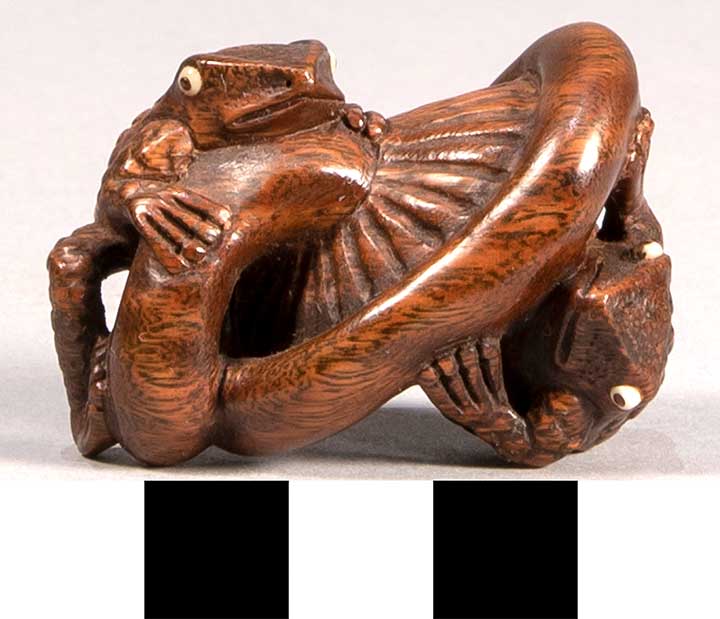
Netsuke: Two Frogs on a Mushroom2020.06.0091 (2020.06.0091)
4.5 x 3.5 x 3 cm (21 g)
Location: Asia, East: Japan
Classification/Nomenclature: Communication Artifacts : Art
Description: The netsuke, literally meaning root (ne) and attached or hung (tsuke) is a clothing fastener which is situated on the upper end of the kimono sash (obi)...
Classification/Nomenclature: Communication Artifacts : Art
Description: The netsuke, literally meaning root (ne) and attached or hung (tsuke) is a clothing fastener which is situated on the upper end of the kimono sash (obi)...
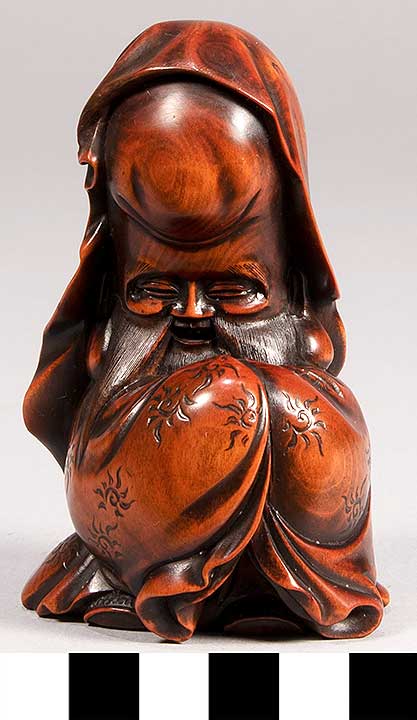
Buddha with Enlarged Forehead2020.06.0092 (2020.06.0092)
9.8 x 6.5 x 5.4 cm (116 g)
Location: Asia, East: Japan
Classification/Nomenclature: Communication Artifacts : Art
Classification/Nomenclature: Communication Artifacts : Art
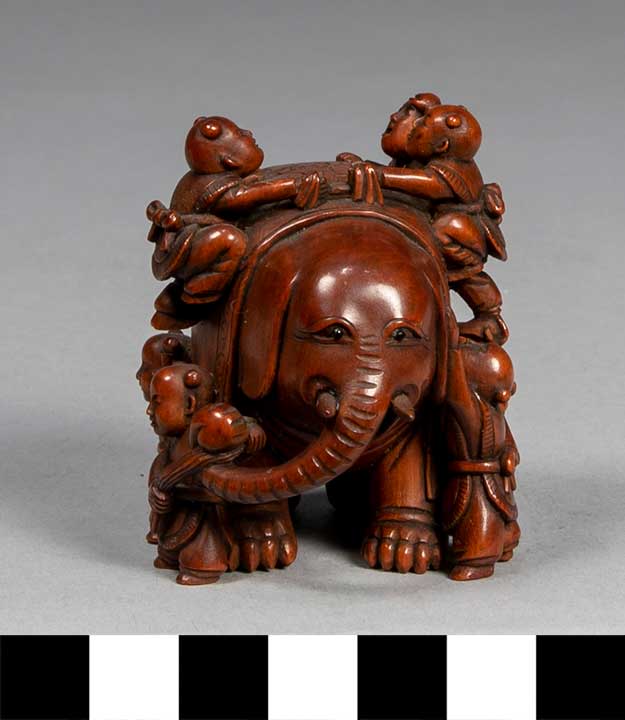
Carving: Seven Figures on an Elephant2020.06.0093 (2020.06.0093)
6.3 x 5.7 x 4.8 cm (47 g)
Location: Asia, East: Japan
Period: 19th Century
Classification/Nomenclature: Communication Artifacts : Art
Period: 19th Century
Classification/Nomenclature: Communication Artifacts : Art
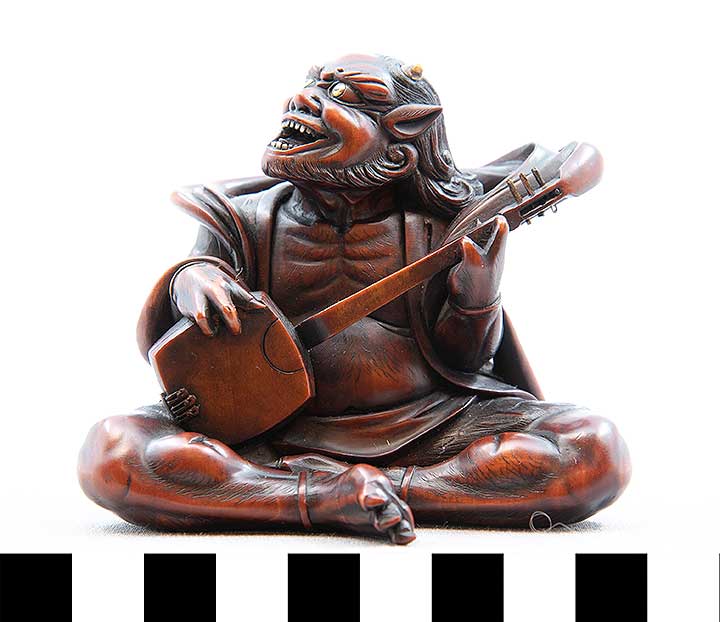
Carving: Oni2020.06.0094 (2020.06.0094)
8.5 x 7.5 x 6.5 cm (95 g)
Location: Asia, East: Japan
Period: c. 1860
Classification/Nomenclature: Communication Artifacts : Art
Period: c. 1860
Classification/Nomenclature: Communication Artifacts : Art
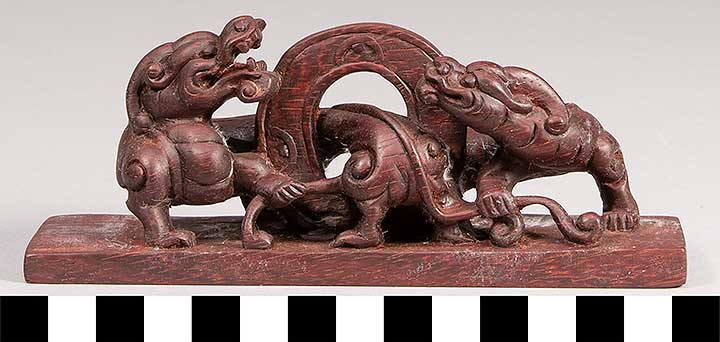
Brush Rest2020.06.0095 (2020.06.0095)
15.3 x 6.5 x 3.5 cm (88 g)
Location: Asia, East: China
Period: Late Qing Dynasty; Early 20th Century
Classification/Nomenclature: Communication Artifacts : Art
Description: Brush rests were among the coveted items made for the Chinese scholar's desk. This type of brush rest, typically constrf the "four treasures" (inkstone, ink, brush, and paper) of a scholar's study became an appreciated facet of interior design during the Song Dynasty (960-1279)...
Period: Late Qing Dynasty; Early 20th Century
Classification/Nomenclature: Communication Artifacts : Art
Description: Brush rests were among the coveted items made for the Chinese scholar's desk. This type of brush rest, typically constrf the "four treasures" (inkstone, ink, brush, and paper) of a scholar's study became an appreciated facet of interior design during the Song Dynasty (960-1279)...
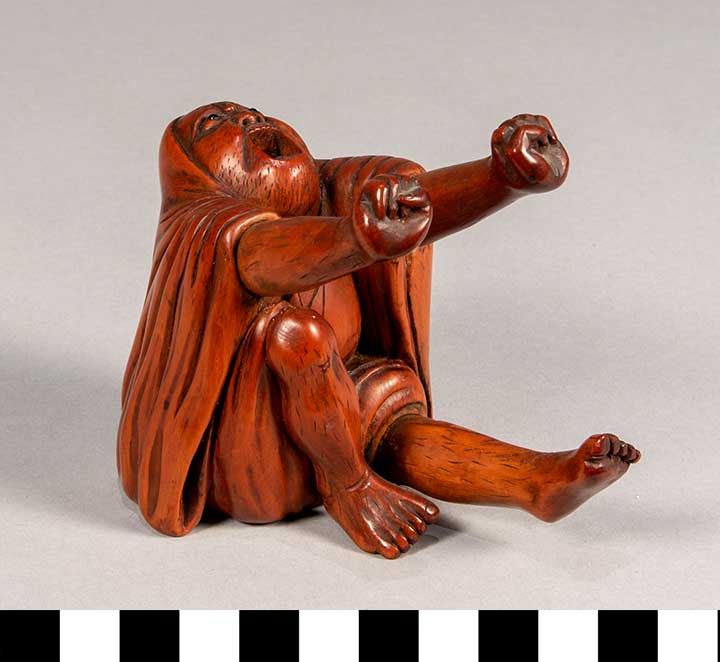
Daruma2020.06.0096 (2020.06.0096)
10 x 8.7 x 6.5 cm (124 g)
Location: Asia, East: Japan
Period: Showa Period; Circa late 1920s
Classification/Nomenclature: Communication Artifacts : Art
Period: Showa Period; Circa late 1920s
Classification/Nomenclature: Communication Artifacts : Art
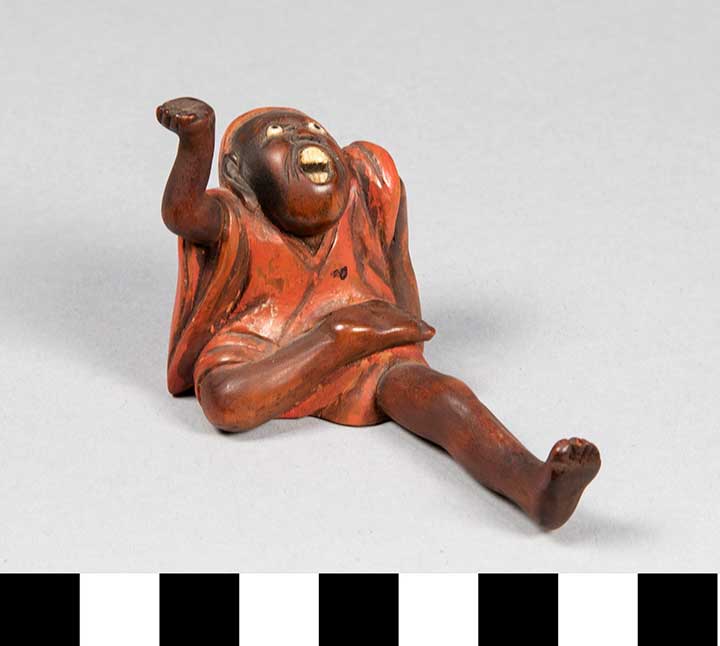
Daruma2020.06.0097 (2020.06.0097)
6.9 x 4.7 x 4 cm (19 g)
Location: Asia, East: Japan
Period: Late Meiji Period
Classification/Nomenclature: Communication Artifacts : Art
Period: Late Meiji Period
Classification/Nomenclature: Communication Artifacts : Art
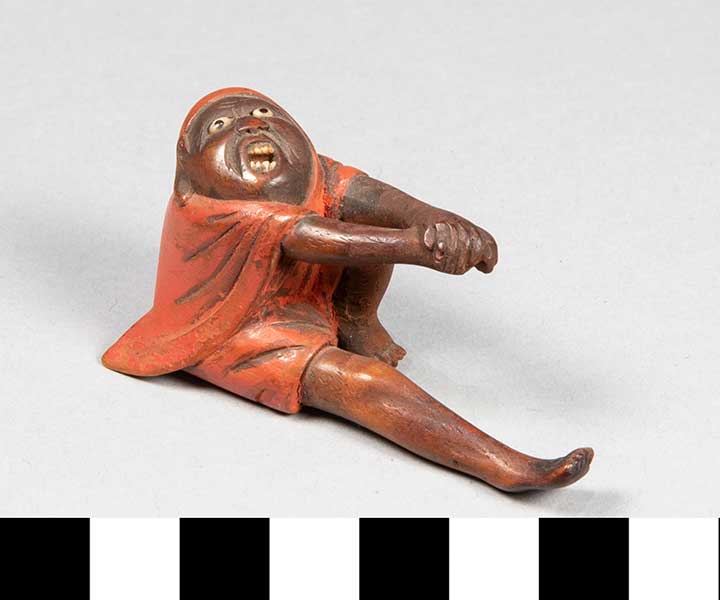
Okimono: Daruma2020.06.0098 (2020.06.0098)
6.3 x 3.2 x 3 cm (129 g)
Location: Asia, East: Japan
Period: Late Meiji Period
Classification/Nomenclature: Communication Artifacts : Art
Description: This Japanese okimono is of Daruma. He is commonly considered to be the founder of Chan (Zen) Buddhism and is credited with introducing the Chan philosophy to China...
Period: Late Meiji Period
Classification/Nomenclature: Communication Artifacts : Art
Description: This Japanese okimono is of Daruma. He is commonly considered to be the founder of Chan (Zen) Buddhism and is credited with introducing the Chan philosophy to China...
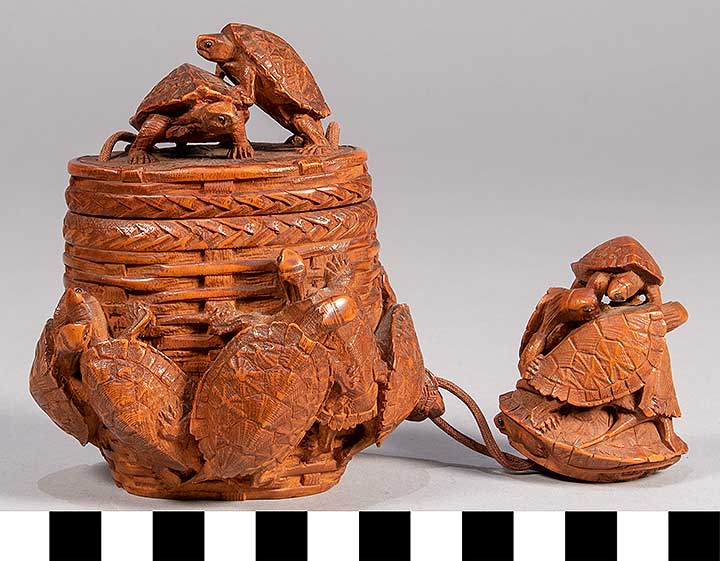
Tonkotsu, Tobacco Box2020.06.0099 (2020.06.0099)
27 x 8.8 x 5.3 cm (177 g)
Location: Asia, East: Japan
Period: Meiji Period; 19th Century
Classification/Nomenclature: Furnishings : Household Accessories : Storage & Display Accessories
Period: Meiji Period; 19th Century
Classification/Nomenclature: Furnishings : Household Accessories : Storage & Display Accessories
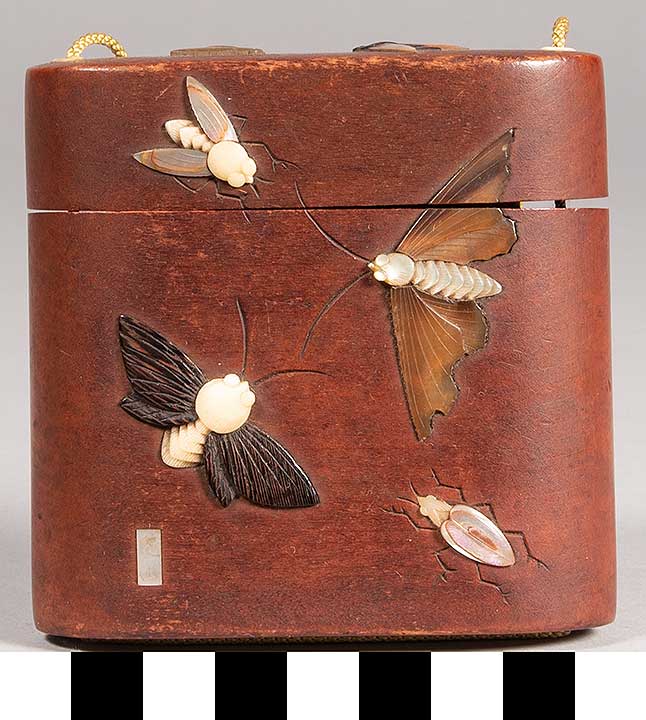
Tonkotsu, Tobacco Box with Ojime, Cord Fastener2020.06.0100 (2020.06.0100)
21.5 x 9 x 3.5 cm (75 g)
Location: Asia, East: Japan
Period: Meijji Period; 19th century
Classification/Nomenclature: Furnishings : Household Accessories : Storage & Display Accessories
Period: Meijji Period; 19th century
Classification/Nomenclature: Furnishings : Household Accessories : Storage & Display Accessories
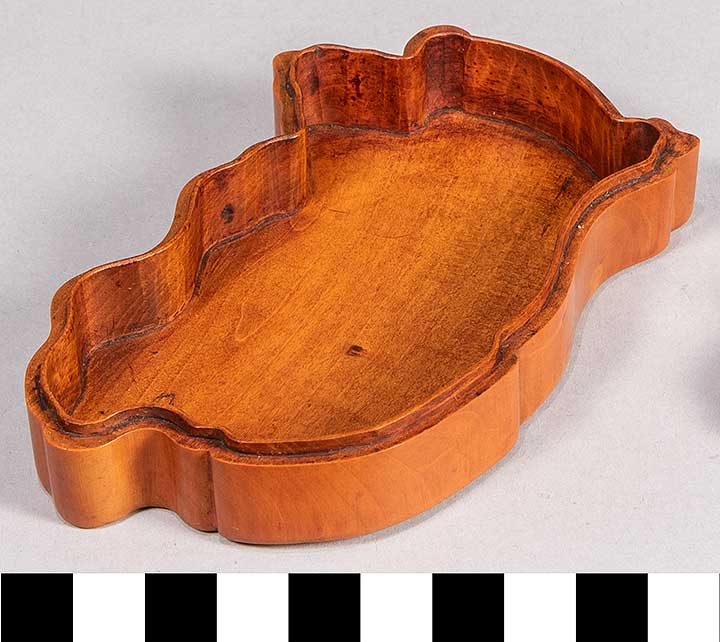
Container with Flowers and Frog2020.06.0101A (2020.06.0101A)
13 x 7 x 1.8 cm (34 g)
Location: Asia, East: Japan
Period: Meiji Period
Classification/Nomenclature: Furnishings : Household Accessories : Storage & Display Accessories
Period: Meiji Period
Classification/Nomenclature: Furnishings : Household Accessories : Storage & Display Accessories
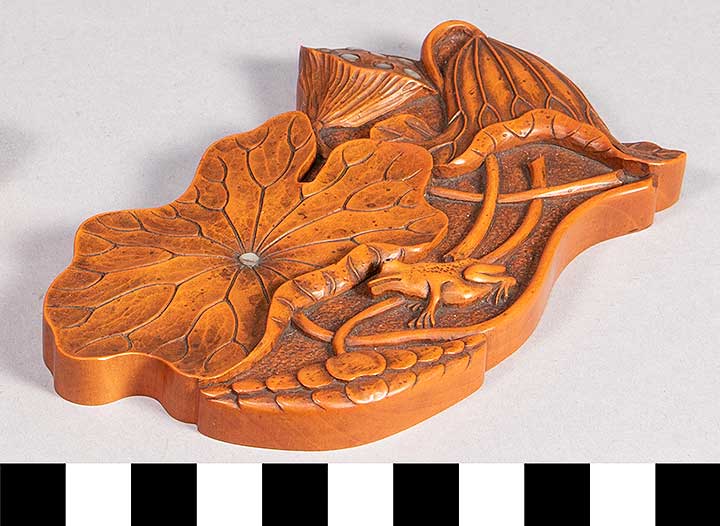
Container Lid2020.06.0101B (2020.06.0101B)
12.3 x 7 x 1.1 cm (34 g)
Location: Asia, East: Japan
Period: Meiji Period
Classification/Nomenclature: Furnishings : Household Accessories : Storage & Display Accessories
Period: Meiji Period
Classification/Nomenclature: Furnishings : Household Accessories : Storage & Display Accessories
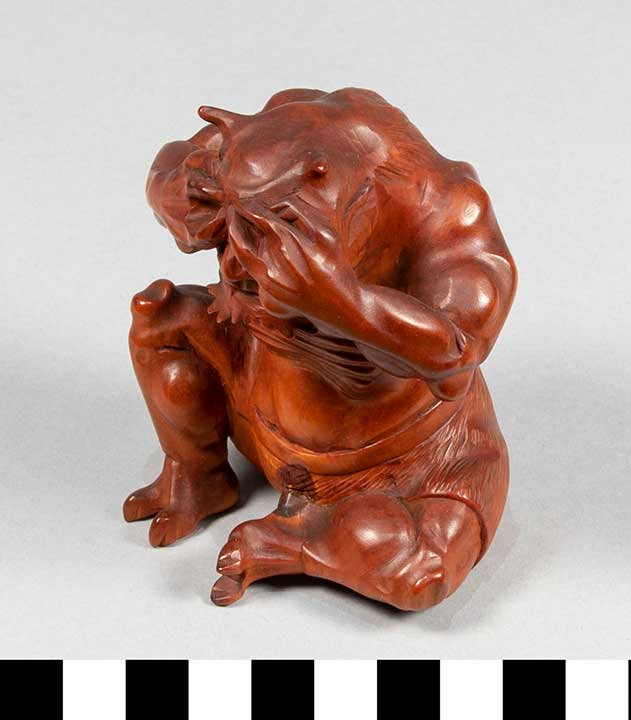
Carving: ‘See No Evil’ Oni2020.06.0102 (2020.06.0102)
9 x 7.3 x 6 cm (114 g)
Location: Asia, East: Japan
Classification/Nomenclature: Communication Artifacts : Art
Classification/Nomenclature: Communication Artifacts : Art
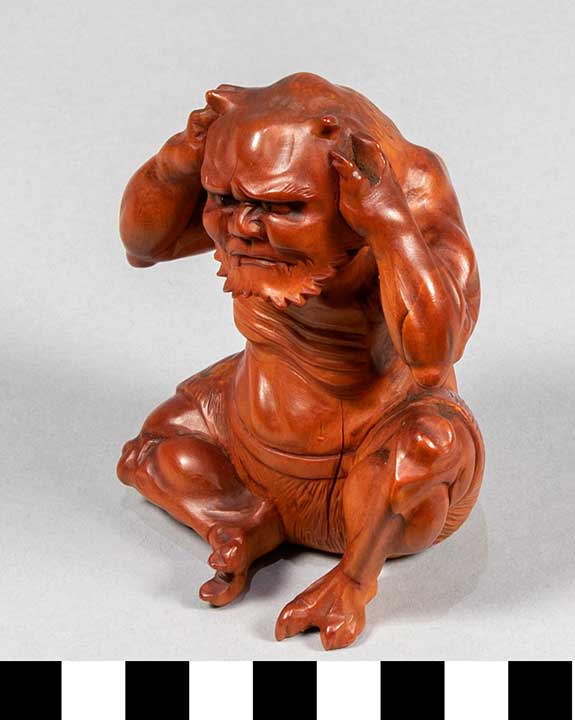
Carving: ‘Hear No Evil’ Oni2020.06.0103 (2020.06.0103)
9.7 x 7 x 5.5 cm (107 g)
Location: Asia, East: Japan
Classification/Nomenclature: Communication Artifacts : Art
Classification/Nomenclature: Communication Artifacts : Art
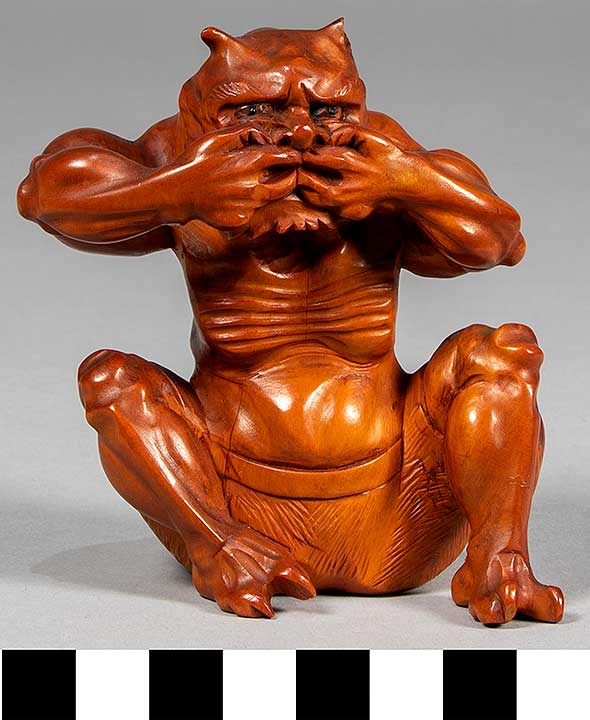
Carving: ‘Speak No Evil’ Oni2020.06.0104 (2020.06.0104)
9.4 x 8 x 6.1 cm (109 g)
Location: Asia, East: Japan
Classification/Nomenclature: Communication Artifacts : Art
Classification/Nomenclature: Communication Artifacts : Art
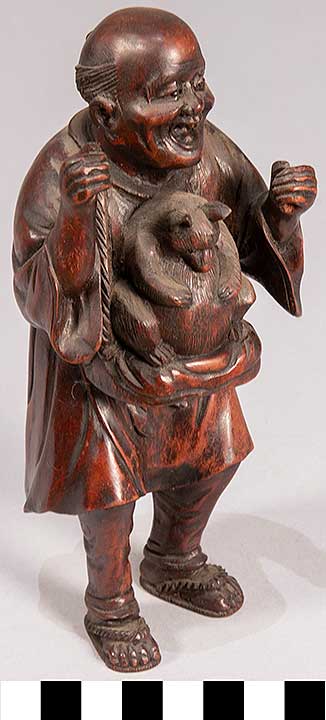
Okimono: Street Musician2020.06.0105A (2020.06.0105A)
18 x 8 x 7 cm (162 g)
Location: Asia, East: Japan
Period: Late 19th century
Classification/Nomenclature: Communication Artifacts : Art
Description: This Japanese boxwood okimono of a street musician raising drumsticks to play on a raised and seated tanuki...
Period: Late 19th century
Classification/Nomenclature: Communication Artifacts : Art
Description: This Japanese boxwood okimono of a street musician raising drumsticks to play on a raised and seated tanuki...
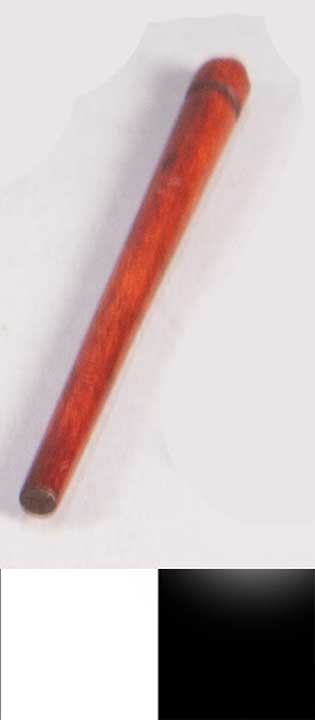
Drum Stick2020.06.0105B (2020.06.0105B)
6 x cm (1 g)
Location: Asia, East: Japan
Period: Late 19th century
Classification/Nomenclature: Communication Artifacts : Art
Description: This is the drum stick Japanese boxwood okimono of a street musician raising drumsticks to play on a raised and seated tanuki...
Period: Late 19th century
Classification/Nomenclature: Communication Artifacts : Art
Description: This is the drum stick Japanese boxwood okimono of a street musician raising drumsticks to play on a raised and seated tanuki...
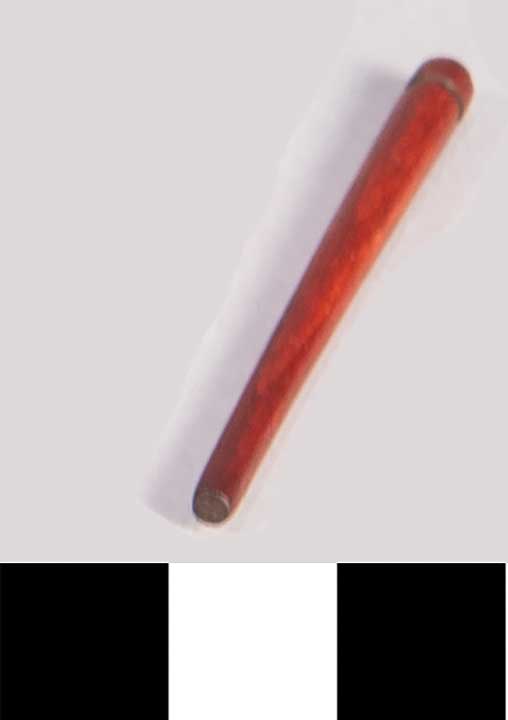
Drum Stick2020.06.0105C (2020.06.0105C)
5.9 x cm (1 g)
Location: Asia, East: Japan
Period: Late 19th century
Classification/Nomenclature: Communication Artifacts : Art
Description: This is the drum stick Japanese boxwood okimono of a street musician raising drumsticks to play on a raised and seated tanuki...
Period: Late 19th century
Classification/Nomenclature: Communication Artifacts : Art
Description: This is the drum stick Japanese boxwood okimono of a street musician raising drumsticks to play on a raised and seated tanuki...
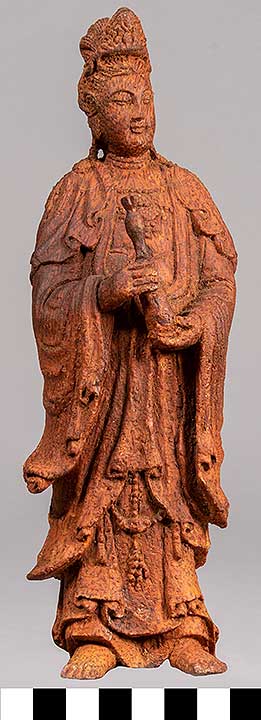
Guanyin, Bodhisattva of Compassion2020.06.0106A (2020.06.0106A)
22 x 7.4 x 5 cm (124 g)
Location: Asia, East: China
Period: Late 19th century
Classification/Nomenclature: Communication Artifacts : Art
Period: Late 19th century
Classification/Nomenclature: Communication Artifacts : Art
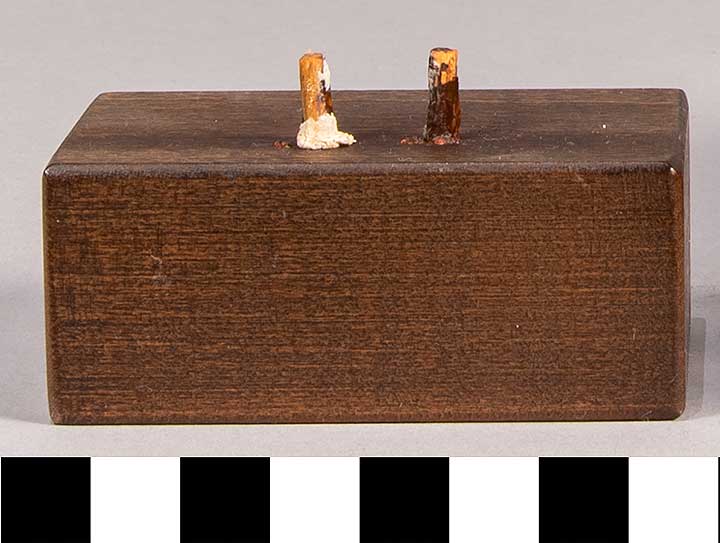
Base2020.06.0106B (2020.06.0106B)
7.5 x 5 x 3.4 cm (81 g)
Location: Asia, East: China
Period: Late 19th century
Classification/Nomenclature: Furnishings : Furniture : Support Furniture
Period: Late 19th century
Classification/Nomenclature: Furnishings : Furniture : Support Furniture
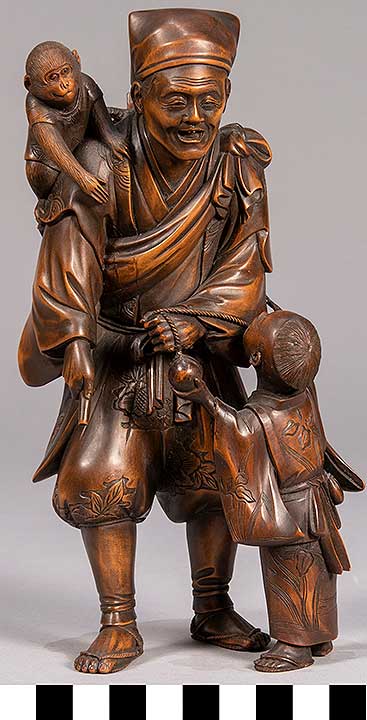
Okimono: Monkey Trainer2020.06.0107 (2020.06.0107)
19.5 x 10.4 x 8.7 cm (344 g)
Location: Asia, East: Japan
Period: Late Meiji Period; Circa 1910
Classification/Nomenclature: Communication Artifacts : Art
Description: This is a Japanese boxwood okimono of a monkey trainer, his monkey, and a boy. Monkey training is a form of entertainment that is frequently featured in Japanese art from the Edo period to the 20th century...
Period: Late Meiji Period; Circa 1910
Classification/Nomenclature: Communication Artifacts : Art
Description: This is a Japanese boxwood okimono of a monkey trainer, his monkey, and a boy. Monkey training is a form of entertainment that is frequently featured in Japanese art from the Edo period to the 20th century...
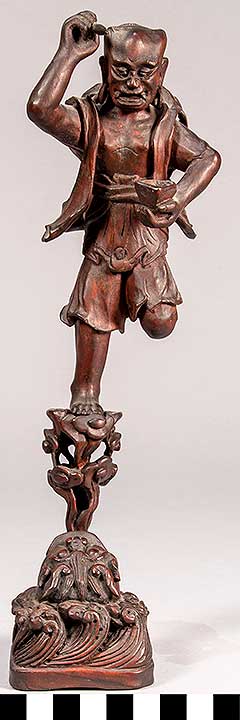
Figure: Futen2020.06.0108A (2020.06.0108A)
19.7 x 8.5 x 7.5 cm (109 g)
Location: Asia, East: Japan
Period: Edo Period
Classification/Nomenclature: Communication Artifacts : Art
Period: Edo Period
Classification/Nomenclature: Communication Artifacts : Art
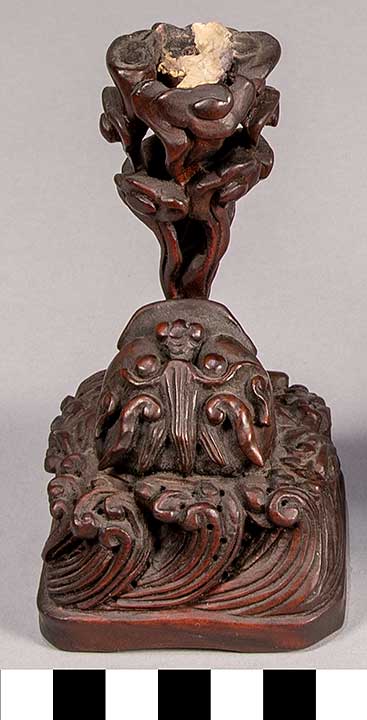
Figure Base2020.06.0108B (2020.06.0108B)
12.5 x 6.3 x 6.3 cm (101 g)
Location: Asia, East: Japan
Period: Edo Period
Classification/Nomenclature: Furnishings : Furniture : Support Furniture
Period: Edo Period
Classification/Nomenclature: Furnishings : Furniture : Support Furniture
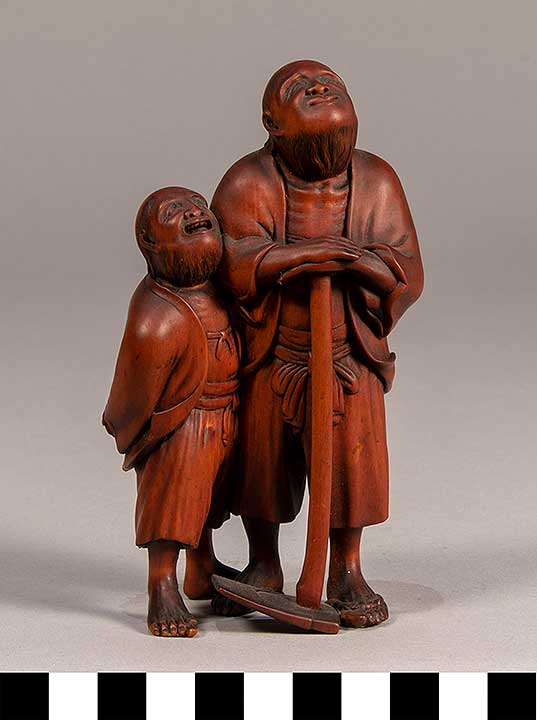
Okimono: Farmers2020.06.0109 (2020.06.0109)
12.8 x 7.8 x 5.3 cm (109 g)
Location: Asia, East: Japan
Period: Late 18th - Early 19th Century
Classification/Nomenclature: Communication Artifacts : Art
Description: This is a Japanese okimono of two farmers, both possessing farming equipment. The okimono, meaning “object of display,” is a Japanese model or free-standing figure that developed from the smaller netsukes, which were clothing fasteners that appeared as three-dimensional carved figures or flattened and engraved buttons or boxes...
Period: Late 18th - Early 19th Century
Classification/Nomenclature: Communication Artifacts : Art
Description: This is a Japanese okimono of two farmers, both possessing farming equipment. The okimono, meaning “object of display,” is a Japanese model or free-standing figure that developed from the smaller netsukes, which were clothing fasteners that appeared as three-dimensional carved figures or flattened and engraved buttons or boxes...
Search Examples
Explore More
Access the public portions of the catalog records for the approximately 50,000 cultural and ethnographic objects in the Museum's Artifact Collection.