
Search Results
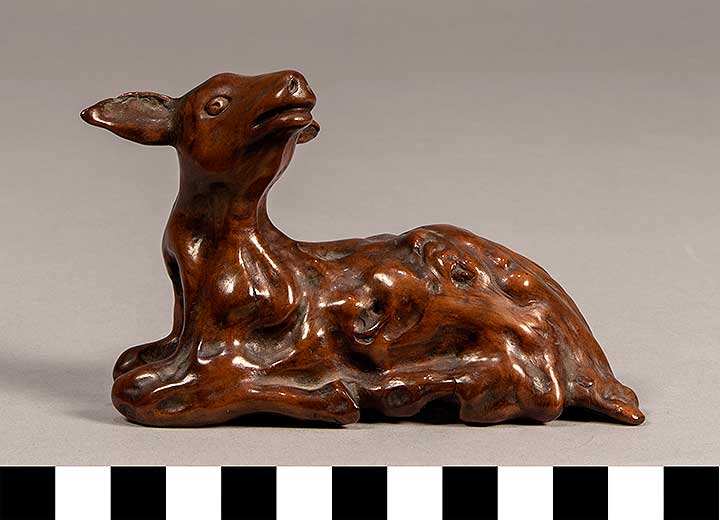
Carving: Resting Doe2020.06.0110 (2020.06.0110)
10.6 x 7.1 x 4.8 cm (71 g)
Location: Asia, East: Japan
Period: Circa 1904 - 1910
Classification/Nomenclature: Communication Artifacts : Art
Period: Circa 1904 - 1910
Classification/Nomenclature: Communication Artifacts : Art
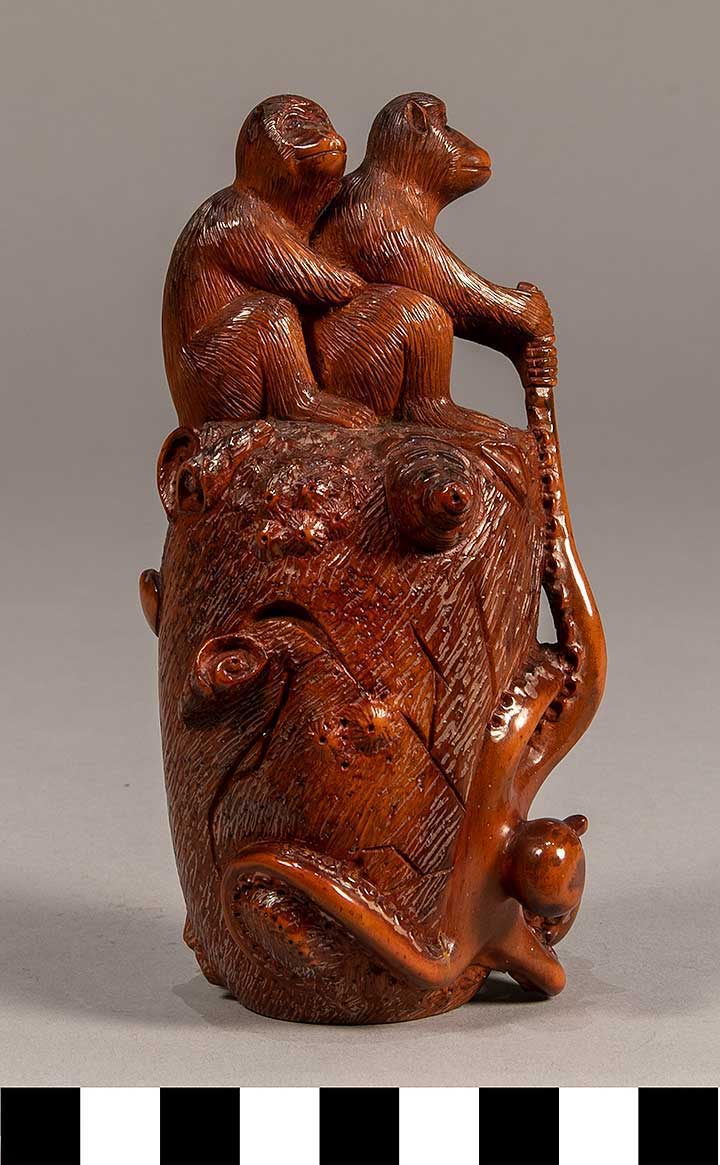
Two Monkeys Play with Octopus2020.06.0111 (2020.06.0111)
12.3 x 7 x 5.5 cm (156 g)
Location: Asia, East: Japan
Period: Meiji period; 19th century
Classification/Nomenclature: Communication Artifacts : Art
Period: Meiji period; 19th century
Classification/Nomenclature: Communication Artifacts : Art
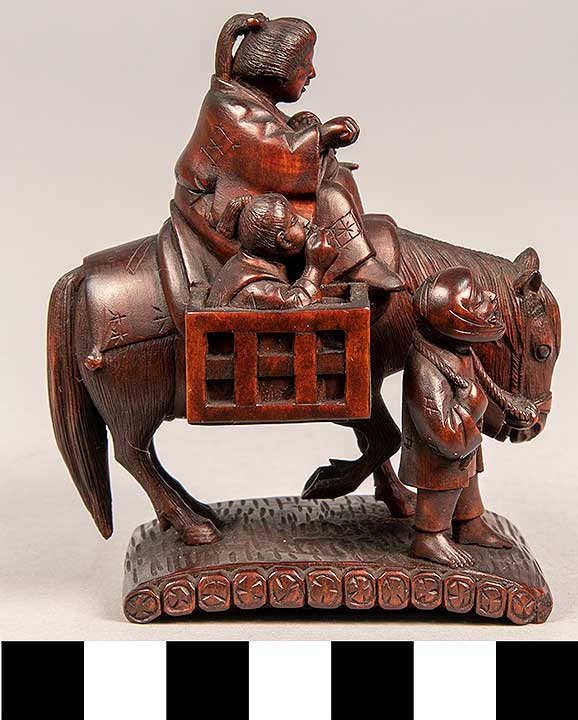
Okimono: Farmer with Horse and Family2020.06.0112 (2020.06.0112)
8.4 x 6.9 x 5.5 cm (59 g)
Location: Asia, East: Japan
Period: Meiji Period; Circa 1880
Classification/Nomenclature: Communication Artifacts : Art
Description: This is a Japanese boxwood okimono of a farmer family. The farmer leads a horse holding his three children and wife...
Period: Meiji Period; Circa 1880
Classification/Nomenclature: Communication Artifacts : Art
Description: This is a Japanese boxwood okimono of a farmer family. The farmer leads a horse holding his three children and wife...
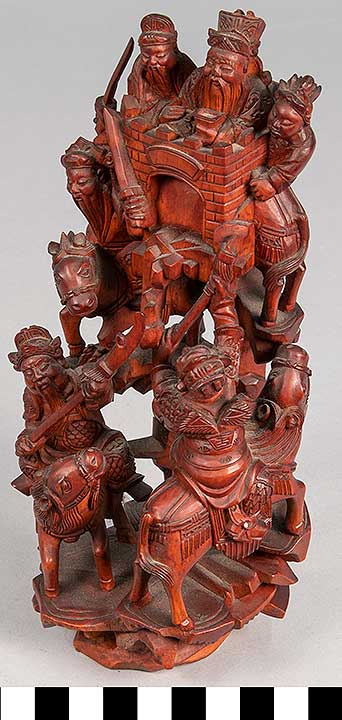
Pagoda of Men on Horseback2020.06.0113A (2020.06.0113A)
20.5 x 8.8 x 8.6 cm (297 g)
Location: Asia, East: China
Period: C. 1850
Classification/Nomenclature: Communication Artifacts : Art
Period: C. 1850
Classification/Nomenclature: Communication Artifacts : Art
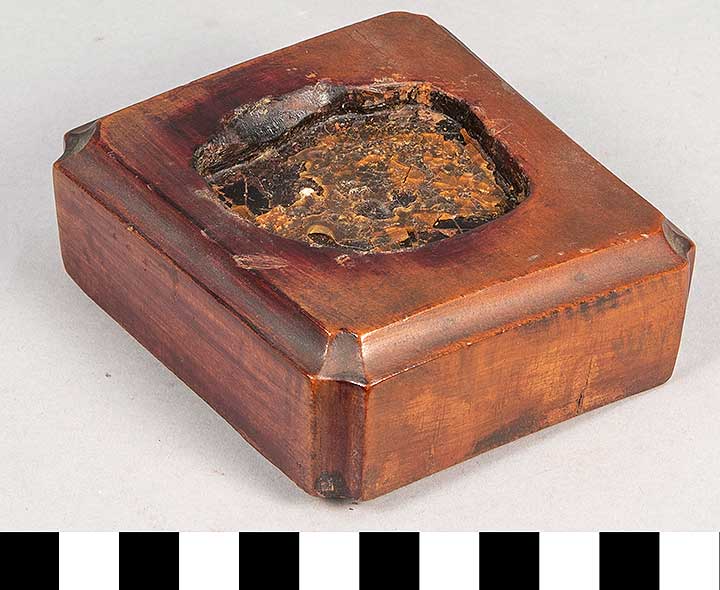
Base2020.06.0113B (2020.06.0113B)
9.6 x 9 x 4 cm (142 g)
Location: Asia, East: China
Classification/Nomenclature: Furnishings : Furniture : Support Furniture
Classification/Nomenclature: Furnishings : Furniture : Support Furniture
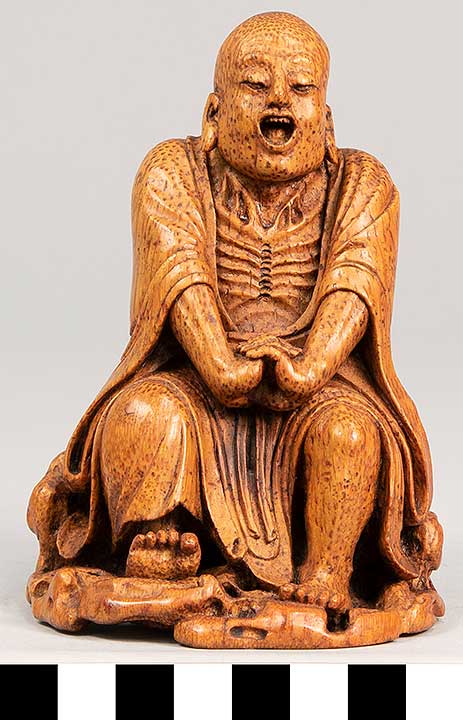
Figure: Maha-Panthaka, Great Panthaka or Pantha the Elder2020.06.0114 (2020.06.0114)
11.4 x 8 x 7.4 cm (133 g)
Location: Asia, East: China
Period: Late Qing Dynasty
Classification/Nomenclature: Communication Artifacts : Art
Description: This is a carving of Pantha the Elder, an enlightened Buddhist disciple (Lohan) who is often depicted as an elderly man resting against a tree...
Period: Late Qing Dynasty
Classification/Nomenclature: Communication Artifacts : Art
Description: This is a carving of Pantha the Elder, an enlightened Buddhist disciple (Lohan) who is often depicted as an elderly man resting against a tree...
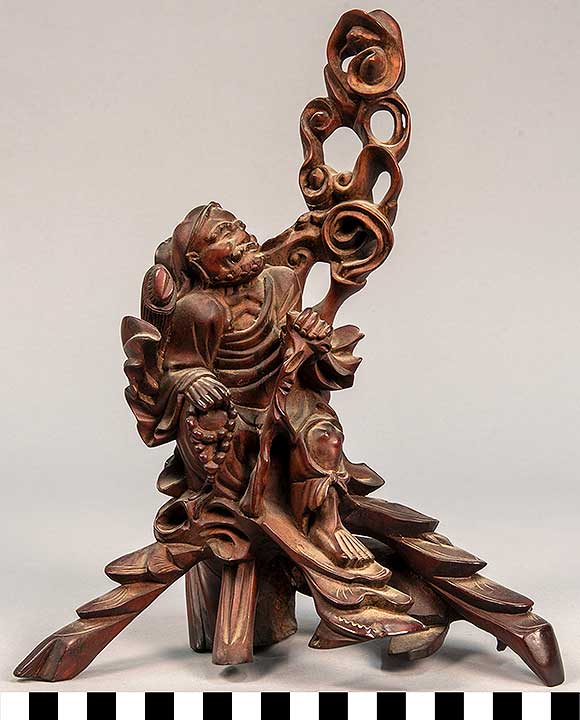
Figure: Immortal2020.06.0115 (2020.06.0115)
25 x 20.5 x 18 cm (557 g)
Location: Asia, East: Japan
Period: Late 18th-Early19th Century
Classification/Nomenclature: Communication Artifacts : Art
Period: Late 18th-Early19th Century
Classification/Nomenclature: Communication Artifacts : Art
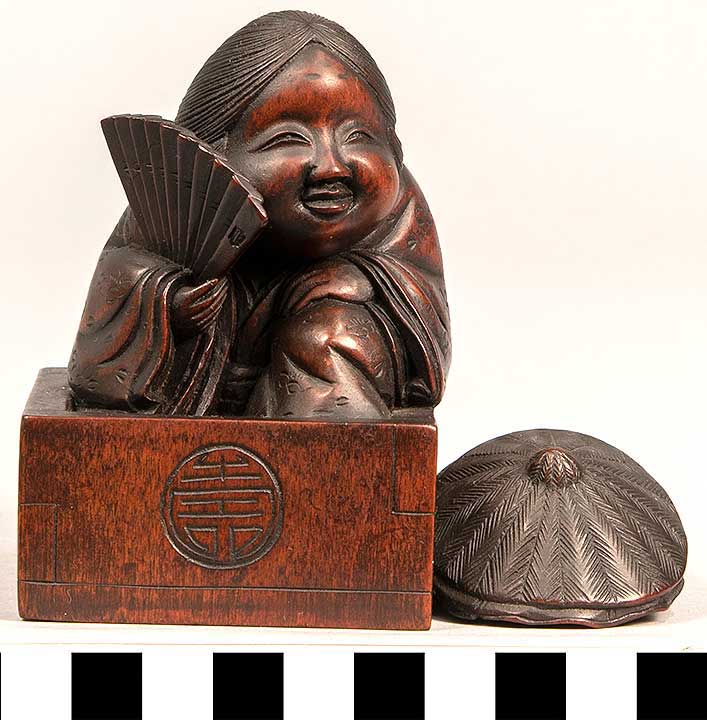
Okimono: Okame, Amen no Uzume no Mikoto, the Goddess of Mirth and Sensuality with Oni2020.06.0116 (2020.06.0116)
10.1 x 9.5 x 6 cm (125 g)
Location: Asia, East: Japan
Period: Meiji Period (1868-1912); c. 1868-1912
Classification/Nomenclature: Communication Artifacts : Art
Description: This Japanese okimono depicts Okame, the goddess of mirth and sensuality, who is always depicted to be smiling...
Period: Meiji Period (1868-1912); c. 1868-1912
Classification/Nomenclature: Communication Artifacts : Art
Description: This Japanese okimono depicts Okame, the goddess of mirth and sensuality, who is always depicted to be smiling...
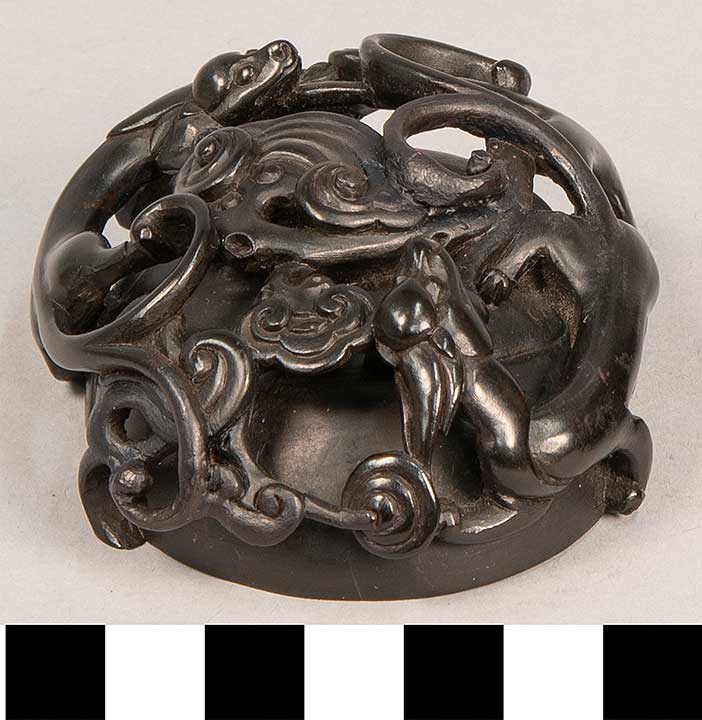
Container with Dragons: Bottom2020.06.0117A (2020.06.0117A)
9.5 x 6.5 x 3.5 cm (96 g)
Location: Asia, East: China
Period: Qing Dynasty
Classification/Nomenclature: Furnishings : Household Accessories : Storage & Display Accessories
Description: This artifact is the bottom half of a carved Chinese wood container. Two dragons are featured in the design...
Period: Qing Dynasty
Classification/Nomenclature: Furnishings : Household Accessories : Storage & Display Accessories
Description: This artifact is the bottom half of a carved Chinese wood container. Two dragons are featured in the design...
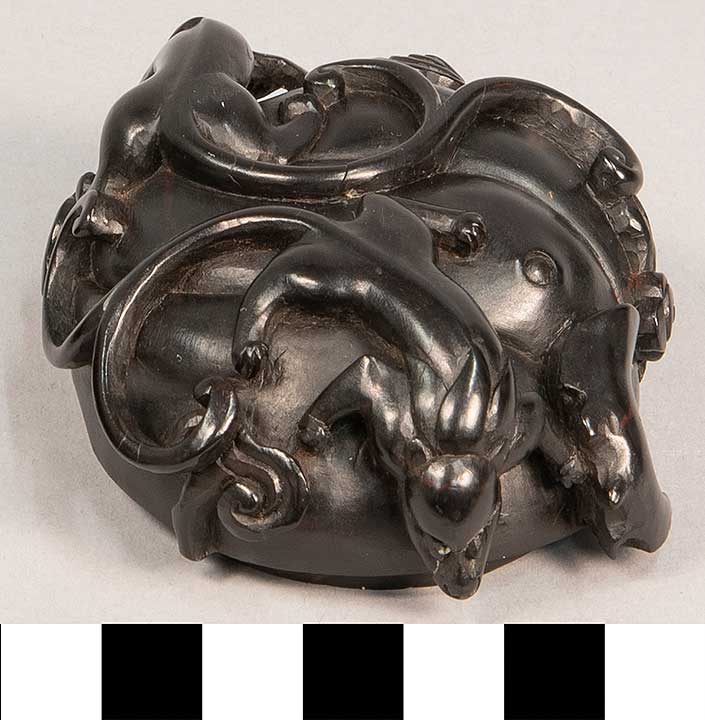
Container with Dragons: Top2020.06.0117B (2020.06.0117B)
8.5 x 6.6 x 3.4 cm (63 g)
Location: Asia, East: China
Period: Qing Dynasty
Classification/Nomenclature: Furnishings : Household Accessories : Storage & Display Accessories
Description: This artifact is the top half of a carved Chinese wood container. Two dragons are featured in the design...
Period: Qing Dynasty
Classification/Nomenclature: Furnishings : Household Accessories : Storage & Display Accessories
Description: This artifact is the top half of a carved Chinese wood container. Two dragons are featured in the design...
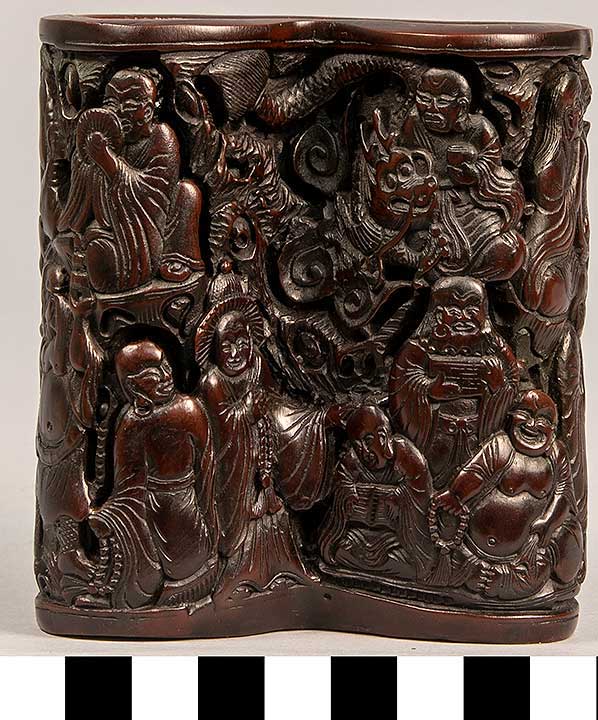
Bitong, Brush Pot2020.06.0118 (2020.06.0118)
10 x 9.8 x 6 cm (207 g)
Location: Asia, East: China
Period: 18th - 19th century
Classification/Nomenclature: Furnishings : Household Accessories : Storage & Display Accessories
Period: 18th - 19th century
Classification/Nomenclature: Furnishings : Household Accessories : Storage & Display Accessories
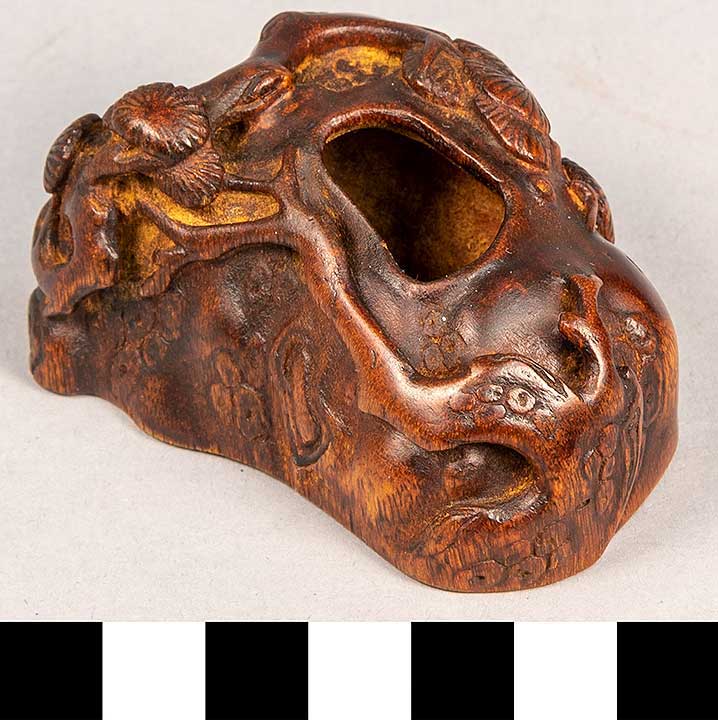
Bitong, Water Pot2020.06.0119 (2020.06.0119)
7.4 x 5.5 x 3.8 cm (37 g)
Location: Asia, East: China
Period: Qing Dynasty; 18th century
Classification/Nomenclature: Communication Artifacts : Art
Description: This is a Chinese carving of a water pot for a scholar's desk. The concept of the "four treasures" (inkstone, ink, brush, and paper) of a scholar's study became an appreciated facet of interior design during the Song Dynasty (960-1279)...
Period: Qing Dynasty; 18th century
Classification/Nomenclature: Communication Artifacts : Art
Description: This is a Chinese carving of a water pot for a scholar's desk. The concept of the "four treasures" (inkstone, ink, brush, and paper) of a scholar's study became an appreciated facet of interior design during the Song Dynasty (960-1279)...
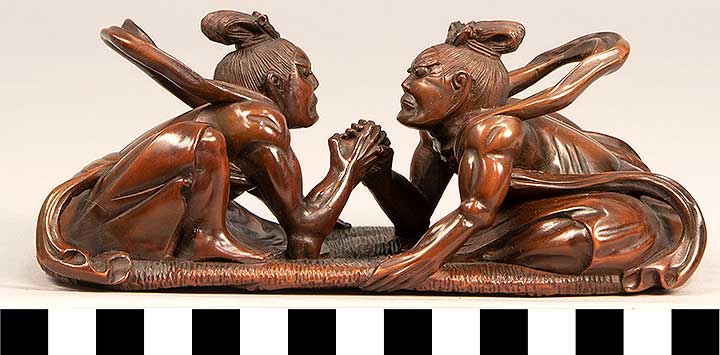
Okimono: Wrestlers2020.06.0120 (2020.06.0120)
15 x 7 x 5.9 cm (173 g)
Location: Asia, East: Japan
Period: Meiji Period
Classification/Nomenclature: Communication Artifacts : Art
Description: This Japanese okimono depicts two arm wrestlers seated on a long mat. They appear to be in the middle of a match...
Period: Meiji Period
Classification/Nomenclature: Communication Artifacts : Art
Description: This Japanese okimono depicts two arm wrestlers seated on a long mat. They appear to be in the middle of a match...
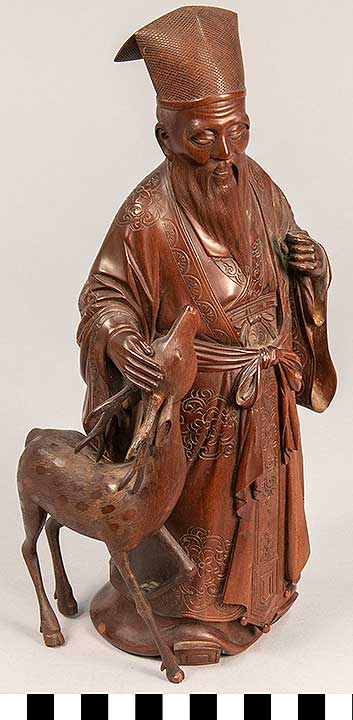
Okimono: Shoulao, God of Fortune with Deer2020.06.0121A (2020.06.0121A)
27.5 x 10.9 x 8.5 cm (1063 g)
Location: Asia, East: Japan
Period: Meiji Period
Classification/Nomenclature: Communication Artifacts : Art
Period: Meiji Period
Classification/Nomenclature: Communication Artifacts : Art

Okimono: Sage's Staff2020.06.0121B (2020.06.0121B)
26.4 x .6 cm (3 g)
Location: Asia, East: Japan
Period: Meiji Period
Classification/Nomenclature: Communication Artifacts : Art
Period: Meiji Period
Classification/Nomenclature: Communication Artifacts : Art
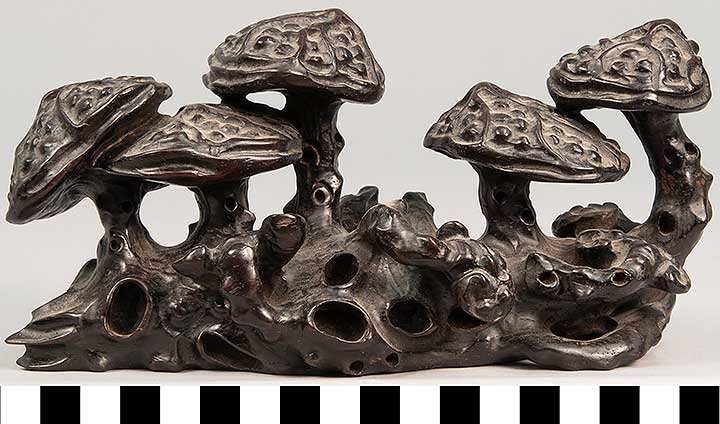
Brush Rest with Lingzhi, Ganoderma Lucidum Mushroom2020.06.0122 (2020.06.0122)
19.8 x 9 x 8.7 cm (542 g)
Location: Asia, East: Japan
Period: 19th Century; Late 19th century
Classification/Nomenclature: Communication Artifacts : Art
Period: 19th Century; Late 19th century
Classification/Nomenclature: Communication Artifacts : Art
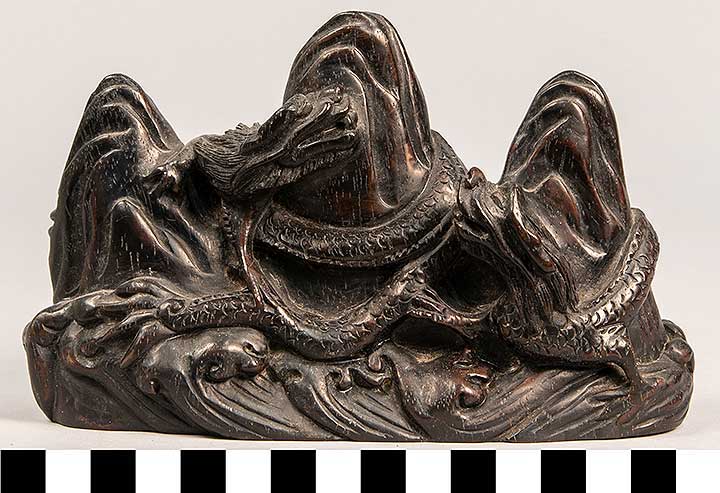
Brush Rest, Dragons on Mountain2020.06.0123 (2020.06.0123)
16.1 x 10.8 x 6 cm (467 g)
Location: Asia, East: China
Period: Contemporary in the style of late Qing Dynasty
Classification/Nomenclature: Communication Artifacts : Art
Description: Brush rests were among the coveted items made for the Chinese scholar's desk. This type of brush rest, typically constructed of ivory, is made of bamboo...
Period: Contemporary in the style of late Qing Dynasty
Classification/Nomenclature: Communication Artifacts : Art
Description: Brush rests were among the coveted items made for the Chinese scholar's desk. This type of brush rest, typically constructed of ivory, is made of bamboo...
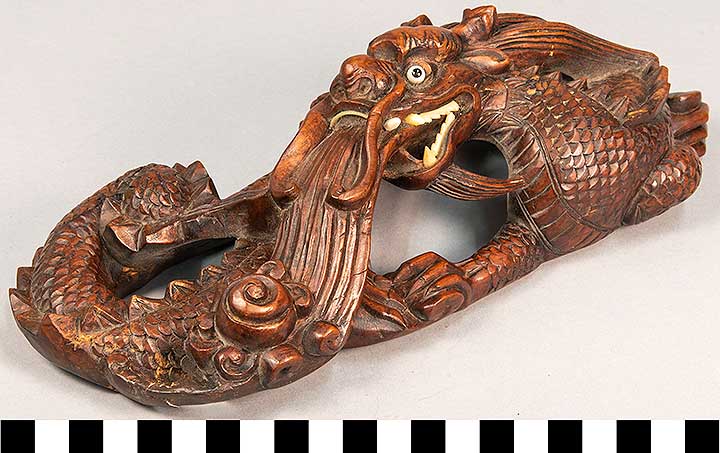
Plaque: Dragon2020.06.0124 (2020.06.0124)
27.9 x 12.5 x 7 cm (543 g)
Location: Asia, East: China
Classification/Nomenclature: Communication Artifacts : Art
Classification/Nomenclature: Communication Artifacts : Art

Ruyi Scepter with Bat Motif2020.06.0125 (2020.06.0125)
28.1 x 7.5 x 3.5 cm (105 g)
Location: Asia, East: China
Period: Contemporary
Classification/Nomenclature: Communication Artifacts : Personal Symbols : Status Symbols
Period: Contemporary
Classification/Nomenclature: Communication Artifacts : Personal Symbols : Status Symbols
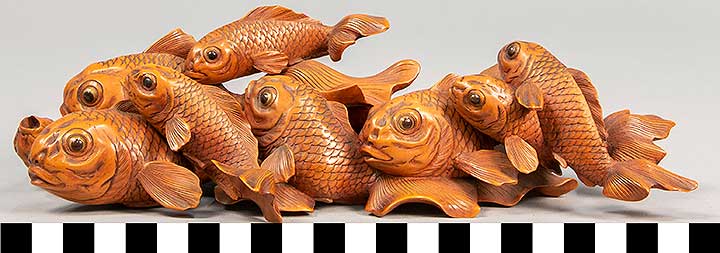
Okimono: Cluster of Fish2020.06.0126 (2020.06.0126)
24 x 13 x 5.9 cm (305 g)
Location: Asia, East: Japan
Period: Meiji Period; Circa 1890
Classification/Nomenclature: Communication Artifacts : Art
Description: This is a Japanese okimono of a cluster of goldfish (shinbunkin), signed by Chikuju. Fish have often held significance in Japanese legend as animals representing perseverance and fertility...
Period: Meiji Period; Circa 1890
Classification/Nomenclature: Communication Artifacts : Art
Description: This is a Japanese okimono of a cluster of goldfish (shinbunkin), signed by Chikuju. Fish have often held significance in Japanese legend as animals representing perseverance and fertility...
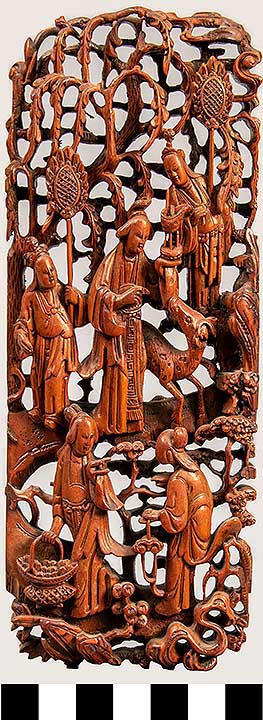
Screen2020.06.0127A (2020.06.0127A)
19.5 x 7.3 x 2.7 cm (124 g)
Location: Asia, East: China
Period: c. 1830
Classification/Nomenclature: Communication Artifacts : Art
Period: c. 1830
Classification/Nomenclature: Communication Artifacts : Art
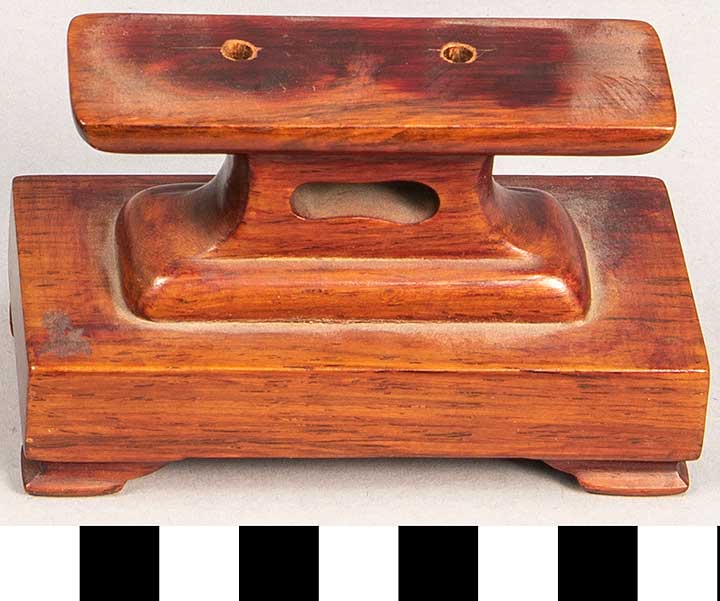
Base2020.06.0127B (2020.06.0127B)
9 x 5.4 x 4.4 cm (97 g)
Location: Asia, East: China
Classification/Nomenclature: Furnishings : Furniture : Support Furniture
Classification/Nomenclature: Furnishings : Furniture : Support Furniture
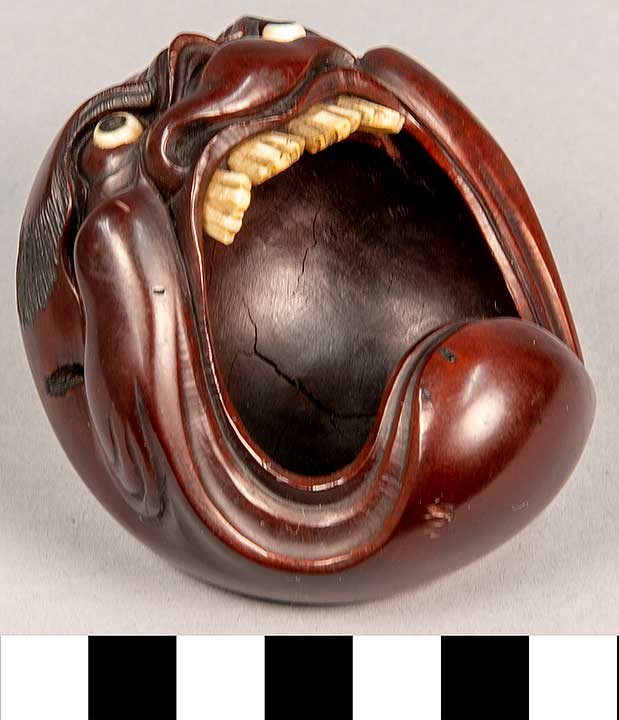
Okimono: Daruma2020.06.0128 (2020.06.0128)
7.2 x 7 x 4.5 cm (118 g)
Location: Asia, East: Japan
Period: Meiji Period; 19th century
Classification/Nomenclature: Communication Artifacts : Art
Description: This Japanese okimono is of the face of Daruma in bowl form. Daruma is commonly considered to be the founder of Chan (Zen) Buddhism and is credited with introducing the Chan philosophy to China...
Period: Meiji Period; 19th century
Classification/Nomenclature: Communication Artifacts : Art
Description: This Japanese okimono is of the face of Daruma in bowl form. Daruma is commonly considered to be the founder of Chan (Zen) Buddhism and is credited with introducing the Chan philosophy to China...
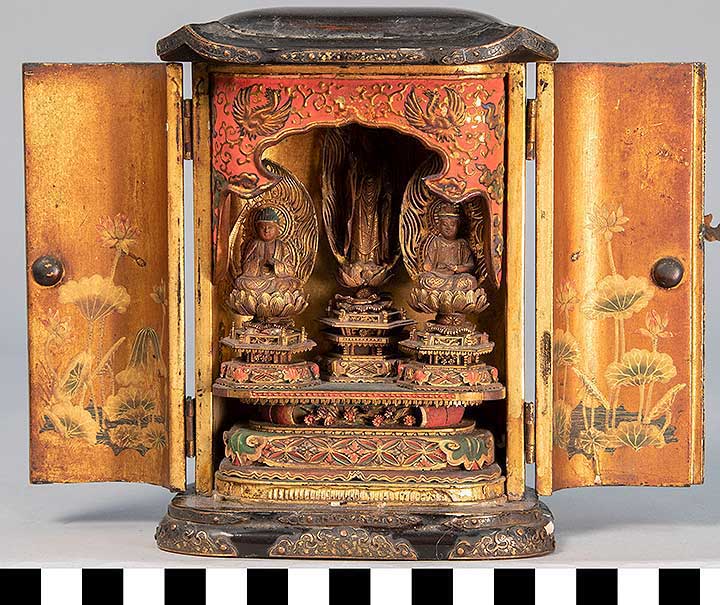
Zushi, Portable Shrine: Amida Sanzon, Amida Buddha Triad2020.06.0129 (2020.06.0129)
19.4 x 14.1 x 7.1 cm (218 g)
Location: Asia, East: Japan
Period: Edo Period; 1st half of 19th century
Classification/Nomenclature: Communication Artifacts : Ceremonial Artifacts
Period: Edo Period; 1st half of 19th century
Classification/Nomenclature: Communication Artifacts : Ceremonial Artifacts
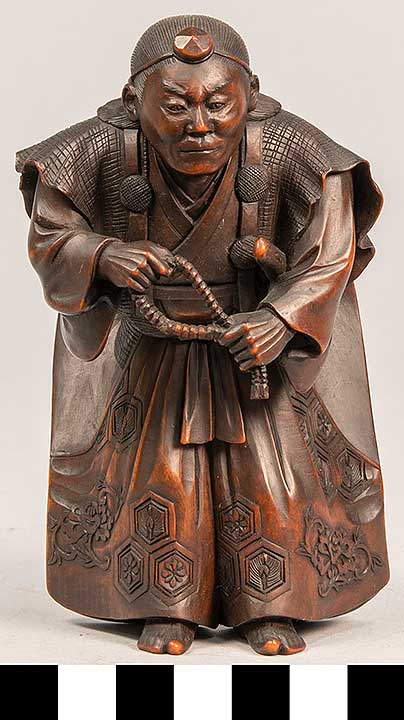
Okimono: Priest2020.06.0130 (2020.06.0130)
11.8 x 8 x 7 cm (128 g)
Location: Asia, East: Japan
Period: Late 18th - Early 19th century
Classification/Nomenclature: Communication Artifacts : Art
Description: This is a Japanese okimono of a priest in ornate attire. The okimono, meaning “object of display,” is a Japanese model or free-standing figure that developed from the smaller netsukes, which were clothing fasteners that appeared as three-dimensional carved figures or flattened and engraved buttons or boxes...
Period: Late 18th - Early 19th century
Classification/Nomenclature: Communication Artifacts : Art
Description: This is a Japanese okimono of a priest in ornate attire. The okimono, meaning “object of display,” is a Japanese model or free-standing figure that developed from the smaller netsukes, which were clothing fasteners that appeared as three-dimensional carved figures or flattened and engraved buttons or boxes...
Search Examples
Explore More
Access the public portions of the catalog records for the approximately 50,000 cultural and ethnographic objects in the Museum's Artifact Collection.