
Search Results
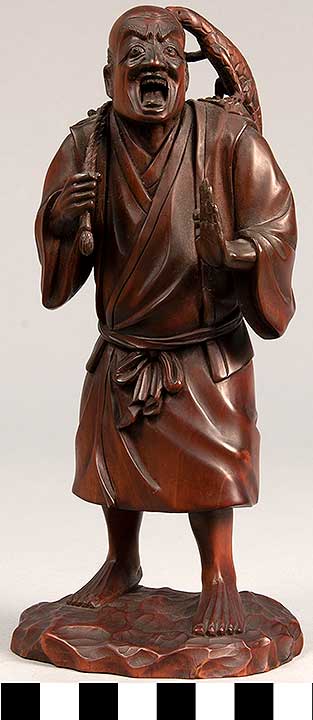
Okimono: Man with Millet and Lizard2020.06.0131 (2020.06.0131)
15.4 x 8.3 x 8.1 cm (245 g)
Location: Asia, East: Japan
Period: Late Edo or Meiji Period; 19th Century
Classification/Nomenclature: Communication Artifacts : Art
Description: This is a Japanese okimono of a man grimacing from a lizard biting his head. The lizard stands on top of a bag filled with millet...
Period: Late Edo or Meiji Period; 19th Century
Classification/Nomenclature: Communication Artifacts : Art
Description: This is a Japanese okimono of a man grimacing from a lizard biting his head. The lizard stands on top of a bag filled with millet...
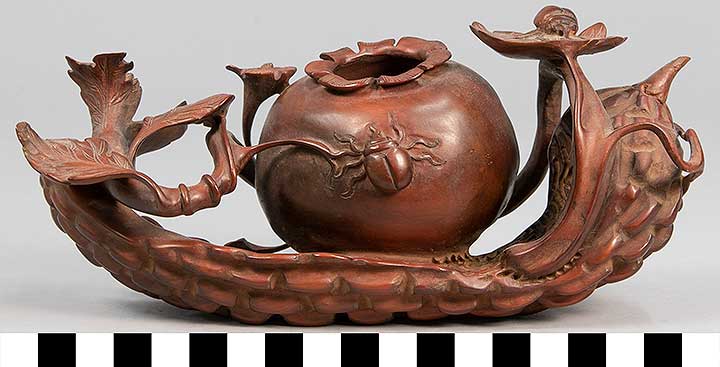
Brush Washer: Persimmon2020.06.0132 (2020.06.0132)
21.6 x 9 x 8.8 cm (307 g)
Location: Asia, East: China, Japan
Period: Qing Dynasty or Meiji Period; 18th-19th century
Classification/Nomenclature: Furnishings : Household Accessories : Storage & Display Accessories
Description: This is a Chinese bamboo carving of a brush washer, one of the items of value for the scholar's desk...
Period: Qing Dynasty or Meiji Period; 18th-19th century
Classification/Nomenclature: Furnishings : Household Accessories : Storage & Display Accessories
Description: This is a Chinese bamboo carving of a brush washer, one of the items of value for the scholar's desk...
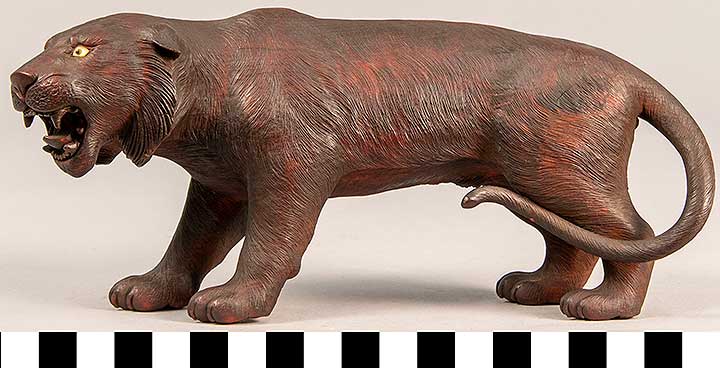
Okimono: Tiger2020.06.0133 (2020.06.0133)
20.7 x 8.5 x 5 cm (280 g)
Location: Asia, East: Japan
Period: Late Meiji Period
Classification/Nomenclature: Communication Artifacts : Art
Description: This is a Japanese okimono of a tiger, one of the animals of the Zodiac (Junishi). The carving is signed by Kah hito...
Period: Late Meiji Period
Classification/Nomenclature: Communication Artifacts : Art
Description: This is a Japanese okimono of a tiger, one of the animals of the Zodiac (Junishi). The carving is signed by Kah hito...
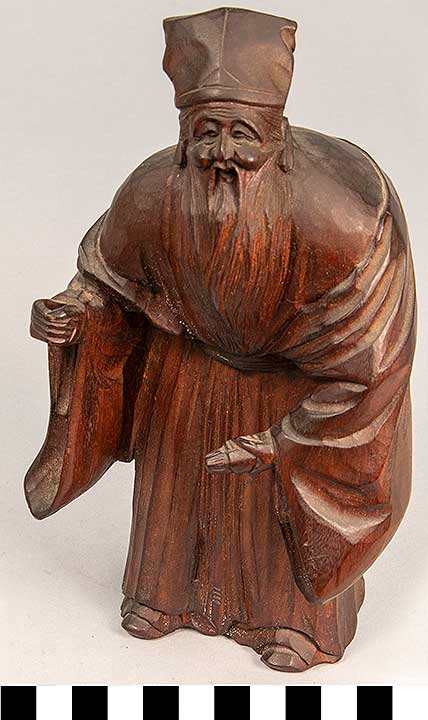
Mingei Okimono: Jurojin, One of Seven Household Gods of Good Fortune2020.06.0134A (2020.06.0134A)
21.2 x 11.5 x 8 cm (333 g)
Location: Asia, East: Japan
Period: Late Edo Period; Mid 19th Century
Classification/Nomenclature: Communication Artifacts : Art
Description: This is a Japanese boxwood okimono of Jurojin. He is one of the Shichi Fukujin (Seven Gods of Good Luck) and is associated with longevity...
Period: Late Edo Period; Mid 19th Century
Classification/Nomenclature: Communication Artifacts : Art
Description: This is a Japanese boxwood okimono of Jurojin. He is one of the Shichi Fukujin (Seven Gods of Good Luck) and is associated with longevity...
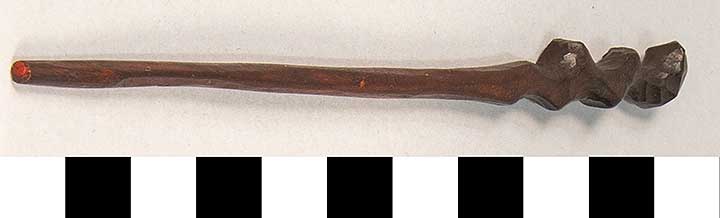
Mingei Okimono: Jurojin's Staff2020.06.0134B (2020.06.0134B)
19.7 x 1.2 x .3 cm (3 g)
Location: Asia, East: Japan
Period: Late Edo Period; Mid 19th Century
Classification/Nomenclature: Communication Artifacts : Art
Description: This is a staff for the Japanese boxwood okimono of Jurojin, one of the Shichi Fukujin (Seven Gods of Good Luck) who is associated with longevity...
Period: Late Edo Period; Mid 19th Century
Classification/Nomenclature: Communication Artifacts : Art
Description: This is a staff for the Japanese boxwood okimono of Jurojin, one of the Shichi Fukujin (Seven Gods of Good Luck) who is associated with longevity...
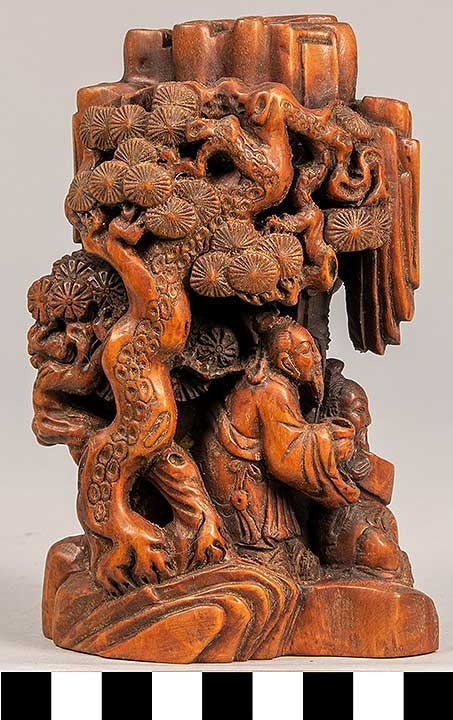
Okimono: Two Immortals in Landscape2020.06.0135 (2020.06.0135)
13.5 x 8.6 x 5.2 cm (278 g)
Location: Asia, East: China
Period: Qing Dynasty; 19th century
Classification/Nomenclature: Communication Artifacts : Art
Period: Qing Dynasty; 19th century
Classification/Nomenclature: Communication Artifacts : Art
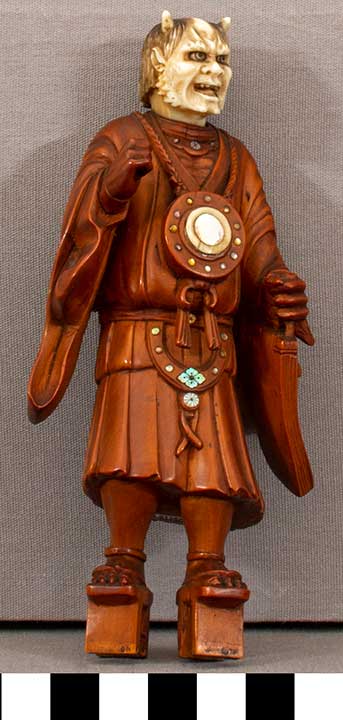
Okimono: Oni Disguised as Beggar Priest2020.06.0136A (2020.06.0136A)
16 x 7.5 x 3.3 cm (128 g)
Location: Asia, East: Japan
Period: Meiji Period; Late 19th century
Classification/Nomenclature: Communication Artifacts : Art
Description: This is a Japanese okimono of an oni (demon) that has disguised itself as a priest. An oni can also be classified as a type of bakemono, an unpleasant being or monster of Japanese legend...
Period: Meiji Period; Late 19th century
Classification/Nomenclature: Communication Artifacts : Art
Description: This is a Japanese okimono of an oni (demon) that has disguised itself as a priest. An oni can also be classified as a type of bakemono, an unpleasant being or monster of Japanese legend...
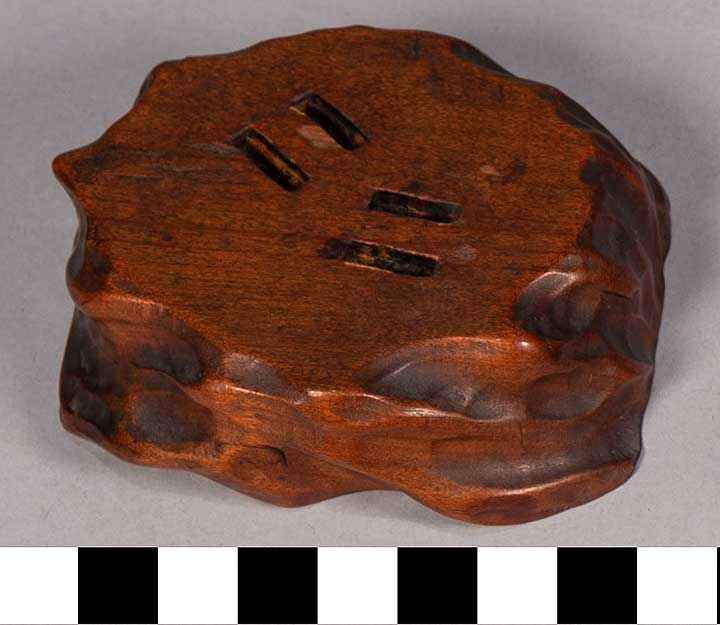
Okimono: Base2020.06.0136B (2020.06.0136B)
8.3 x 7.8 x 2.5 cm (57 g)
Location: Asia, East: Japan
Period: Meiji Period; Late 19th century
Classification/Nomenclature: Furnishings : Furniture : Support Furniture
Description: This is the base of a Japanese okimono of an oni (demon) that has disguised itself as a priest. An oni can also be classified as a type of bakemono, an unpleasant being or monster of Japanese legend...
Period: Meiji Period; Late 19th century
Classification/Nomenclature: Furnishings : Furniture : Support Furniture
Description: This is the base of a Japanese okimono of an oni (demon) that has disguised itself as a priest. An oni can also be classified as a type of bakemono, an unpleasant being or monster of Japanese legend...
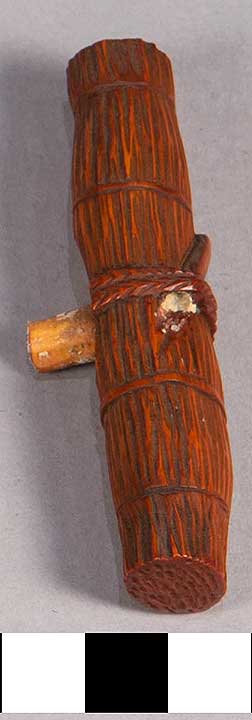
Okimono: Sleeping Mat2020.06.0136C (2020.06.0136C)
8.2 x 2 x 1.4 cm (14 g)
Location: Asia, East: Japan
Period: Meiji Period; Late 19th century
Classification/Nomenclature: Communication Artifacts : Art
Description: This is the sleeping mat of a Japanese okimono of an oni (demon) that has disguised itself as a priest...
Period: Meiji Period; Late 19th century
Classification/Nomenclature: Communication Artifacts : Art
Description: This is the sleeping mat of a Japanese okimono of an oni (demon) that has disguised itself as a priest...
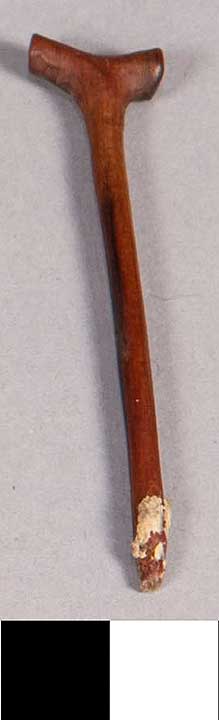
Okimono: Cane2020.06.0136D (2020.06.0136D)
6.5 x 1.2 cm (1 g)
Location: Asia, East: Japan
Period: Meiji Period; Late 19th century
Classification/Nomenclature: Communication Artifacts : Art
Description: This is the cane of a Japanese okimono of an oni (demon) that has disguised itself as a priest. An oni can also be classified as a type of bakemono, an unpleasant being or monster of Japanese legend...
Period: Meiji Period; Late 19th century
Classification/Nomenclature: Communication Artifacts : Art
Description: This is the cane of a Japanese okimono of an oni (demon) that has disguised itself as a priest. An oni can also be classified as a type of bakemono, an unpleasant being or monster of Japanese legend...
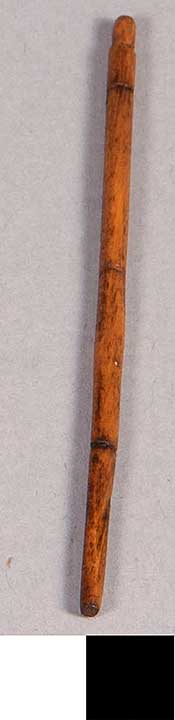
Okimono: Umbrella Handle2020.06.0136E (2020.06.0136E)
9 x cm (1 g)
Location: Asia, East: Japan
Period: Meiji Period; Late 19th century
Classification/Nomenclature: Communication Artifacts : Art
Description: This is the umbrella handle of a Japanese okimono of an oni (demon) that has disguised itself as a priest...
Period: Meiji Period; Late 19th century
Classification/Nomenclature: Communication Artifacts : Art
Description: This is the umbrella handle of a Japanese okimono of an oni (demon) that has disguised itself as a priest...
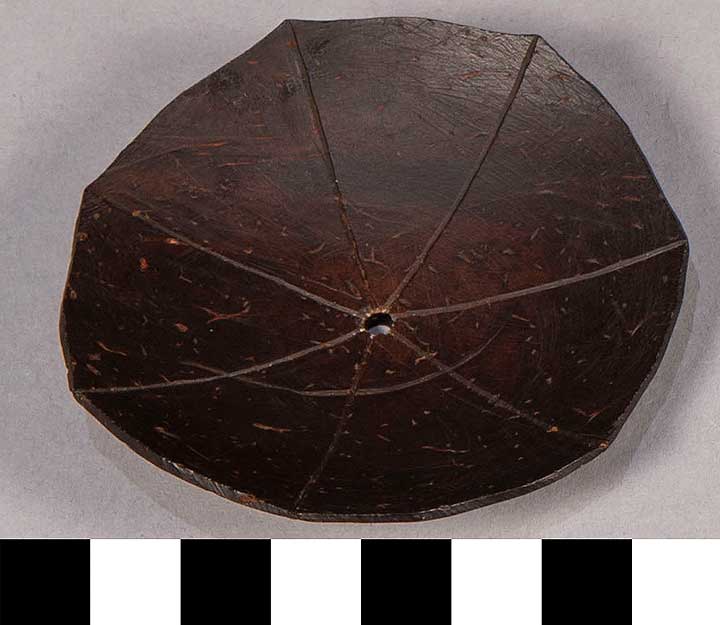
Okimono: Umbrella Top2020.06.0136F (2020.06.0136F)
7.3 x .8 cm (12 g)
Location: Asia, East: Japan
Period: Meiji Period; Late 19th century
Classification/Nomenclature: Communication Artifacts : Art
Description: This is the umbrella top of a Japanese okimono of an oni (demon) that has disguised itself as a priest...
Period: Meiji Period; Late 19th century
Classification/Nomenclature: Communication Artifacts : Art
Description: This is the umbrella top of a Japanese okimono of an oni (demon) that has disguised itself as a priest...
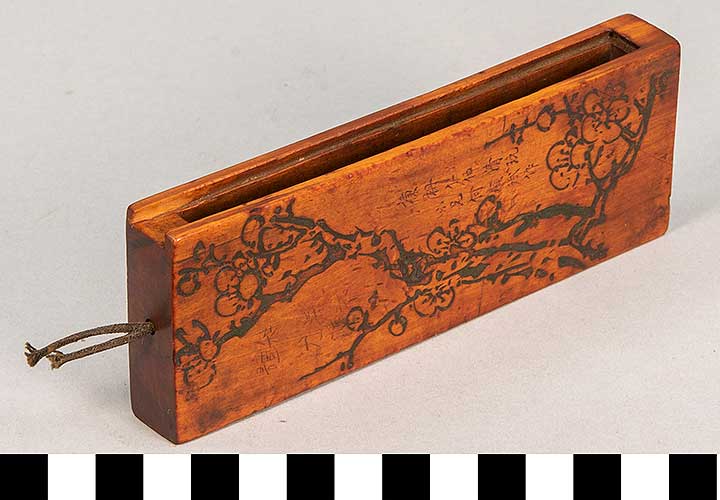
Spectacles Case 2020.06.0137A (2020.06.0137A)
14.7 x 5.4 x 1.8 cm (80 g)
Location: Asia, East: China
Period: Qing Dynasty; Late 18th - Early 19th century
Classification/Nomenclature: Furnishings : Household Accessories : Storage & Display Accessories
Description: This is a Chinese boxwood carved spectacles case from the Qing Dynasty (1644-1911). As the second of the five Chinese elements, wood is highly venerated as a material for decorative art...
Period: Qing Dynasty; Late 18th - Early 19th century
Classification/Nomenclature: Furnishings : Household Accessories : Storage & Display Accessories
Description: This is a Chinese boxwood carved spectacles case from the Qing Dynasty (1644-1911). As the second of the five Chinese elements, wood is highly venerated as a material for decorative art...

Spectacles Case Lid2020.06.0137B (2020.06.0137B)
13.7 x 1.2 x .3 cm (7 g)
Location: Asia, East: China
Period: Qing Dynasty; Late 18th - Early 19th century
Classification/Nomenclature: Furnishings : Household Accessories : Storage & Display Accessories
Description: This is the lid for a carved Chinese boxwood spectacles case from the Qing Dynasty (1644-1911). As the second of the five Chinese elements, wood is highly venerated as a material for decorative art...
Period: Qing Dynasty; Late 18th - Early 19th century
Classification/Nomenclature: Furnishings : Household Accessories : Storage & Display Accessories
Description: This is the lid for a carved Chinese boxwood spectacles case from the Qing Dynasty (1644-1911). As the second of the five Chinese elements, wood is highly venerated as a material for decorative art...
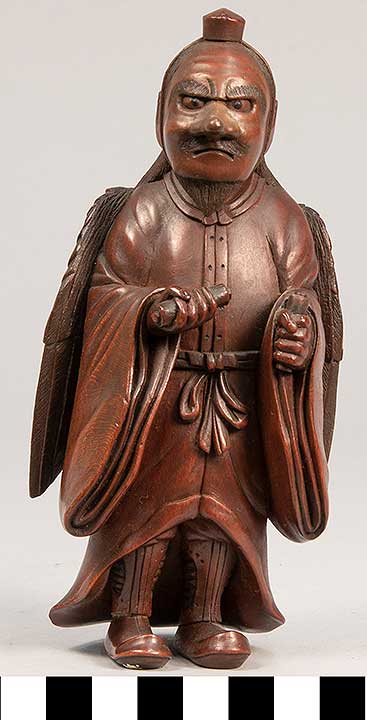
Okimono: Dai Tengu2020.06.0138 (2020.06.0138)
15.9 x 7.5 x 6 cm (135 g)
Location: Asia, East: Japan
Period: 19th century
Classification/Nomenclature: Communication Artifacts : Art
Description: This is a Japanese okimono of a tengu, a forest and mountain goblin with both Shinto and Buddhist attributes...
Period: 19th century
Classification/Nomenclature: Communication Artifacts : Art
Description: This is a Japanese okimono of a tengu, a forest and mountain goblin with both Shinto and Buddhist attributes...
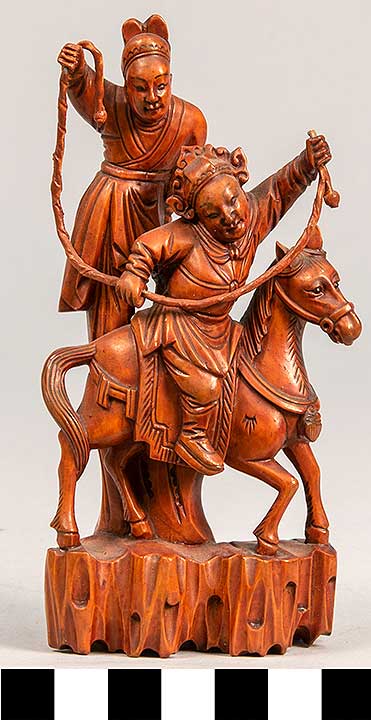
Okimono: San Guo Yan Yi, Romance of the Three Kingdoms2020.06.0139 (2020.06.0139)
13 x 5.8 x 3 cm (77 g)
Location: Asia, East: Japan
Period: Republic of China; late 19th century
Classification/Nomenclature: Communication Artifacts : Art
Period: Republic of China; late 19th century
Classification/Nomenclature: Communication Artifacts : Art
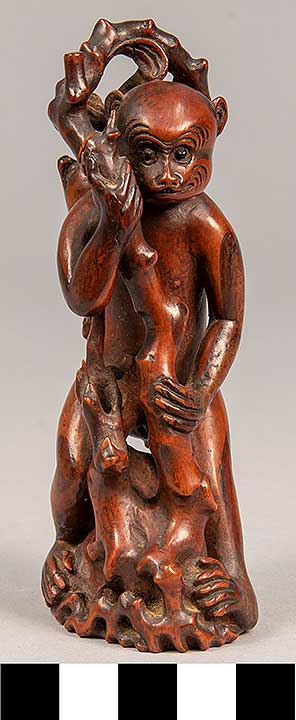
Okimono: Monkey Holding Branch with Peach2020.06.0140 (2020.06.0140)
11.9 x 5 x 4.1 cm (66 g)
Location: Asia, East: Japan
Period: Late Edo Period; Circa 1800
Classification/Nomenclature: Communication Artifacts : Art
Description: This Japanese okimono depicts a monkey (saru) grasping a gnarled peach branch. The Saru is one of the Zodiac and frequently plays a role in legend...
Period: Late Edo Period; Circa 1800
Classification/Nomenclature: Communication Artifacts : Art
Description: This Japanese okimono depicts a monkey (saru) grasping a gnarled peach branch. The Saru is one of the Zodiac and frequently plays a role in legend...
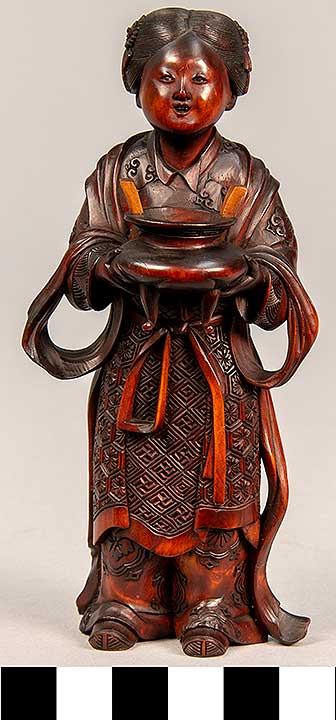
Okimono: Female Figure Holding Container2020.06.0141 (2020.06.0141)
12.4 x 5.8 x 4 cm (68 g)
Location: Asia, East: Japan
Period: Meiji Period (1868-1912); Circa 1868-1912
Classification/Nomenclature: Communication Artifacts : Art
Description: This is a Japanese okimono of a woman, dressed in ornate clothing, holding a container. The okimono, meaning “object of display,” is a Japanese model or free-standing figure that developed from the smaller netsukes, which were clothing fasteners that appeared as three-dimensional carved figures or flattened and engraved buttons or boxes...
Period: Meiji Period (1868-1912); Circa 1868-1912
Classification/Nomenclature: Communication Artifacts : Art
Description: This is a Japanese okimono of a woman, dressed in ornate clothing, holding a container. The okimono, meaning “object of display,” is a Japanese model or free-standing figure that developed from the smaller netsukes, which were clothing fasteners that appeared as three-dimensional carved figures or flattened and engraved buttons or boxes...
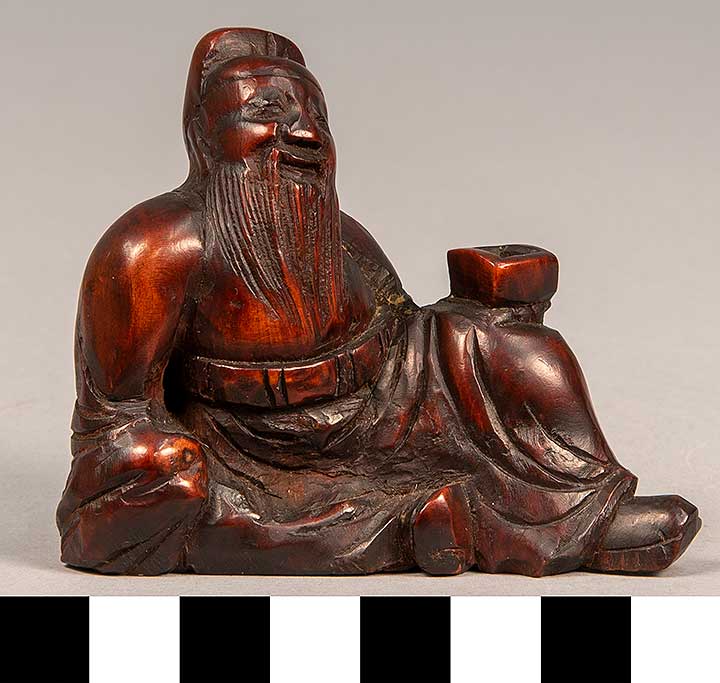
Figure: Sage2020.06.0142 (2020.06.0142)
7.8 x 6.4 x 2.8 cm (40 g)
Location: Asia, East: China
Period: Late 19th century
Classification/Nomenclature: Communication Artifacts : Art
Period: Late 19th century
Classification/Nomenclature: Communication Artifacts : Art
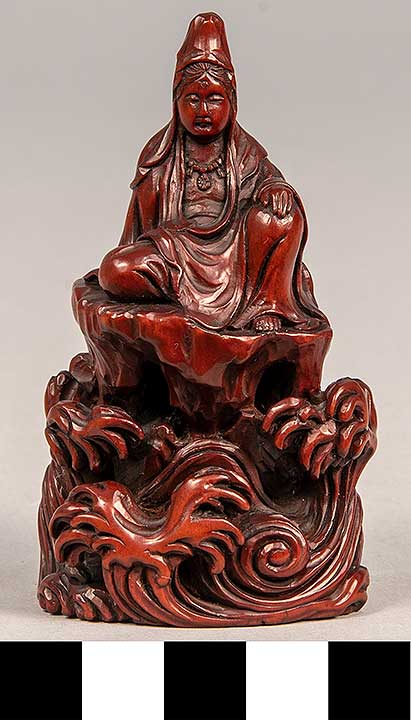
Okimono: Kuan Yin2020.06.0143 (2020.06.0143)
8 x 4.4 x 3.8 cm (40 g)
Location: Asia, East: Japan
Period: Late 18th - Early Late 19th Century
Classification/Nomenclature: Communication Artifacts : Art
Description: This is a Japanese okimono of Kuan Yin (Kannon), which is another name for Bodhisattva Avalokitesvara...
Period: Late 18th - Early Late 19th Century
Classification/Nomenclature: Communication Artifacts : Art
Description: This is a Japanese okimono of Kuan Yin (Kannon), which is another name for Bodhisattva Avalokitesvara...
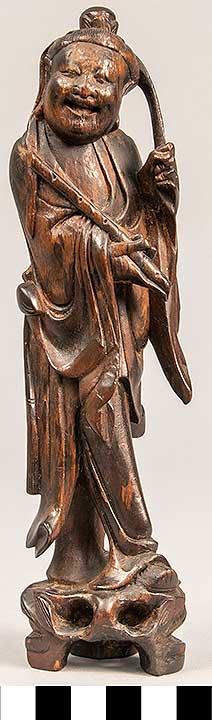
Carving: Han Xiang or Han Hsiang-tzu, Daoist Immortal2020.06.0144 (2020.06.0144)
20.6 x 5.5 x 3.9 cm (146 g)
Location: Asia, East: China
Period: Early Republic of China; C. 1912-1949
Classification/Nomenclature: Communication Artifacts : Art
Period: Early Republic of China; C. 1912-1949
Classification/Nomenclature: Communication Artifacts : Art
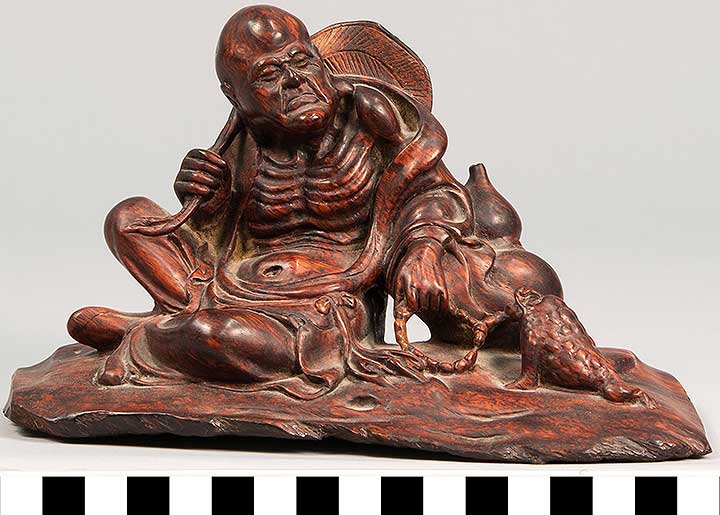
Figurine: Liu Hai, Daoist God of Prosperity and Wealth2020.06.0145 (2020.06.0145)
19 x 11.4 x 9.5 cm (352 g)
Location: Asia, East: China
Period: Republic Period; 20th century
Classification/Nomenclature: Communication Artifacts : Art
Period: Republic Period; 20th century
Classification/Nomenclature: Communication Artifacts : Art
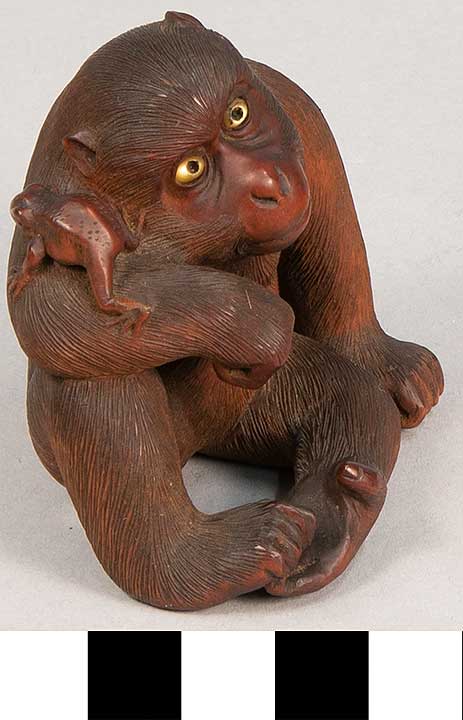
Okimono: Monkey with Frog2020.06.0146A (2020.06.0146A)
6 x 5.6 x 4.7 cm (46 g)
Location: Asia, East: Japan
Period: Meiji Period
Classification/Nomenclature: Communication Artifacts : Art
Description: This Japanese okimono depicts a monkey (saru) with a frog on its shoulder. The saru is one of the Zodiac and frequently plays a role in legend...
Period: Meiji Period
Classification/Nomenclature: Communication Artifacts : Art
Description: This Japanese okimono depicts a monkey (saru) with a frog on its shoulder. The saru is one of the Zodiac and frequently plays a role in legend...
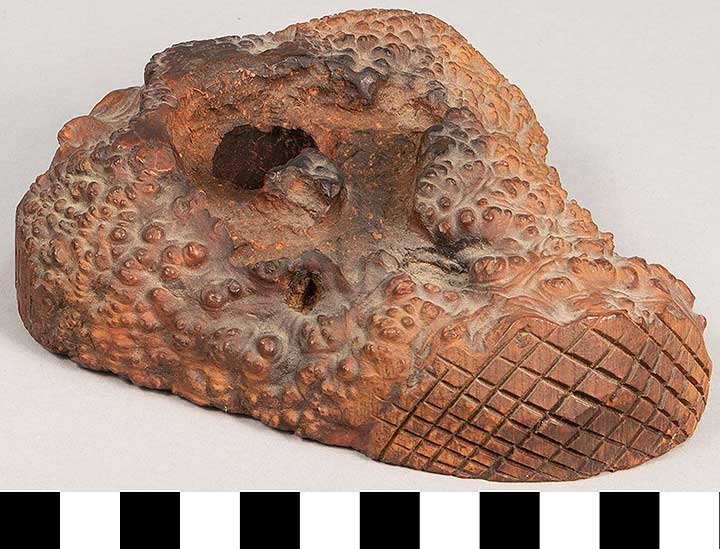
Okimono: Base2020.06.0146B (2020.06.0146B)
12.4 x 11 x 4.5 cm (206 g)
Location: Asia, East: Japan
Period: Meiji Period
Classification/Nomenclature: Furnishings : Furniture : Support Furniture
Description: This is the base for a Japanese okimono of a monkey (saru) with a frog on its shoulder. The saru is one of the Zodiac and frequently plays a role in legend...
Period: Meiji Period
Classification/Nomenclature: Furnishings : Furniture : Support Furniture
Description: This is the base for a Japanese okimono of a monkey (saru) with a frog on its shoulder. The saru is one of the Zodiac and frequently plays a role in legend...
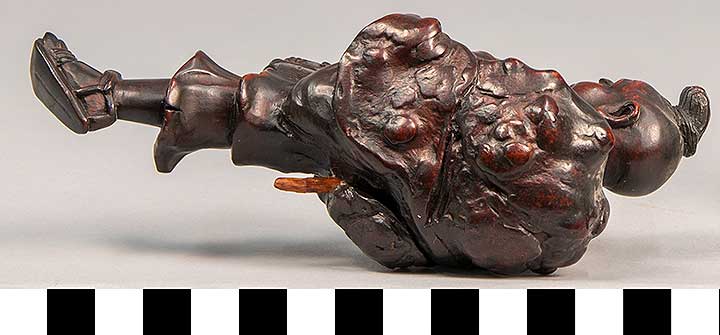
Carving: Samurai2020.06.0147A (2020.06.0147A)
15.2 x 7 x 5.9 cm (105 g)
Location: Asia, East: Japan
Period: Late Meiji Period
Classification/Nomenclature: Communication Artifacts : Art
Period: Late Meiji Period
Classification/Nomenclature: Communication Artifacts : Art
Search Examples
Explore More
Access the public portions of the catalog records for the approximately 50,000 cultural and ethnographic objects in the Museum's Artifact Collection.