
Search Results
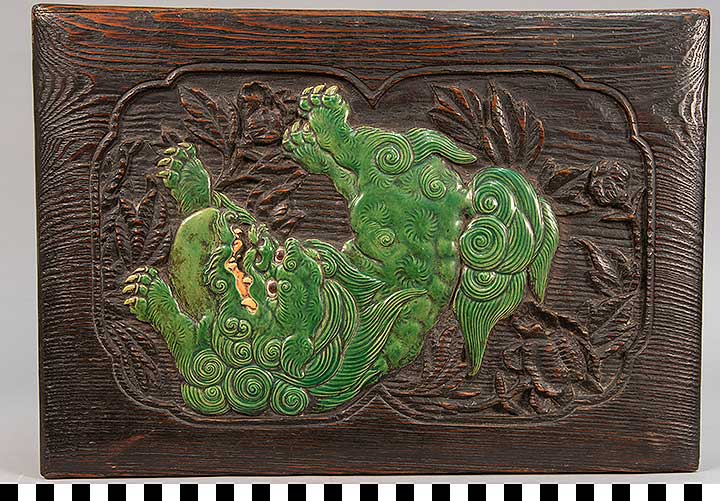
Suzuibako, Writing Utensils Box Lid with Jade Dragon2020.06.0191A (2020.06.0191A)
40.4 x 27.8 x 3.7 cm (660 g)
Location: Asia, East: Japan
Period: Late Edo Period; Mid 19th century
Classification/Nomenclature: Furnishings : Household Accessories : Storage & Display Accessories
Period: Late Edo Period; Mid 19th century
Classification/Nomenclature: Furnishings : Household Accessories : Storage & Display Accessories
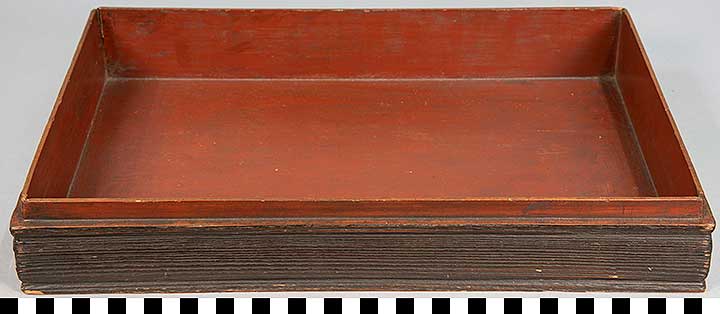
Suzuibako, Writing Utensils Box Base2020.06.0191B (2020.06.0191B)
39 x 27.4 x 6 cm (460 g)
Location: Asia, East: Japan
Period: Late Edo Period; Mid 19th century
Classification/Nomenclature: Furnishings : Household Accessories : Storage & Display Accessories
Period: Late Edo Period; Mid 19th century
Classification/Nomenclature: Furnishings : Household Accessories : Storage & Display Accessories
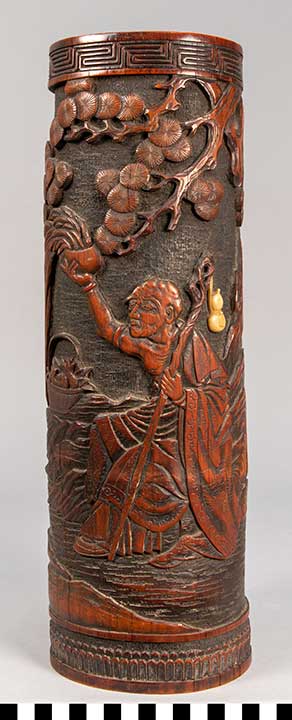
Joss Stick Holder2020.06.0192 (2020.06.0192)
39.5 x 13.2 x 12.6 cm (903 g)
Location: Asia, East: Japan
Classification/Nomenclature: Furnishings : Household Accessories : Storage & Display Accessories
Classification/Nomenclature: Furnishings : Household Accessories : Storage & Display Accessories
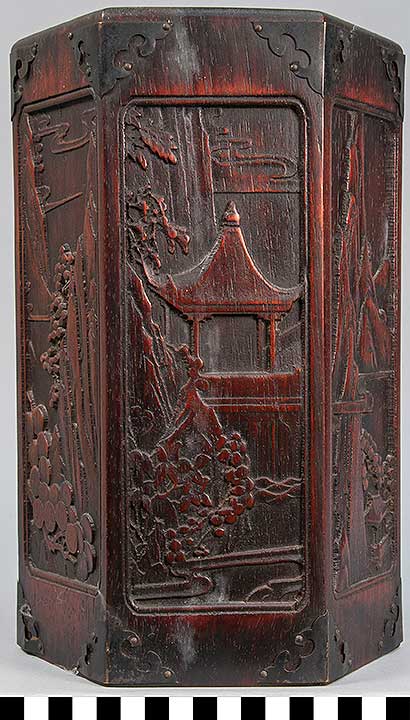
Bitong, Brush Pot2020.06.0193 (2020.06.0193)
29.1 x 19.2 x 16.6 cm (1222 g)
Location: Asia, East: China
Period: Late 18th/19th century
Classification/Nomenclature: Communication Artifacts : Art
Period: Late 18th/19th century
Classification/Nomenclature: Communication Artifacts : Art
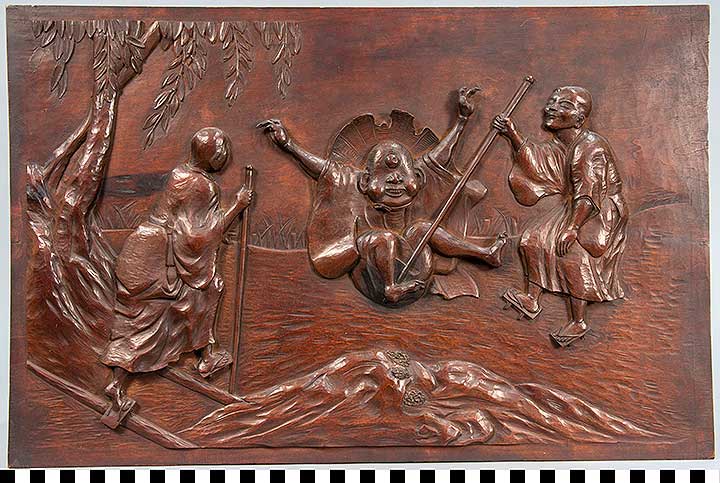
Panel: Hitosume Kozo Bakemono and Two Other Bakemono2020.06.0194 (2020.06.0194)
51.5 x 33.4 x 2.3 cm (1221 g)
Location: Asia, East: Japan
Period: Meiji Period
Classification/Nomenclature: Communication Artifacts : Art
Period: Meiji Period
Classification/Nomenclature: Communication Artifacts : Art
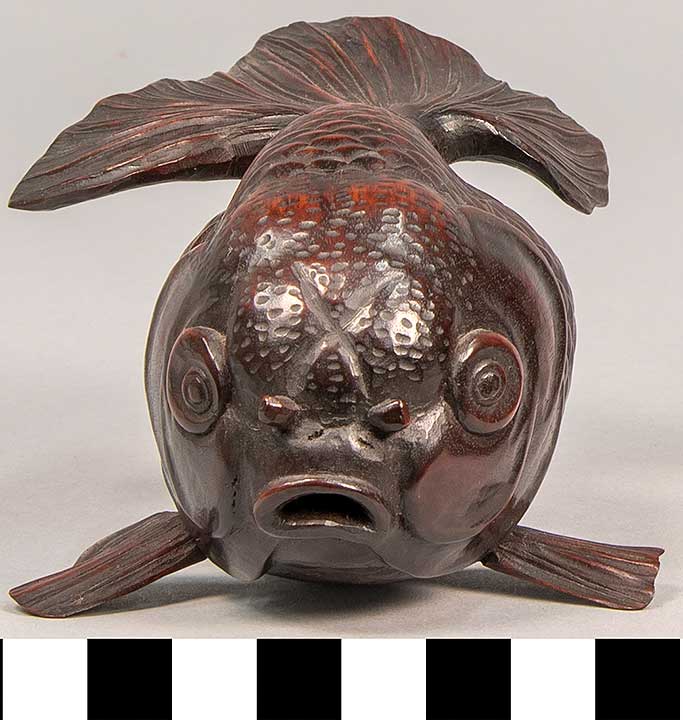
Okimono: Lionhead Goldfish2020.06.0195A (2020.06.0195A)
14.4 x 9.9 x 7.9 cm (173 g)
Location: Asia, East: Japan
Period: Late Meiji Period; Mid June 1907
Classification/Nomenclature: Communication Artifacts : Art
Description: This is a Japanese okimono of a lionhead goldfish. Fish have often held significance in Japanese legend as animals representing perseverance and fertility...
Period: Late Meiji Period; Mid June 1907
Classification/Nomenclature: Communication Artifacts : Art
Description: This is a Japanese okimono of a lionhead goldfish. Fish have often held significance in Japanese legend as animals representing perseverance and fertility...
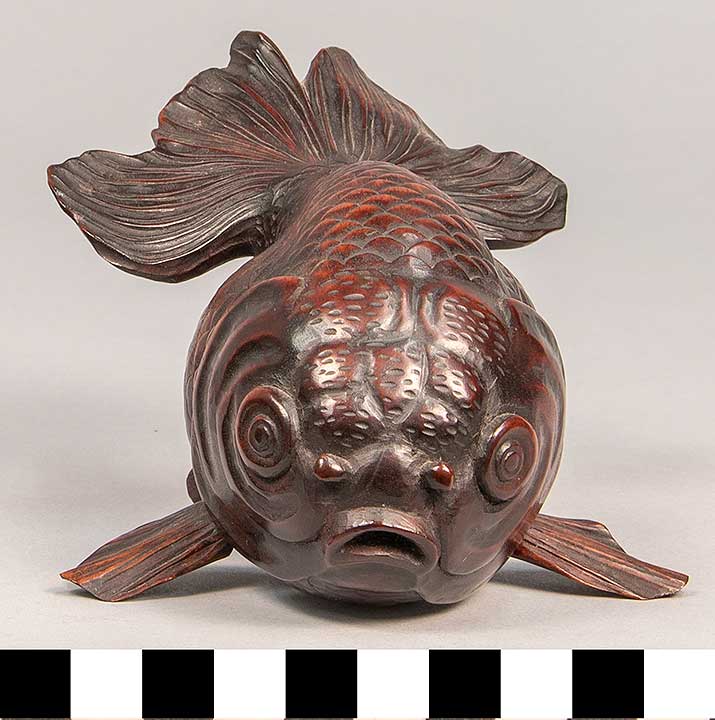
Okimono: Lionhead Goldfish2020.06.0195B (2020.06.0195B)
13.8 x 8.5 x 6.1 cm (166 g)
Location: Asia, East: Japan
Period: Late Meiji Period; Mid June 1907
Classification/Nomenclature: Communication Artifacts : Art
Description: This is a Japanese okimono of a lionhead goldfish. Fish have often held significance in Japanese legend as animals representing perseverance and fertility...
Period: Late Meiji Period; Mid June 1907
Classification/Nomenclature: Communication Artifacts : Art
Description: This is a Japanese okimono of a lionhead goldfish. Fish have often held significance in Japanese legend as animals representing perseverance and fertility...
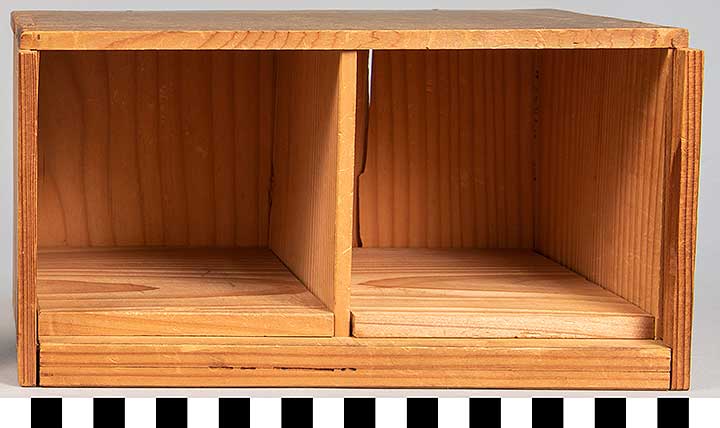
Tomobako: Original Box2020.06.0195C (2020.06.0195C)
23.2 x 17 x 12.6 cm (425 g)
Location: Asia, East: Japan
Period: Meiji Period; Mid June 1907
Classification/Nomenclature: Distribution & Transportation Artifacts : Containers
Period: Meiji Period; Mid June 1907
Classification/Nomenclature: Distribution & Transportation Artifacts : Containers
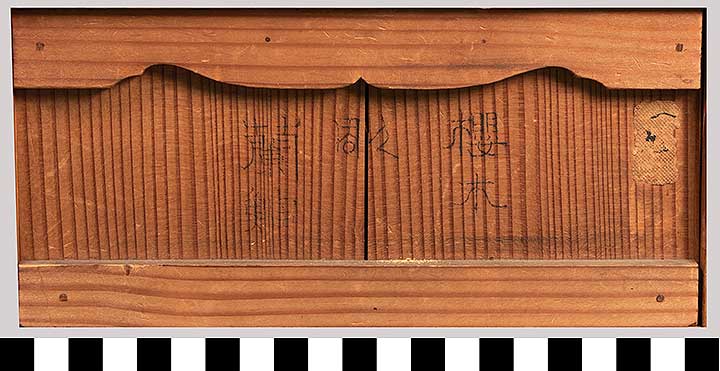
Tomobako: Original Lid2020.06.0195D (2020.06.0195D)
23.2 x 10.9 x 1.7 cm (80 g)
Location: Asia, East: Japan
Period: Meiji Period; Mid June 1907
Classification/Nomenclature: Distribution & Transportation Artifacts : Containers
Period: Meiji Period; Mid June 1907
Classification/Nomenclature: Distribution & Transportation Artifacts : Containers
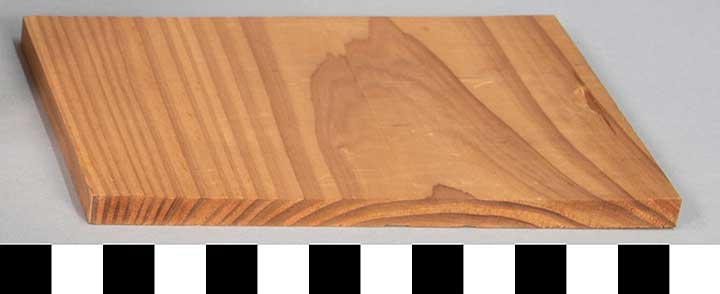
Tomobako: Wooden Insert (Left)2020.06.0195E (2020.06.0195E)
14.8 x 10.7 x .8 cm (57 g)
Location: Asia, East: Japan
Period: Meiji Period; Mid June 1907
Classification/Nomenclature: Distribution & Transportation Artifacts : Containers
Period: Meiji Period; Mid June 1907
Classification/Nomenclature: Distribution & Transportation Artifacts : Containers
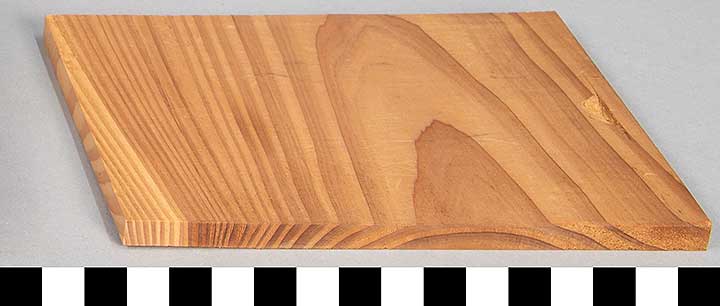
Tomobako: Wooden Insert (Right)2020.06.0195F (2020.06.0195F)
14.8 x 10.7 x .8 cm (54 g)
Location: Asia, East: Japan
Period: Meiji Period; Mid June 1907
Classification/Nomenclature: Distribution & Transportation Artifacts : Containers
Period: Meiji Period; Mid June 1907
Classification/Nomenclature: Distribution & Transportation Artifacts : Containers
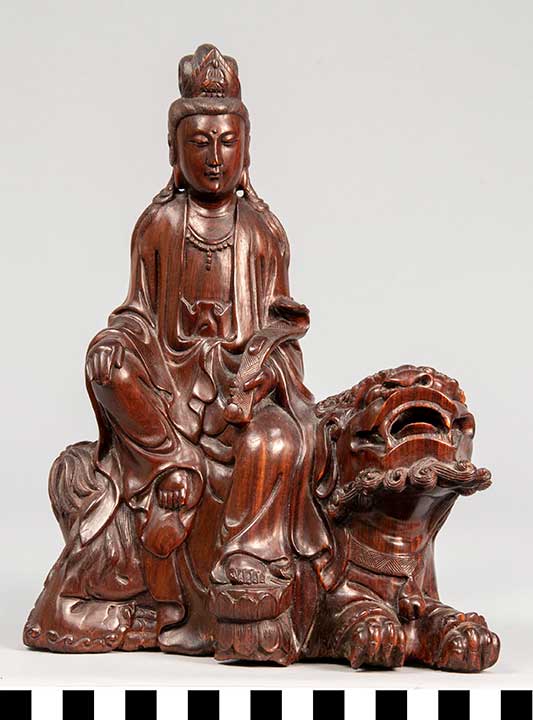
Figure: Guanyin on Kylin2020.06.0196 (2020.06.0196)
22 x 17.4 x 10 cm (832 g)
Location: Asia, East: China
Period: People's Republic of China; Circa 1950s
Classification/Nomenclature: Communication Artifacts : Art
Period: People's Republic of China; Circa 1950s
Classification/Nomenclature: Communication Artifacts : Art
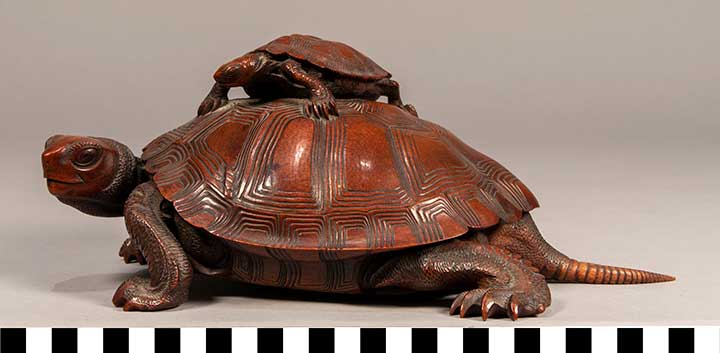
Carving: Turtle Carrying Smaller Turtle2020.06.0197 (2020.06.0197)
28.2 x 17.4 x 10.1 cm (1192 g)
Location: Asia, East: Japan
Period: C. 1890
Classification/Nomenclature: Communication Artifacts : Art
Period: C. 1890
Classification/Nomenclature: Communication Artifacts : Art
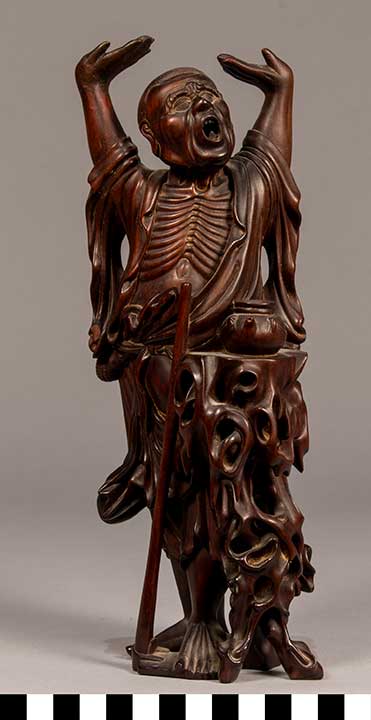
Figure: Rakan2020.06.0198 (2020.06.0198)
25.5 x 8.3 x 7.4 cm (539 g)
Location: Asia, East: Japan
Period: Meiji Period
Classification/Nomenclature: Communication Artifacts : Art
Period: Meiji Period
Classification/Nomenclature: Communication Artifacts : Art
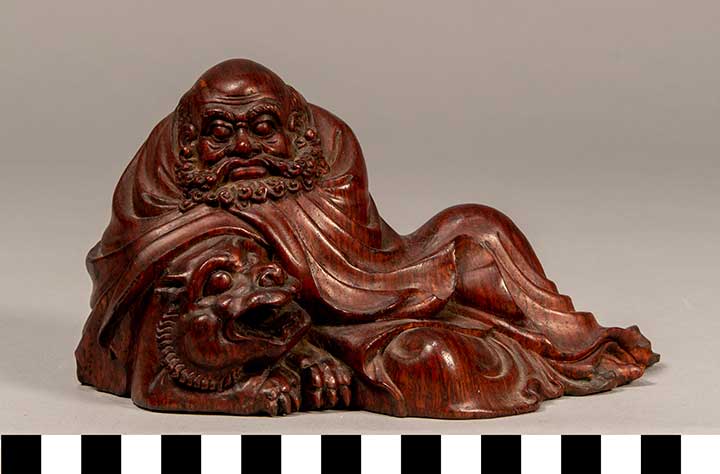
Pindola, Lion Tamer2020.06.0199 (2020.06.0199)
16.5 x 9.7 x 9.5 cm (420 g)
Location: Asia, East: China
Period: Late 19th century
Classification/Nomenclature: Communication Artifacts : Art
Period: Late 19th century
Classification/Nomenclature: Communication Artifacts : Art
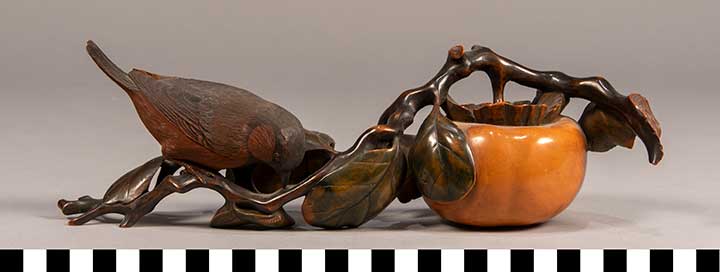
Okimono: Bird with Persimmon2020.06.0200 (2020.06.0200)
28.2 x 9.5 x 8.5 cm (352 g)
Location: Asia, East: Japan
Period: 1865-1912
Classification/Nomenclature: Communication Artifacts : Art
Description: This is a Japanese okimono of a bird pecking at the stem of a persimmon fruit. The okimono, meaning “object of display,” is a Japanese model or free-standing figure that developed from the smaller netsukes, which were clothing fasteners that appeared as three-dimensional carved figures or flattened and engraved buttons or boxes...
Period: 1865-1912
Classification/Nomenclature: Communication Artifacts : Art
Description: This is a Japanese okimono of a bird pecking at the stem of a persimmon fruit. The okimono, meaning “object of display,” is a Japanese model or free-standing figure that developed from the smaller netsukes, which were clothing fasteners that appeared as three-dimensional carved figures or flattened and engraved buttons or boxes...
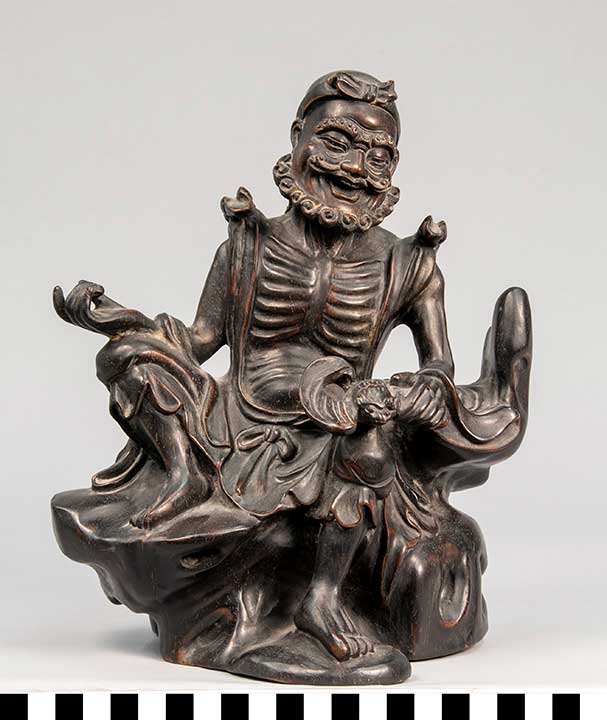
Figurine: Lohan2020.06.0201 (2020.06.0201)
25 x 20.3 x 13.9 cm (1797 g)
Location: Asia, East: China
Period: 18th century
Classification/Nomenclature: Communication Artifacts : Art
Description: This is a rootwood carving of a Lohan, one of the 500 Buddhist disciples to achieve enlightenment. Lohans followed the Noble Eightfold Path established by the Shaka (historical Buddha) and earned the title of Mugaku (nothing else to learn)...
Period: 18th century
Classification/Nomenclature: Communication Artifacts : Art
Description: This is a rootwood carving of a Lohan, one of the 500 Buddhist disciples to achieve enlightenment. Lohans followed the Noble Eightfold Path established by the Shaka (historical Buddha) and earned the title of Mugaku (nothing else to learn)...
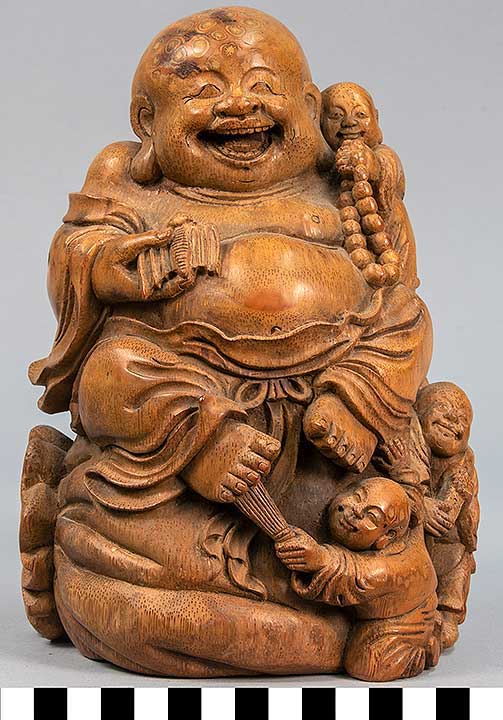
Budda with Three Children2020.06.0202 (2020.06.0202)
22 x 14.8 x 14 cm (741 g)
Location: Asia, East: Japan
Classification/Nomenclature: Communication Artifacts : Art
Classification/Nomenclature: Communication Artifacts : Art
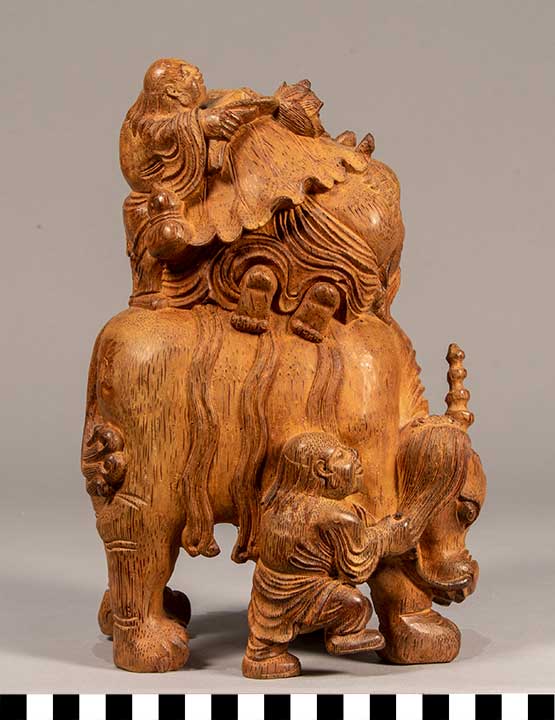
HeHe Erxian Twins on Mythological Unicorn Like Animal2020.06.0203 (2020.06.0203)
24.8 x 15.1 x 12.2 cm (973 g)
Location: Asia, East: China
Period: Qing Dynasty; 19th century
Classification/Nomenclature: Communication Artifacts : Art
Description: This is a bamboo wood carving of Hehe Erxian, the twin Buddhist immortals of mirth. Their names are Shide and Hanshan...
Period: Qing Dynasty; 19th century
Classification/Nomenclature: Communication Artifacts : Art
Description: This is a bamboo wood carving of Hehe Erxian, the twin Buddhist immortals of mirth. Their names are Shide and Hanshan...
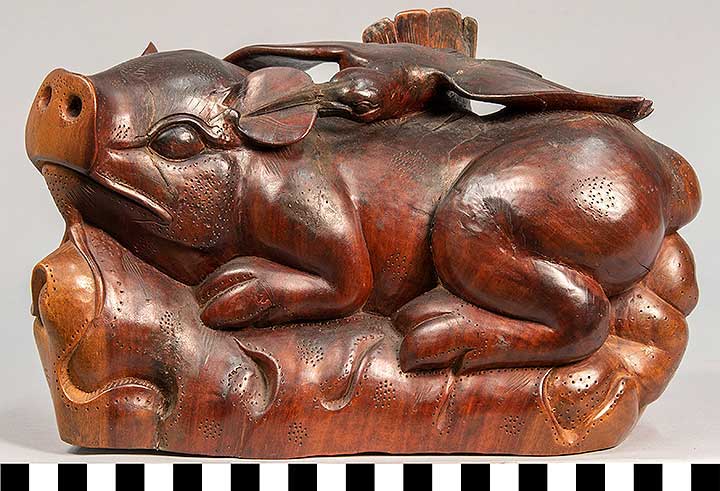
Mingei, Folk Art: Boar and Bird2020.06.0204 (2020.06.0204)
25 x 16.8 x 13.7 cm (3105 g)
Location: Asia, East: Japan
Period: Mid 19th century
Classification/Nomenclature: Communication Artifacts : Art
Period: Mid 19th century
Classification/Nomenclature: Communication Artifacts : Art
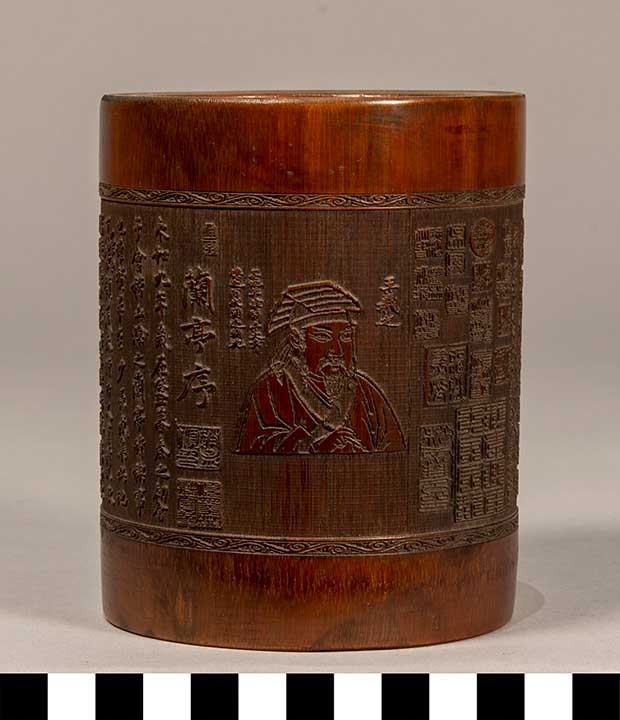
Bitong, Brush Holder2020.06.0205 (2020.06.0205)
12.2 x 9.6 cm (271 g)
Location: Asia, East: China
Period: Contemporary
Classification/Nomenclature: Communication Artifacts : Art
Period: Contemporary
Classification/Nomenclature: Communication Artifacts : Art
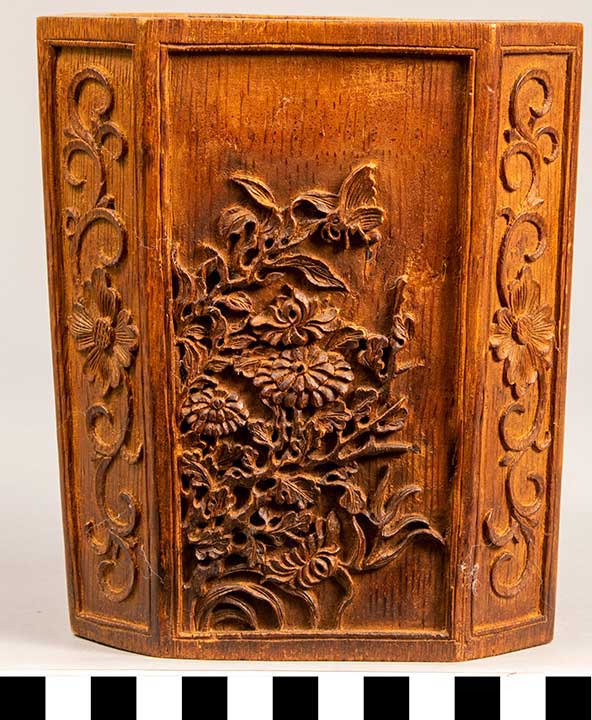
Bitong, Brush Pot: Four Seasons2020.06.0206 (2020.06.0206)
14.6 x 12.5 x 11.8 cm (393 g)
Location: Asia, East: China
Period: Late Qing or Early Republic Period
Classification/Nomenclature: Distribution & Transportation Artifacts : Containers
Description: The Chinese bitong (brush pot) was an ideal interior design piece for the scholar's desk. The concept of the "four treasures" (inkstone, ink, brush, and paper) of a scholar's study became an appreciated facet of interior design during the Song Dynasty (960-1279)...
Period: Late Qing or Early Republic Period
Classification/Nomenclature: Distribution & Transportation Artifacts : Containers
Description: The Chinese bitong (brush pot) was an ideal interior design piece for the scholar's desk. The concept of the "four treasures" (inkstone, ink, brush, and paper) of a scholar's study became an appreciated facet of interior design during the Song Dynasty (960-1279)...
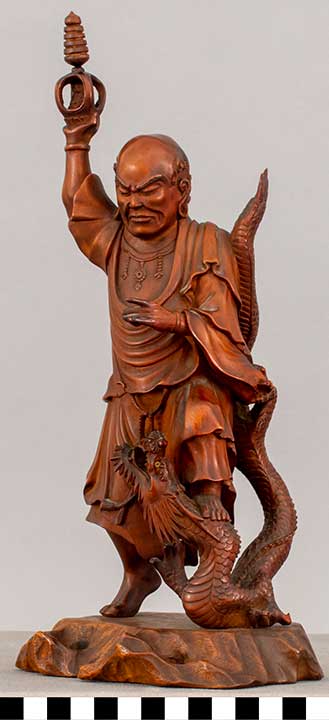
Okimono: Rakan Handaka Sonja2020.06.0207 (2020.06.0207)
30.9 x 13.2 x 11.2 cm (564 g)
Location: Asia, East: Japan
Period: 19th century
Classification/Nomenclature: Communication Artifacts : Art
Description: This is a Japanese okimono of the Rakan (Lohan) Handaka Sonja, a Buddhist holy figure. Rakans have learned the teachings of the Shaka (historical Buddha) and earned the title of Mugaku (nothing else to learn) when passing the different stages of the Noble Path...
Period: 19th century
Classification/Nomenclature: Communication Artifacts : Art
Description: This is a Japanese okimono of the Rakan (Lohan) Handaka Sonja, a Buddhist holy figure. Rakans have learned the teachings of the Shaka (historical Buddha) and earned the title of Mugaku (nothing else to learn) when passing the different stages of the Noble Path...
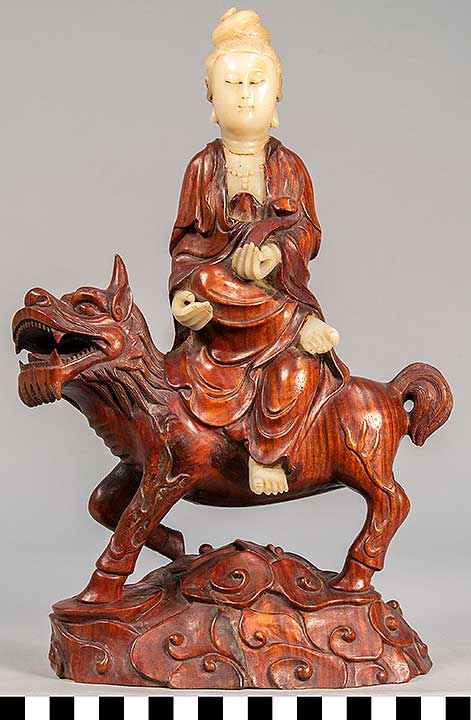
Figure: Guanyin on Kylin2020.06.0208 (2020.06.0208)
31 x 21.7 x 10.4 cm (1245 g)
Location: Asia, East: China
Period: 18th century
Classification/Nomenclature: Communication Artifacts : Art
Period: 18th century
Classification/Nomenclature: Communication Artifacts : Art
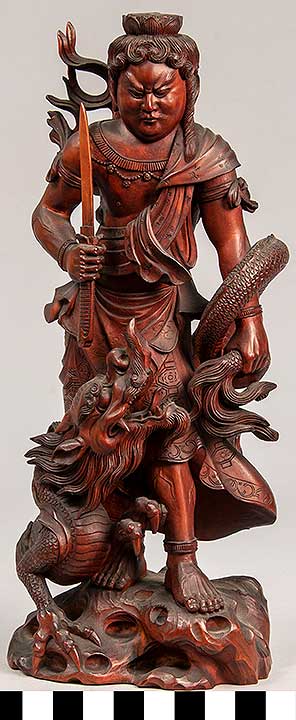
Okimono: Fudo-Myo, God of Fire2020.06.0209 (2020.06.0209)
23 x 9.7 x 7.5 cm (510 g)
Location: Asia, East: Japan
Period: 19th Century
Classification/Nomenclature: Communication Artifacts : Art
Description: This is a Japanese boxwood okimono of Fudo-Myo, the Shinto god of fire, with a dragon. The okimono, meaning “object of display,” is a Japanese model or free-standing figure that developed from the smaller netsukes, which were clothing fasteners that appeared as three-dimensional carved figures or flattened and engraved buttons or boxes...
Period: 19th Century
Classification/Nomenclature: Communication Artifacts : Art
Description: This is a Japanese boxwood okimono of Fudo-Myo, the Shinto god of fire, with a dragon. The okimono, meaning “object of display,” is a Japanese model or free-standing figure that developed from the smaller netsukes, which were clothing fasteners that appeared as three-dimensional carved figures or flattened and engraved buttons or boxes...
Search Examples
Explore More
Access the public portions of the catalog records for the approximately 50,000 cultural and ethnographic objects in the Museum's Artifact Collection.