
Search Results
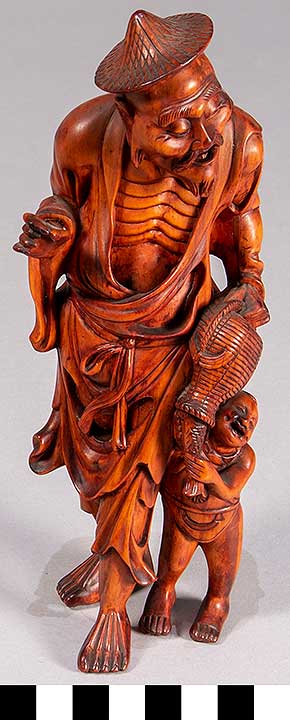
Figure: Immortal2020.06.0061A (2020.06.0061A)
21 x 8.5 x 5.5 cm (215 g)
Location: Asia, East: Japan
Classification/Nomenclature: Communication Artifacts : Art
Classification/Nomenclature: Communication Artifacts : Art
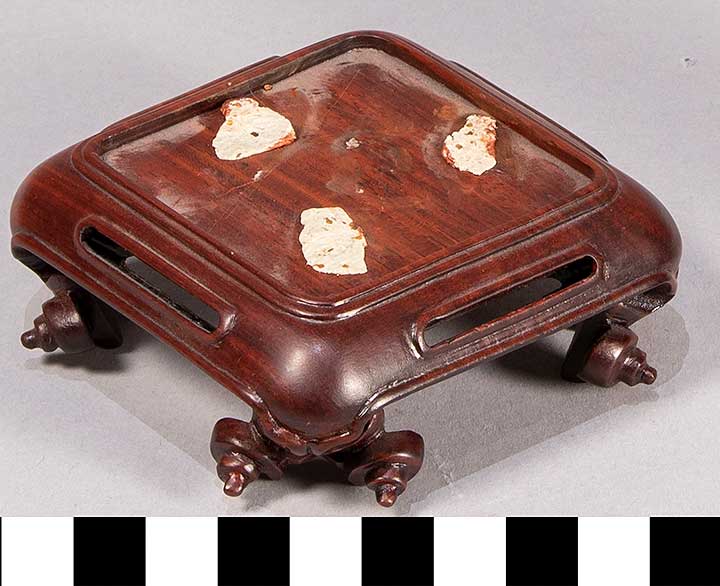
Base2020.06.0061B (2020.06.0061B)
8.3 x 8.3 x 3.5 cm (77 g)
Location: Asia, East: Japan
Classification/Nomenclature: Furnishings : Furniture : Support Furniture
Classification/Nomenclature: Furnishings : Furniture : Support Furniture
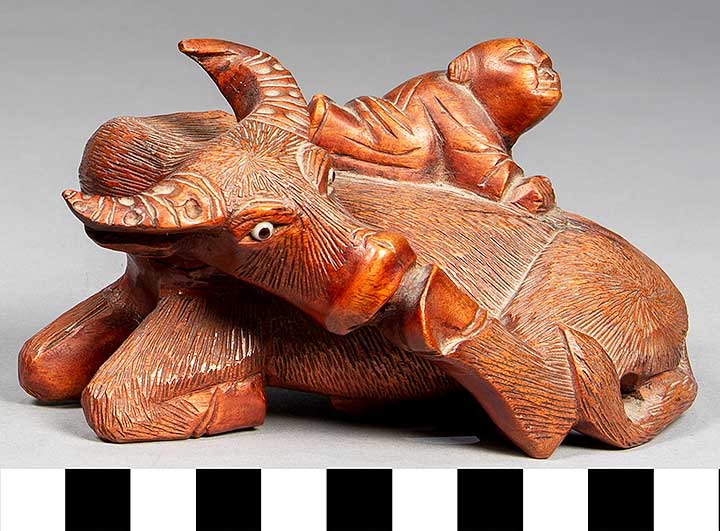
Toddler On Ox Looking Left2020.06.0062A (2020.06.0062A)
12 x 7 x 7 cm (154 g)
Location: Asia, East: China
Classification/Nomenclature: Communication Artifacts : Art
Classification/Nomenclature: Communication Artifacts : Art
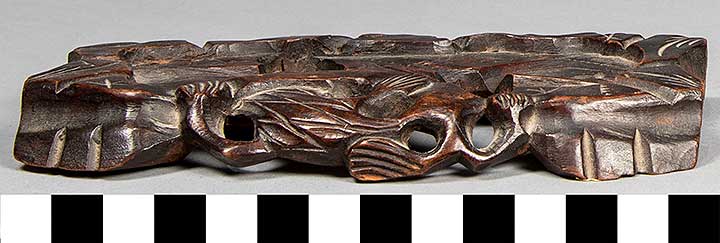
Base2020.06.0062B (2020.06.0062B)
14 x 7.8 x 1.8 cm (80 g)
Location: Asia, East: China
Classification/Nomenclature: Furnishings : Furniture : Support Furniture
Classification/Nomenclature: Furnishings : Furniture : Support Furniture
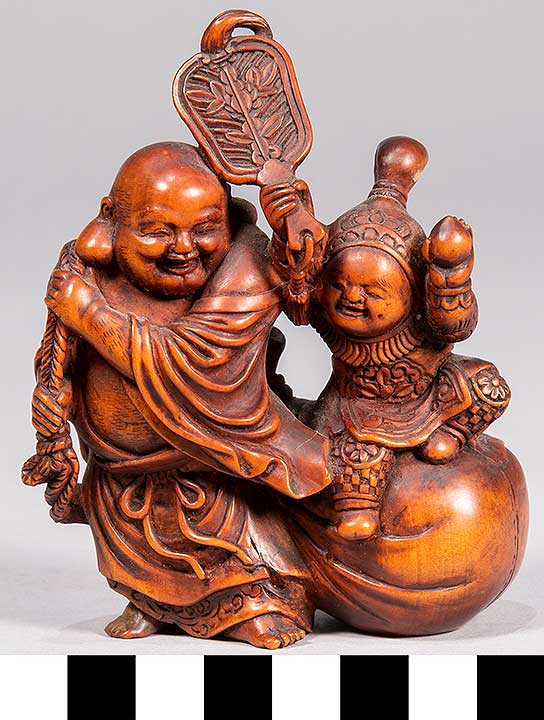
Carving: Daikoku with Sick Child2020.06.0063 (2020.06.0063)
10 x 7 x 3.5 cm (93 g)
Location: Asia, East: Japan
Classification/Nomenclature: Communication Artifacts : Art
Classification/Nomenclature: Communication Artifacts : Art
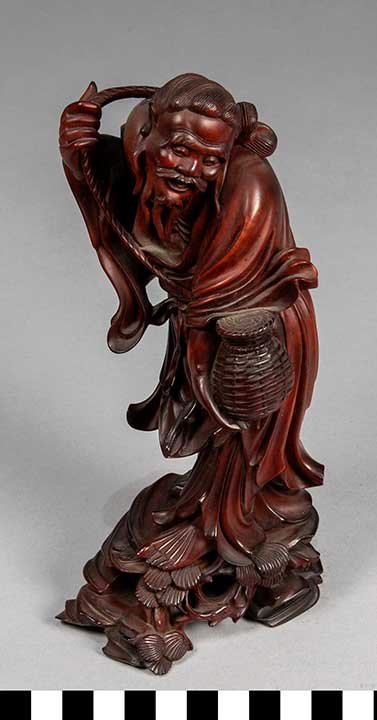
Figure Holding Basket2020.06.0064 (2020.06.0064)
21 x 9.5 x 8.5 cm (324 g)
Location: Asia, East: Japan
Period: Late 19th century
Classification/Nomenclature: Communication Artifacts : Art
Period: Late 19th century
Classification/Nomenclature: Communication Artifacts : Art
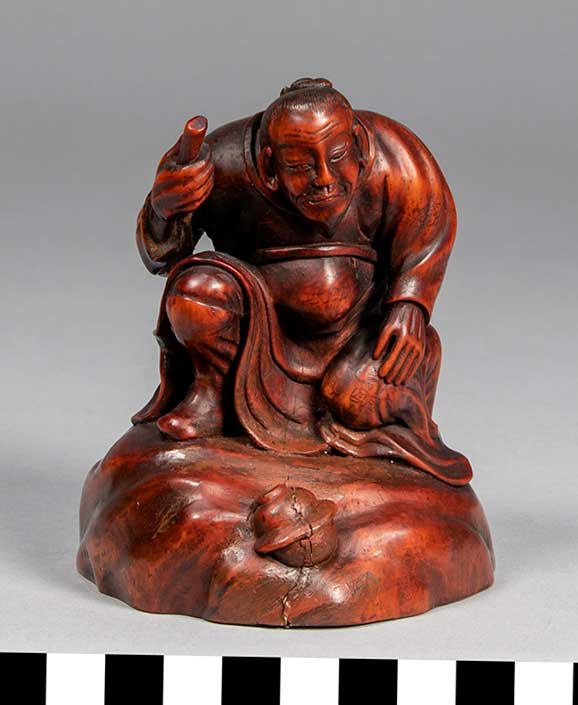
Figure: Man on Mountain with Hoe2020.06.0065 (2020.06.0065)
10 x 8.7 x 8.1 cm (194 g)
Location: Asia, East: Japan
Period: Edo Period - Meiji Period
Classification/Nomenclature: Communication Artifacts : Art
Period: Edo Period - Meiji Period
Classification/Nomenclature: Communication Artifacts : Art
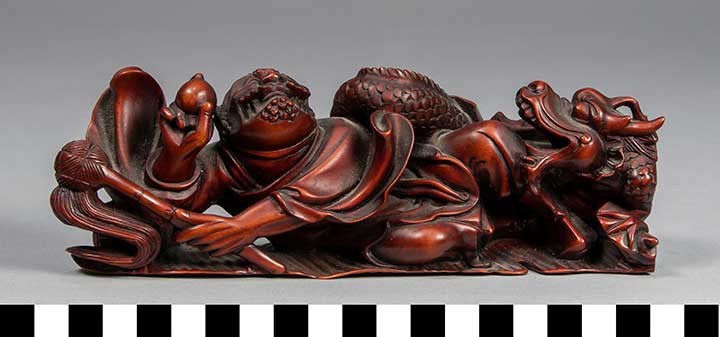
Figure: Elder Pearl of Wisdom and Dragon2020.06.0066 (2020.06.0066)
18.3 x 6.5 x 4.5 cm (215 g)
Location: Asia, East: Japan
Period: Meiji Period; circa 1870
Classification/Nomenclature: Communication Artifacts : Art
Period: Meiji Period; circa 1870
Classification/Nomenclature: Communication Artifacts : Art
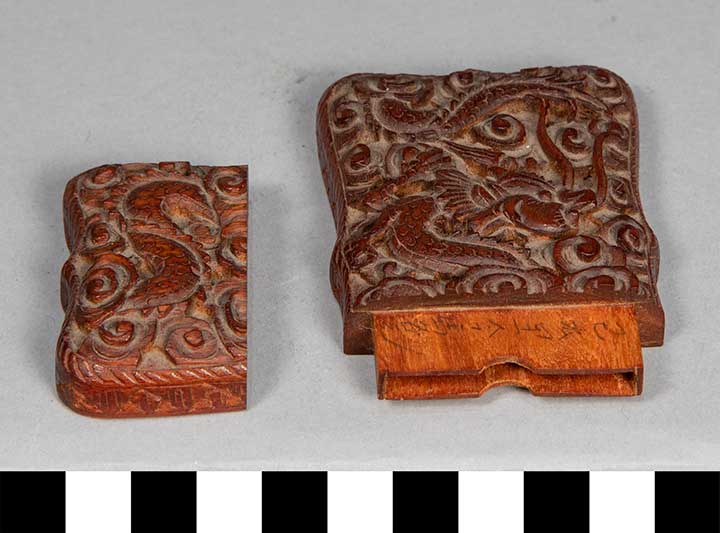
Card Container: Base2020.06.0067A (2020.06.0067A)
8.3 x 5.9 x 1.6 cm (30 g)
Location: Asia, East: China: Canton
Period: First half of 19th century
Classification/Nomenclature: Furnishings : Household Accessories : Storage & Display Accessories
Period: First half of 19th century
Classification/Nomenclature: Furnishings : Household Accessories : Storage & Display Accessories
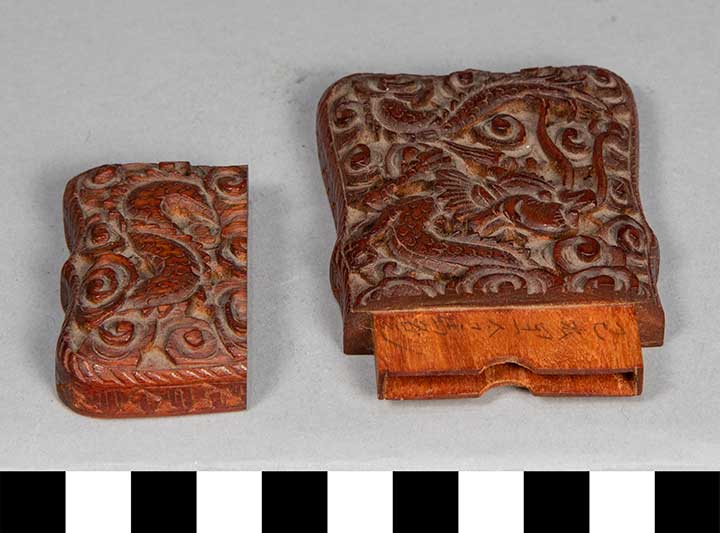
Card Container: Lid2020.06.0067B (2020.06.0067B)
5.9 x 3.2 cm (13 g)
Location: Asia, East: China: Canton
Period: First half of 19th century
Classification/Nomenclature: Furnishings : Household Accessories : Storage & Display Accessories
Period: First half of 19th century
Classification/Nomenclature: Furnishings : Household Accessories : Storage & Display Accessories
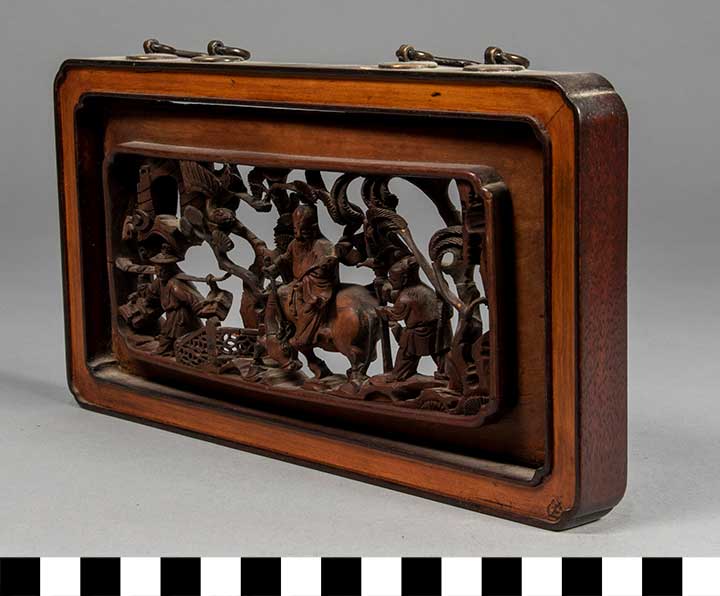
Hanging Carved Scene2020.06.0068 (2020.06.0068)
23.5 x 15 x 2.2 cm (294 g)
Location: Asia, East: China
Period: Early Republic of China; Circa 1920's
Classification/Nomenclature: Communication Artifacts : Art
Period: Early Republic of China; Circa 1920's
Classification/Nomenclature: Communication Artifacts : Art
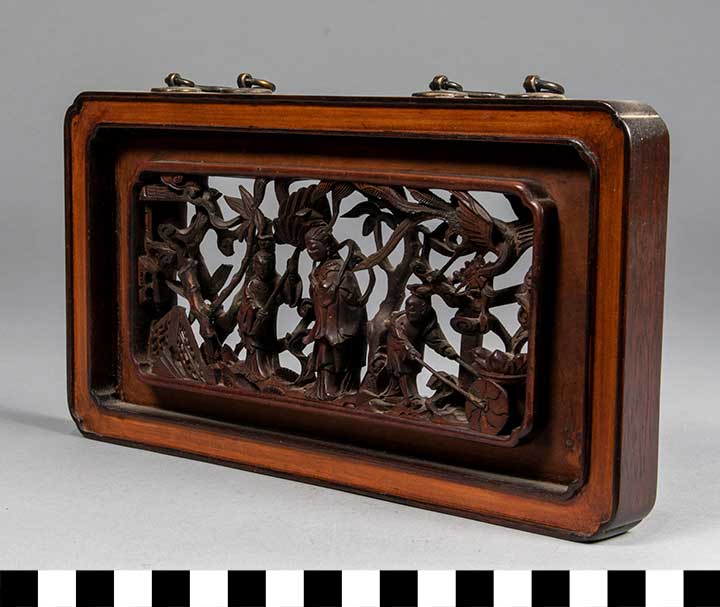
Hanging Carved Scene2020.06.0069 (2020.06.0069)
23.5 x 15 x 2.2 cm (297 g)
Location: Asia, East: China
Period: Early Republic of China; Circa 1920's
Classification/Nomenclature: Communication Artifacts : Art
Period: Early Republic of China; Circa 1920's
Classification/Nomenclature: Communication Artifacts : Art
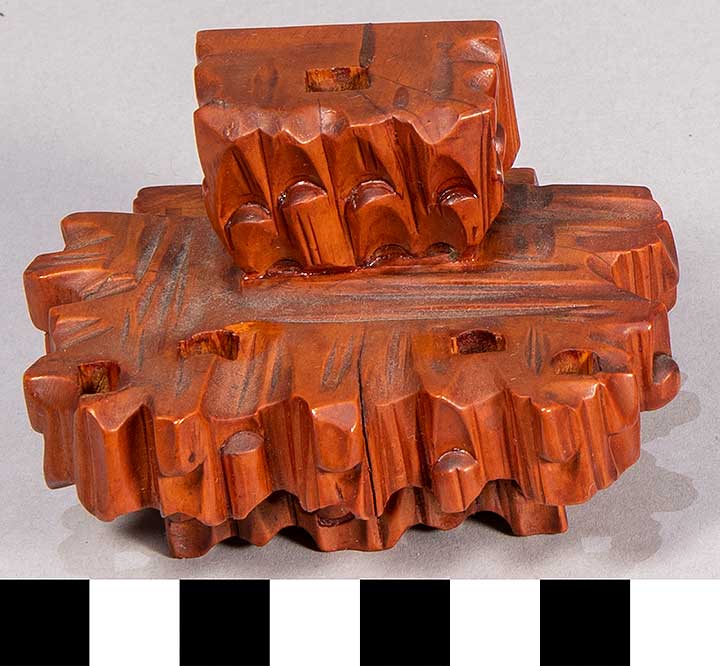
Base for Carving: Fuk Luk Sau, The Three Wise Men, Three Household Gods, Three Star Gods2020.06.0070A (2020.06.0070A)
8 x 7.4 x 5.1 cm (99 g)
Location: Asia, East: China
Period: Republic of China (1912-1949); Circa 1912-1949
Classification/Nomenclature: Furnishings : Furniture : Support Furniture
Period: Republic of China (1912-1949); Circa 1912-1949
Classification/Nomenclature: Furnishings : Furniture : Support Furniture
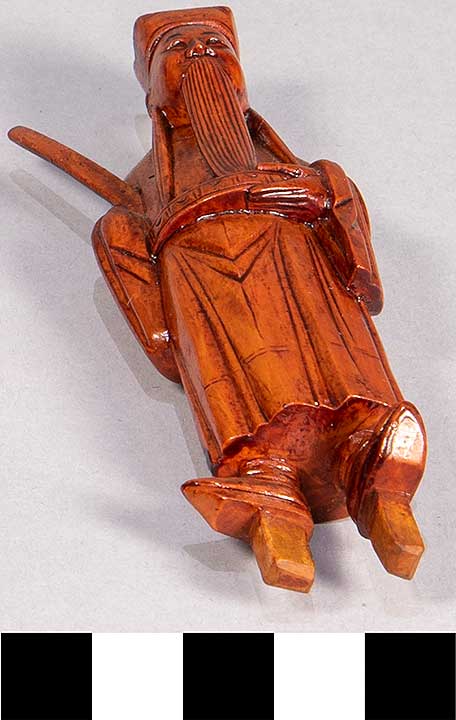
Carving: Sau, or Shou, One of The Three Wise Men, Three Household Gods, Three Star Gods2020.06.0070B (2020.06.0070B)
11.5 x 4 x 2.5 cm (28 g)
Location: Asia, East: China
Period: Republic of China (1912-1949); Circa 1912-1949
Classification/Nomenclature: Communication Artifacts : Art
Period: Republic of China (1912-1949); Circa 1912-1949
Classification/Nomenclature: Communication Artifacts : Art
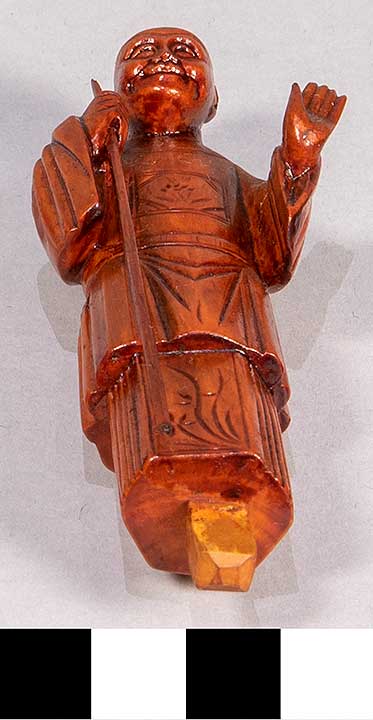
Carving: Luk, or Lu, One of The Three Wise Men, Three Household Gods, Three Star Gods2020.06.0070C (2020.06.0070C)
11.2 x 4 x 2.4 cm (27 g)
Location: Asia, East: China
Period: Republic of China (1912-1949); Circa 1912-1949
Classification/Nomenclature: Communication Artifacts : Art
Period: Republic of China (1912-1949); Circa 1912-1949
Classification/Nomenclature: Communication Artifacts : Art
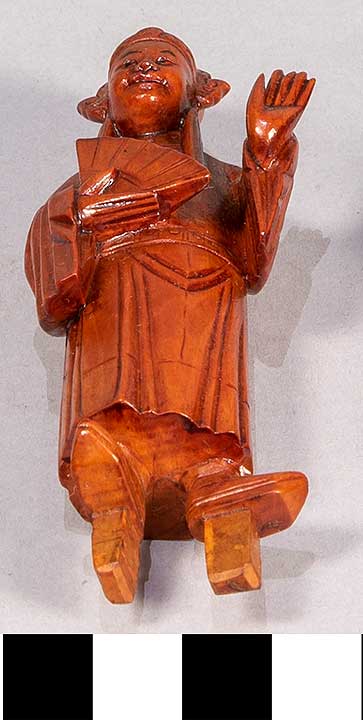
Carving: Fuk, or Fu, One of The Three Wise Men, Three Household Gods, Three Star Gods2020.06.0070D (2020.06.0070D)
11.8 x 4 x 2.8 cm (30 g)
Location: Asia, East: China
Period: Republic of China (1912-1949); Circa 1912-1949
Classification/Nomenclature: Communication Artifacts : Art
Period: Republic of China (1912-1949); Circa 1912-1949
Classification/Nomenclature: Communication Artifacts : Art
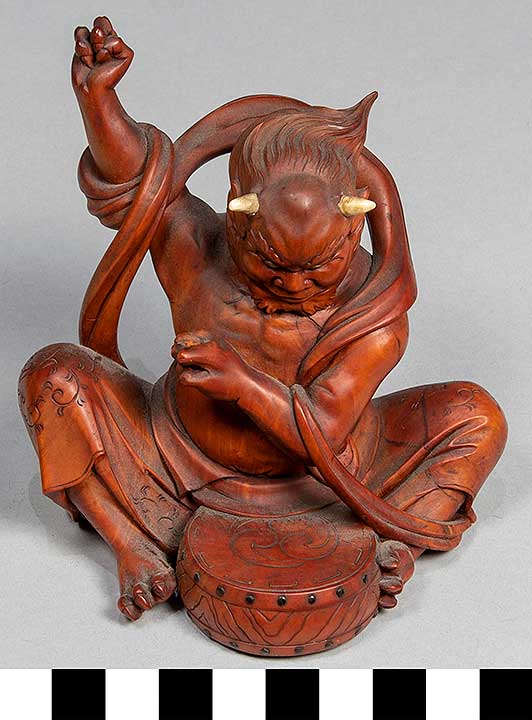
Okimono: Raiden2020.06.0071A (2020.06.0071A)
11 x 9.9 x 8.5 cm (148 g)
Location: Asia, East: Japan
Period: Early Meiji Period
Classification/Nomenclature: Communication Artifacts : Art
Description: This is a Japanese boxwood okimono of Raiden, the Shinto god of thunder. Raiden is often depicted to have demonic features and his most common attribute is a drum or wheel of drums to create the sound of thunder...
Period: Early Meiji Period
Classification/Nomenclature: Communication Artifacts : Art
Description: This is a Japanese boxwood okimono of Raiden, the Shinto god of thunder. Raiden is often depicted to have demonic features and his most common attribute is a drum or wheel of drums to create the sound of thunder...
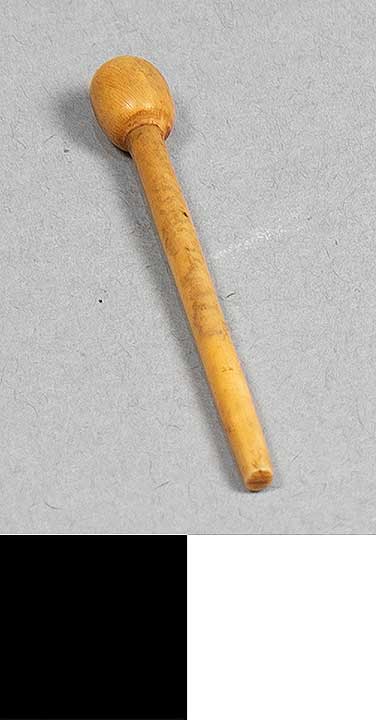
Okimono: Raiden's Drumstick2020.06.0071B (2020.06.0071B)
3.2 x cm ( g)
Location: Asia, East: Japan
Period: Early Meiji Period
Classification/Nomenclature: Communication Artifacts : Art
Description: This is the drumstick for a Japanese boxwood okimono of Raiden, the Shinto god of thunder. Raiden is often depicted to have demonic features and his most common attribute is a drum or wheel of drums to create the sound of thunder...
Period: Early Meiji Period
Classification/Nomenclature: Communication Artifacts : Art
Description: This is the drumstick for a Japanese boxwood okimono of Raiden, the Shinto god of thunder. Raiden is often depicted to have demonic features and his most common attribute is a drum or wheel of drums to create the sound of thunder...
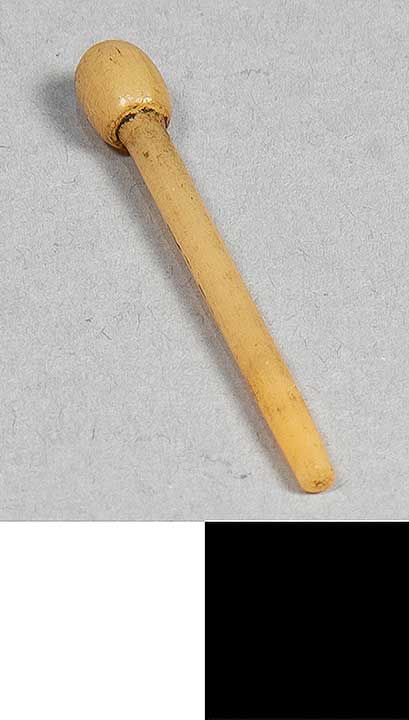
Okimono: Raiden's Drumstick2020.06.0071C (2020.06.0071C)
3.2 x cm ( g)
Location: Asia, East: Japan
Period: Early Meiji Period
Classification/Nomenclature: Communication Artifacts : Art
Description: This is the drumstick for a Japanese boxwood okimono of Raiden, the Shinto god of thunder. Raiden is often depicted to have demonic features and his most common attribute is a drum or wheel of drums to create the sound of thunder...
Period: Early Meiji Period
Classification/Nomenclature: Communication Artifacts : Art
Description: This is the drumstick for a Japanese boxwood okimono of Raiden, the Shinto god of thunder. Raiden is often depicted to have demonic features and his most common attribute is a drum or wheel of drums to create the sound of thunder...
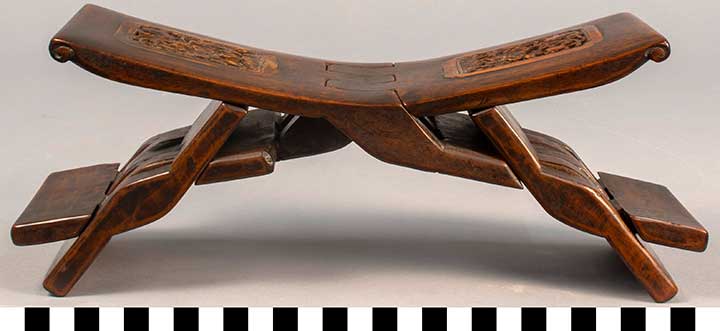
Foldable Pillow2020.06.0072 (2020.06.0072)
29.5 x 13 x 9 cm (470 g)
Location: Asia, East: China
Period: Late Qing; Late 17th - 18th century
Classification/Nomenclature: Furnishings : Furniture : Support Furniture
Description: This is a Chinese wood carving of a hard pillow or a head rest. Soft substances were believed to take energy and vitality from the body and were bad for blood circulation...
Period: Late Qing; Late 17th - 18th century
Classification/Nomenclature: Furnishings : Furniture : Support Furniture
Description: This is a Chinese wood carving of a hard pillow or a head rest. Soft substances were believed to take energy and vitality from the body and were bad for blood circulation...
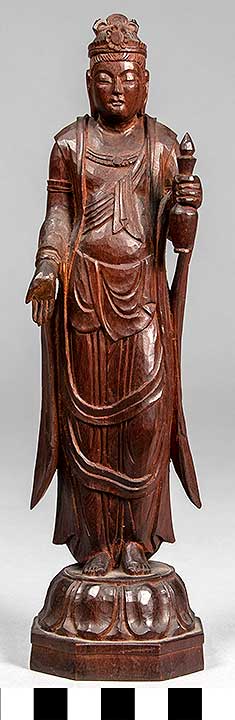
Okimono: Kannon, Bodhisattva of Mercy2020.06.0073A (2020.06.0073A)
21.1 x 5.8 x 5 cm (128 g)
Location: Asia, East: Japan
Period: Early 20th century
Classification/Nomenclature: Communication Artifacts : Art
Description: This is a Japanese okimono of Kannon, the Japanese name for the Bodhisattva Avalokitesvara. Though male in India, Guanyin has been represented as female in East and Southeast Asia...
Period: Early 20th century
Classification/Nomenclature: Communication Artifacts : Art
Description: This is a Japanese okimono of Kannon, the Japanese name for the Bodhisattva Avalokitesvara. Though male in India, Guanyin has been represented as female in East and Southeast Asia...
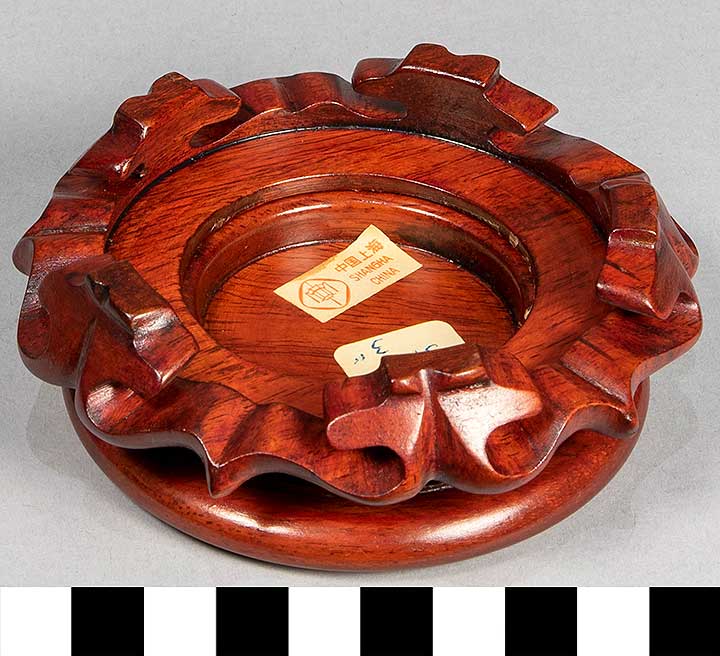
Lotus Flower Base2020.06.0073B (2020.06.0073B)
32.2 x 10.8 x 3.7 cm (91 g)
Location: Asia, East: Japan
Period: Early 20th century
Classification/Nomenclature: Furnishings : Furniture : Support Furniture
Period: Early 20th century
Classification/Nomenclature: Furnishings : Furniture : Support Furniture
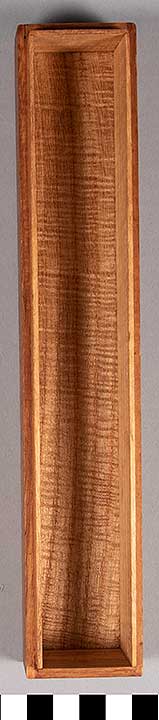
Chashaku Set, Tea Scoop Set: Container Base2020.06.0074A (2020.06.0074A)
23.3 x 4.2 x 3.3 cm (31 g)
Location: Asia, East: Japan
Period: Edo Period (1615-1868) or Meiji Era (1868-1912); 19th Century
Classification/Nomenclature: Personal Artifacts : Personal Gear : Personal Carrying & Storage Gear
Description: A light rectangular container that stores a pair of chashaku. Chashaku are slender scoops used to extract tea powder from caddies, and the small tip is designed to precisely measure the amount of powder that goes into a serving of tea...
Period: Edo Period (1615-1868) or Meiji Era (1868-1912); 19th Century
Classification/Nomenclature: Personal Artifacts : Personal Gear : Personal Carrying & Storage Gear
Description: A light rectangular container that stores a pair of chashaku. Chashaku are slender scoops used to extract tea powder from caddies, and the small tip is designed to precisely measure the amount of powder that goes into a serving of tea...
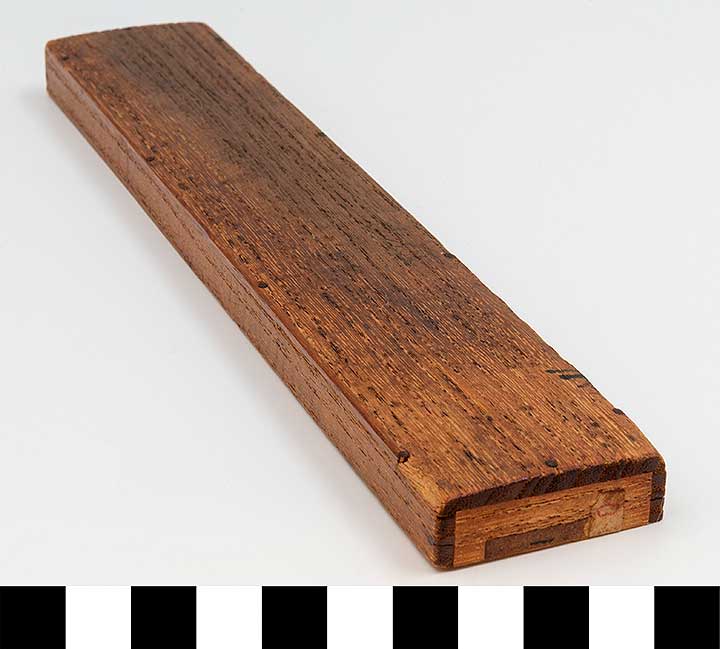
Chashaku Set, Tea Scoop Set: Container Lid2020.06.0074B (2020.06.0074B)
23.5 x 4.2 x 1.5 cm (16 g)
Location: Asia, East: Japan
Period: Edo Period (1615-1868) or Meiji Era (1868-1912); 19th Century
Classification/Nomenclature: Personal Artifacts : Personal Gear : Personal Carrying & Storage Gear
Description: A rectangular lid that connects to the container base for storing a pair of chashaku. Beyond its practical purposes in the tea ceremony, the chashaku also serves as an art piece...
Period: Edo Period (1615-1868) or Meiji Era (1868-1912); 19th Century
Classification/Nomenclature: Personal Artifacts : Personal Gear : Personal Carrying & Storage Gear
Description: A rectangular lid that connects to the container base for storing a pair of chashaku. Beyond its practical purposes in the tea ceremony, the chashaku also serves as an art piece...
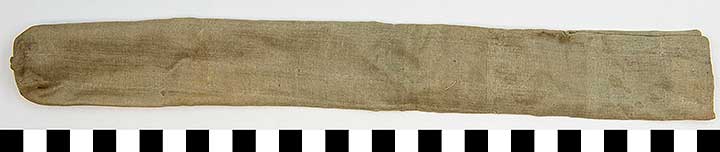
Chashaku Set, Tea Scoop Set: Bag2020.06.0074C (2020.06.0074C)
30.5 x 4 x 1.7 cm (1 g)
Location: Asia, East: Japan
Period: Edo Period (1615-1868) or Meiji Era (1868-1912); 19th Century
Classification/Nomenclature: Personal Artifacts : Personal Gear : Personal Carrying & Storage Gear
Description: A thin bag tucked inside the box providing an additional layer of protection for both the chashaku and the containers that hold them...
Period: Edo Period (1615-1868) or Meiji Era (1868-1912); 19th Century
Classification/Nomenclature: Personal Artifacts : Personal Gear : Personal Carrying & Storage Gear
Description: A thin bag tucked inside the box providing an additional layer of protection for both the chashaku and the containers that hold them...
Search Examples
Explore More
Access the public portions of the catalog records for the approximately 50,000 cultural and ethnographic objects in the Museum's Artifact Collection.