
Advancing Object Research Through Campus Collaboration
- Post Date: 4/21/2026
- Author: John Holton
- Reading Time: 3 minute read
In October, the Spurlock had the opportunity to partner with the Illinois State Archeological Survey (ISAS) on an exciting new venture using X-rays. The project, lead by Collections Manager John Holton and ISAS Senior Scientific Specialist Teresa Palomares Rodriguez, utilized a Portable X-ray Fluorescence (PXRF) device to perform a noninvasive technique for elemental analysis, to identify the composition of select artifacts within the Museum’s collection.
-
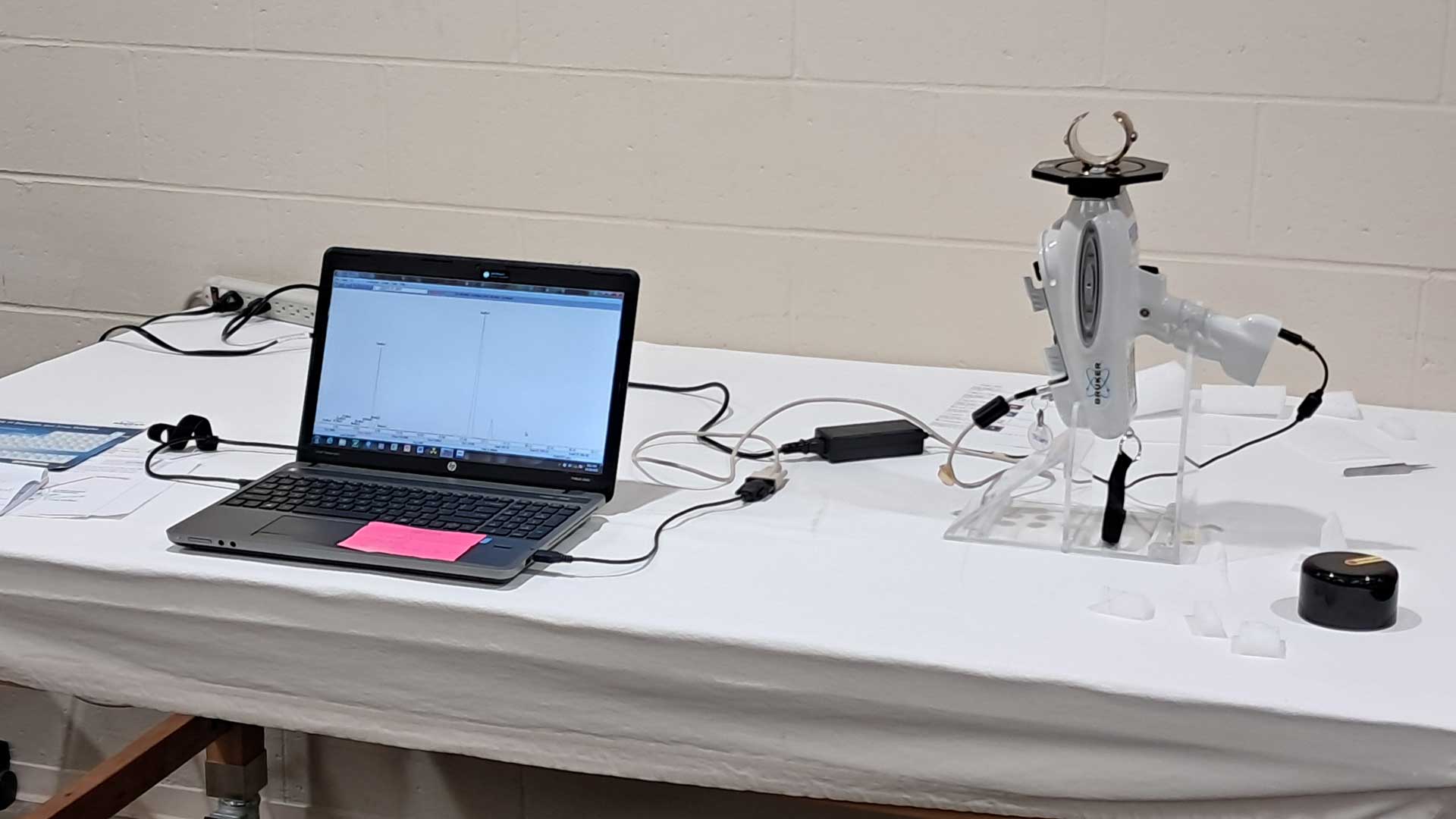 The laptop displays a graph of the photon counts for elements identified in a metal Egyptian bracelet (2018.05.0017) being tested by the PXRF.
Over 4 days, the Spurlock tested over 450 artifacts with the goal of discovering and/or confirming the elemental composition of artifacts made of metal, ivory, and gemstones. During the process, the PXRF was utilized in either its stationary or hand-held mode based on the size of the artifact. Small artifacts are placed on the testing platform with the X-rays coming through a window below. The PXRF was held in direct contact with artifacts too large for the platform.
-
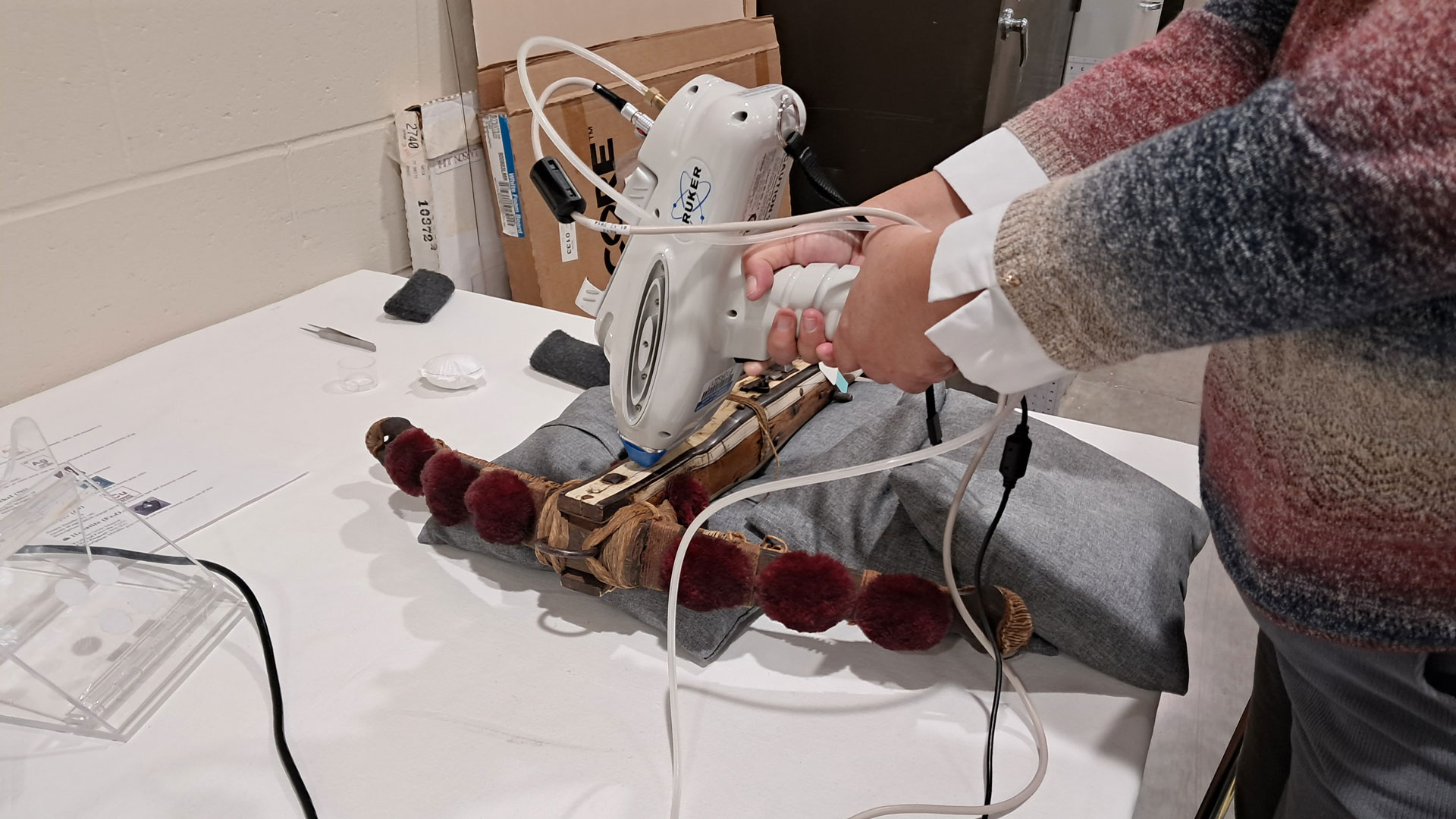 Palomares holds the PXRF against a 16th-century German crossbow (1924.04.0002A) to test the ivory inlay.
After each test, the PXRF software displays the results as a spectrum: a line graph shows the counts of photons for each element identified; these elements make up the artifact's surface tested. Once this data is fully evaluated, the Spurlock can accurately update their artifact records (physical and digital) to improve research, physically reorganize artifacts for efficient access, and improve preservation efforts for artifacts based on their specific material needs.
-
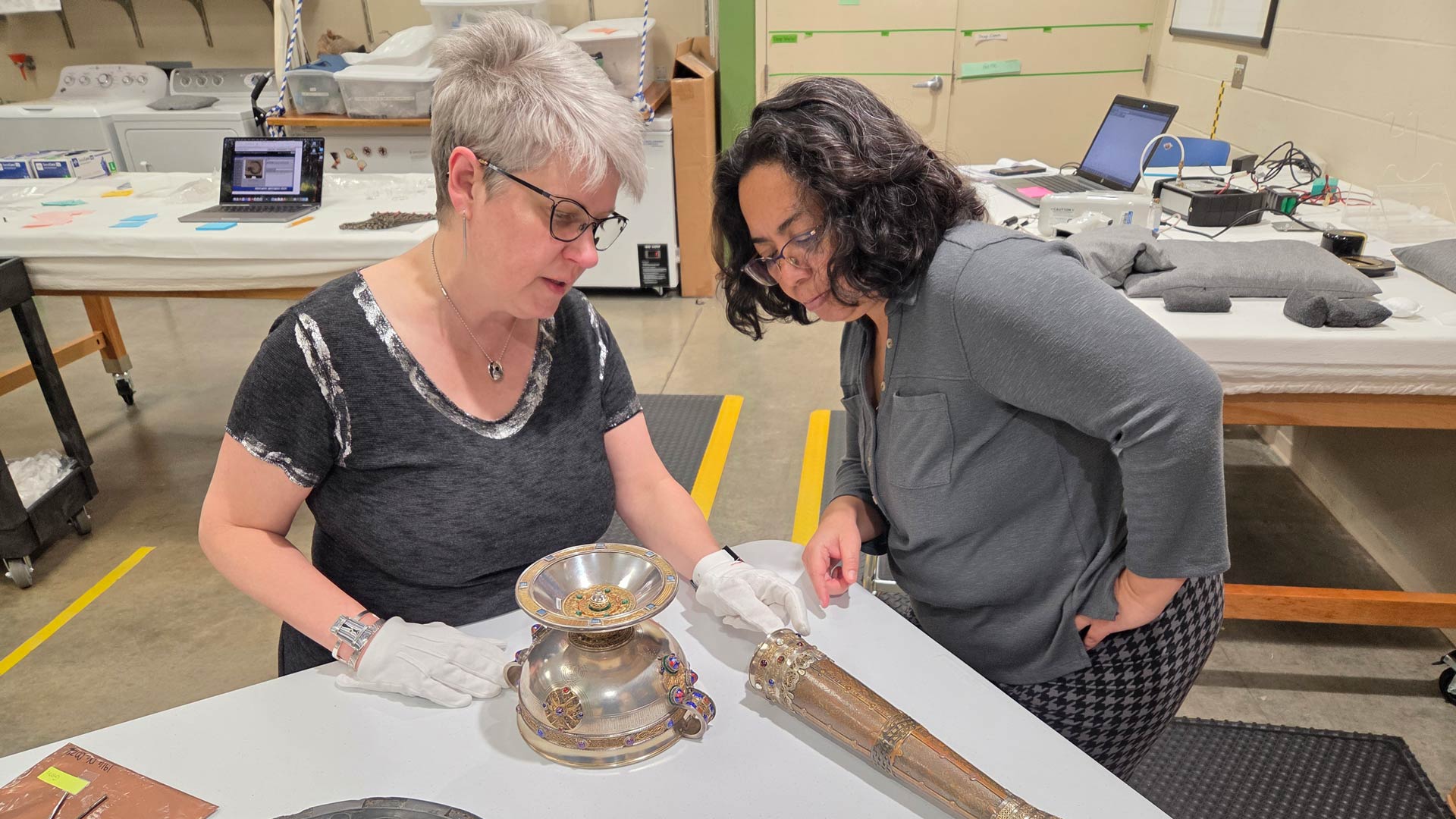 Senior Collections Manager Christa Deacy-Quinn and Palomares determine what surfaces are the best suited to be tested on an electrotype facsimile of Shrine of St. Lachtin’s Arm.
 -
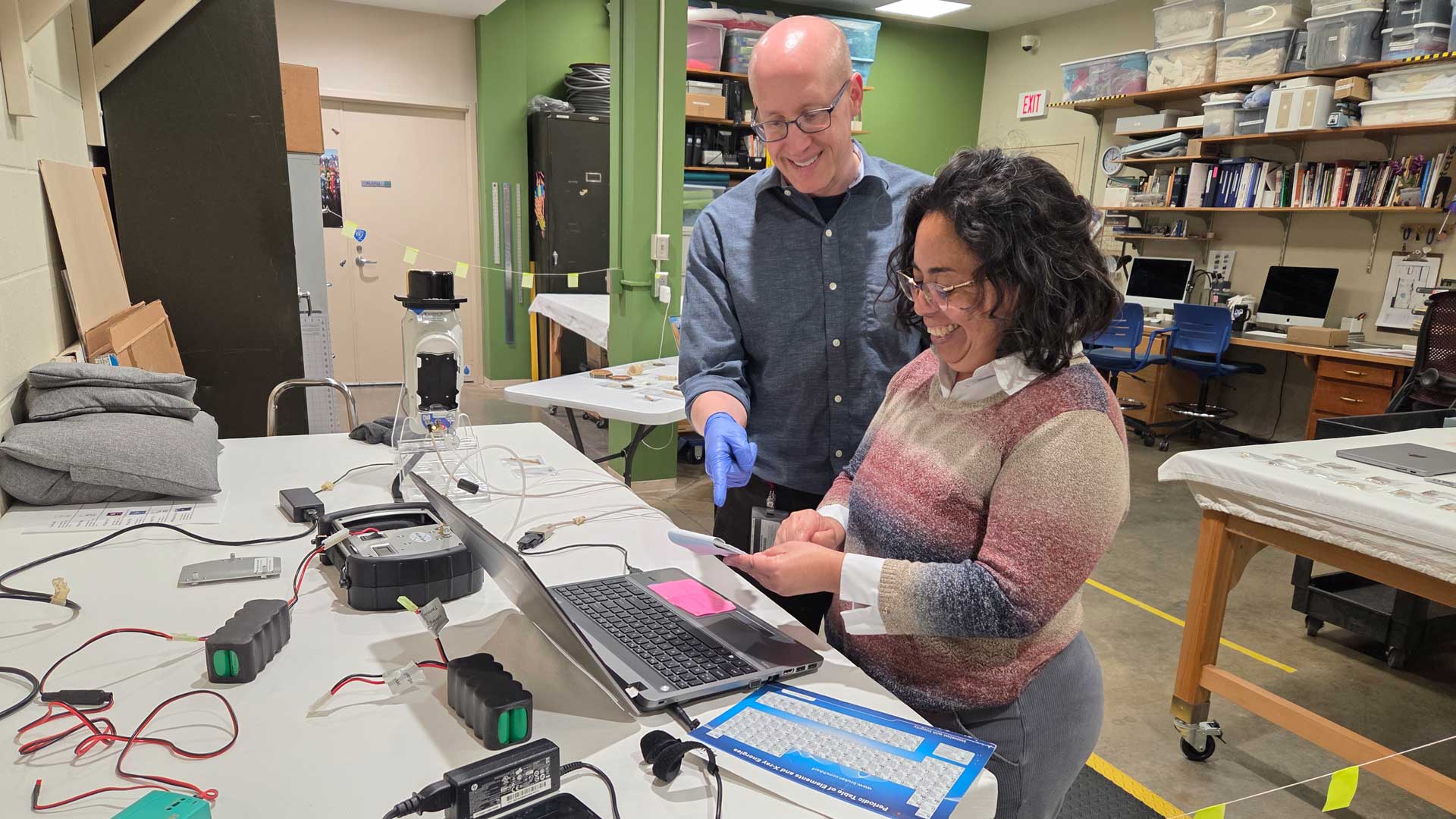 Holton and Palomares review the results of a PXRF scan. The object is on the testing platform and covered with a safety lid.
In February, Palomares had the opportunity to present on this collaboration at the Prairie Research Institute’s recent Lighting Symposium. In her presentation titled Collaboration Across Campus: Use of ISAS’s Portable XRP on Spurlock Museum Collections, she discussed challenges with the project, her initial findings, and goals of further data analysis.The Spurlock is grateful to ISAS for their partnership on this project and for their time and expertise on the Portable X-ray Fluorescence technique for elemental analysis. We hope to continue the collaboration in the future, learning more about the Spurlock’s collection.
-
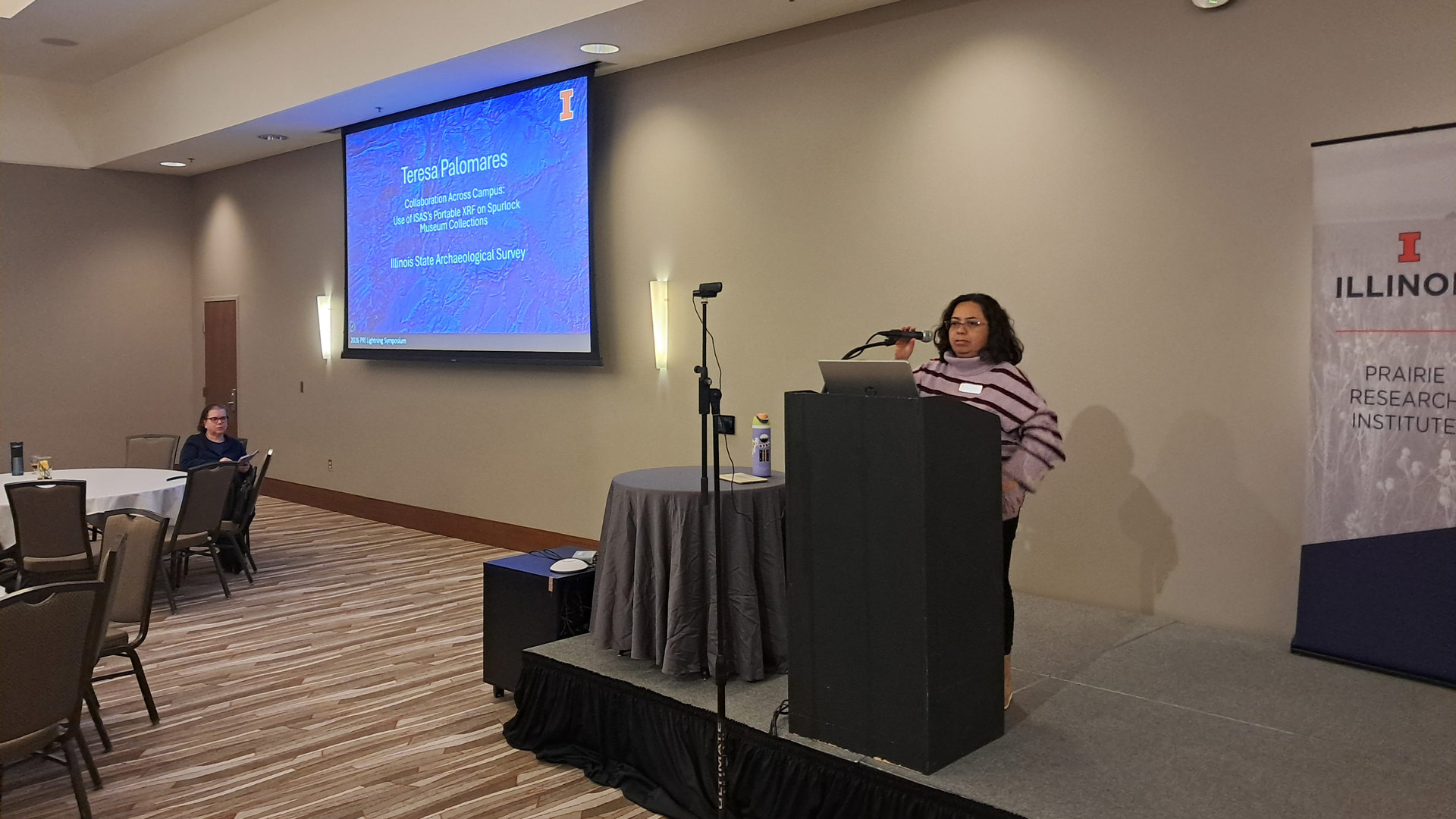 Palomares presenting the project at the Prairie Research Institute’s Lightening Symposium.
 -
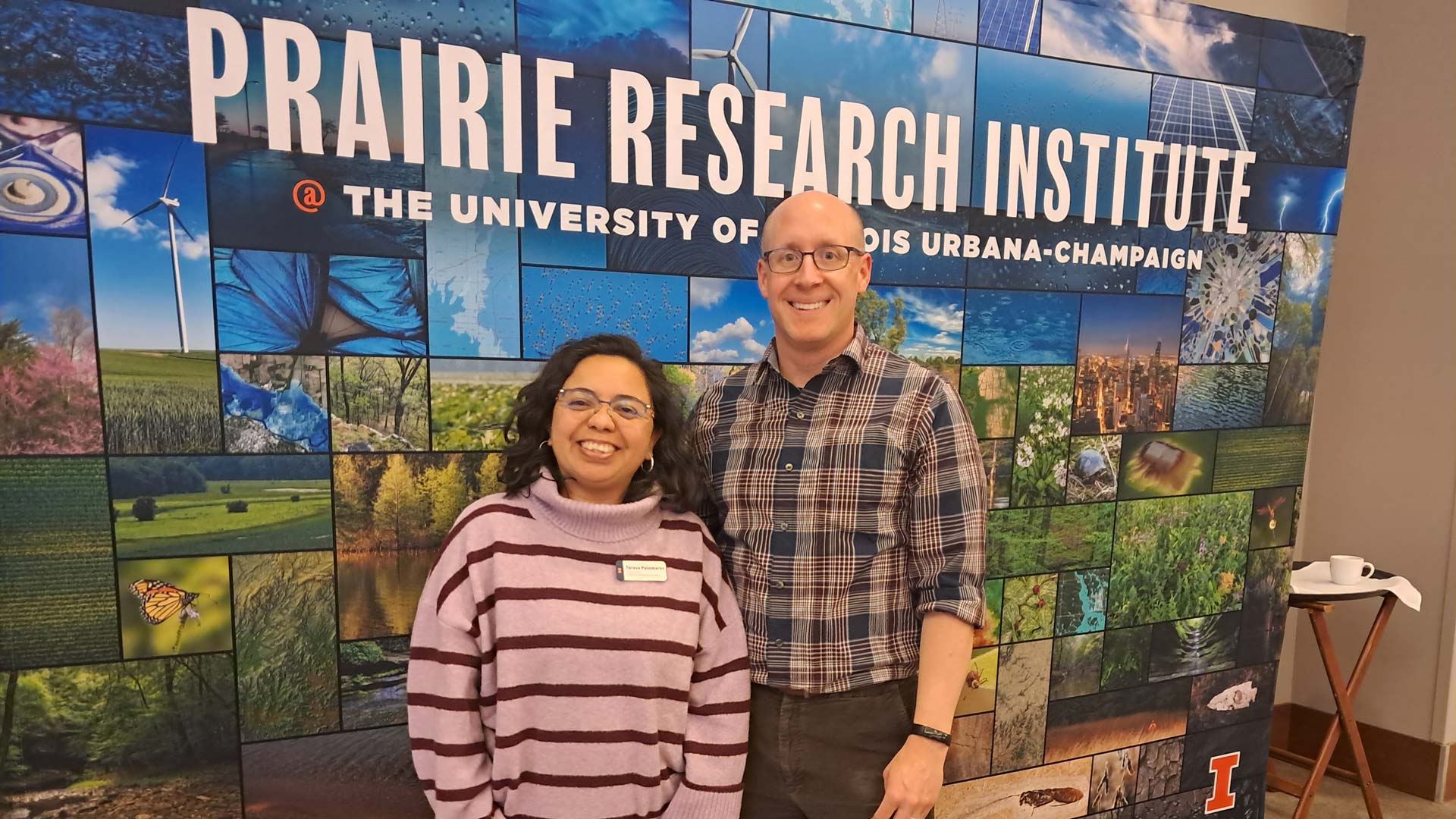
Palomares and Holton at the Prairie Research Institute Lightening Symposium where the project was presented.
-
- Share:
- Subscribe to Newletter
- Giving