
Mascots help shape the modern Olympic identity
- Post Date: 2/6/2026
- Author: Diego Navarro, registration student assistant
- Reading Time: 15 minute read
The modern Olympics are a global stage uniting the world through athletic competition, while also showcasing the cultural identity of the host country. Yet it is difficult to encapsulate the essence of a host city when the main focus is the drama of competition between countries. One popular avenue for cultural expression is the Olympic mascot, a physical embodiment of the host nation's cultural heritage. The first official mascot was Waldi for the 1972 Munich Games. Waldi was a dachshund, a popular dog breed adored by German citizens and marketable to international audiences. Since then, mascots have played a crucial role in promoting the games, fostering community engagement and merchandise sales. From raccoons to tigers each mascot tells the story of its host city or country and leaves a lasting legacy on Olympic history.
Roni: 1980 Lake Placid Winter Games
Roni was the mascot for the 1980 Winter Games in Lake Placid, New York, and the first official mascot at an American Olympic event. With many of the events taking place in the shadow of the Adirondack Mountains, the abundant raccoon was chosen as the region's symbol. The name Roni originated from the Mohawk word for raccoon (ati:ron) and sports illustrator Donald Moss created the mascot's logos. Roni was also the first mascot to be illustrated competing in different Olympic events, a feature that was terrific for advertisement. Roni was featured heavily on products ranging from posters and plushes to various forms of clothing and accessories. Roni and the 1980 Winter Olympics continue to be remembered fondly in the New York mountain village.
-
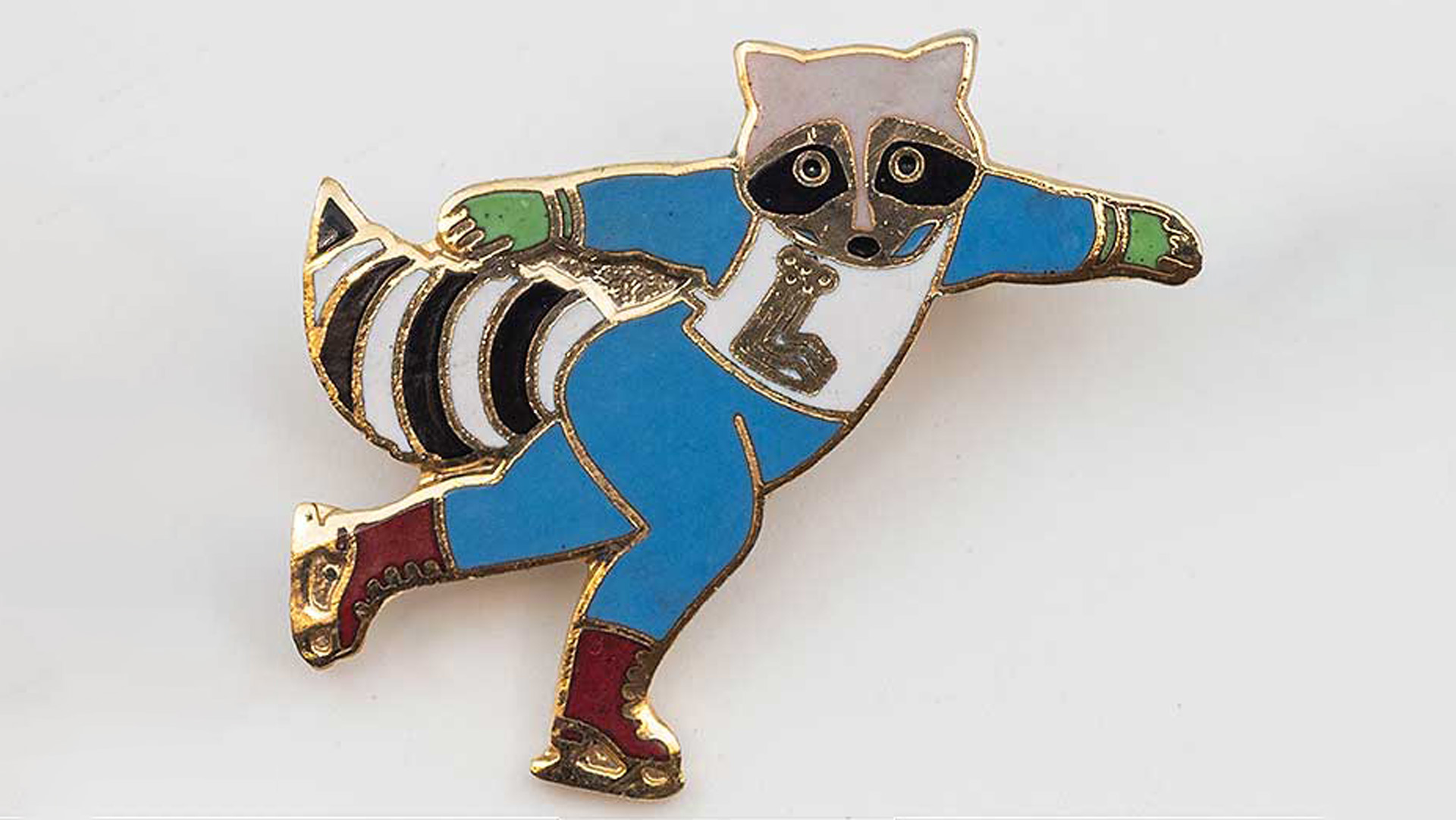 Roni Lake Placid Glass–Enamel, Metal 1980 Gift of H. Henriksen 1980.09.0012D
Misha: 1980 Moscow Summer Games
Misha, full name Mikhail Potapych Toptygin, was the mascot for Moscow’s 1980 Summer Games. Misha was a bear, a common sight in the Russian wilderness. Yet it was their abundance in historical depictions and folklore that made the animal a popular submission among the 40,000 Soviet citizens who replied to the organizing committee’s open call for a mascot. Russian children's book illustrator Victor Chizhikov was tasked with creating the mascot and designed Misha, a little brown bear with a belt made of the Olympic colors and a belt buckle made of the 5 Olympic rings (this belt could possibly be an allusion to the Soviet’s history of weightlifting prowess). Due to the Soviet invasion of Afghanistan, however, the United States and 55 other nations boycotted the 1980 Summer Games, and fewer countries participated in these games than any since 1956. Despite this lack of an international presence, Misha was still globally popular and also financially successful, as the Soviet Union plastered him on merchandise all over the world. Ironically, the United States would employ a similar blueprint to market their own mascot four years later.
-
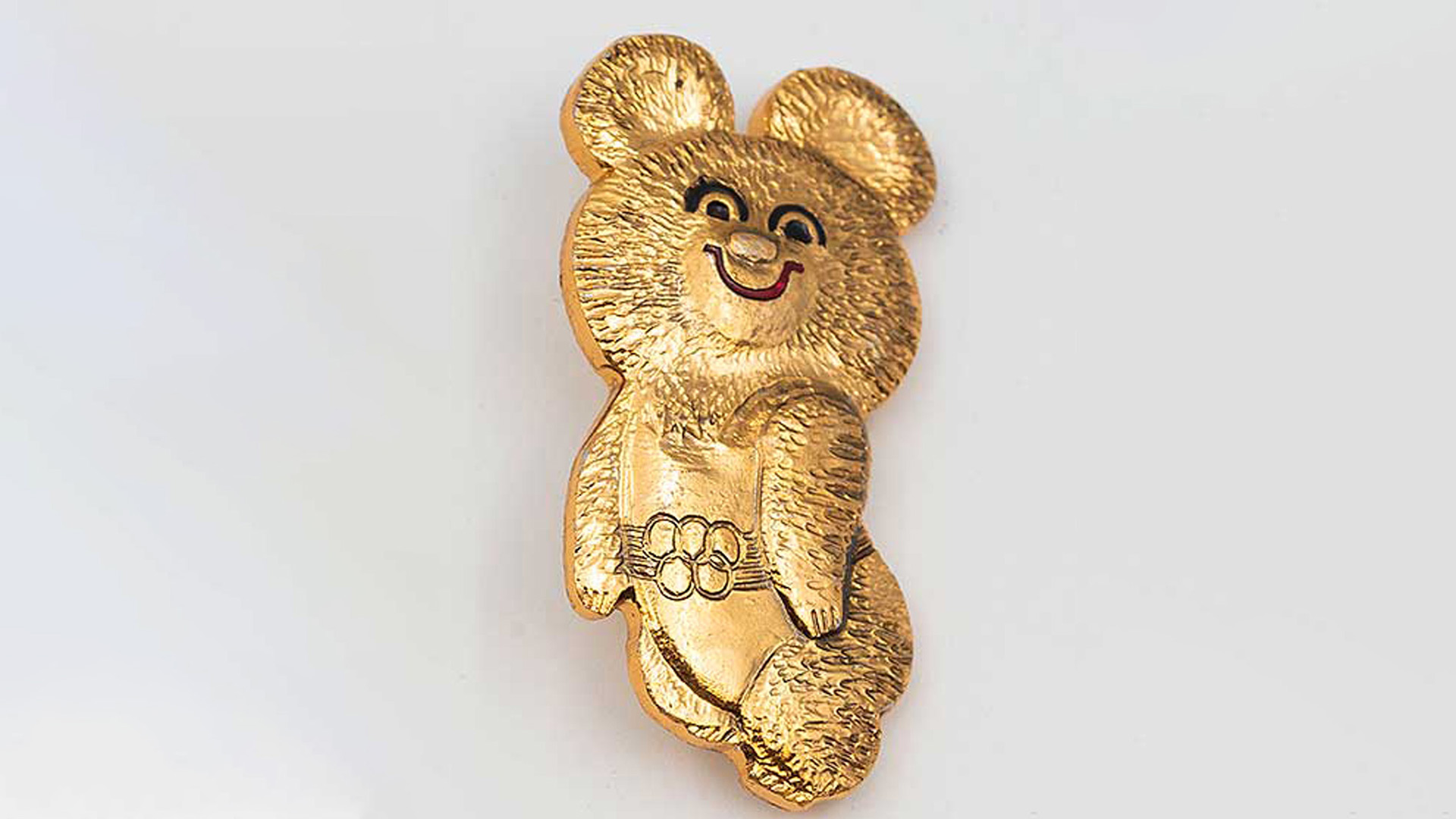 Misha Russia Glass–Enamel, Metal 1980 Gift of H. Henriksen 1980.09.0020
Vučko: 1984 Sarajevo Winter Games
The year 1984 was a trying time for Yugoslavia. The country was on the verge of a partition and ethnic conflicts were rampant. It was believed that the selection of a mascot would help to unify the nation. Artists from across Yugoslavia were invited to participate in designing an Olympic mascot through the national broadcasting network. Jose Trobec's character Vucko, a wolf sporting an orange scarf, ultimately won the contest. One of the reasons Vucko was a wolf was because the Dinaric Alps contains one of the largest populations of Eurasian wolf. Forty years after the games ended, Vučko is still a beloved symbol in the former Yugoslavia. Depictions of the loveable Vučko can still be seen on posters in restaurants and in the streets as public artworks. In addition, he is also seen in pins and other coveted memorabilia. When asked for his opinion on his character's legacy, Trobec stated Vučko is “the only thing that all Bosnians can agree on.
-
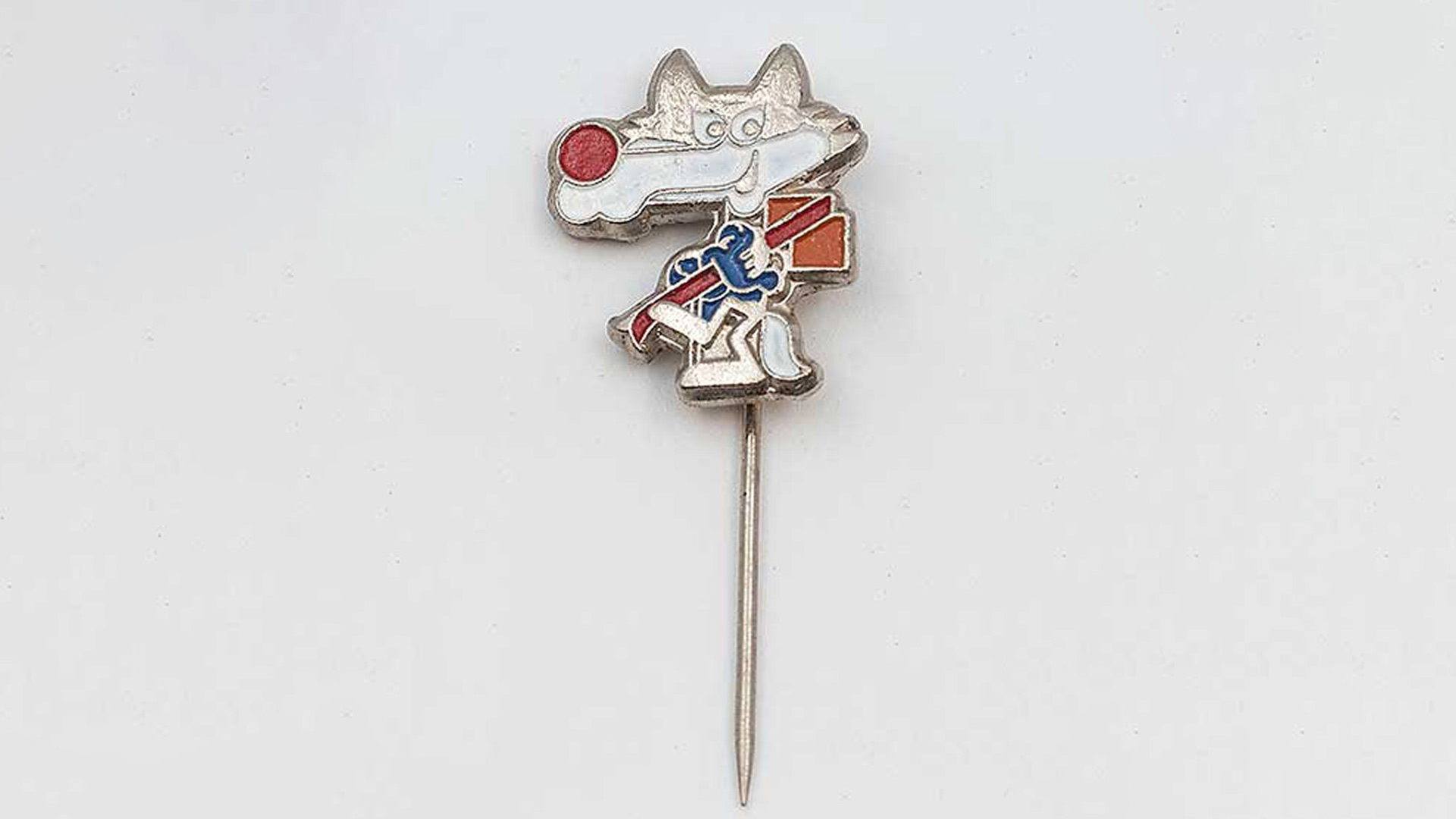 Vučko Sarajevo Metal 1984 1984.18.0021
Sam: 1984 Los Angeles Summer Games
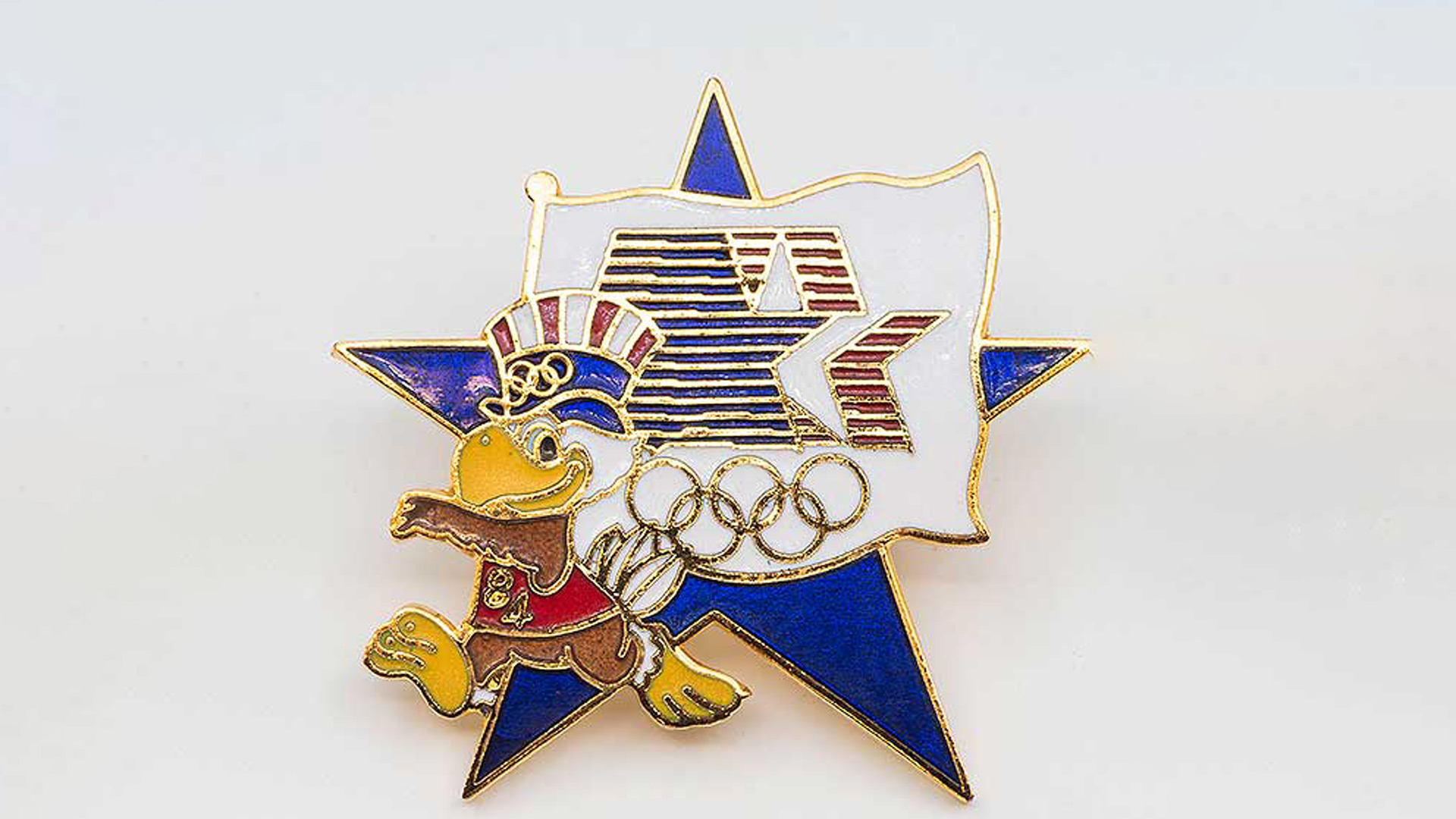
The 1984 summer games marked the second arrival of the Olympics in Los Angeles. The Olympic Organizing Committee hired Walt Disney to design a mascot to represent Southern California, but the initial ideas were unpopular, even the brown bear, the animal featured on the California flag, given the creation of the USSR's Misha four years prior. Cartoonist Bob Moore and his team of Disney animators then designed a hybrid of Uncle Sam and the Bald Eagle, two national symbols, to represent the United States in its entirety. Uncle Sam is a long standing personification of the federal government, while the bald eagle has its origins in its adoption as a national emblem in 1782. These symbols manifested into a bipedal anthropomorphic eagle wearing Uncle Sam’s attire. The hat and bow tie were given red and white stripes to represent the flag of the United States, and Sam’s iconic appearance, like his predecessor Misha, lent him well to merchandise.
-
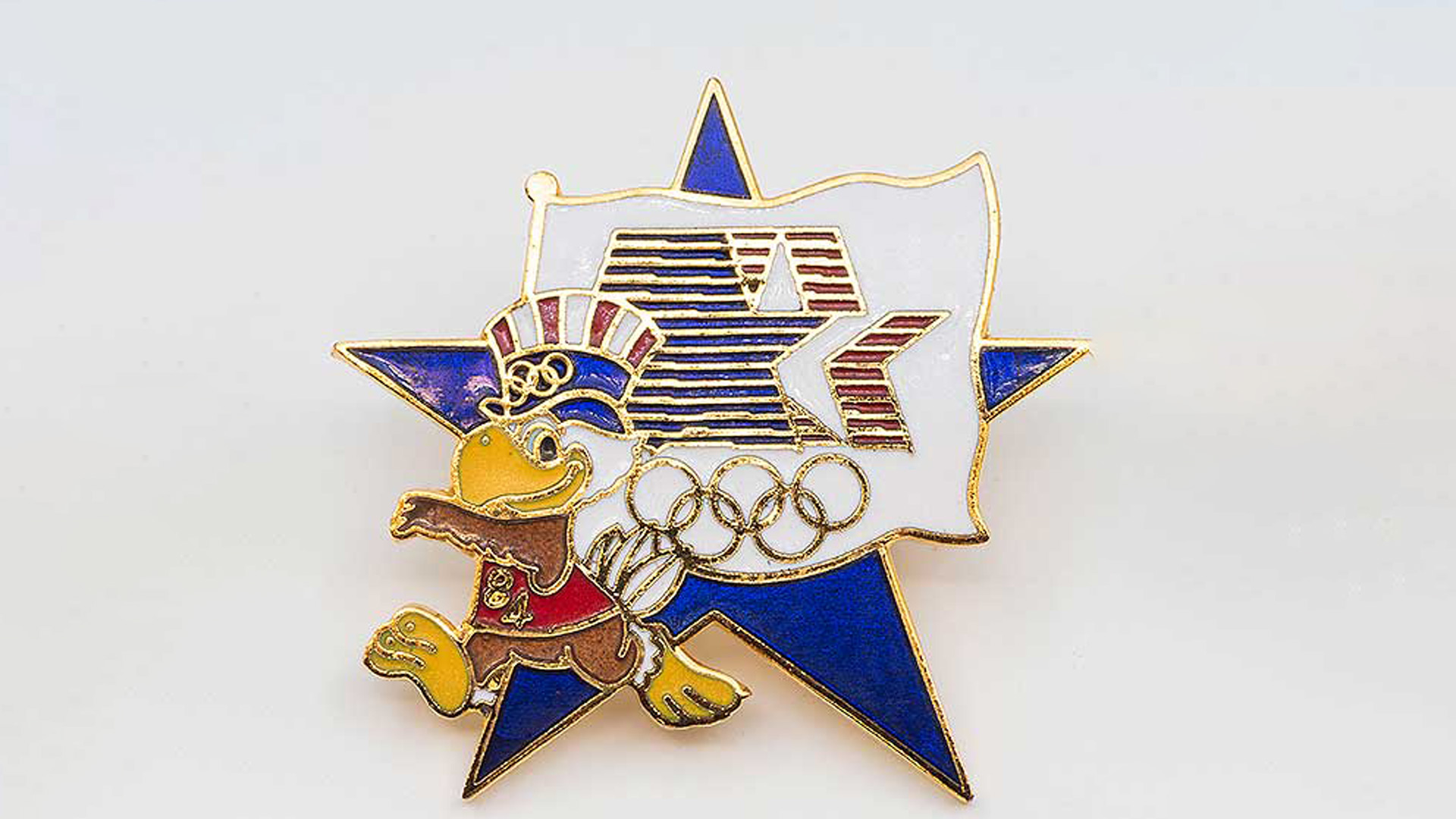 Sam Los Angeles Metal, Pigment–Paint 1984 Gift of Coca Cola Bottling Company 1984.04.0001C
Hidy and Howdy: 1988 Calgary Winter Games
The polar bears Hidy and Howdy were the mascots of the 1988 Calgary Winter Games. Their names were reminiscent of friendly greetings and their Western-style clothing was based on typical Western wear popular in Alberta, the province hosting the games (Calgary, host of an annual rodeo called the Calgary Stampede, historically has a Western feel). The use of polar bears represented Canada as a whole, since the country is home to two-thirds of the world's polar bear population . The hospitable nature the mascots embodied was not an exaggeration. As Herbert Denton explains in the Washington post, “(t)he kind of genial, prairie hospitality symbolized by Hidy and Howdy, the polar bear mascots of the Winter Games who go around giving hugs, really does exist in Calgary”. These winter games were unique in the fact that they were profitable for Calgary, and part of this can be attributed to that friendly nature of the city; the games were largely volunteer-run, which contributed to its $140 million profit, compared with Montreal’s loss of $1 billion after hosting the 1976 Summer Games. Hidy and Howdy merchandise sales also contributed to the record profit of the games. Costumed mascots were seen throughout the games, hugging viewers and athletes; photos and posters of the mascots were widely distributed, and plush toys and pins of the sibling bears represented various sports and events at the games.
-
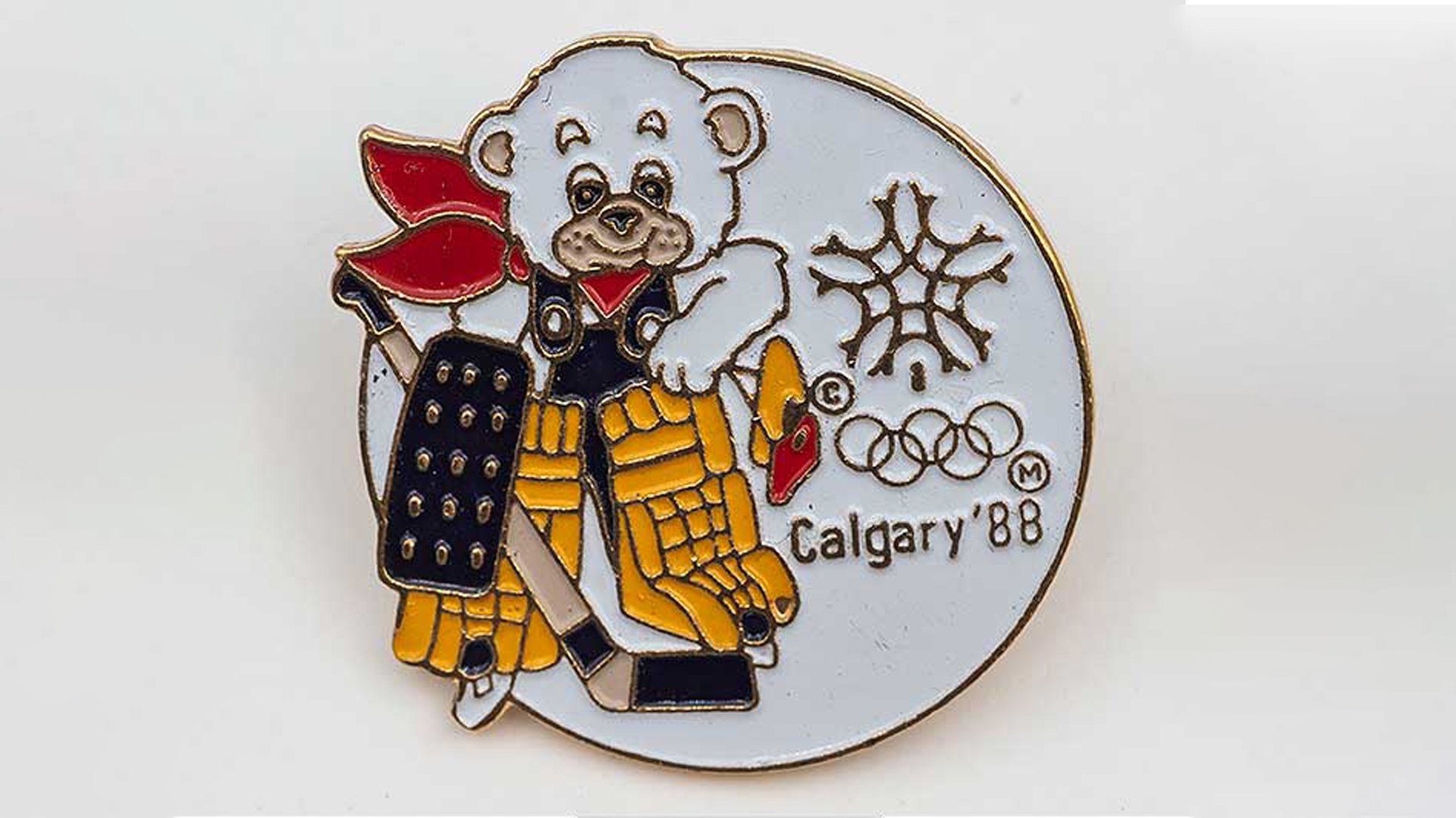 Howdy Calgary Glass–Enamel, Metal 1988 2003.09.0007
Hodori: 1988 Seoul Summer Games
The Siberian Tiger has long been a popular animal in Korean folklore and culture. The country’s fascination with the large cat made it a perfect symbol to represent the 1988 Seoul Summer Games in South Korea. The mascot, named Hodori, sporting the Olympic rings as a medal around his neck and a Korean hat called a Sangmo. The end of the Sangmo, called the Piji, is a paper streamer that moves during traditional Korean folk performance. In Hodori’s design, the piji at the end of his Sangmo was used in various practical and aesthetic forms to represent different sports and pictograms. As examples, the piji forms an “S” to represent Seoul, a heart to show the Korean people's friendliness, and as arrows to help direct visitors around the numerous event spaces. Hodori became a pop culture icon in Korea, featured in public service announcements as well as his own animated show “Run, Hodori.” The legacy of Hodori has continued in Korea as a white tiger named Soohorang, the mascot for the 2018 PyeongChang games, is often referred to as the spiritual son of Hodori.
-
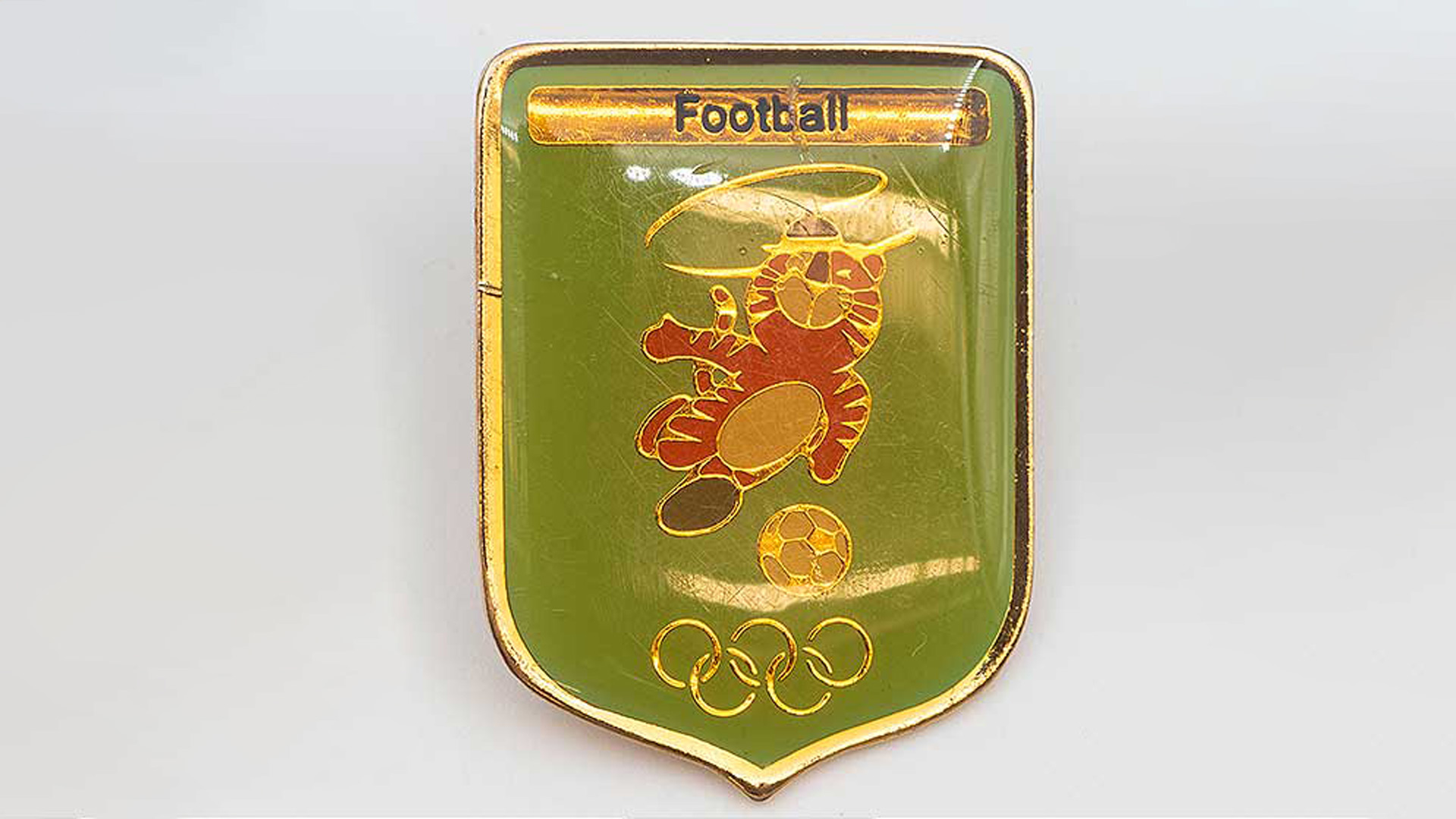 Hodori Seoul Glass–Enamel, Metal 1988 2003.09.0005
The modern Olympic games advertise their host cities to the world, and the Olympic mascot, as a carefully crafted symbol of the games and their sites, serve as an advertisement and a way for athletes and viewers alike to remember their Olympic experiences. It is only natural that the mascots materialized as merchandise, most commonly in the form of pins, and the merchandising and promotion of these mascots has made them everlasting memories of the Olympic games.
-
- Share:
- Subscribe to Newletter
- Giving