
Search Results
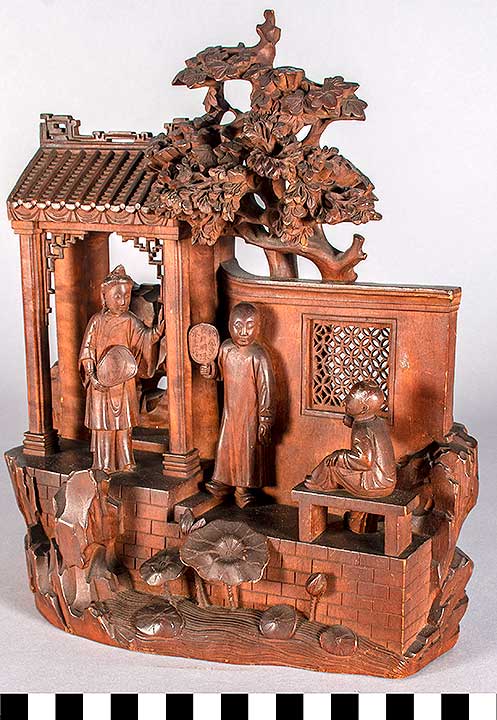
Figurine: Figures in Scenic Garden Setting2005.11.0003 (2005.11.0003)
28 x 23 x 13.2 cm (911 g)
Location: Asia, East: China
Period: Qing (Ch’ing) dynasty; Early 19th century
Classification/Nomenclature: Communication Artifacts : Art
Description: This is a Chinese wood carving of a scenic garden setting, with what appears to be a family, from the Qing Dynasty (1644-1911)...
Period: Qing (Ch’ing) dynasty; Early 19th century
Classification/Nomenclature: Communication Artifacts : Art
Description: This is a Chinese wood carving of a scenic garden setting, with what appears to be a family, from the Qing Dynasty (1644-1911)...
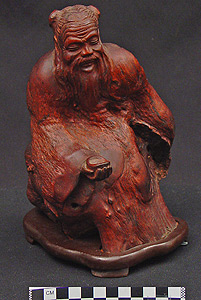
Figurine: Lohan (Rakan) (unnamed)2005.11.0004 (2005.11.0004)
22.3 x 16.4 x 12 cm (1109 g)
Location: Asia, East: China
Period: Qing Dynasty (1644-1911); 19th Century
Classification/Nomenclature: Communication Artifacts : Art
Description: This is a rootwood carving of a Lohan, one of the 500 Buddhist disciples to achieve enlightenment. The Spurlock museum holds a variety of Chinese lacquer figures created during the Qing Dynasty (1644-1911) which serve as representations of regional beliefs and ethics, cultural figureheads, and the human condition...
Period: Qing Dynasty (1644-1911); 19th Century
Classification/Nomenclature: Communication Artifacts : Art
Description: This is a rootwood carving of a Lohan, one of the 500 Buddhist disciples to achieve enlightenment. The Spurlock museum holds a variety of Chinese lacquer figures created during the Qing Dynasty (1644-1911) which serve as representations of regional beliefs and ethics, cultural figureheads, and the human condition...
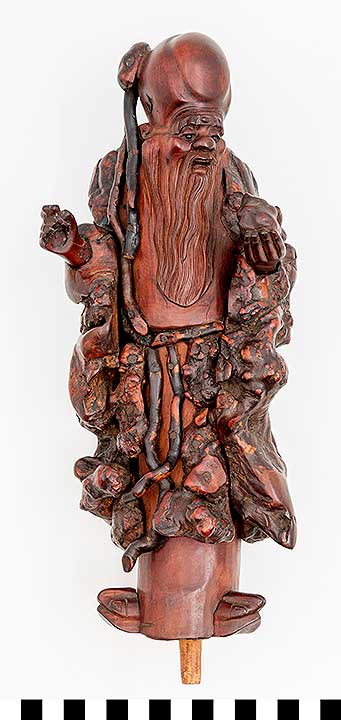
Figural Group: Shou lao, God of Longevity2005.11.0005A (2005.11.0005A)
29 x 11 x 8 cm (706 g)
Location: Asia, East: China
Period: Qing (Ch’ing) dynasty; 18th Century
Classification/Nomenclature: Communication Artifacts : Art
Description: This is a Chinese rootwood carving of Shoulao, the god of longevity. He is portrayed as a venerable elder with many portrayals having him hold the "fruit of fabulous tree," a plant which blossoms and bears fruit every six thousand years...
Period: Qing (Ch’ing) dynasty; 18th Century
Classification/Nomenclature: Communication Artifacts : Art
Description: This is a Chinese rootwood carving of Shoulao, the god of longevity. He is portrayed as a venerable elder with many portrayals having him hold the "fruit of fabulous tree," a plant which blossoms and bears fruit every six thousand years...
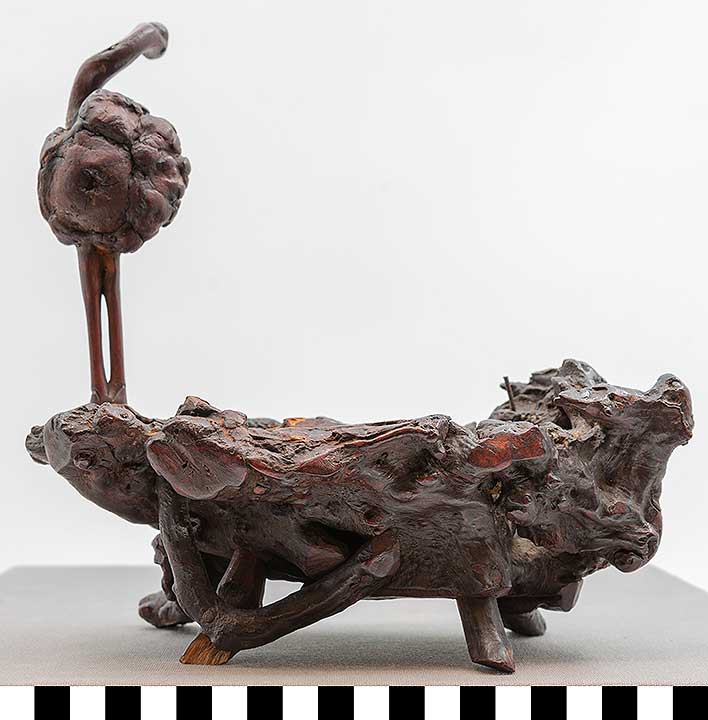
Figural Group: Shoulao, God of Longevity, Crane Base2005.11.0005B (2005.11.0005B)
22.5 x 21 x 12 cm (434 g)
Location: Asia, East: China
Period: Qing (Ch’ing) dynasty; 18th Century
Classification/Nomenclature: Communication Artifacts : Art
Description: This is a the base for the Chinese rootwood carving of Shoulao, the god of longevity. It features a carving of a crane, an animal that is symbolically tied to longevity and a frequent companion of Shaolao...
Period: Qing (Ch’ing) dynasty; 18th Century
Classification/Nomenclature: Communication Artifacts : Art
Description: This is a the base for the Chinese rootwood carving of Shoulao, the god of longevity. It features a carving of a crane, an animal that is symbolically tied to longevity and a frequent companion of Shaolao...
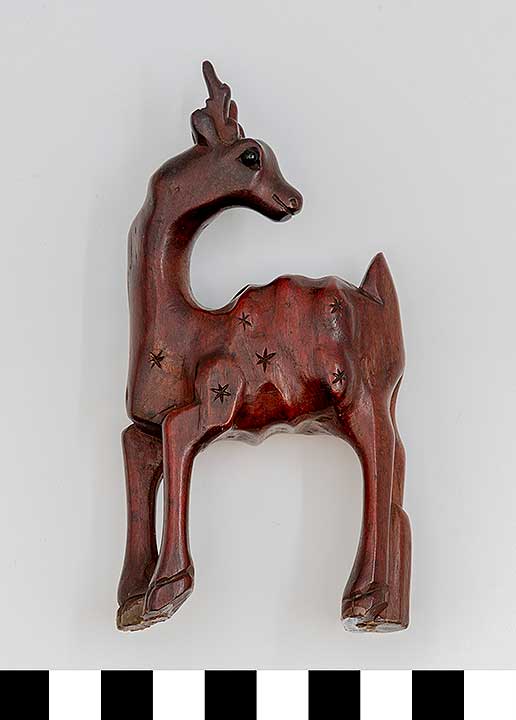
Figural Group: Shoulao, God of Longevity, Deer2005.11.0005C (2005.11.0005C)
11 x 6 x 2 cm (32 g)
Location: Asia, East: China
Period: Qing (Ch’ing) dynasty; 18th Century
Classification/Nomenclature: Communication Artifacts : Art
Description: This is a carving of a deer which is a part of the display for the Chinese rootwood carving of Shoulao, the god of longevity...
Period: Qing (Ch’ing) dynasty; 18th Century
Classification/Nomenclature: Communication Artifacts : Art
Description: This is a carving of a deer which is a part of the display for the Chinese rootwood carving of Shoulao, the god of longevity...

Figural Group: Shoulao, God of Longevity, Cane2005.11.0005D (2005.11.0005D)
25 x 1.5 x .7 cm (7 g)
Location: Asia, East: China
Period: Qing (Ch’ing) dynasty; 18th Century
Classification/Nomenclature: Communication Artifacts : Art
Description: This is a cane which is attached to the Chinese rootwood carving of Shoulao, the god of longevity. Shoulao is portrayed as a venerable elder with many portrayals having him hold the "fruit of fabulous tree," a plant which blossoms and bears fruit every six thousand years...
Period: Qing (Ch’ing) dynasty; 18th Century
Classification/Nomenclature: Communication Artifacts : Art
Description: This is a cane which is attached to the Chinese rootwood carving of Shoulao, the god of longevity. Shoulao is portrayed as a venerable elder with many portrayals having him hold the "fruit of fabulous tree," a plant which blossoms and bears fruit every six thousand years...
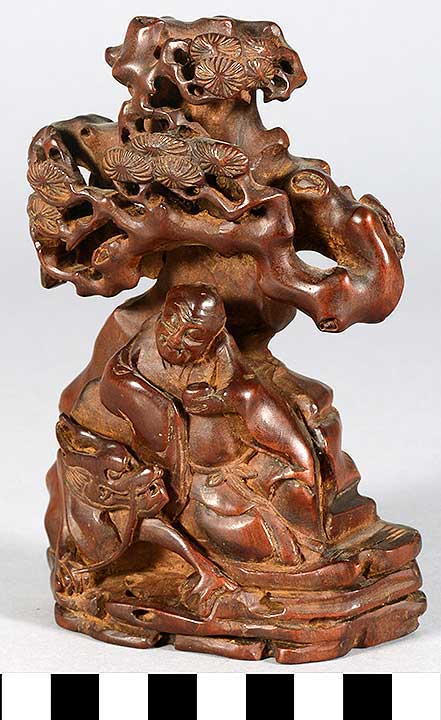
Figurine: Lohan (Rakan) Pantha the Elder (Pan-t'o-ka)2005.11.0006 (2005.11.0006)
14 x 10.5 x 4 cm (212 g)
Location: Asia, East: China
Period: Qing (Ch’ing) dynasty; 18th century
Classification/Nomenclature: Communication Artifacts : Art
Description: This is a carved scene of a robed figure seated beneath a pine tree. It is likely that the figure depicted is Pan-t'o-ka (Pantha the Elder), an enlightened Buddhist disciple (Lohan) who is often depicted as an elderly man resting against a tree...
Period: Qing (Ch’ing) dynasty; 18th century
Classification/Nomenclature: Communication Artifacts : Art
Description: This is a carved scene of a robed figure seated beneath a pine tree. It is likely that the figure depicted is Pan-t'o-ka (Pantha the Elder), an enlightened Buddhist disciple (Lohan) who is often depicted as an elderly man resting against a tree...
Figurine: Guanyin (Kannon, Kuanyin, Avalokiteshvara)2005.11.0007A (2005.11.0007A)
23 x 9.5 x 6.5 cm (310 g)
Location: Asia, East: China
Period: Qing (Ch’ing) dynasty; 18th Century
Classification/Nomenclature: Communication Artifacts : Art
Description: This is a Chinese boxwood carving of Guanyin (Kuan Yin), the Chinese name for the Bodhisattva Avalokitesvara...
Period: Qing (Ch’ing) dynasty; 18th Century
Classification/Nomenclature: Communication Artifacts : Art
Description: This is a Chinese boxwood carving of Guanyin (Kuan Yin), the Chinese name for the Bodhisattva Avalokitesvara...
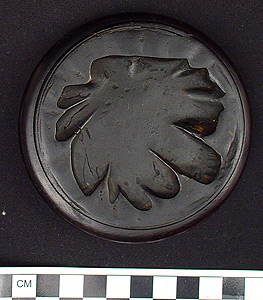
Figurine: Guanyin (Kannon, Kuanyin, Avalokiteshvara), Stand 2005.11.0007B (2005.11.0007B)
9.6 x 3.3 cm (99 g)
Location: Asia, East: China
Period: Qing (Ch’ing) dynasty; 18th Century
Classification/Nomenclature: Communication Artifacts : Art
Description: This is the base stand of a Guanyin (Kuan Yin) carving. It can be determined that it was carved in the 18th century due to it possessing a mark of the Qianlong reign (1735-1796)...
Period: Qing (Ch’ing) dynasty; 18th Century
Classification/Nomenclature: Communication Artifacts : Art
Description: This is the base stand of a Guanyin (Kuan Yin) carving. It can be determined that it was carved in the 18th century due to it possessing a mark of the Qianlong reign (1735-1796)...
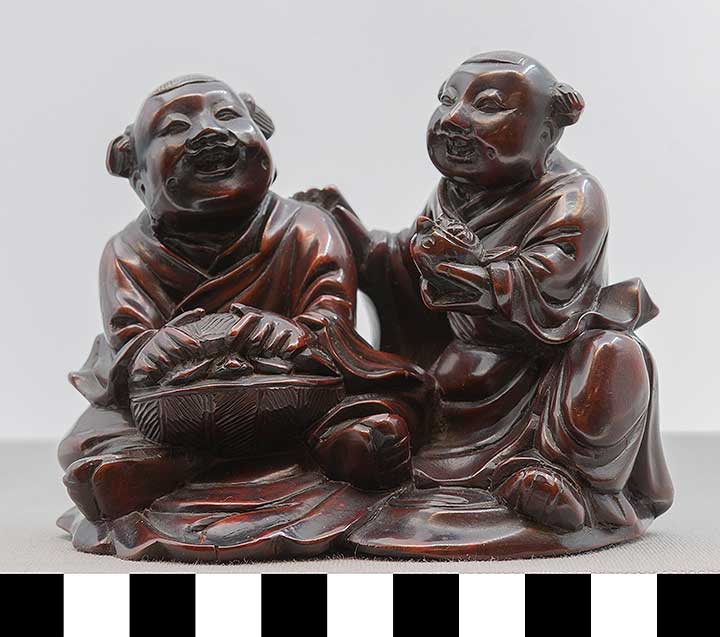
Figurine: Hehe Erxian, Gods of Mirth2005.11.0008 (2005.11.0008)
11 x 8.5 x 8 cm (208 g)
Location: Asia, East: China
Period: Qing Dynasty (1644-1911); Late 18th - Early 19th Century
Classification/Nomenclature: Communication Artifacts : Art
Description: This is a wood carving of Hehe Erxian, the twin Buddhist immortals of mirth, both of which are holding tortoises...
Period: Qing Dynasty (1644-1911); Late 18th - Early 19th Century
Classification/Nomenclature: Communication Artifacts : Art
Description: This is a wood carving of Hehe Erxian, the twin Buddhist immortals of mirth, both of which are holding tortoises...
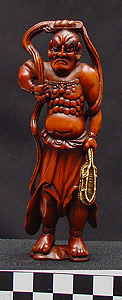
Sashi Netsuke: Nio, Protector of Buddhist Temples2005.11.0009 (2005.11.0009)
13 x 5 x 3 cm (47 g)
Location: Asia, East: Japan
Period: Late Edo Period; 18th Century
Classification/Nomenclature: Personal Artifacts : Personal Gear : Personal Carrying & Storage Gear
Description: This is a Japanese netsuke of one of the two Nio (Benevolent Kings), a pair of guardian deities who protect Buddhist sanctuaries...
Period: Late Edo Period; 18th Century
Classification/Nomenclature: Personal Artifacts : Personal Gear : Personal Carrying & Storage Gear
Description: This is a Japanese netsuke of one of the two Nio (Benevolent Kings), a pair of guardian deities who protect Buddhist sanctuaries...
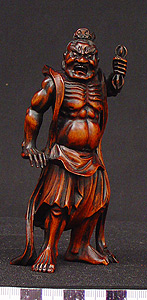
Okimono: Nio, Protector of Buddhist Temples, with Vajra2005.11.0010 (2005.11.0010)
14 x 6.8 x 5 cm (100 g)
Location: Asia, East: Japan
Period: Edo Period (1603-1868); Late 18th century
Classification/Nomenclature: Communication Artifacts : Art
Description: This is a Japanese okimono of one of the two Nio (Benevolent Kings), a pair of guardian deities who protect Buddhist sanctuaries...
Period: Edo Period (1603-1868); Late 18th century
Classification/Nomenclature: Communication Artifacts : Art
Description: This is a Japanese okimono of one of the two Nio (Benevolent Kings), a pair of guardian deities who protect Buddhist sanctuaries...
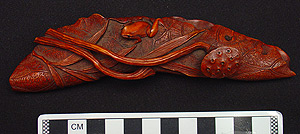
Okimono: Lotus Leaf2005.11.0011 (2005.11.0011)
15.6 x 3.5 x 3 cm (46 g)
Location: Asia, East: Japan
Period: Meiji Period (1868-1912); Late 19th - early 20th century
Classification/Nomenclature: Communication Artifacts : Art
Description: This is a Japanese okimono of a furled lotus leaf with the exterior adorned with a dried pod and stem, bamboo grass, and a miniature frog...
Period: Meiji Period (1868-1912); Late 19th - early 20th century
Classification/Nomenclature: Communication Artifacts : Art
Description: This is a Japanese okimono of a furled lotus leaf with the exterior adorned with a dried pod and stem, bamboo grass, and a miniature frog...
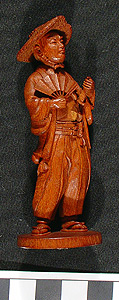
Figurine: Ronin 2005.11.0012 (2005.11.0012)
8.5 x 3.1 x 2.6 cm (11 g)
Location: Asia, East: Japan
Period: Meiji Period (1868-1912), Taisho Period (1912-1926), Showa Period (1926-1989); 1907-1942
Classification/Nomenclature: Communication Artifacts : Art
Description: "A fine and rare Japanese boxwood carving of an important historical figure, Oishi Kuranosuke, the head of the 47 Ronin, 3 1/4” high, by Morita Soko, a very important “So School” carver...
Period: Meiji Period (1868-1912), Taisho Period (1912-1926), Showa Period (1926-1989); 1907-1942
Classification/Nomenclature: Communication Artifacts : Art
Description: "A fine and rare Japanese boxwood carving of an important historical figure, Oishi Kuranosuke, the head of the 47 Ronin, 3 1/4” high, by Morita Soko, a very important “So School” carver...
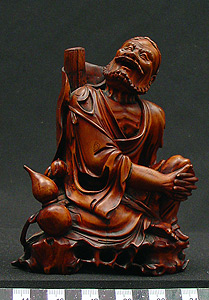
Figurine: Li T’ieh-kuai, One of the Eight Daoist Immortals (Baxian)2005.11.0013 (2005.11.0013)
17.5 x 13 x 9 cm (632 g)
Location: Asia, East: China
Period: Qing Dynasty (1644-1911); 18th century
Classification/Nomenclature: Communication Artifacts : Art
Description: This is a hard wood carving of Li T'ieh-kuai - one of the eight Daoist immortals (Pa Hsien) - represented as a beggar...
Period: Qing Dynasty (1644-1911); 18th century
Classification/Nomenclature: Communication Artifacts : Art
Description: This is a hard wood carving of Li T'ieh-kuai - one of the eight Daoist immortals (Pa Hsien) - represented as a beggar...
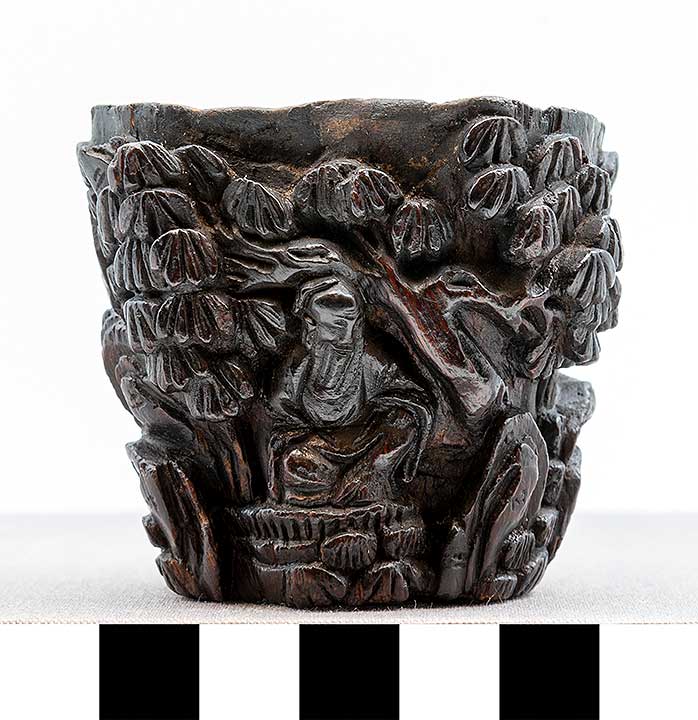
Miniature Libation Cup2005.11.0014A (2005.11.0014A)
6.2 x 5.5 x 5.3 cm (63 g)
Location: Asia, East: China
Period: Reign of Kang Hsi (1662–1722), Qing Dynasty (1644-1911); 17th century
Classification/Nomenclature: Materials T&E : Food Service T&E : Drinking Vessels
Description: Libation cups of the Qing Dynasty (1644-1911) were treasured items for interior design, particularly for the scholar's desk layout...
Period: Reign of Kang Hsi (1662–1722), Qing Dynasty (1644-1911); 17th century
Classification/Nomenclature: Materials T&E : Food Service T&E : Drinking Vessels
Description: Libation cups of the Qing Dynasty (1644-1911) were treasured items for interior design, particularly for the scholar's desk layout...
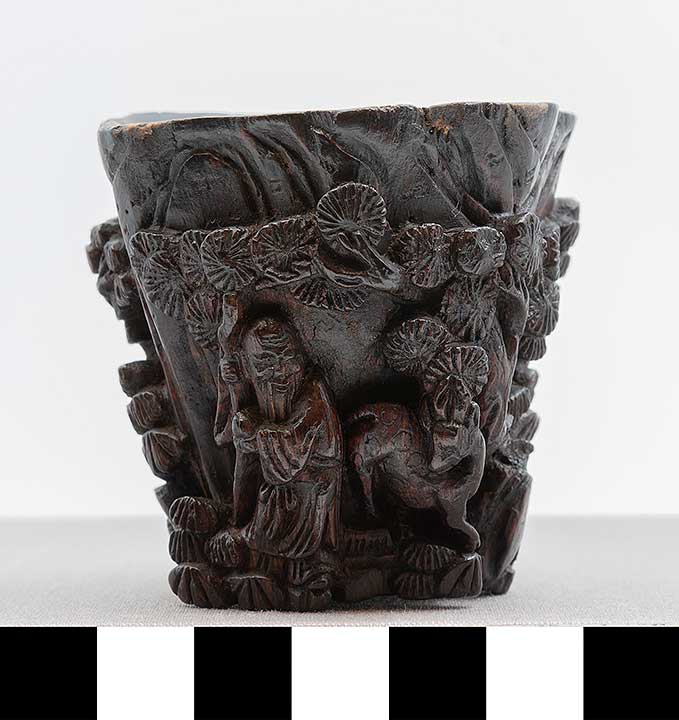
Miniature Libation Cup2005.11.0014B (2005.11.0014B)
5.7 x 5.4 x 5.3 cm (55 g)
Location: Asia, East: China
Period: Reign of Kang Hsi (1662–1722), Qing Dynasty (1644-1911); Late 17th century
Classification/Nomenclature: Materials T&E : Food Service T&E : Drinking Vessels
Description: Libation cups of the Qing Dynasty (1644-1911) were treasured items for interior design, particularly for the scholar's desk layout...
Period: Reign of Kang Hsi (1662–1722), Qing Dynasty (1644-1911); Late 17th century
Classification/Nomenclature: Materials T&E : Food Service T&E : Drinking Vessels
Description: Libation cups of the Qing Dynasty (1644-1911) were treasured items for interior design, particularly for the scholar's desk layout...
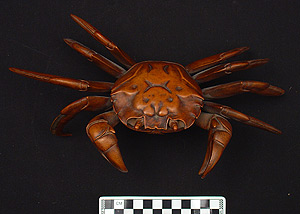
Okimono: Heike-gani (Crab)2005.11.0015 (2005.11.0015)
28.5 x 15 x 9 cm (253 g)
Location: Asia, East: Japan
Period: Meiji Period (1868-1912); Late 19th - early 20th century
Classification/Nomenclature: Communication Artifacts : Art
Description: This is a Japanese okimono of a crab signed by Ikkan. In legend, the Heike crabs of Akamaganseki are tiny crabs where the ghostly remains of the warriors killed at the Battle of Dan-no-ura (1185) reside...
Period: Meiji Period (1868-1912); Late 19th - early 20th century
Classification/Nomenclature: Communication Artifacts : Art
Description: This is a Japanese okimono of a crab signed by Ikkan. In legend, the Heike crabs of Akamaganseki are tiny crabs where the ghostly remains of the warriors killed at the Battle of Dan-no-ura (1185) reside...
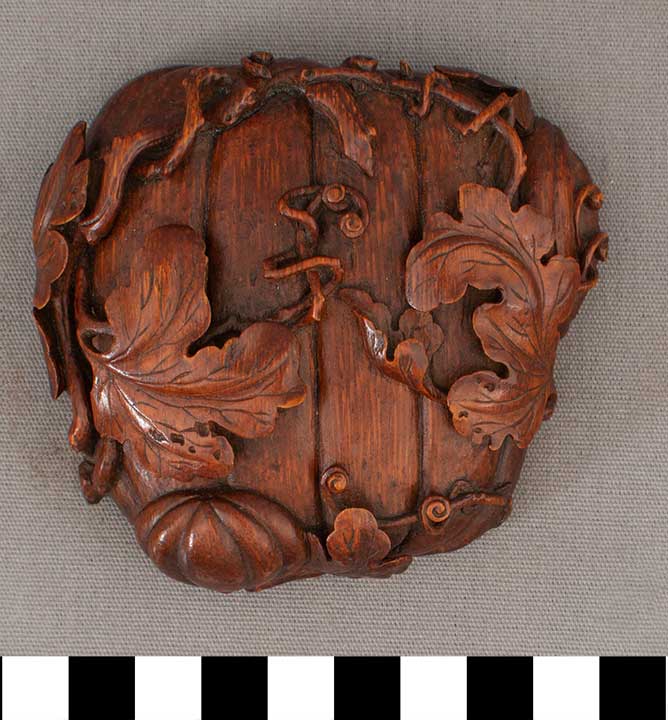
Kogo, Powdered Incense Container2005.11.0016A (2005.11.0016A)
8.3 x 7.6 x 2.8 cm (30 g)
Location: Asia, East: Japan
Period: Edo period; 18th century
Classification/Nomenclature: Furnishings : Household Accessories : Storage & Display Accessories
Description: "An extremely rare Japanese bamboo kogo. The bamboo carved in a squash form with low and high relief carving of smaller squash, furling foliage, entwined branches and tendrils with open work...
Period: Edo period; 18th century
Classification/Nomenclature: Furnishings : Household Accessories : Storage & Display Accessories
Description: "An extremely rare Japanese bamboo kogo. The bamboo carved in a squash form with low and high relief carving of smaller squash, furling foliage, entwined branches and tendrils with open work...
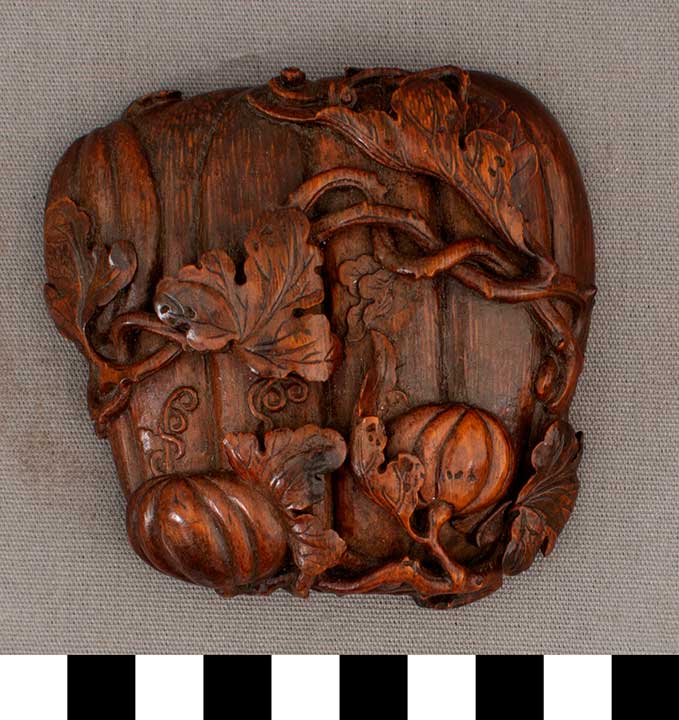
Kogo, Powdered Incense Container2005.11.0016B (2005.11.0016B)
7 x 7.8 x 2.5 cm (26 g)
Location: Asia, East: Japan
Period: Edo period; 18th century
Classification/Nomenclature: Furnishings : Household Accessories : Storage & Display Accessories
Description: "An extremely rare Japanese bamboo kogo. The bamboo carved in a squash form with low and high relief carving of smaller squash, furling foliage, entwined branches and tendrils with open work...
Period: Edo period; 18th century
Classification/Nomenclature: Furnishings : Household Accessories : Storage & Display Accessories
Description: "An extremely rare Japanese bamboo kogo. The bamboo carved in a squash form with low and high relief carving of smaller squash, furling foliage, entwined branches and tendrils with open work...
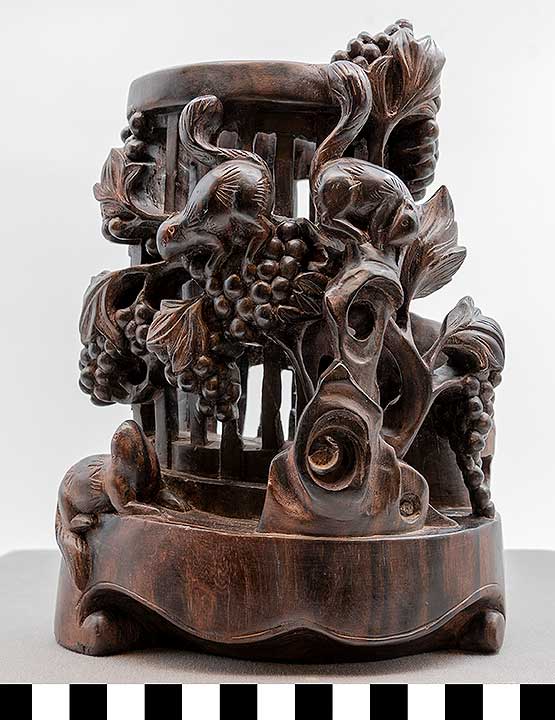
Bitong, Brush Pot2005.11.0017 (2005.11.0017)
20.5 x 15.3 x 12 cm (1196 g)
Location: Asia, East: China
Period: Qing (Ch’ing) dynasty; 18th century
Classification/Nomenclature: Communication T&E : Written Communication T&E : Writing Accessories
Description: This is a Chinese zitan carving of a brush pot (bitong) with designs of grapes, vines, and squirrels...
Period: Qing (Ch’ing) dynasty; 18th century
Classification/Nomenclature: Communication T&E : Written Communication T&E : Writing Accessories
Description: This is a Chinese zitan carving of a brush pot (bitong) with designs of grapes, vines, and squirrels...
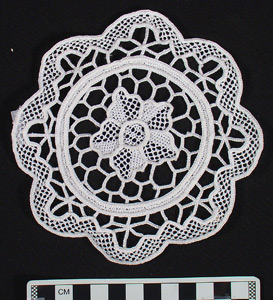
Doily2005.12.0001 (2005.12.0001)
15 x 1 cm (4 g)
Location: Asia, Southeast: Vietnam: Hanoi
Period: Contemporary; 2005
Classification/Nomenclature: Furnishings : Household Accessories : Furniture Coverings
Period: Contemporary; 2005
Classification/Nomenclature: Furnishings : Household Accessories : Furniture Coverings
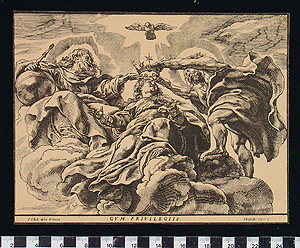
Reproduction Woodcut: The Coronation of the Virgin2006.01.0001 (2006.01.0001)
22.4 x 17.2 cm (5 g)
Location: Europe, West: Belgium: Flanders: Antwerp
Period: Renaissance; c. 1635 CE
Classification/Nomenclature: Communication Artifacts : Documentary Artifacts : Graphic Documents
Period: Renaissance; c. 1635 CE
Classification/Nomenclature: Communication Artifacts : Documentary Artifacts : Graphic Documents
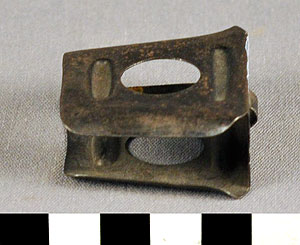
Ammunition Clip2006.01.0002 (2006.01.0002)
4 x 3.6 x 1.7 cm (8 g)
Classification/Nomenclature: Science & Technology T&E : Armaments : Armament Accessories
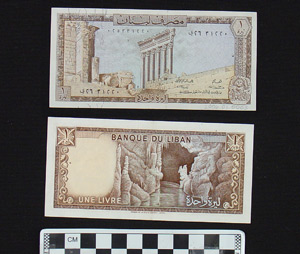
Bank Note: Lebanon, 1 Livre2006.01.0003 (2006.01.0003)
13.4 x 6.4 cm (<1 g)
Location: Asia, West: Lebanon
Classification/Nomenclature: Communication Artifacts : Exchange Media
Classification/Nomenclature: Communication Artifacts : Exchange Media
Search Examples
Explore More
Access the public portions of the catalog records for the approximately 50,000 cultural and ethnographic objects in the Museum's Artifact Collection.