
Search Results

Figurine: Wen Chang, God of Literature2002.18.0002 (2002.18.0002)
32.9 x 18.3 x 8.8 cm (1,317 g)
Location: Asia, East: China
Period: Late Ming Dynasty (1368-1644) - Early Qing Dynasty (1644-1911); 17th century
Classification/Nomenclature: Communication Artifacts : Art
Description: In Chinese art, Wen Chang, the deity of literature, is depicted as a dignified court official and is sometimes seated...
Period: Late Ming Dynasty (1368-1644) - Early Qing Dynasty (1644-1911); 17th century
Classification/Nomenclature: Communication Artifacts : Art
Description: In Chinese art, Wen Chang, the deity of literature, is depicted as a dignified court official and is sometimes seated...
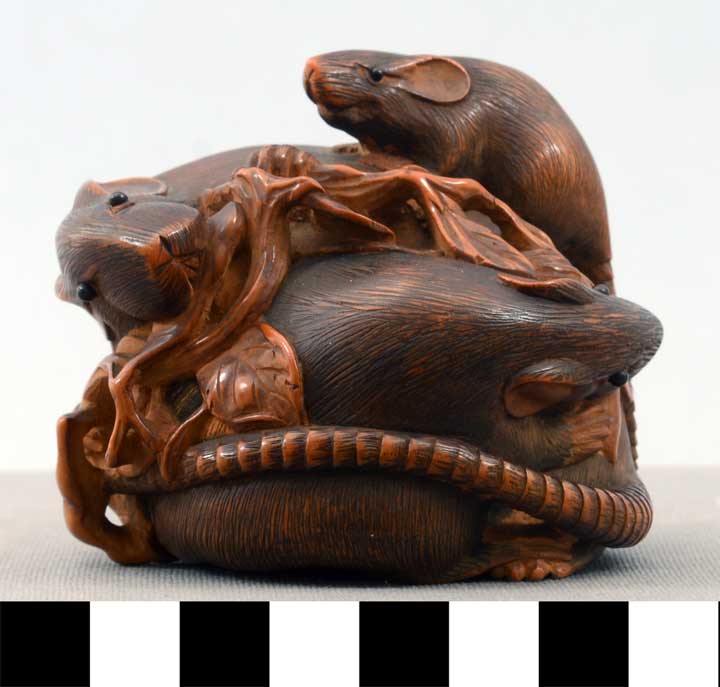
Okimono: Group of Rats on a Vine2002.18.0003 (2002.18.0003)
7.2 x 6.1 cm (123 g)
Location: Asia, East: Japan
Period: Late Edo Period (1603-1868) - Early Meiji Period (1868-1912); 19th Century
Classification/Nomenclature: Communication Artifacts : Art
Description: This is a Japanese okimono of a group of three rats on a vine signed by Gyokumin. The rat is one of the twelve animals of the duodenary cycle and is often featured in Japanese art...
Period: Late Edo Period (1603-1868) - Early Meiji Period (1868-1912); 19th Century
Classification/Nomenclature: Communication Artifacts : Art
Description: This is a Japanese okimono of a group of three rats on a vine signed by Gyokumin. The rat is one of the twelve animals of the duodenary cycle and is often featured in Japanese art...
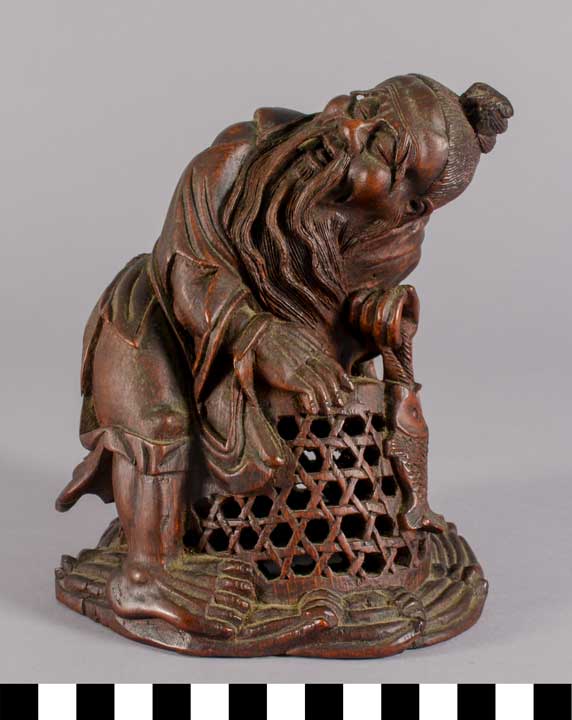
Figurine: Fisherman2002.18.0004 (2002.18.0004)
18.3 x 14.6 x 12.9 cm (360 g)
Location: Asia, East: China
Period: Late Qing Dynasty (1644-1911); 18th Century
Classification/Nomenclature: Communication Artifacts : Art
Description: This is a Chinese bamboo carving of a fishermen. The natural world has been a consistent theme of Chinese artwork and can be seen in this artifact with the image of waves on the underside of the boat...
Period: Late Qing Dynasty (1644-1911); 18th Century
Classification/Nomenclature: Communication Artifacts : Art
Description: This is a Chinese bamboo carving of a fishermen. The natural world has been a consistent theme of Chinese artwork and can be seen in this artifact with the image of waves on the underside of the boat...
Figurine: Lohan (Rakan) Rahula2002.18.0005A (2002.18.0005A)
24 x 21.3 x 5.5 cm (943 g)
Location: Asia, East: China
Period: Qing Dynasty (1644-1911); Late 18th - Early 19th Century
Classification/Nomenclature: Communication Artifacts : Art
Description: This is a boxwood carving of a Lohan, likely Rahula, who is one of the 500 Buddhist disciples to achieve enlightenment...
Period: Qing Dynasty (1644-1911); Late 18th - Early 19th Century
Classification/Nomenclature: Communication Artifacts : Art
Description: This is a boxwood carving of a Lohan, likely Rahula, who is one of the 500 Buddhist disciples to achieve enlightenment...
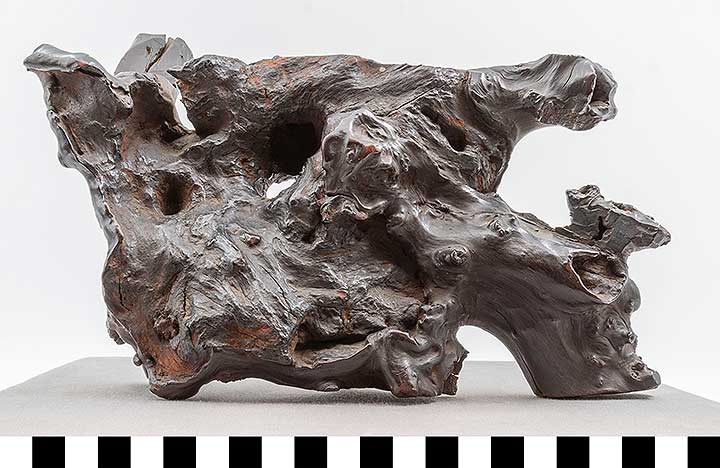
Figurine: Lohan (Rakan) Rahula, Stand2002.18.0005B (2002.18.0005B)
27.6 x 18.5 x 13 cm (839 g)
Location: Asia, East: China
Period: Qing Dynasty (1644-1911); Late 18th - Early 19th Century
Classification/Nomenclature: Furnishings : Furniture : Support Furniture
Description: This is the stand of a carved Lohan, likely Rahula, which was created during the Qing Dynasty (1644-1911)...
Period: Qing Dynasty (1644-1911); Late 18th - Early 19th Century
Classification/Nomenclature: Furnishings : Furniture : Support Furniture
Description: This is the stand of a carved Lohan, likely Rahula, which was created during the Qing Dynasty (1644-1911)...
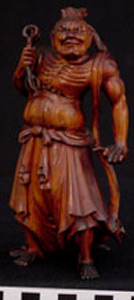
Okimono: Nio, Protector of Buddhist Temples2002.18.0006 (2002.18.0006)
15.7 x 7.4 x 5.6 cm (164 g)
Location: Asia, East: Japan
Period: Late Meiji Period (1868-1912); 1875-1910
Classification/Nomenclature: Communication Artifacts : Art
Description: This is a Japanese okimono of one of the two Nio (Benevolent Kings), a pair of guardian deities who protect Buddhist sanctuaries...
Period: Late Meiji Period (1868-1912); 1875-1910
Classification/Nomenclature: Communication Artifacts : Art
Description: This is a Japanese okimono of one of the two Nio (Benevolent Kings), a pair of guardian deities who protect Buddhist sanctuaries...
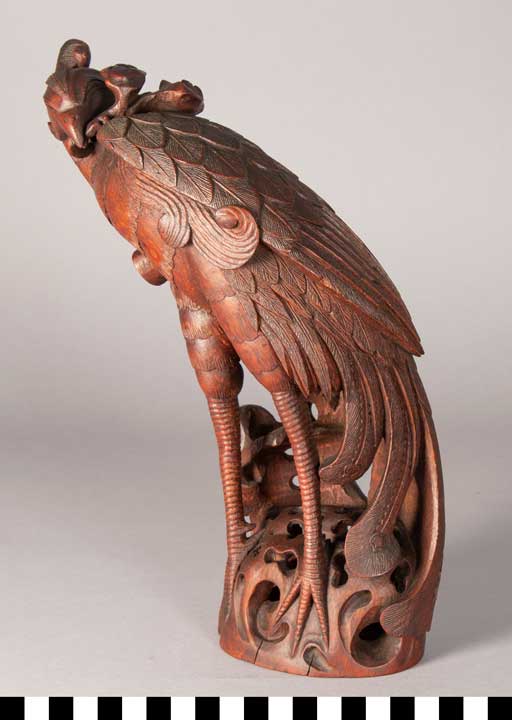
Figurine: Phoenix 2002.18.0007 (2002.18.0007)
29.1 x 10.6 x 8.5 cm (504 g)
Location: Asia, East: China
Period: Qing Dynasty (1644-1911); Late 18th century
Classification/Nomenclature: Communication Artifacts : Art
Description: A mythical bird of peace and prosperity in Chinese culture, the phoenix (Fenghuang) is depicted in this bamboo lacquer carving...
Period: Qing Dynasty (1644-1911); Late 18th century
Classification/Nomenclature: Communication Artifacts : Art
Description: A mythical bird of peace and prosperity in Chinese culture, the phoenix (Fenghuang) is depicted in this bamboo lacquer carving...
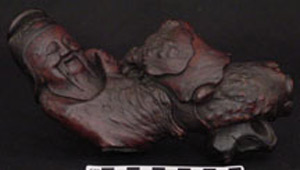
Figure: Shoulao, God of Longevity2002.18.0008A (2002.18.0008A)
21.5 x 17.5 x 10.9 cm (536 g)
Location: Asia, East: China
Period: Qing Dynasty (1644-1911); 18th century
Classification/Nomenclature: Communication Artifacts : Art
Description: This is a boxwood carving of Shoulao, the god of longevity. He is depicted as a venerable elder and often holds the "fruit of fabulous tree," a plant which blossoms and bears fruit every six thousand years...
Period: Qing Dynasty (1644-1911); 18th century
Classification/Nomenclature: Communication Artifacts : Art
Description: This is a boxwood carving of Shoulao, the god of longevity. He is depicted as a venerable elder and often holds the "fruit of fabulous tree," a plant which blossoms and bears fruit every six thousand years...
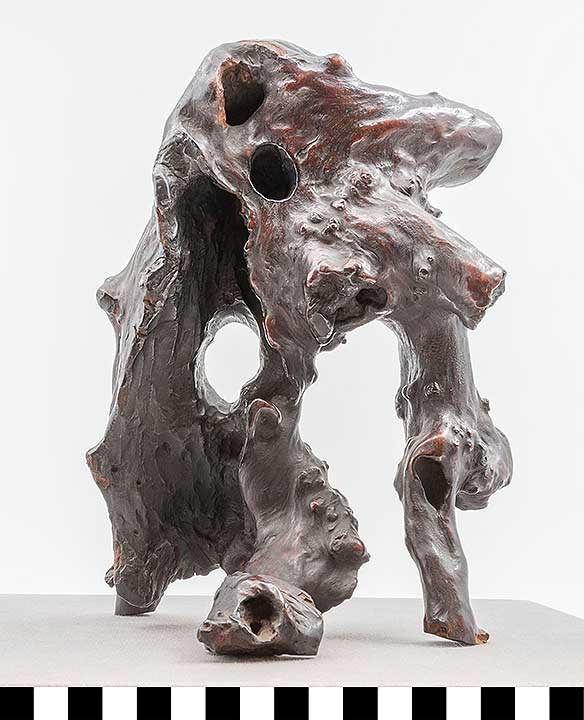
Figure: Shoulao, God of Longevity, Stand2002.18.0008B (2002.18.0008B)
26.8 x 16.4 x 14.8 cm (815 g)
Location: Asia, East: China
Period: Qing Dynasty (1644-1911); 18th century
Classification/Nomenclature: Furnishings : Furniture : Support Furniture
Description: This is the stand of a carved depiction of Pudai, also known as "the laughing Buddha." He is usually depicted as a large, half-naked figure who is said to have a carefree expression given that he has overcome the cares and anxieties which burden people...
Period: Qing Dynasty (1644-1911); 18th century
Classification/Nomenclature: Furnishings : Furniture : Support Furniture
Description: This is the stand of a carved depiction of Pudai, also known as "the laughing Buddha." He is usually depicted as a large, half-naked figure who is said to have a carefree expression given that he has overcome the cares and anxieties which burden people...
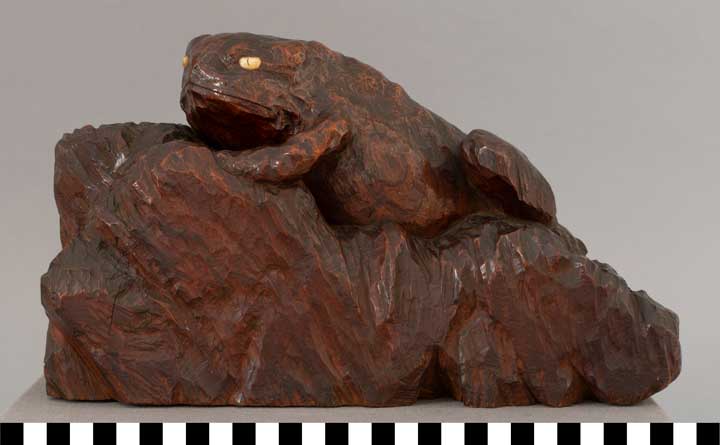
Figurine: Toad 2002.18.0009 (2002.18.0009)
28.3 x 18.3 x 16.5 cm (3305 g)
Location: Asia, East: Japan
Period: Late Edo Period (1603-1868) or Early Meiji Period (1868-1912); 19th century
Classification/Nomenclature: Communication Artifacts : Art
Description: "A Japanese wood carving of a toad. A finely executed Japanese Mingei wood carving of a large toad, 12”L x 6”W x 7”H, late Edo period/early Meiji period...
Period: Late Edo Period (1603-1868) or Early Meiji Period (1868-1912); 19th century
Classification/Nomenclature: Communication Artifacts : Art
Description: "A Japanese wood carving of a toad. A finely executed Japanese Mingei wood carving of a large toad, 12”L x 6”W x 7”H, late Edo period/early Meiji period...
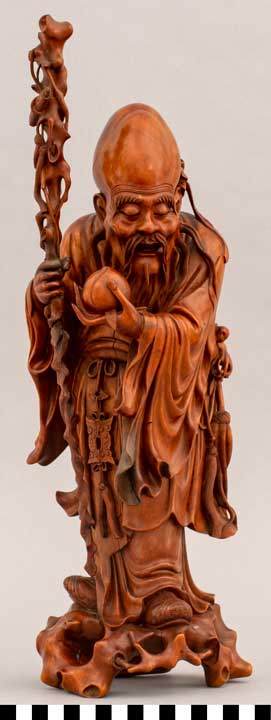
Figurine: Shoulao, God of Longevity 2002.18.0010 (2002.18.0010)
42.8 x 13.5 cm (1860 g)
Location: Asia, East: China
Period: Qing Dynasty (1644-1911); Late 18th Century
Classification/Nomenclature: Communication Artifacts : Art
Description: This is a boxwood carving of Shoulao, the god of longevity. He is depicted as a venerable elder and often holds the "fruit of fabulous tree," a plant which blossoms and bears fruit every six thousand years...
Period: Qing Dynasty (1644-1911); Late 18th Century
Classification/Nomenclature: Communication Artifacts : Art
Description: This is a boxwood carving of Shoulao, the god of longevity. He is depicted as a venerable elder and often holds the "fruit of fabulous tree," a plant which blossoms and bears fruit every six thousand years...
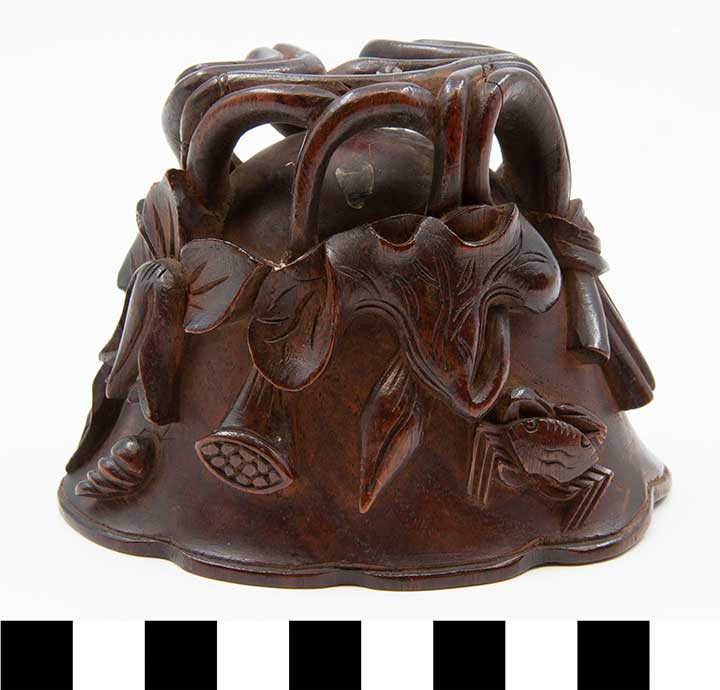
Libation Cup2002.18.0011 (2002.18.0011)
8.9 x 7.8 x 7.2 cm (92 g)
Location: Asia, East: China
Period: Qing Dynasty (1644-1911); 18th century
Classification/Nomenclature: Communication Artifacts : Ceremonial Artifacts : Religious Objects
Description: Libation cups of the Qing Dynasty (1644-1911) were treasured items for interior design, particularly for the scholar's desk layout...
Period: Qing Dynasty (1644-1911); 18th century
Classification/Nomenclature: Communication Artifacts : Ceremonial Artifacts : Religious Objects
Description: Libation cups of the Qing Dynasty (1644-1911) were treasured items for interior design, particularly for the scholar's desk layout...
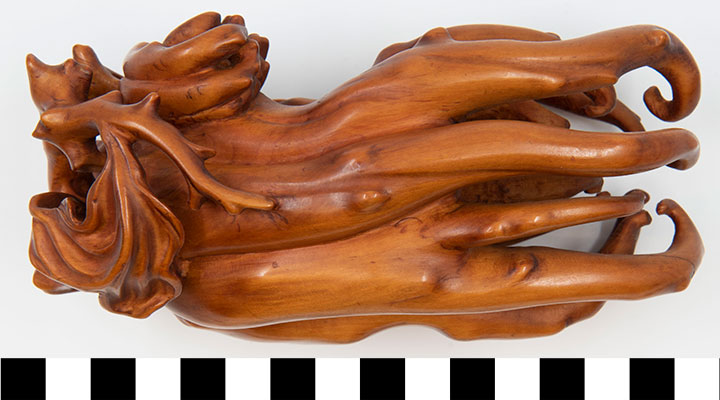
Carving: Finger Citron (“Buddha’s Hand”)2002.18.0012 (2002.18.0012)
13.3 x 6.4 x 6.5 cm (167 g)
Location: Asia, East: Japan
Period: Late Edo Period (1603-1868) or Early Meiji Period (1868-1912); Early 19th century
Classification/Nomenclature: Communication Artifacts : Art
Description: "A Japanese wood carving of a finger citron. A rare Japanese boxwood carving of finger citron, late Edo /early Meiji period, 5...
Period: Late Edo Period (1603-1868) or Early Meiji Period (1868-1912); Early 19th century
Classification/Nomenclature: Communication Artifacts : Art
Description: "A Japanese wood carving of a finger citron. A rare Japanese boxwood carving of finger citron, late Edo /early Meiji period, 5...
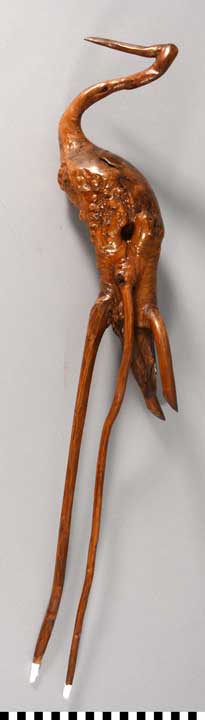
Figurine: Manchurian Crane2002.18.0013A (2002.18.0013A)
63.4 x 9.1 cm ( g)
Location: Asia, East: China
Period: Qing (Ch’ing) Dynasty ; 18th century
Classification/Nomenclature: Communication Artifacts : Art
Description: The crane, which is considered to be a symbol of longevity in Chinese art and legend, is seen here as a rootwood sculpture...
Period: Qing (Ch’ing) Dynasty ; 18th century
Classification/Nomenclature: Communication Artifacts : Art
Description: The crane, which is considered to be a symbol of longevity in Chinese art and legend, is seen here as a rootwood sculpture...
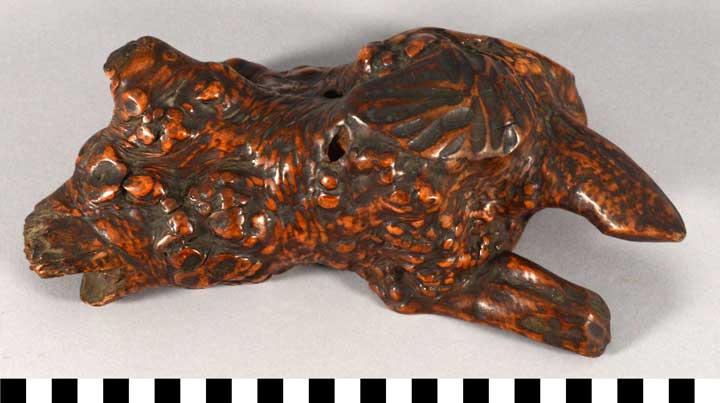
Figure: Manchurian Crane Stand2002.18.0013B (2002.18.0013B)
26.3 x 14.2 x 7.6 cm (645 g)
Location: Asia, East: China
Period: Qing (Ch’ing) Dynasty; 18th century
Classification/Nomenclature: Furnishings : Furniture : Support Furniture
Description: This is the stand for a Chinese rootwood sculpture of a crane, a bird which is often considered to symbolize longevity...
Period: Qing (Ch’ing) Dynasty; 18th century
Classification/Nomenclature: Furnishings : Furniture : Support Furniture
Description: This is the stand for a Chinese rootwood sculpture of a crane, a bird which is often considered to symbolize longevity...
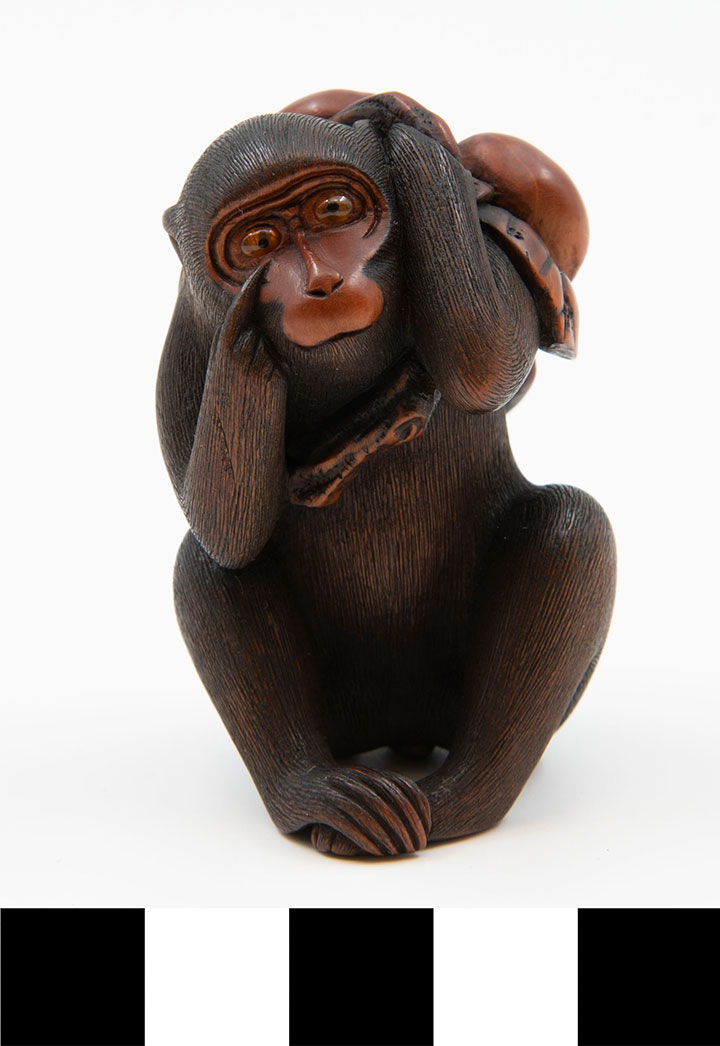
Okimono: Monkey2002.18.0014 (2002.18.0014)
5.8 x 3.8 x 3.4 cm (32 g)
Location: Asia, East: Japan
Period: Meiji Period (1868-1912); Late 19th century
Classification/Nomenclature: Communication Artifacts : Art
Description: This is a Japanese boxwood okimono of a monkey (saru) holding a branch with two persimmons (kaki). The Saru is one of the Zodiac and frequently plays a role in legend...
Period: Meiji Period (1868-1912); Late 19th century
Classification/Nomenclature: Communication Artifacts : Art
Description: This is a Japanese boxwood okimono of a monkey (saru) holding a branch with two persimmons (kaki). The Saru is one of the Zodiac and frequently plays a role in legend...
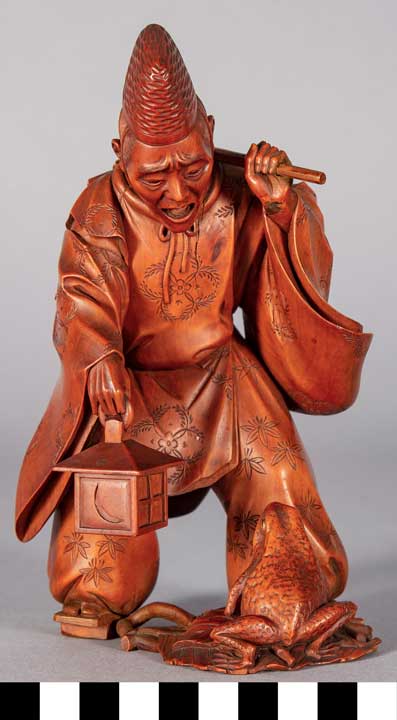
Okimono: Shinto Priest with Frog2002.18.0015 (2002.18.0015)
17.8 x 8.4 x 7.2 cm (304 g)
Location: Asia, East: Japan
Period: Meiji Period (1868-1912); Late 19th century
Classification/Nomenclature: Communication Artifacts : Art
Description: This is a Japanese okimono of a Shinto priest and a frog signed by Ryuchin. Shintoism consists of beliefs native to Japanese life such as a veneration of ancestors and heroes as well as divine spirits (kami)...
Period: Meiji Period (1868-1912); Late 19th century
Classification/Nomenclature: Communication Artifacts : Art
Description: This is a Japanese okimono of a Shinto priest and a frog signed by Ryuchin. Shintoism consists of beliefs native to Japanese life such as a veneration of ancestors and heroes as well as divine spirits (kami)...
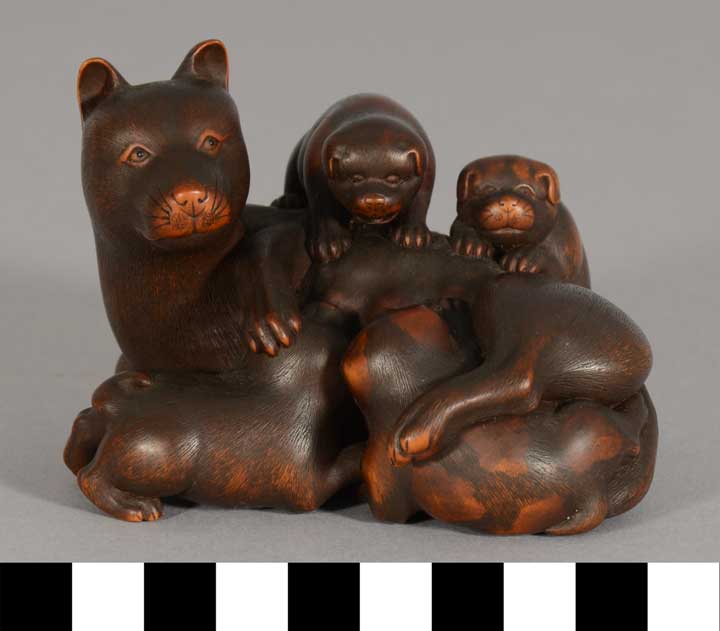
Okimono: Group of Dogs (Akita and Puppies)2002.18.0016 (2002.18.0016)
9.6 x 6.7 x 6.6 cm (187 g)
Location: Asia, East: Japan
Period: Late Edo Period (1603-1868) - Early Meiji Period (1868-1912); 1850-1899 CE
Classification/Nomenclature: Communication Artifacts : Art
Description: This is a Japanese okimono of an Akita and her puppies. This carving is signed by Masakatsu who was known for his boxwood animals...
Period: Late Edo Period (1603-1868) - Early Meiji Period (1868-1912); 1850-1899 CE
Classification/Nomenclature: Communication Artifacts : Art
Description: This is a Japanese okimono of an Akita and her puppies. This carving is signed by Masakatsu who was known for his boxwood animals...
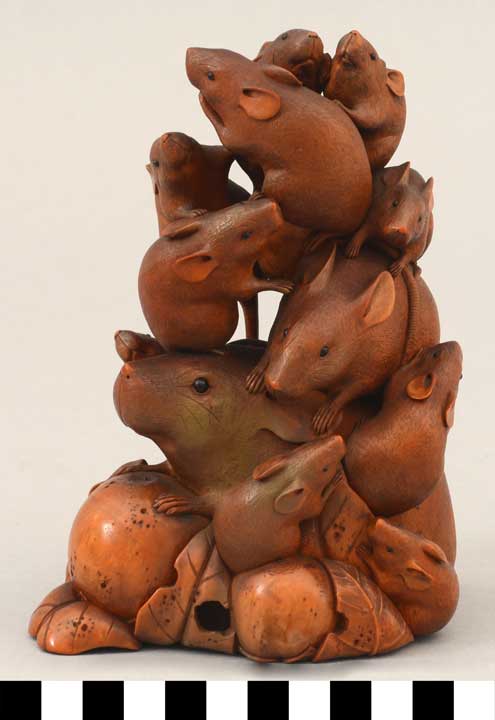
Okimono: Group of Rats Eating Pomegranates2002.18.0017 (2002.18.0017)
15.2 x 11.3 x 8.7 cm (419 g)
Location: Asia, East: Japan
Period: Late Meiji Period (1868-1912); 1875-1910
Classification/Nomenclature: Communication Artifacts : Art
Description: This is a Japanese okimono of a group of rats eating pomegranates signed by Kogetsu. The rat is one of the twelve animals of the duodenary cycle and is often featured in Japanese art...
Period: Late Meiji Period (1868-1912); 1875-1910
Classification/Nomenclature: Communication Artifacts : Art
Description: This is a Japanese okimono of a group of rats eating pomegranates signed by Kogetsu. The rat is one of the twelve animals of the duodenary cycle and is often featured in Japanese art...
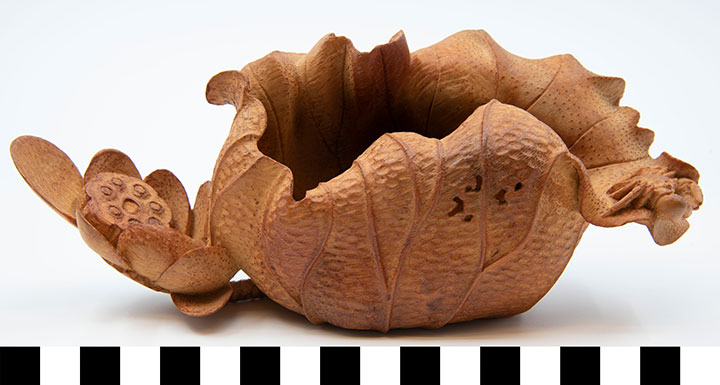
Water Pot, Brush Washer: Lotus Flower2002.18.0018 (2002.18.0018)
17.2 x 6.9 x 5.8 cm (58 g)
Location: Asia, East: China
Period: Late Ming Dynasty (1368-1644) - Early Qing Dynasty (1644-1911); 17th century
Classification/Nomenclature: Communication T&E : Written Communication T&E : Writing Accessories
Description: Brush washers were treasured interior design items for the scholar's desk during the Qing Dynasty (1644-1911)...
Period: Late Ming Dynasty (1368-1644) - Early Qing Dynasty (1644-1911); 17th century
Classification/Nomenclature: Communication T&E : Written Communication T&E : Writing Accessories
Description: Brush washers were treasured interior design items for the scholar's desk during the Qing Dynasty (1644-1911)...
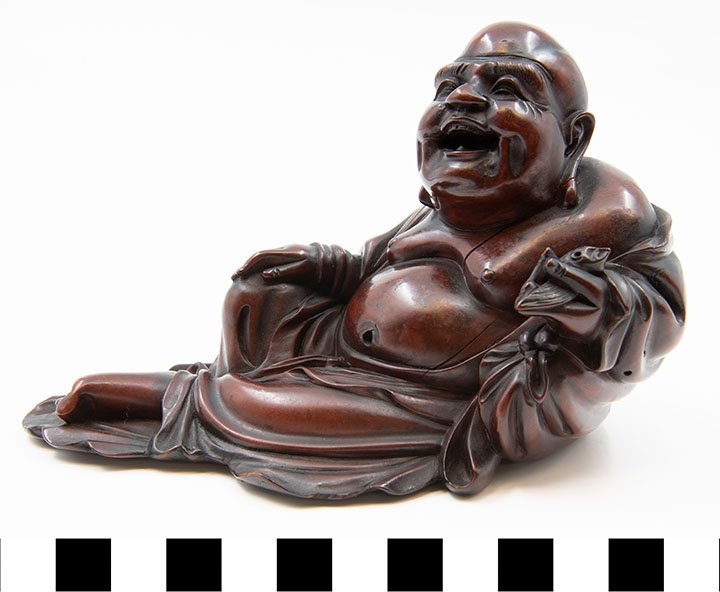
Figurine: Pudai (Budai, Hotei), Buddha of Happiness and Laughter2002.18.0019A (2002.18.0019A)
15.4 x 9 x 7.6 cm (253 g)
Location: Asia, East: China
Period: Qing Dynasty (1644-1911); Late 18th - Early 19th Century
Classification/Nomenclature: Communication Artifacts : Art
Description: Pudai, also known as "the laughing Buddha," is depicted as a large, half-naked figure who is said to have a carefree expression given that he has overcome the cares and anxieties which burden people...
Period: Qing Dynasty (1644-1911); Late 18th - Early 19th Century
Classification/Nomenclature: Communication Artifacts : Art
Description: Pudai, also known as "the laughing Buddha," is depicted as a large, half-naked figure who is said to have a carefree expression given that he has overcome the cares and anxieties which burden people...
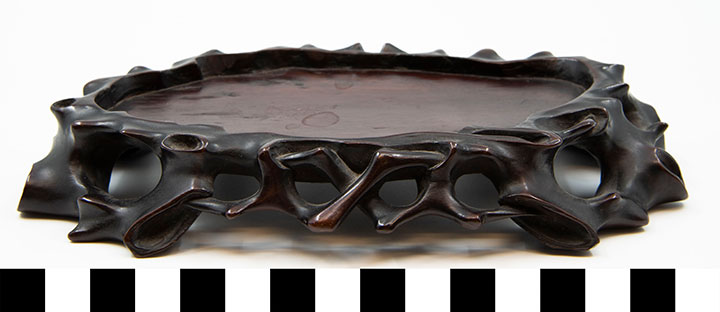
Figurine: Pudai (Budai, Hotei), God of Happiness and Laughter, Stand2002.18.0019B (2002.18.0019B)
17.5 x 11.5 x 2.4 cm (144 g)
Location: Asia, East: China
Period: Qing Dynasty (1644-1911); Late 18th - Early 19th Century
Classification/Nomenclature: Furnishings : Furniture : Support Furniture
Description: This is the stand of a carved Lohan, likely Rahula, which was created during the Qing Dynasty (1644-1911)...
Period: Qing Dynasty (1644-1911); Late 18th - Early 19th Century
Classification/Nomenclature: Furnishings : Furniture : Support Furniture
Description: This is the stand of a carved Lohan, likely Rahula, which was created during the Qing Dynasty (1644-1911)...
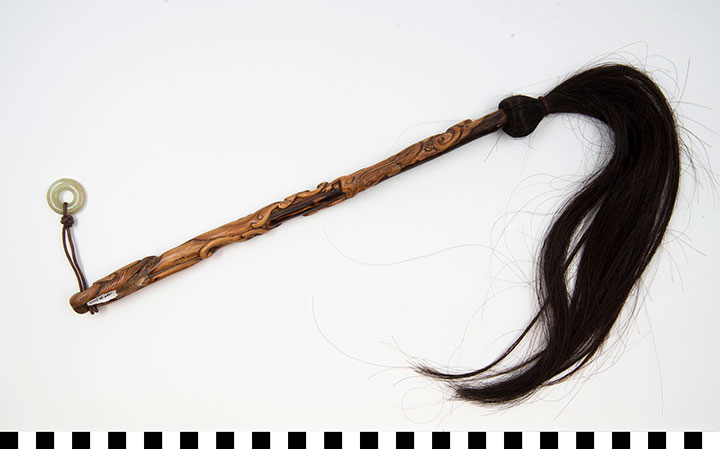
Fly whisk2002.18.0020 (2002.18.0020)
60 x 1.3 x .8 cm (41 g)
Location: Asia, East: China
Period: Qing Dynasty (1644-1911); 18th century
Classification/Nomenclature: Furnishings : Household Accessories : Other Household Accessories
Description: The Spurlock museum holds a variety of Chinese lacquer figures created during the Qing Dynasty (1644-1911), and they serve as representations of regional beliefs and ethics, cultural figureheads, and the human condition...
Period: Qing Dynasty (1644-1911); 18th century
Classification/Nomenclature: Furnishings : Household Accessories : Other Household Accessories
Description: The Spurlock museum holds a variety of Chinese lacquer figures created during the Qing Dynasty (1644-1911), and they serve as representations of regional beliefs and ethics, cultural figureheads, and the human condition...
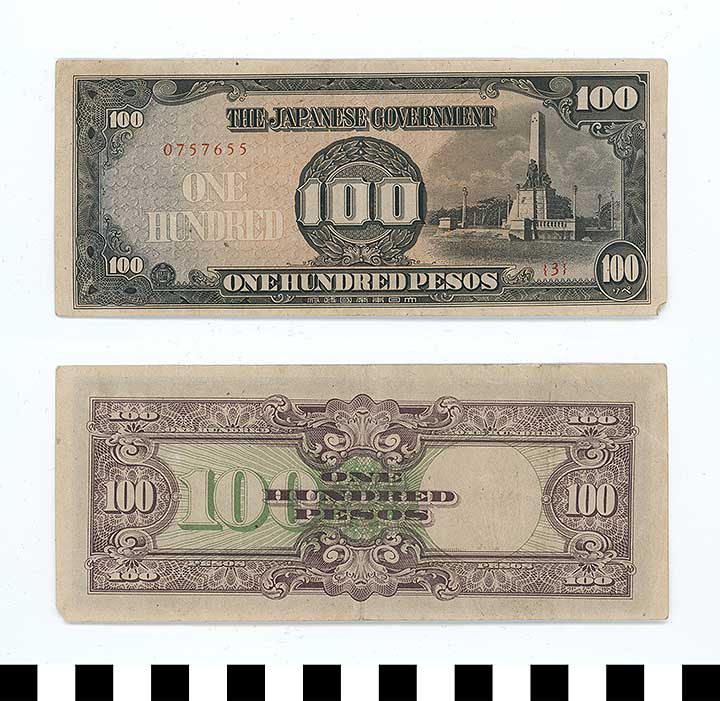
Japanese Government-Issued Philippine Occupation Fiat Bank Note: 100 Pesos2002.19.0001 (2002.19.0001)
16 x 6.7 cm (<1 g)
Location: Asia, Southeast: Philippines
Period: World War II; 1942-1945
Classification/Nomenclature: Communication Artifacts : Exchange Media
Period: World War II; 1942-1945
Classification/Nomenclature: Communication Artifacts : Exchange Media
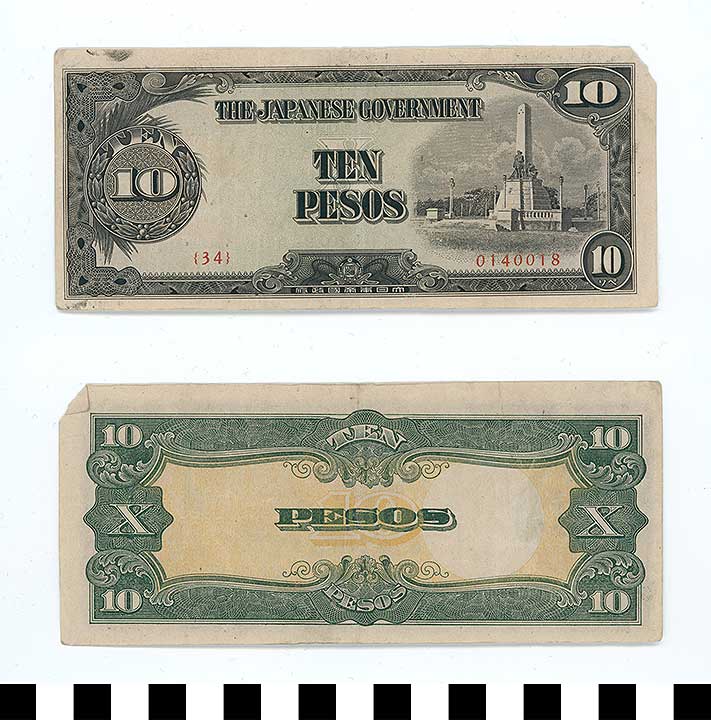
Japanese Government-Issued Philippine Occupation Fiat Bank Note: 10 Pesos2002.19.0002 (2002.19.0002)
15.9 x 6.9 cm (<1 g)
Location: Asia, Southeast: Philippines
Period: World War II; 1942-1945
Classification/Nomenclature: Communication Artifacts : Exchange Media
Period: World War II; 1942-1945
Classification/Nomenclature: Communication Artifacts : Exchange Media
Search Examples
Explore More
Access the public portions of the catalog records for the approximately 50,000 cultural and ethnographic objects in the Museum's Artifact Collection.