Featured Object: Roman Glass Jar
- Post Date: 8/10/2026
- Author: Beth Watkins, manager of exhibit interpretation and visitor experience
- Reading Time: 2 minute read
This small blown glass jar was purchased for the Classical Museum, one of several ancestor campus museums to Spurlock, in 1917. It was part of a collection of 50 glass and bronze Roman objects in the possession of Daniel Z. Noorian, a collector and dealer in New York. Noorian was a translator and guide with American excavations at the Mesopotamian city of Nippur the 1880s and later moved to New York, where he ran an antiquities shop.
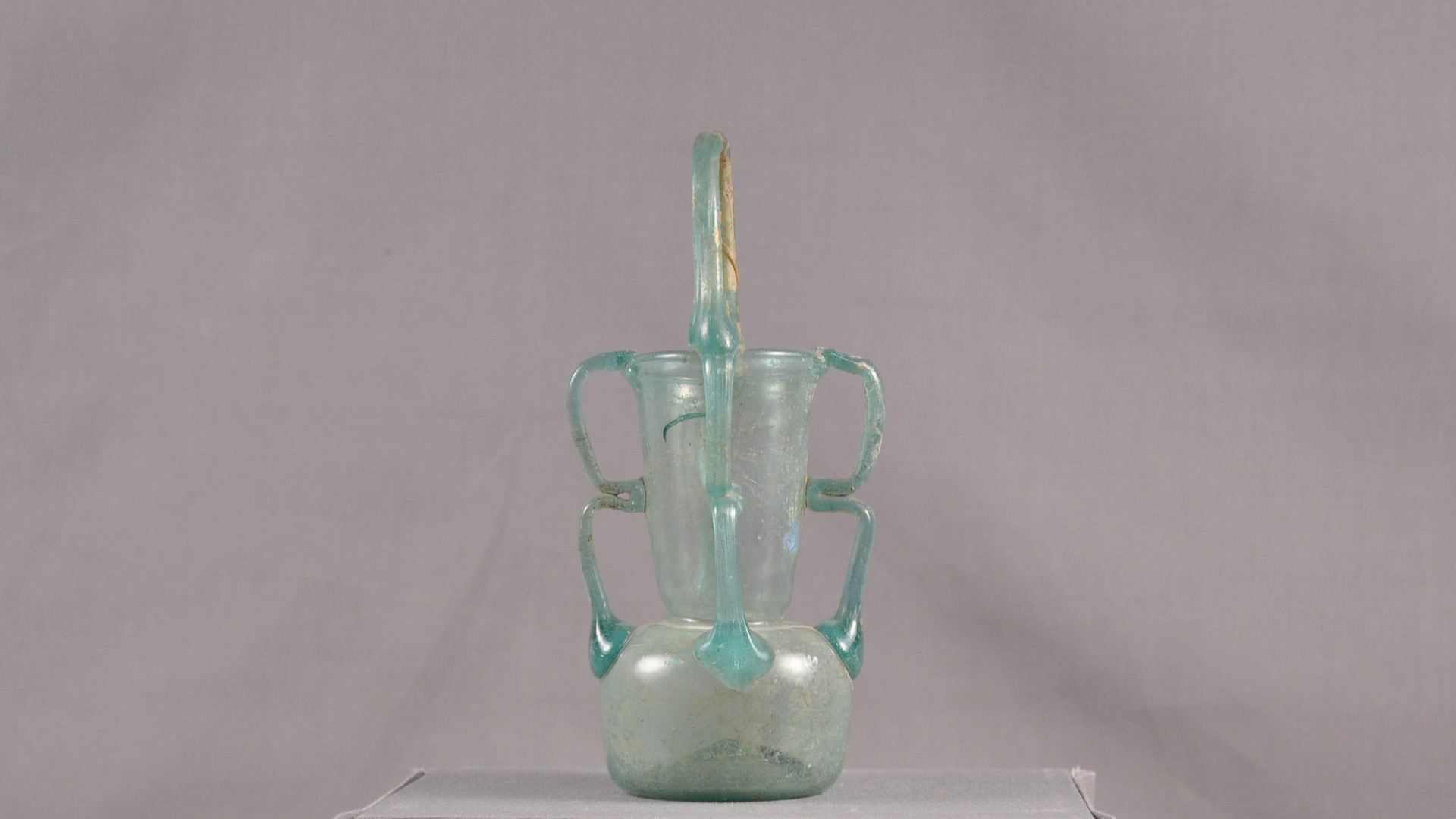
The jar is distinctive in the number of handles found on all 4 sides and the top. On the sides are double-looped handles, each made of 2 round threads of glass. While the shape and fabric of the vase itself is typical of the glass manufactured in the Late Roman Imperial provinces of Syria and Palestine, the multiple handles are rare.
The handles also make the use of the vessel hard to understand. Filling the jar with liquids or pouring from it would have been difficult. It may have been made to show off the glass maker’s skill at forming and attaching handles while the jar was still hot. Or it may have been made for a grave, which is the archaeological context from which most intact ancient glass comes.
Glass is the earliest human-made artificial material. Vessels were first made in Egypt around 1500 BCE. Blowing molten glass spread to Italy where it was perfected by the Romans, and glass vessels were mass-produced before 50 CE. In addition to vessels, the Romans also mass-produced window and mosaic glass.
Before this technology was invented, glass vessels were an expensive luxury item similar to those made of silver and gold. Subsequently, glass began to replace the elaborately decorated fine-ware pottery previously used by the elite. The quality of Roman glass was not equaled again until the Renaissance.
-
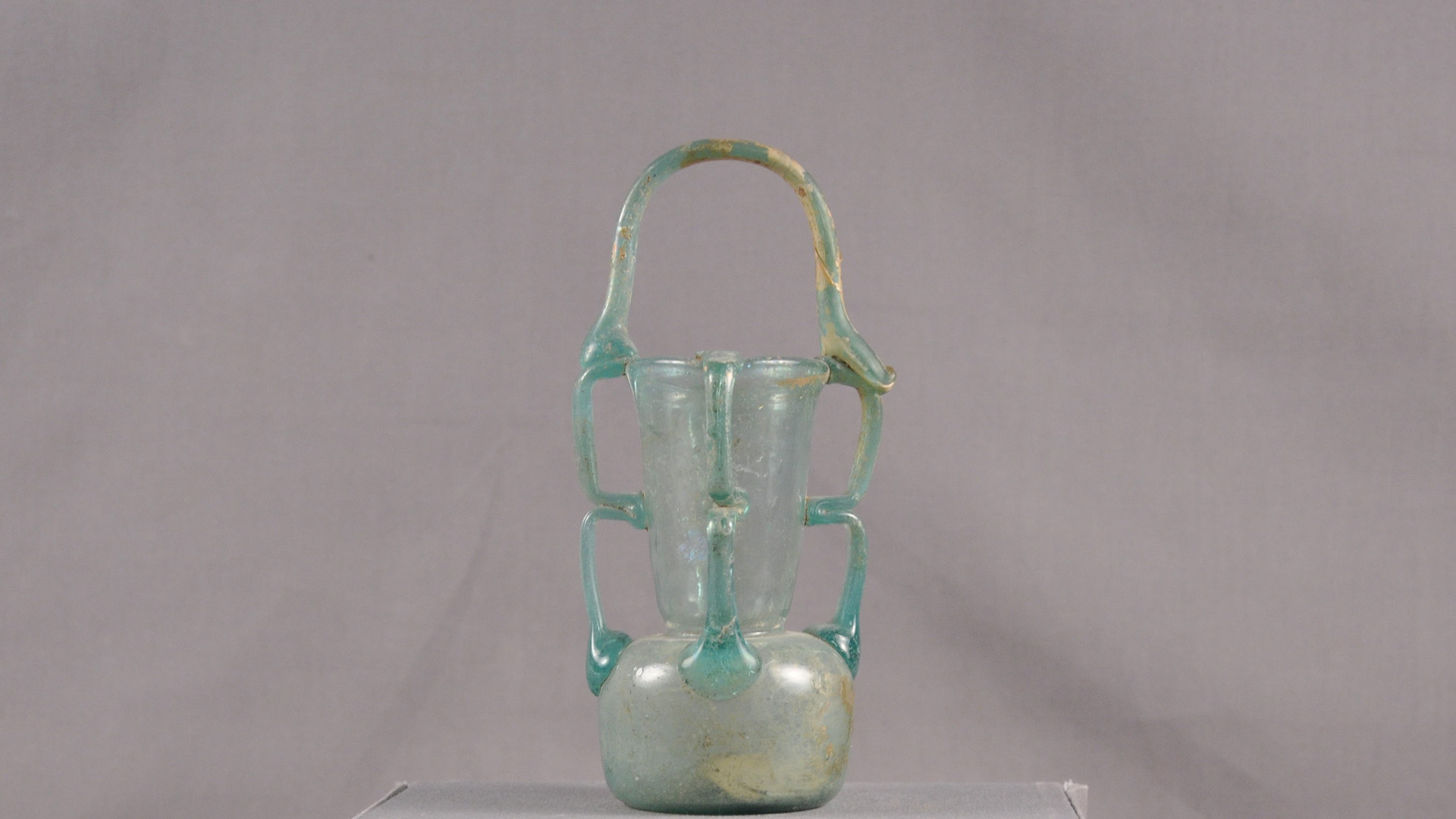 Three-Handled Jar Rome Glass 1917.02.0027
Text adapted from our temporary exhibit Collecting and Connecting: One Hundred Years at the Spurlock Museum.
-
- Share:
- Subscribe to Newletter
- Giving