
Tattooing in Myanmar
- Post Date: 10/11/2026
- Author: McKenna Wise, student assistant
- Reading Time: 12 minute read
Across regions and peoples in Myanmar, tattooing is culturally and historically significant. From North to South, East to West, tattooing traditions stretched beyond current borders in Southeast Asia. In Myanmar, the tattooing has been practiced for at least 1,000 years. Inking one’s skin was done for a variety of reasons, tribal designation, societal accomplishments, medical or therapeutic purposes, religious and spiritual expressions and more. Traditional tattooing practices have been banned since the mid-20th century in Myanmar. This was due to their complicated connections to rebellion and subversion. Colonization has deeply influenced tattooing and perceptions of the practice in the region. The confluence of repression and tradition has greatly impacted tourism in the region and led to the commodification of traditional tattooing. Identity and tattoos are undoubtably connected. This is also true among traditional tattooing in Myanmar. In this blog, identity will be a constant point of discussion as the tattooing materials from Myanmar are activated through historical research and investigation of their cultural contexts.
-
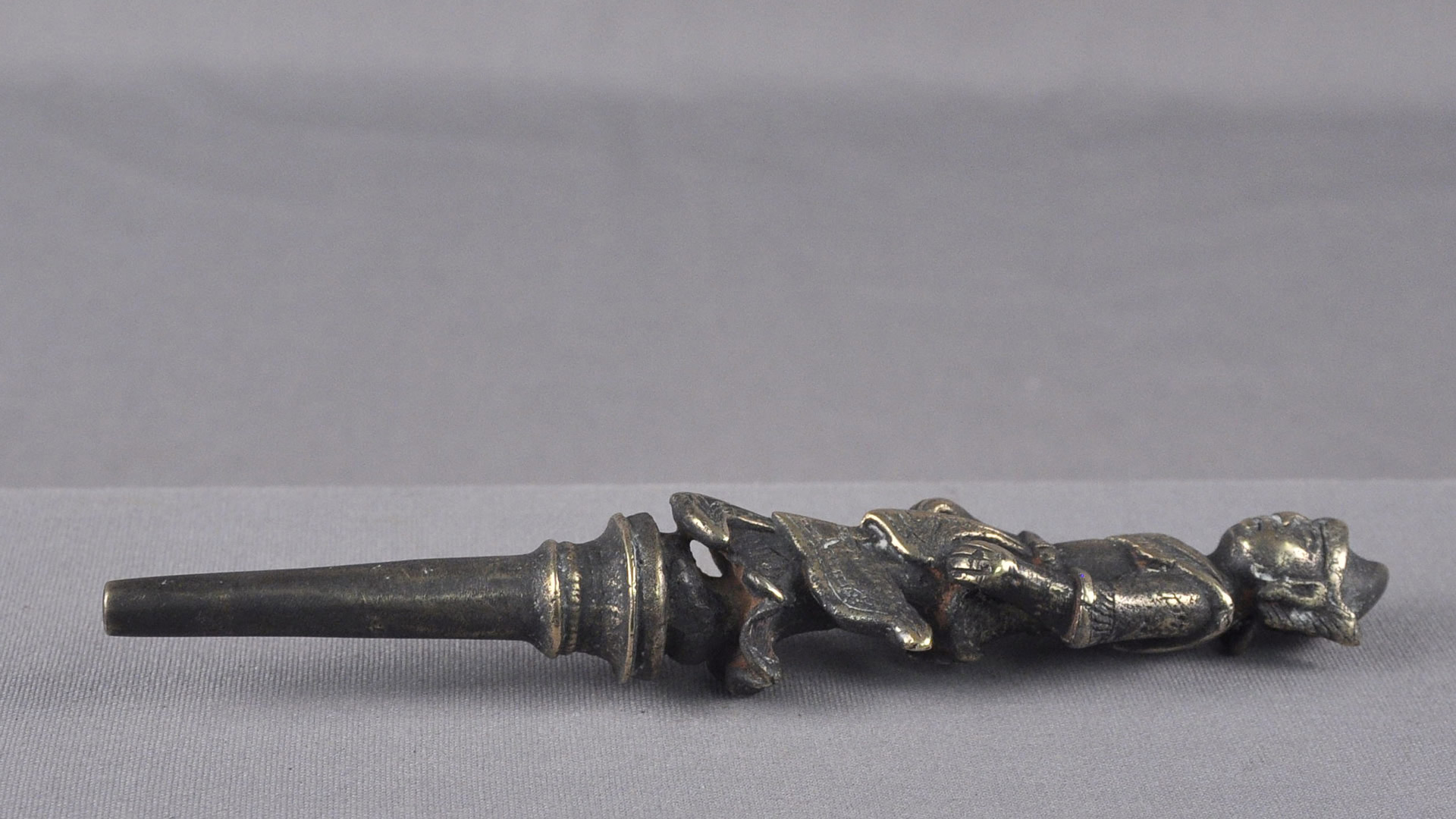
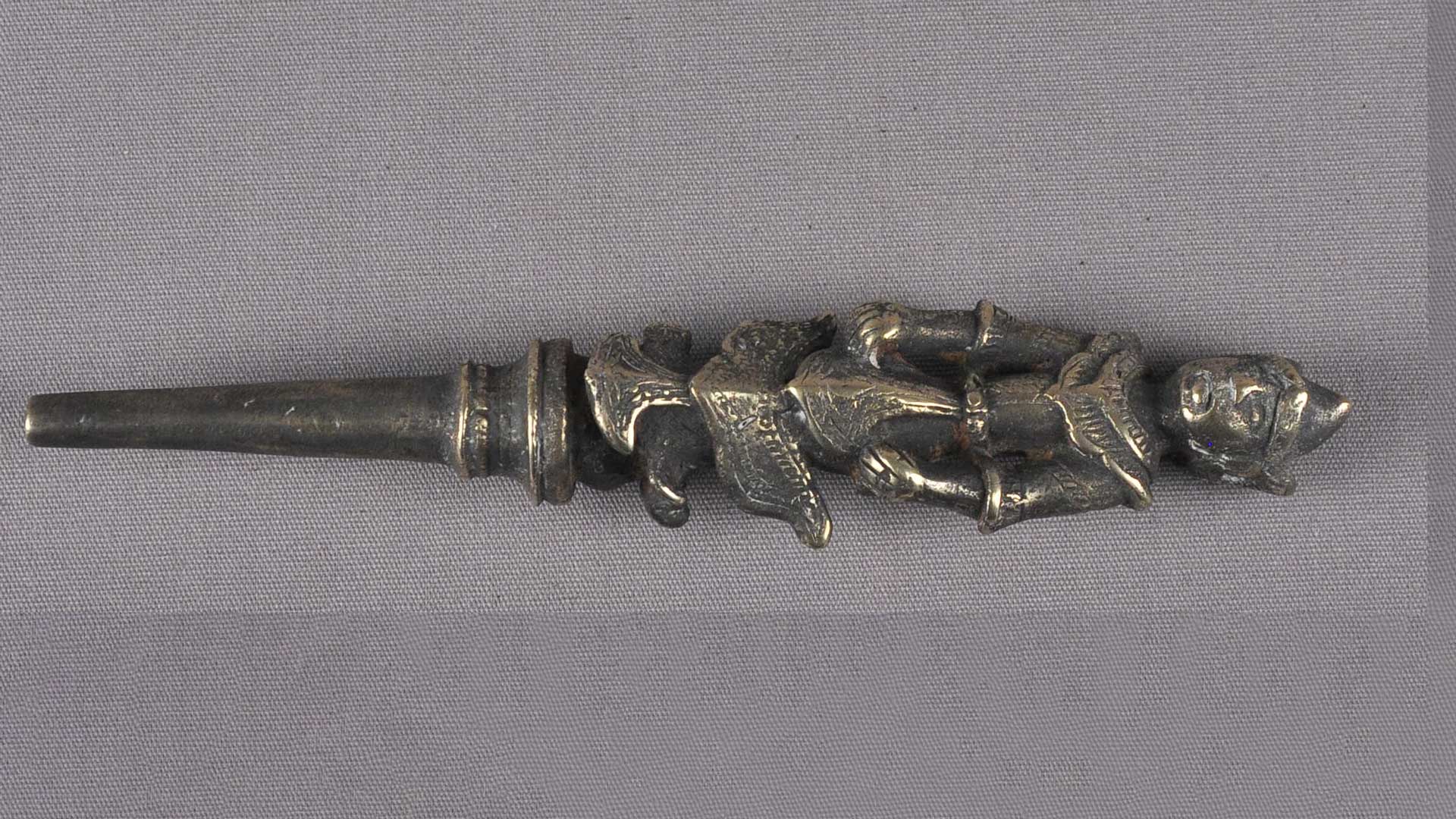
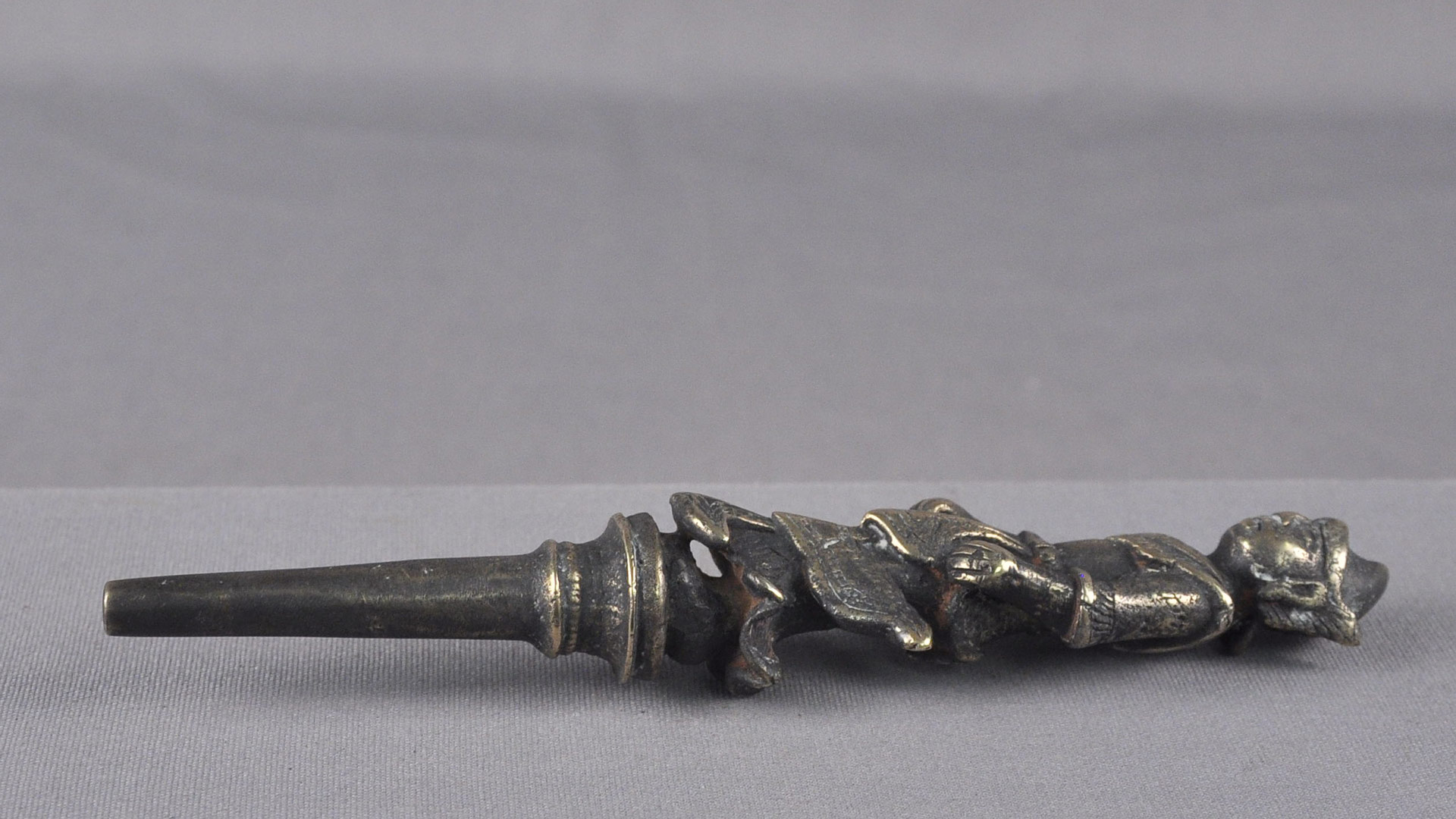 Tattooing Needle Top Asia, East: Myanmar Metal 20th century Gift of Robert C. and Donna M. Spina Helmholz 2012.10.0183
 -
Origins, Tools & Methods
Tattoo needles were often made from brass, thorns, or bamboo skewers; traditionally, the ink used a combination of lards, soot, herbs, and animal bile. The color of the ink was dependent on the intended meaning of the tattoo, with black or red as the most common. Monks or doctors were most often tattooing due to the connections of protection threats to both the physical body and the spiritual soul. The spiritual and religious aspects of tattooing are made clear by the artifact shown above. In Myanmar, animism and esoteric Buddhism are blended into cultural identity, and one aspect of these beliefs is Nat spirit worship. There are 37 Nat spirits and while it is unclear which one specifically is sculpted into the tattooing tool at the Spurlock Museum the figure does share characteristics with both Shin Htwe Hla Thone Pan Hla Nat and Shin Nei Mi Nat. Both are female spirits whose garments reflect the floral, tiered petal motif of the artifact but it is unclear specifically which Nat is represented.
One mythology surrounding tattooing from the Chin region in Westen Myanmar says that a king travelled to the area and was so overwhelmed by the beauty of a young woman that he kidnapped her to make her his bride. From this, families began tattooing the faces of young women to prevent capture. Other Chin histories suggest facial tattooing was done for beauty ˗ either to accentuate or create ˗ or to differentiate groups of people. The process is long, regardless of its origins. Young women were tattooed for anywhere between two and four days depending on the necessary steps and intricacies of the design. There are six groups in the Chin region who practice facial tattooing, all of whom have their own uniquely remarkable styles. Facial tattooing has recently fallen out of fashion with many young women for a variety of social and political reasons, but the practice still holds a great deal of cultural importance.
Decoration or identification are not the only reasons to put needle to skin. Therapeutic tattooing has deep roots among both the Kayan tribe of northern Myanmar and the Shan people of Eastern Myanmar. Shan men wore tattoos from their hips to their knees that incorporated Buddhism, Nat worship, and Animism. Tattoos in this case were a form of physical and spiritual protection as well as aesthetic decoration that made men more desirable to Shan women; physical and spiritual manifestations of power, strength, and ability were conveyed through these tattoos. But across both regions, tattooing is believed to have restorative healing properties and was practiced as a form of acupuncture. This traditional method of tattooing requires prayers and offerings to a guardian spirit to combat infection and in conjunction with cultural and religious beliefs.
-
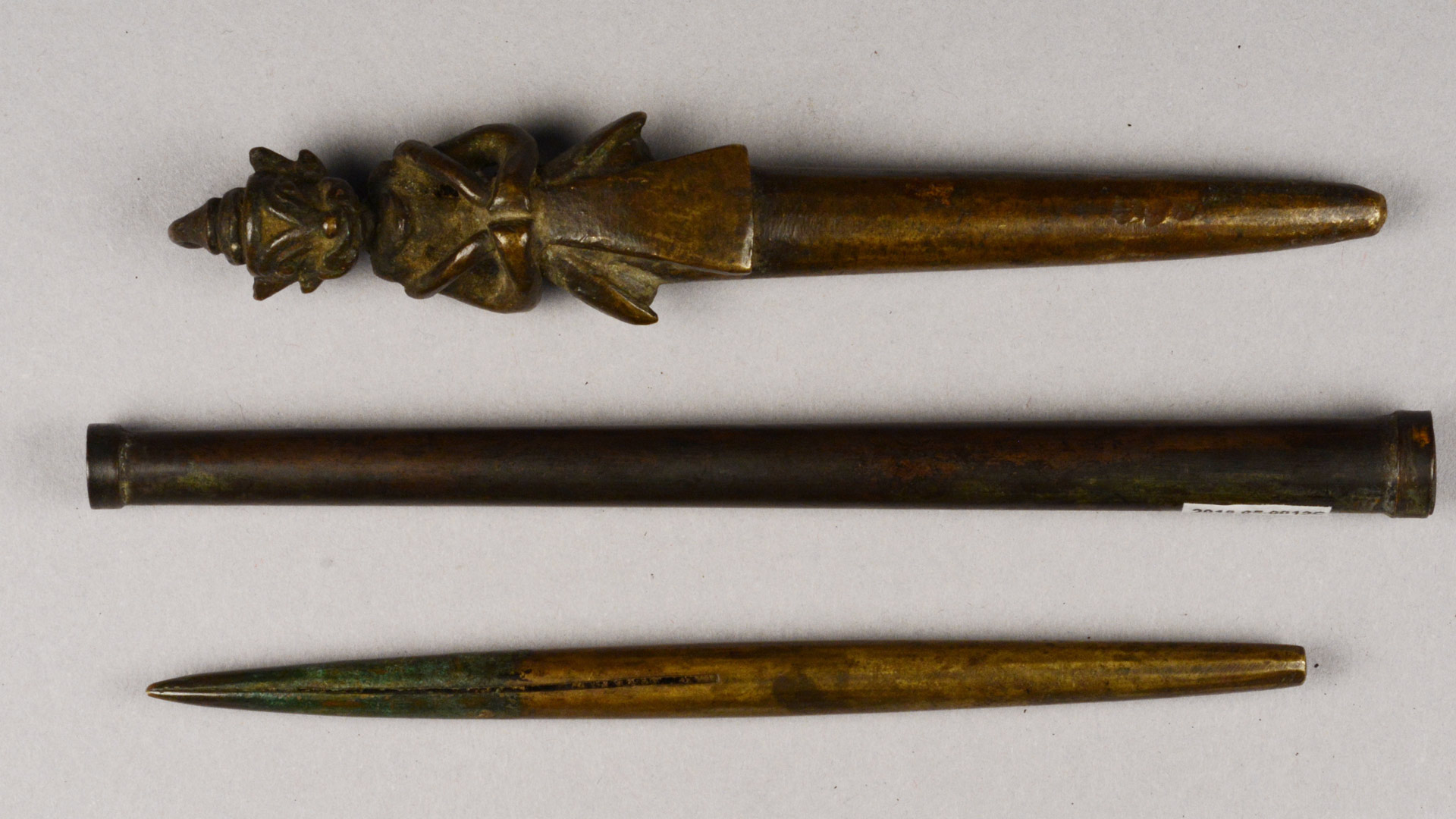 Tattoo Needle: Nat Burmese Figurine Top Asia, East: Myanmar Metal—Brass Late 19th – early 20th century Gift of Robert C. and Donna M. Spina Helmholz 2018.05.0012A
Repression, Rebellion, and Otherness
In the 1930s tattooing as a practice had been reconfigured by the State in Myanmar away from its tradition of healing or identity and towards signaling expressions of armed resistance or political rebellion. This idea stemmed from the complex figure, Saya San, who required members of his following to tattoo images connected to British defeat at the hands of the Burmese. Victory was depicted visually by a galon ̶ a half man half raptor representing the Burmese ̶ defeating a dragon called naga meant to be the British. Eventually, thousands of accused “rebels” were arrested because cultural practices (namely tattooing for the purposes of this research) incorrectly associated many rural peoples with Saya San. This reduced the experiences of other rural protestors to fit the State narrative while simultaneously manufacturing a means of suppression by way of cultural tattoosJudges asserted tattoos and rebellion worked hand in hand thus transforming the ethnographic understanding into a legal argument centered on the nature of resistance. Again, the imagery of the galon was used to situate rural peoples as a monolith of rebels which led to suppression and violence. The colonial effects of British influence cannot be understated as most of the anti-rebel rhetoric stemmed from colonial authority. Using tattoos and various images, an Otherness was constructed by the State to oppress rural populations. Healing culture, therapeutic ties, and protection beliefs were stripped from the practice of tattooing and replaced with political rebellion, eliminating ties to tradition and culture. Identity as it relates to tattooing had been mutated, for it no longer belonged to the individual or to a group of people, but rather an Otherness decided by the State.
In the mid-20th century, both Christian missionaries and the militaristic national government worked to ban facial tattooing in the Chin region. Missionaries vehemently denounced the so-called ‘barbarity’ of tattooing. Notably, the governmental campaign was largely focused on eradicating traditional practices. The pronouncement of authority solidified the Otherness of tattoos and tattooed individuals while simultaneously imposing an exoticism over people’s identities, spiritual lives, and more broadly, the tattooing culture in Myanmar. These culminating factors ̶ along with the aforementioned state and colonial repression ̶ have meant the tattooing landscape in Myanmar has changed dramatically.
-
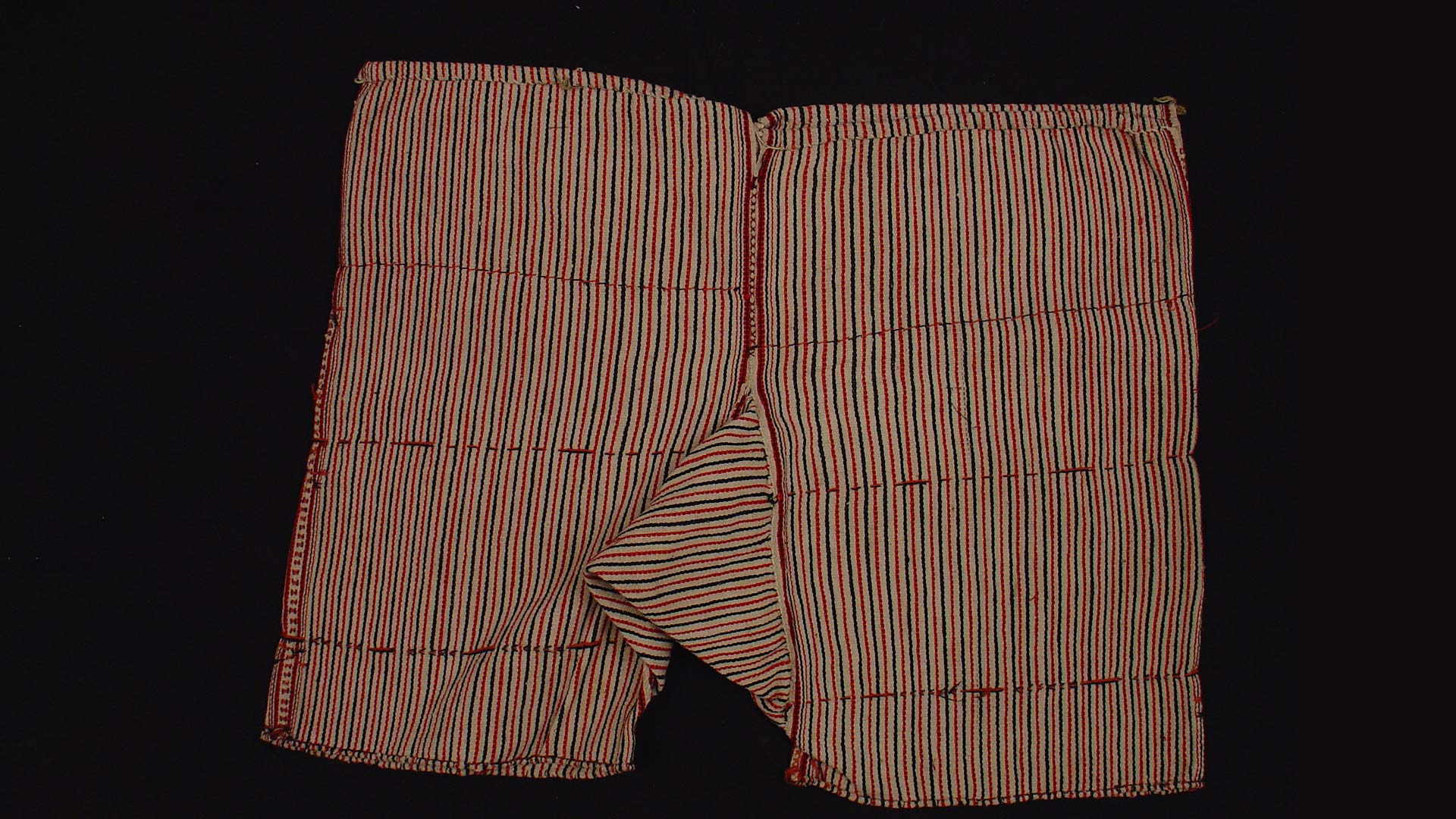 Sci Jo' Ma Kho, Man's Pants Asia, Southeast: Myanmar: Kayah State Textile 1961 Frederic K. and Sheila G. Lehman Collection, Transfer from the Department of Anthropology, UIUC 2000.01.0748
 -
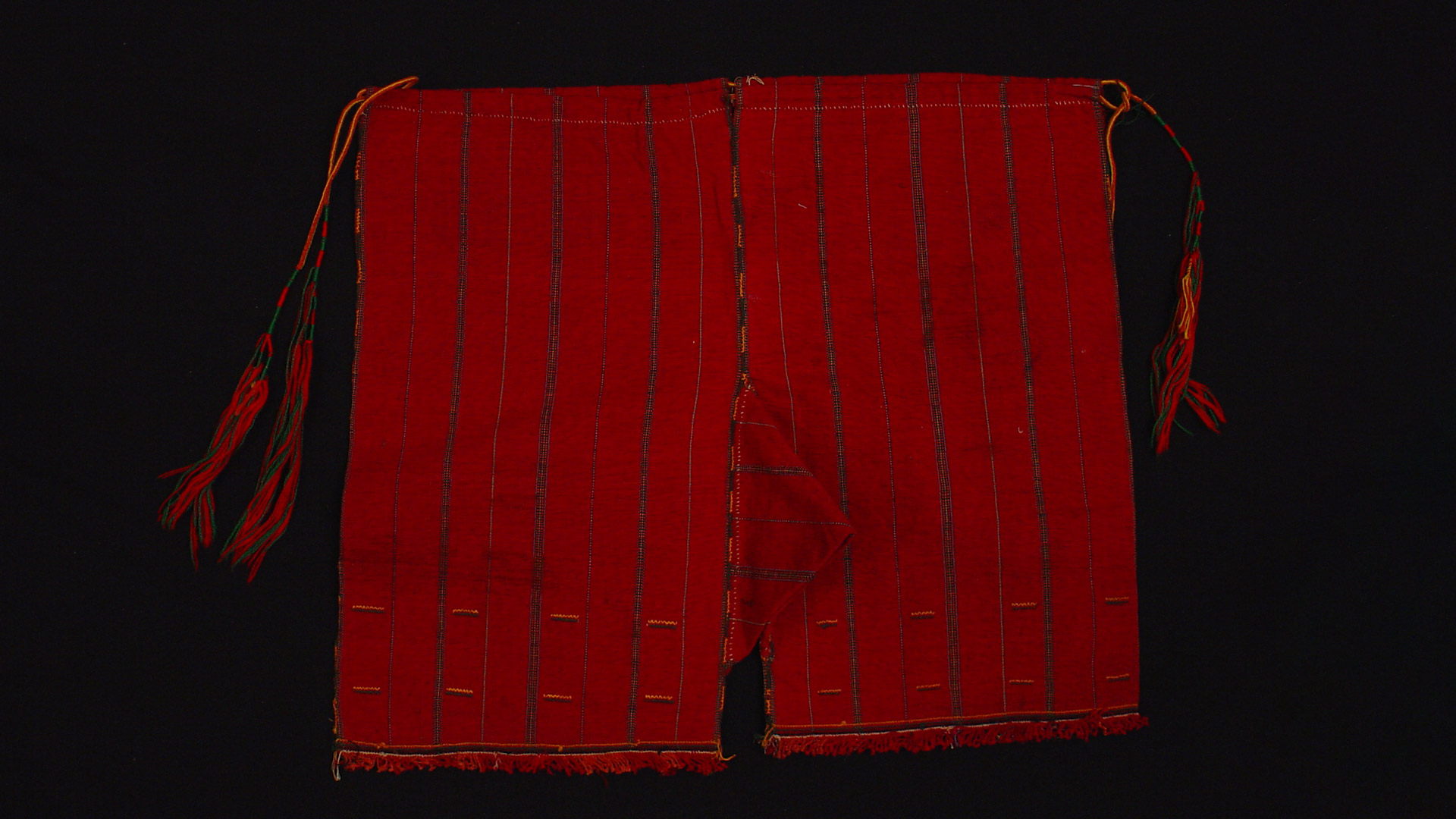 Man's Short Pants Asia, Southeast: Myanmar: Kayah State: Kyebogyi Village, Kaja lij, Key Lja Textile, Pigment—Dye Frederic K. and Sheila G. Lehman Collection, Transfer from the Department of Anthropology, UIUC/span> 2000.01.0749
Tattoo Tourism
Cultural tourism has become a significant contributor to socioeconomic development in countries across the globe. Myanmar’s government, like many others, recognized the tourism potential in their landscapes and peoples, and leveraged both as a catalyst for economic growth. Community-based tourism in the Chin State has centered on facial tattooing and as a result layers of ethnic identity promotion and commodification have saturated the area and its people. Traditional tattooing practices and rituals are reconstructed and presented in accordance with tourism and the tourist gaze. The interplay between culture and profit in the Chin State is directly tied to the commodification of Chin women’s facial tattoos. So, while fewer and fewer young Chin women are participating in facial tattooing, tourists have their faces painted in a commodified presentation of culture.
Another form of tattoo tourism includes those who seek out traditional practitioners to give them an ‘authentic’ tattoo. The ties to the aforementioned exoticism of identity cannot be overstated. Conceptualizations of Buddhism, monks, and cultural tattooing ̶ especially for Western tourists ̶ have been constructed through the distance of an Otherness. Signature characteristics of culture are often reproduced for and proliferated by tourism. Typically, this is done by those outside of the represented communities resulting in portrayals of an ‘untouched’ society that is fundamentally Other. Here again, the identity of people who practice traditional tattoo have been skewed and disrupted in this case by tattoo tourism. While some heritage scholars argue community members connect to their cultural identity and preserve their heritage through community-based tourism others raise concerns about dilution of cultural significance as commercialization increases. In either case, tourism undoubtably affects the landscape of tattooing, identity, and culture.
Conclusion
This project is in no way an exhaustive research endeavor, but rather an activation and exploration of the artifacts at the Spurlock Museum of World Cultures. Tattoo culture in Myanmar has deep cultural connections to identity, protection, healing, and spirituality. And it showcases an interesting juxtaposition between permanence and change in that region, just as it does across the globe. While ink has a permanent place in skin and tradition, the attitudes, identities, and rhetoric surrounding tattoos are intangible and constantly changing, for better or worse.
-
- Share:
- Subscribe to Newletter
- Giving