
The Key to the Present-Day: The First Transistor
- Post Date: 5/26/2026
- Author: Santiago Zapata Zuluaga, registration student assistant
- Reading Time: 10 minute read
Every single day, we carry in our pockets millions of what has become arguably one the greatest inventions of humanity, the transistor. It is everywhere in our current age, allowing computers to process immense amounts of information, phones to communicate with other phones around the world, and satellites to transmit data across vast distances. Without the transistor, and the technological revolution that came after it, the world we live in today would be a lot different.
Before 1947, radio communications were made possible by vacuum tubes. These devices amplified signals and switched electricity on and off. However, they were fragile, expensive to make, used large amounts of power, generated a lot of heat, and were very large. In addition, they were inefficient and unreliable.
It was a group of scientists working for Bell Labs that found a replacement for the vacuum tube, a replacement which solved all of these problems. John Bardeen joined Bell Labs’ research group in solid-state physics under the leadership of William Shockley in 1945, developing an interest in the field of semiconductors. Semiconductors are a type of material that conducts electricity, but they do not do it as well as conductors. Bardeen, Shockley, and their colleague Walter Brattain soon began publishing papers on semiconductors, and following the third paper, Bardeen and Brattain initiated a series of experiments on semiconductors. The experiments aimed to demonstrate Schockley’s ideas on modulating the conductivity of semiconductors, allowing the conductivity of semiconductors to be altered at will.
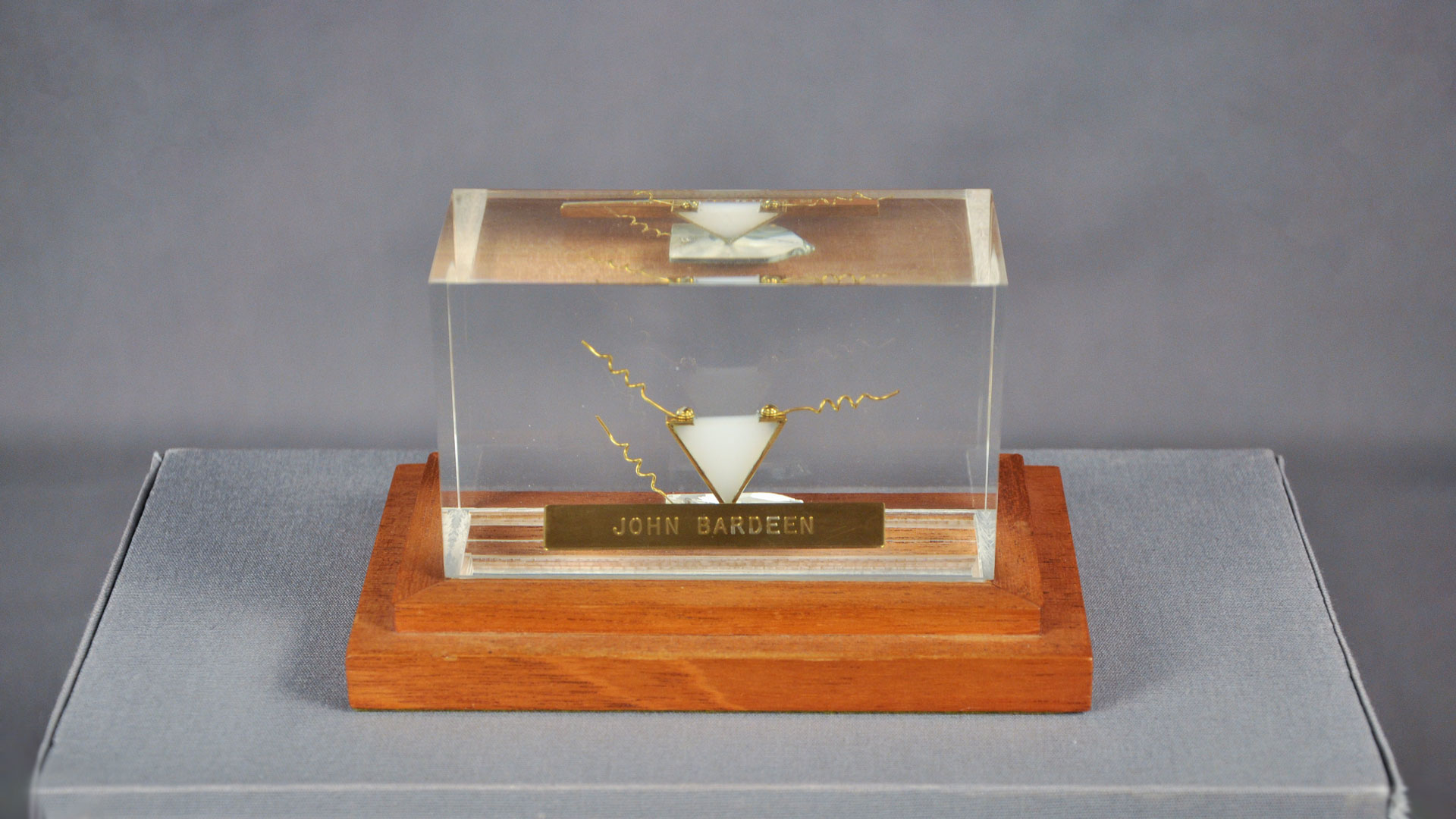
The result of this group’s research culminated in the transistor, a device that amplified and oscillated electric signals but was more robust and more efficient than the vacuum tube. The first successful prototype consisted of a germanium slab and a plastic triangular slab above it about half an inch tall, with two wires on top.
-
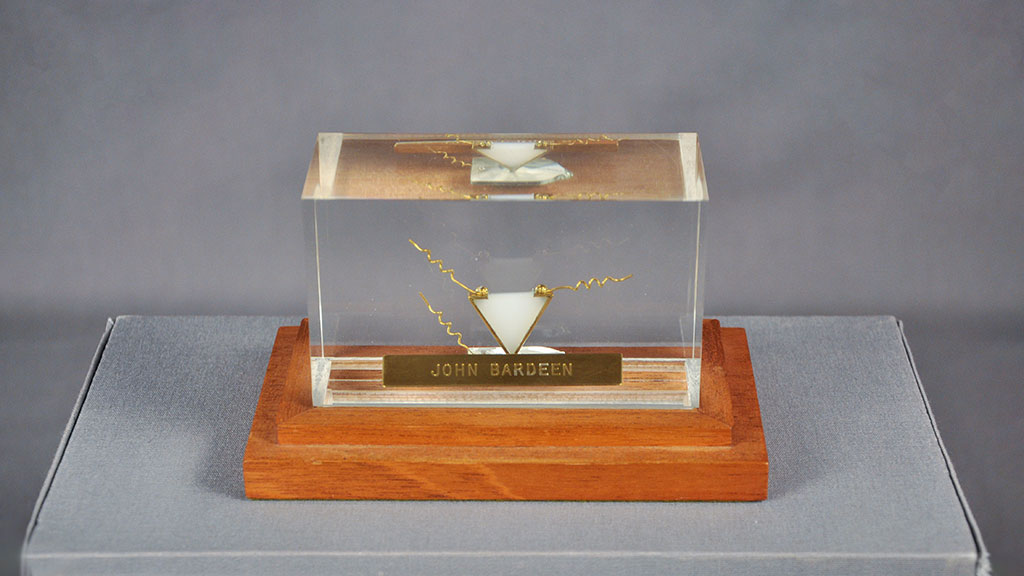 John Bardeen's Model of the Earliest Transistor (1991.04.0108)
The transistor was presented in a private meeting to Bell Labs scientists and executives on December 23rd, 1947. After demonstrating the transistor’s potential, the design of that first experimental-looking prototype was improved upon. In 1949, a Bell Labs engineer built three identical circuits to demonstrate the functionality of the transistors. There were two transistors in each circuit: one transistor allowed for the manipulation of the amplitude of a signal, while the other allowed for the manipulation of the frequency of signals. The best test case for demonstrating the transistor’s capabilities was sound. The manipulation of a sound wave's amplitude and frequency allowed for the creation of musical notes. It was because of this musical nature that the transistorized circuits were called music boxes. Each music box was a clear polymer container with wires, buttons, capacitors, a battery, a speaker, and two first generation transistors. Of the three original boxes given to Bardeen, Shockley, and Brattain, only Bardeen’s survives, making the transistors in this music box the oldest surviving transistors. After Bardeen’s return to the University of Illinois as a faculty member, he played the song “How Dry I Am” on the music box during his lectures. This was one of his most prized possessions.
-
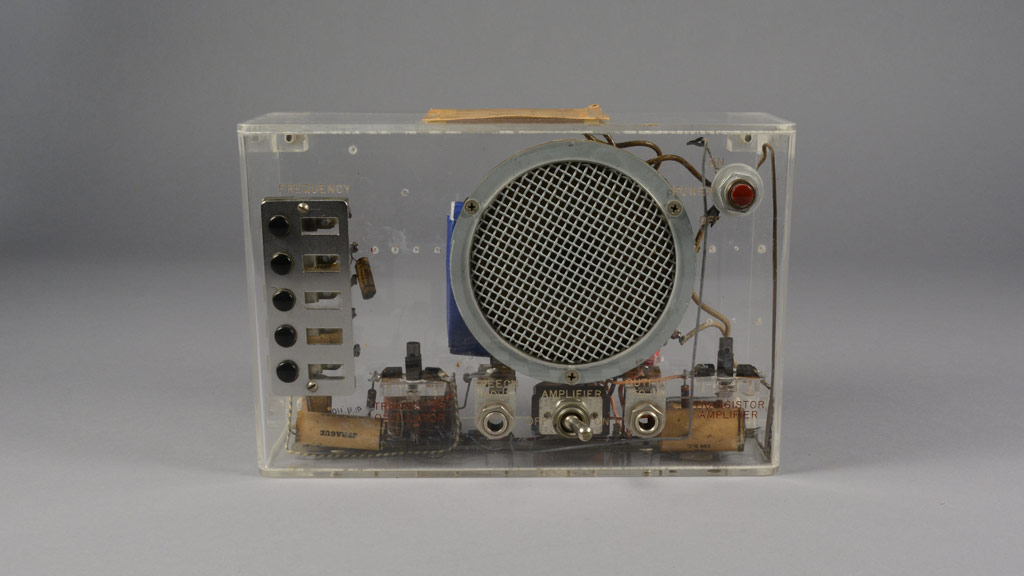 Bardeen Transistor Music Box (1991.04.0110)
While the first transistors outperformed the vacuum tube in efficiency, robustness, and cost-effectiveness, they still took up large amounts of space. With smaller components, a device like a radio could be made more compact and portable. Another benefit of having smaller components is that more of them can be packed in the same space, amplifying their effects. The first transistor prototype was half an inch tall, and the first generation of transistors was not any smaller. Soon after the development of the first generation of the transistors, scientists continued to make progress in making the transistor smaller. The bulky germanium slab became a germanium stick, and the two polarities on the thick plastic became thin metal sheets. What was before a half-inch tall device was now smaller, while still keeping all of its effects. This ability to shrink the transistor marked another pivotal moment in the development of this technology.
-
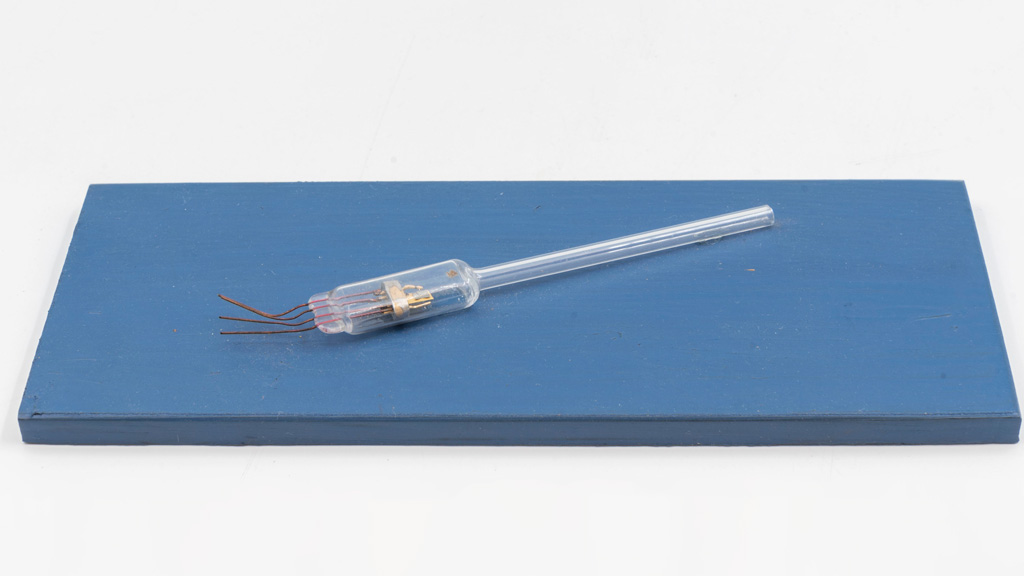 Early Transistor (1985.07.0004)
Now that many transistors were capable of being placed and working together, a new ability was discovered. In 1962, ILLinois Automatic Computer II (ILLIAC II), University of Illinois’ second supercomputer, became operational. A supercomputer is a computer that is capable of computing complex calculations at high speed. The ILLIAC II employed transistors for the applications that transistors were known for before, but now there was a discovery of a new application. When many transistors were combined, their conductivity could be modified to create different outputs, and their state could be read to store information. This ability allowed for the ILLIAC II to be 100 times faster than its predecessor, the ILLIAC. ILLIAC II helped make great advances in science, technology, and engineering.
-
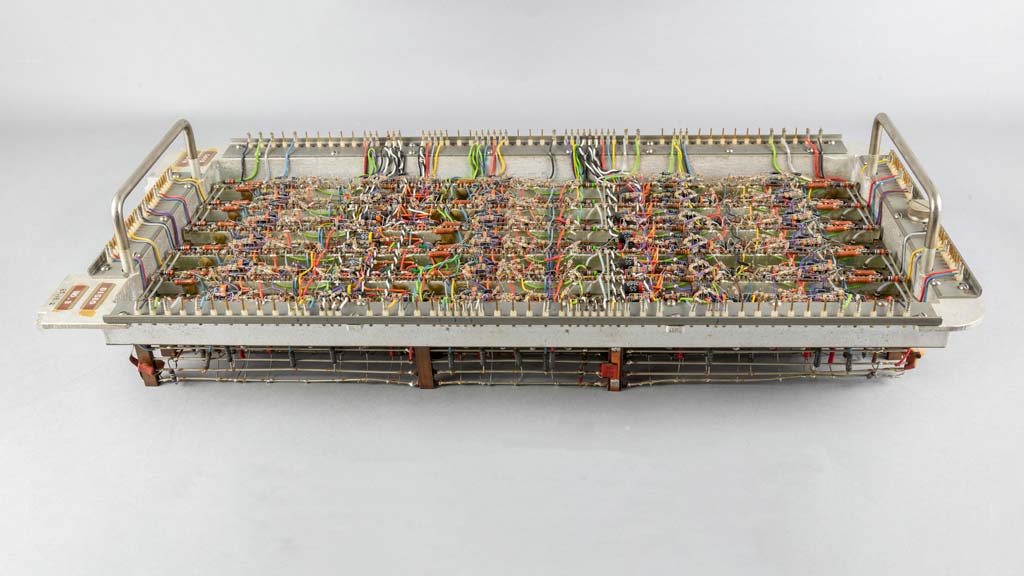 Illiac II Transistor Panel (1985.13.0002)
John Bardeen received many awards throughout his life. He received the Stuart Ballantine Medal of the Franklin Institute in 1952, the Fritz London Memorial Award in 1962, the National Medal of Science in 1965, The Lincoln Academy of Illinois in 1965, US Medal of Freedom in 1976, among many others. For the 25th anniversary of the invention of the transistor, John Bardeen was awarded a commemorative IEEE Medal of Honor, its case and a plaque from the Institute of Electrical and Electronics Engineers. The most notable award that he received was the Nobel Prize in physics in 1956 along with William Shockley and Walter Brattain for the invention of the transistor. John Bardeen would later receive a second Nobel Prize in physics in 1972 for his contributions to the theory of superconductivity, making him the first person in history to receive two Nobel Prizes in the same field.
-
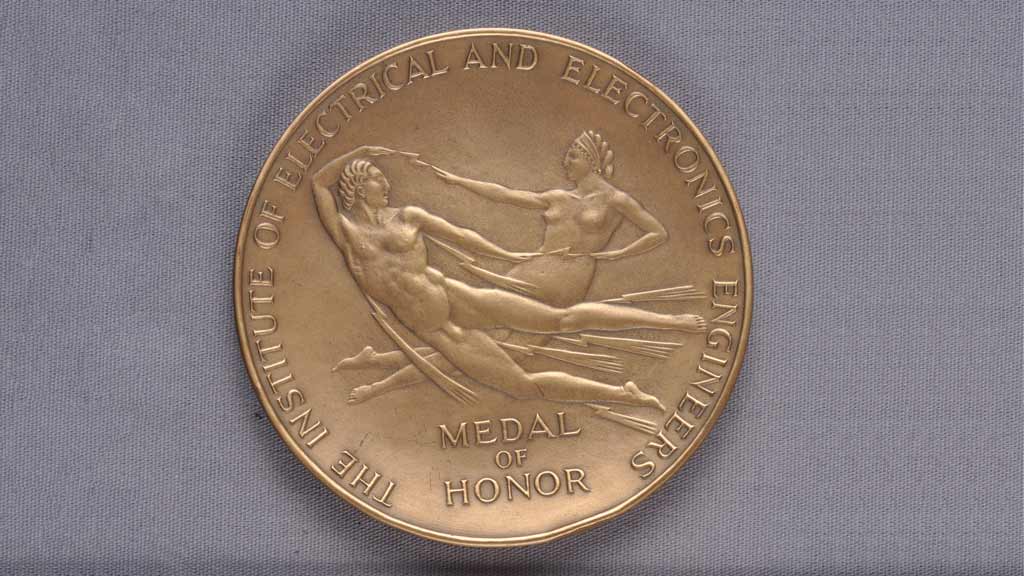 The Institute of Electrical and Electronics Engineers Medal (1991.04.0009A)
 -
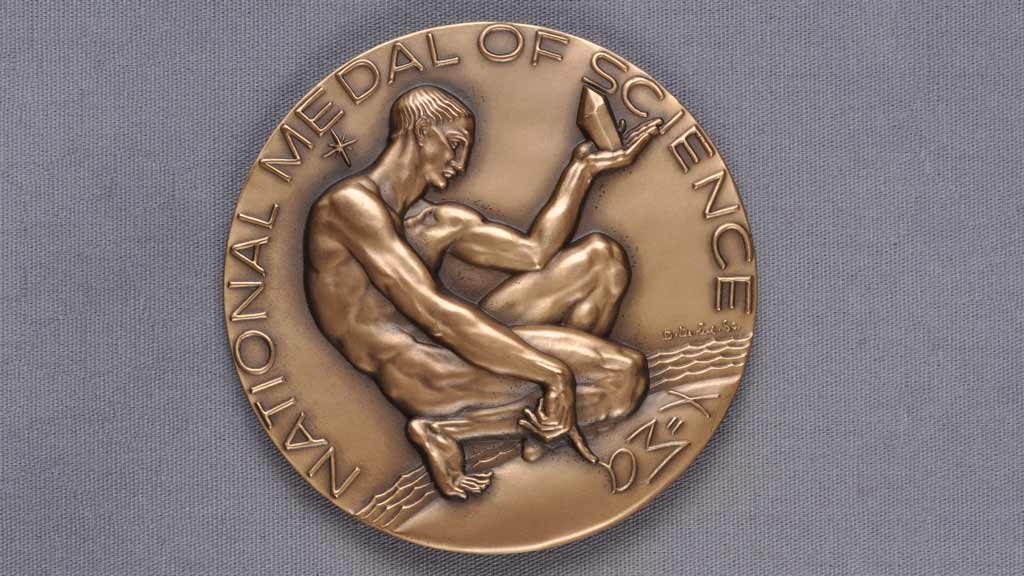 National Medal of Science (1991.04.0006)
 -
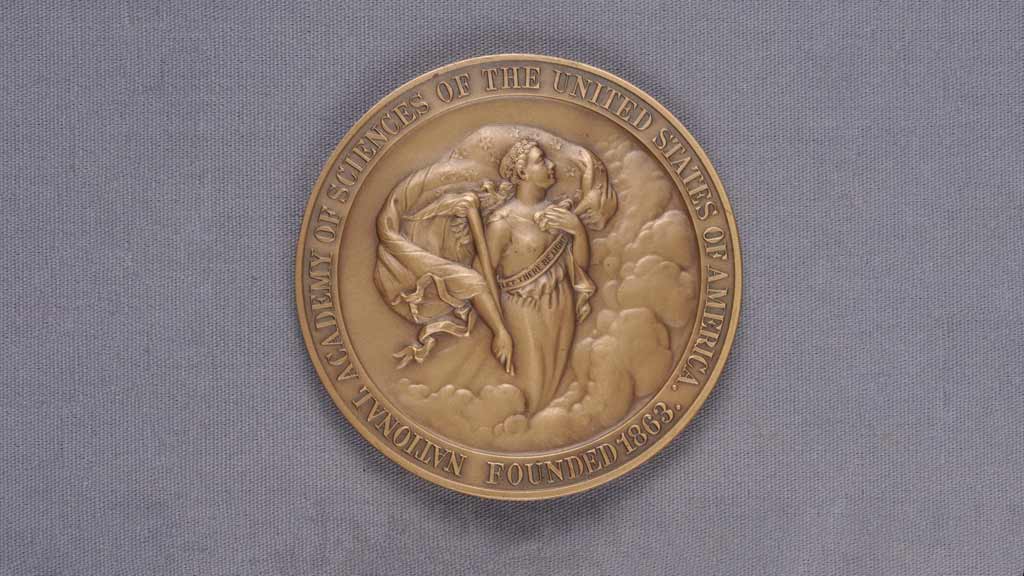 National Academy of Sciences Centennial Medal Reproduction (1991.04.0017A)
 -
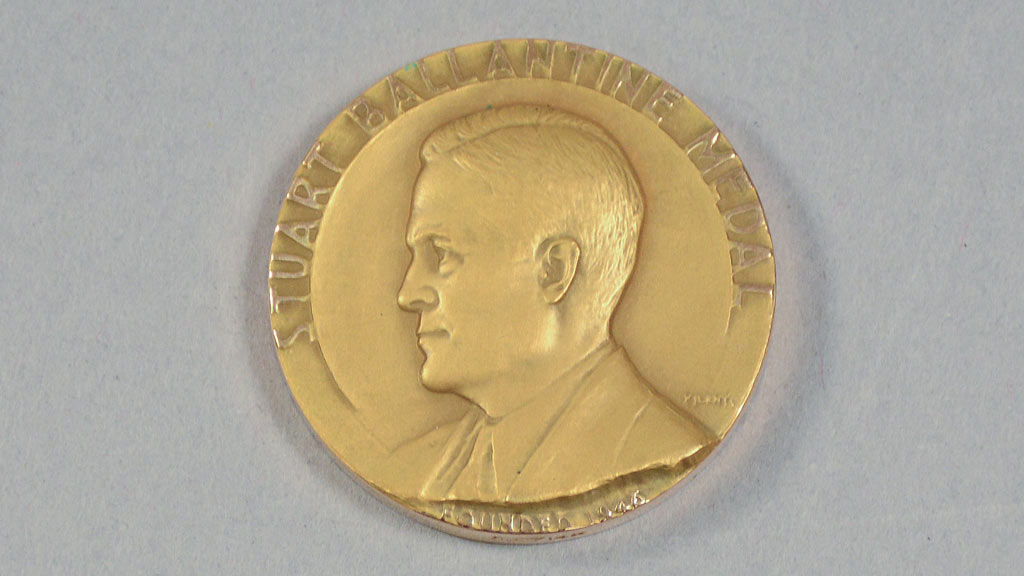 Stuart Ballantine Medal of the Franklin Institute (1991.04.0001A)
 -
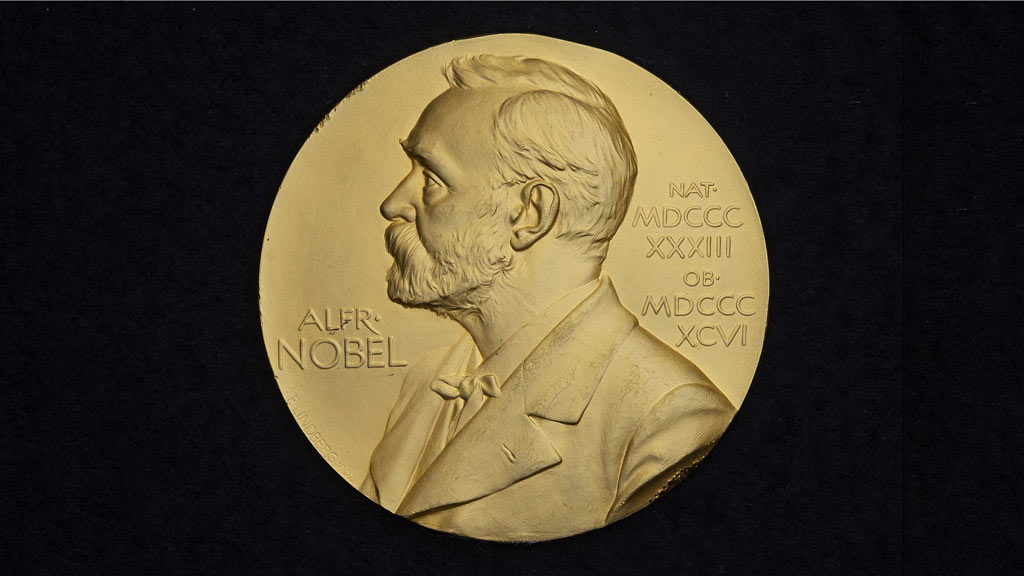 Nobel Prize Medal for Physics (1991.04.0051B)
 -
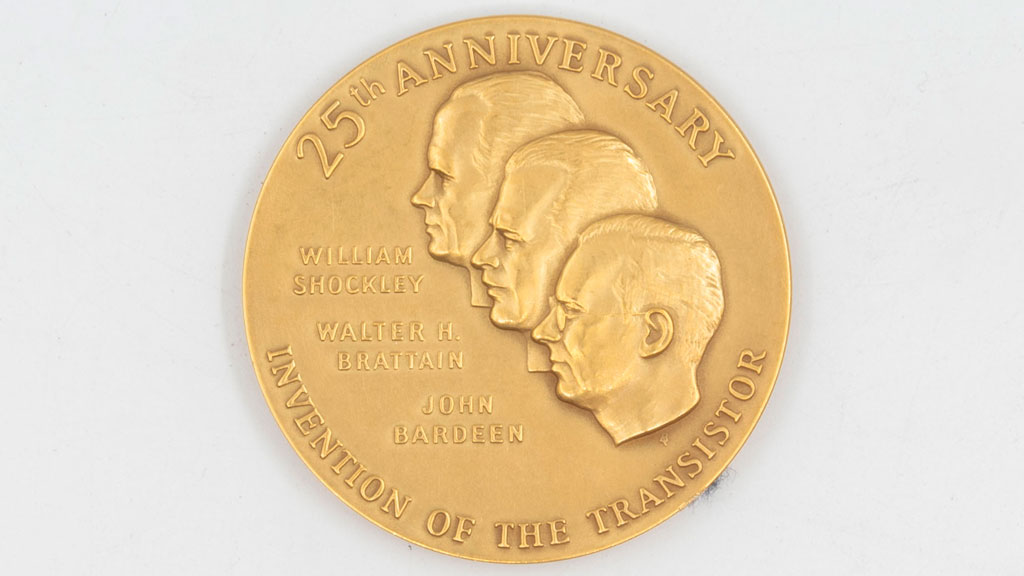 Commemorative Medal of the 25th Anniversary (1991.04.0019A)
-
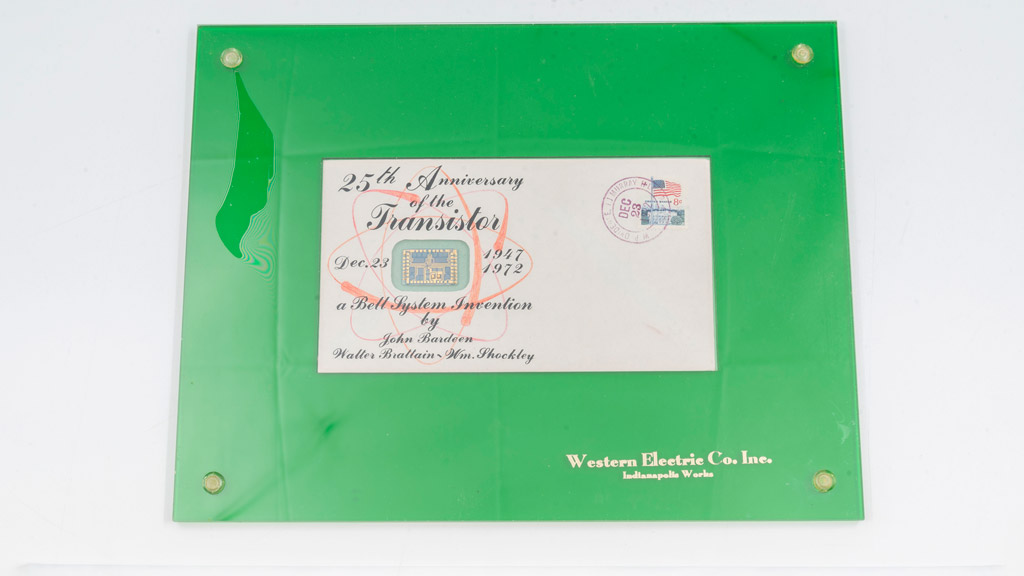 Commemorative Plaque for the 25th Anniversary (1991.04.0085)
 -
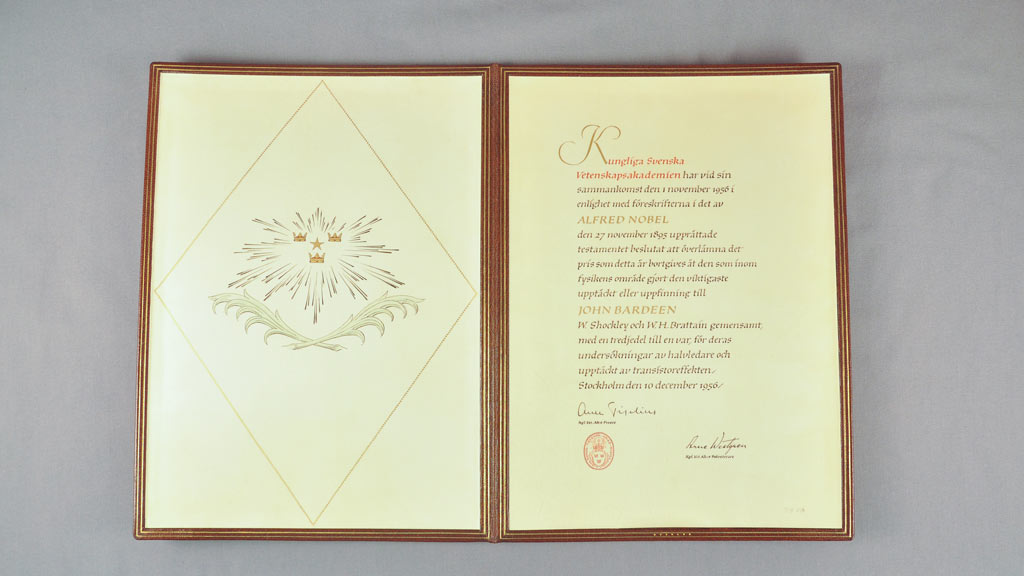 Nobel Prize for Physics Certificate (1991.04.0051A)
Years later, in 1981, despite still being in great condition, the music box had not been complete for some time. Steve Kirchoefer, who was a graduate student at the University of Illinois in Nick Holonyak’s lab at the time, was notified by Holonyak that he would be repairing Bardeen’s music box. The switch in the music box needed to be replaced, and Kirchoefer, with great care, unsoldered and removed the old switch, replacing it with a new one. Despite the historical significance of the music box, Bardeen let Kirchoefer keep the old switch. For 35 years, the old switch remained in Steve’s custody and away from the music box. However, in 2016, the music box and its original switch were reunited when Kirchoefer donated the switch to the Spurlock Museum where the music box was now housed and on display.
-
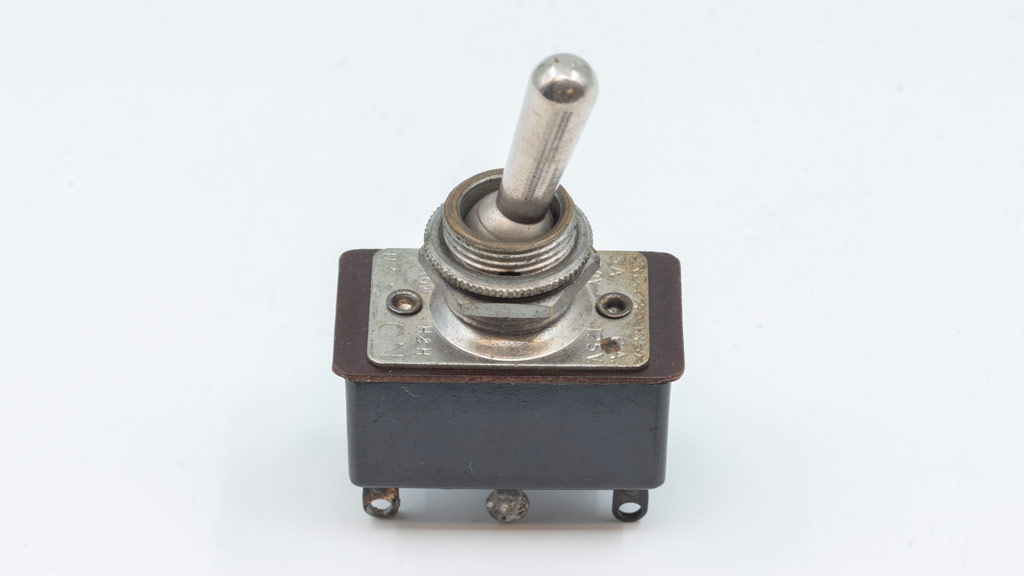 Bardeen Transistor Music Box Switch (2016.12.0001)
The invention of the transistor reshaped the world. It has made communication devices more robust, more efficient, and more reliable. It has inspired a technological revolution, which led to the development of supercomputers, and, in turn, the development of cellphones, computers, radios, headphones, so much of what surrounds us every day. When imagining a world without the transistor, the only certainty is that it would be unrecognizable.
-
- Share:
- Subscribe to Newletter
- Giving