Featured Object: The Muse
- Post Date: 6/15/2026
- Author: Beth Watkins, manager of exhibit interpretation and visitor experience
- Reading Time: 2 minute read
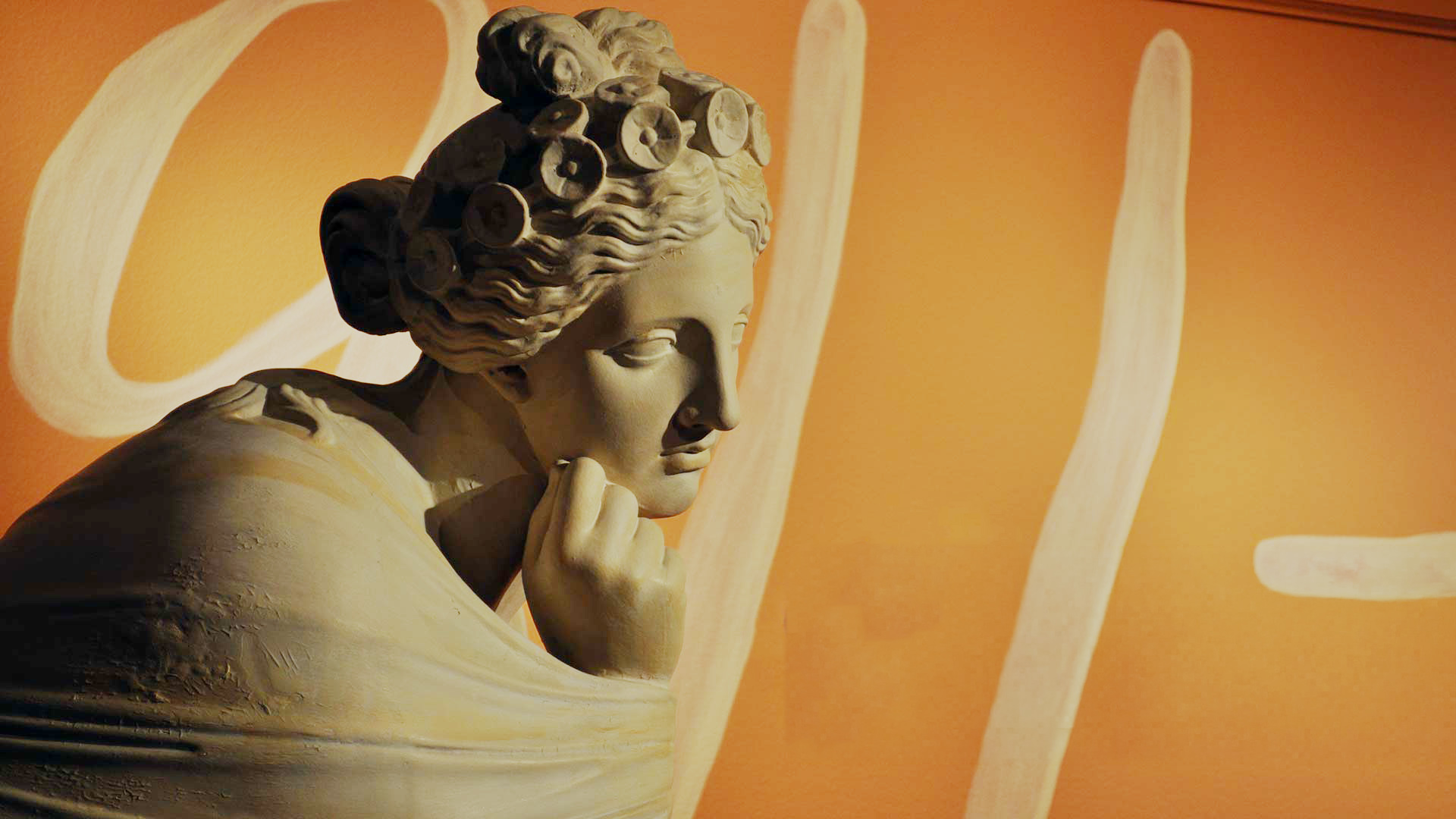
The original of this statue of Polyhymnia, the ancient Greek muse of sacred poetry and hymns, has a curious history. Part of it was made in the 1st or 2nd century CE—but part of it was made more than 1600 years later (or more)! The lower half of the statue is the older part and was found as a large broken piece in Italy, probably in the early 18th century. In 1780, the sculptor Agostino Penna (1728–1800) was commissioned by a prince from the royal Borghese family to recreate an upper half of the statue for display in their great country villa.
As inspiration for his restoration, Penna used another smaller image of Polyhymnia created around 300 years earlier than the base fragment of his statue. In that image, Polyhymnia appears near the middle of a scene of the author Homer being turned into a god, surrounded by the muses and other mythological figures. See details of it at the British Museum’s site; Polyhymnia is standing but leaning on her right elbow on a tree stump.
Penna’s design an excellent example of the contemporary popular practice of undertaking substantial restorations of fragmentary classical sculptures. The resulting piece is enormously appealing, with Polyhymnia standing in a pose of quiet contemplation.
This plaster cast is one of four surviving full-size casts from the original University of Illinois Art Gallery. This collection was created in 1874 by the first president of the University, John Milton Gregory. You can see 2 others, Laocoon and Artemis, in the Ancient Mediterranean gallery.
-
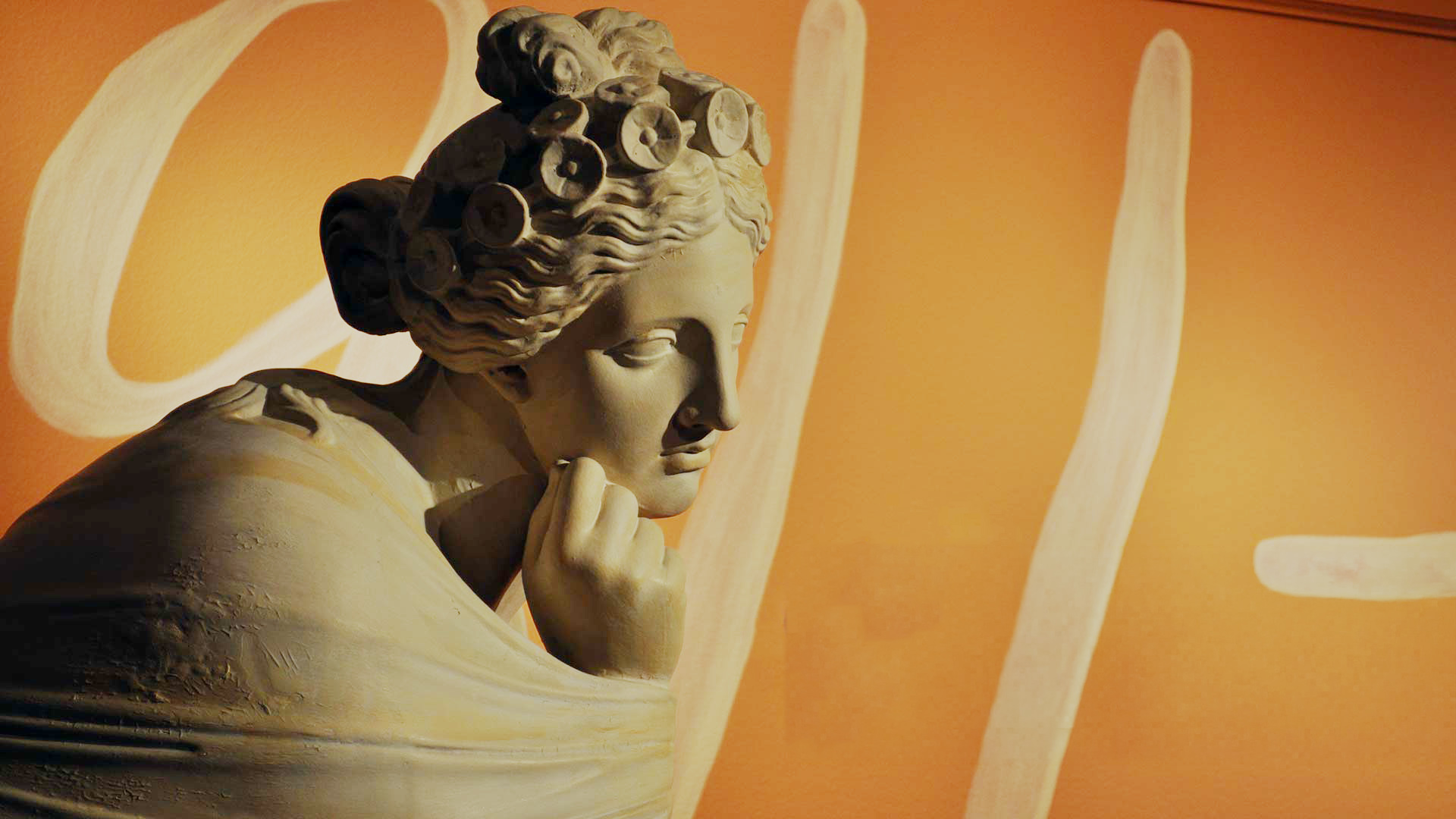 Plaster Cast of Greek Statue: Polyhymnia Greece Plaster John Milton Gregory Collection 1948.01.0055
Text adapted from our temporary exhibit Collecting and Connecting: One Hundred Years at the Spurlock Museum.
-
- Share:
- Subscribe to Newletter
- Giving