
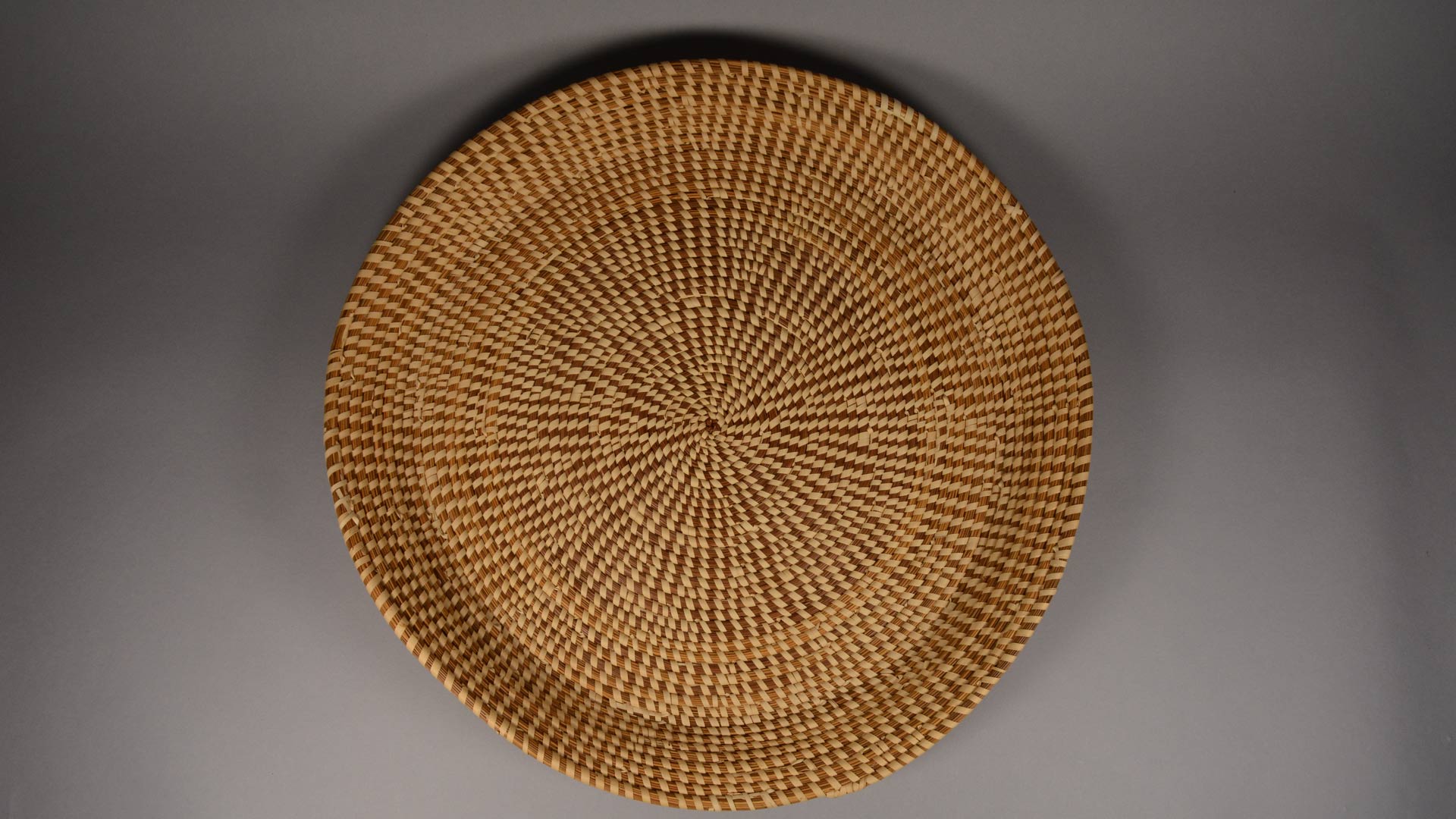
Food and Drink: Rice
- Post Date: 6/29/2026
- Author: McKenna Wise, student assistant
- Reading Time: 13 minute read
Food is at the center of all our lives. Meals provide community and cuisine builds cultural identity and personal identity. While food certainly provides physical sustenance, the nuance of food is impactful for so many reasons. Here at the Spurlock Museum of World Cultures, the collection contains numerous artifacts with ties to food. When deciding to revive the “Food and Drink” series there was only one food for the job, rice.
The history of early human-rice interaction is complicated. The first recorded mention of rice was in China in 2,800 BCE. However, historians estimate domestication occurred around 5,000 BCE. Archaeologists, on the other hand, pose the year 4,530 BCE in China, yet further evidence in archaeological work in India has uncovered rice digestion at a site in Lahuradewa in the Ganges Valley dating to 7,000–5,000 BCE. Archaeologists have also found impressions of rice grains have been found in Ganjiganna, located in North-East Nigeria, from 1,800 BCE. One thing is for certain when it comes to rice, it is a staple food in more than half of the world’s population.
-
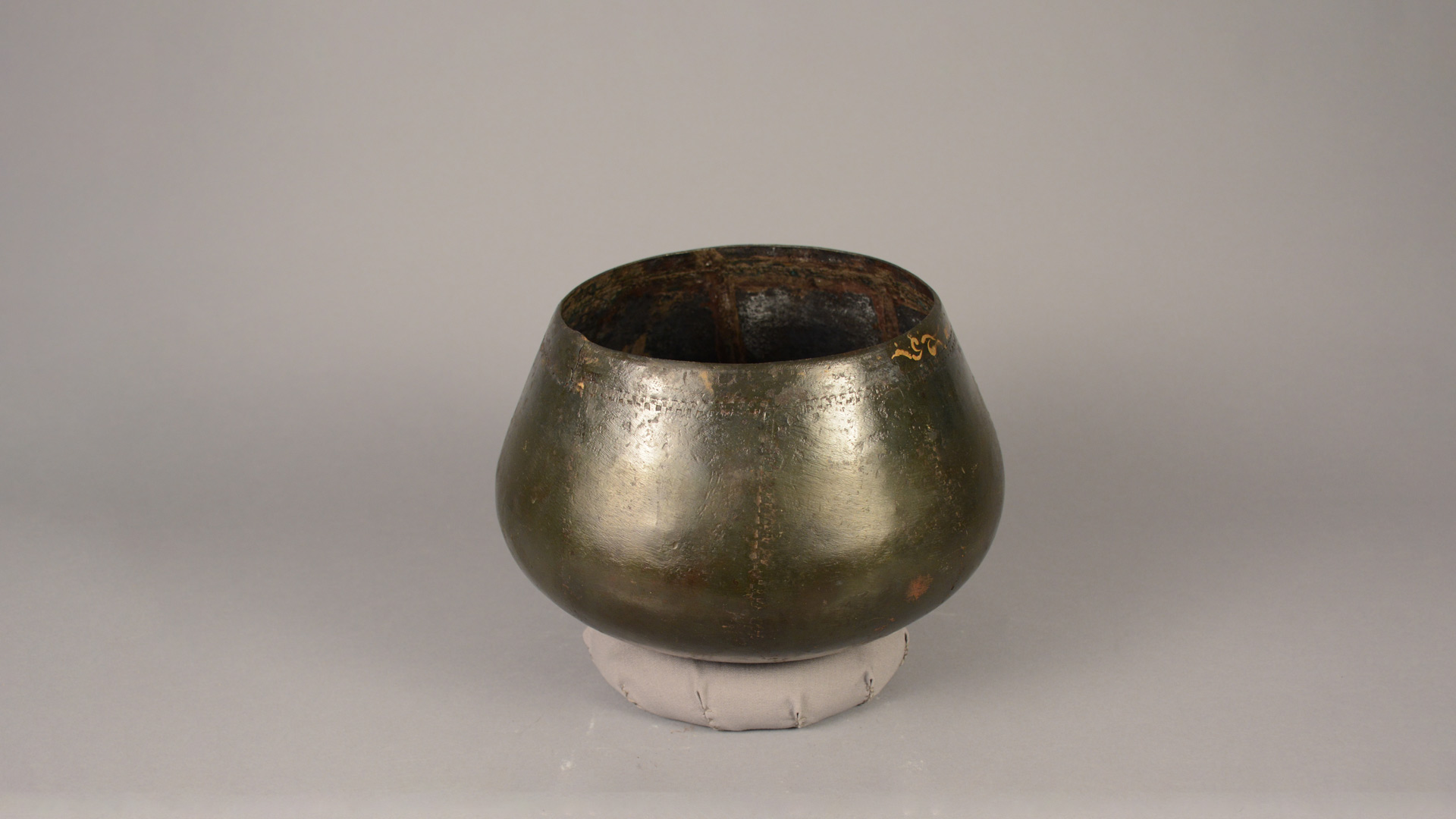 Monk's Rice Bowl Thailand Metal-Brass, Pigment Gift of Clark E. Cunningham 1997.02.0002A
Rice has spread across the globe, influencing every populated continent on Earth. The materials in the Museum’s collection represent the vastness of rice’s reach. The artifacts selected showcase the different methods of growing, harvesting, and storing rice as well as the labor deeply engrained in the history of rice. Additionally, the complex spiritual entity, Bulul who is deeply intertwined with rice and culture in the Island of Luzon, Philippines. This project seeks to investigate rice not just as sustenance, but rather as a global cultural and historical touchstone.
-
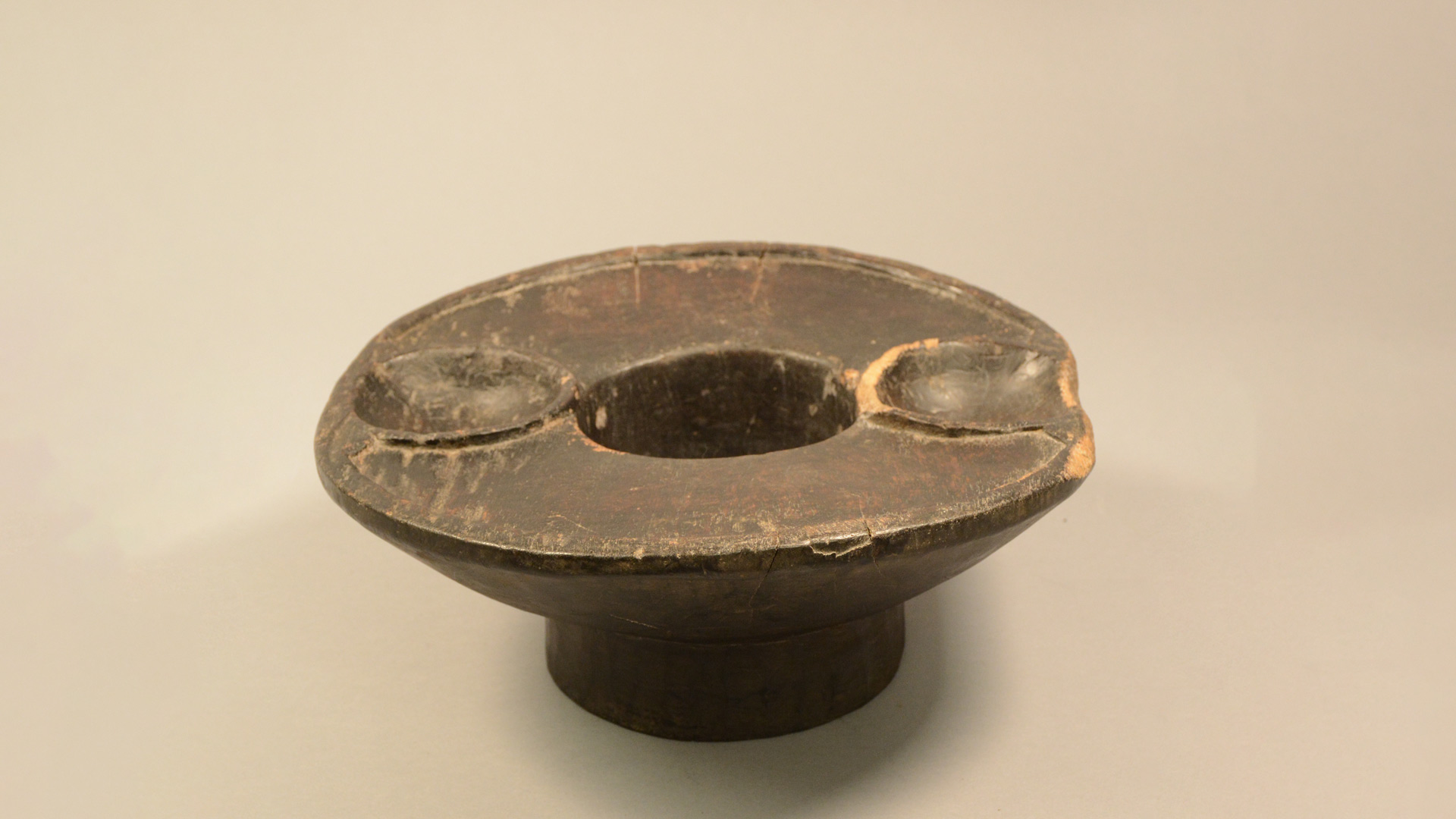 Rice Bowl: Sokong Philippines Plant-Wood Gift of Drs. Albert V. and Marguerite Carozzi 1990.10.0085A
Cultivation
Rice grains were gathered and consumed in the tropics and subtropics by prehistoric peoples. Cultivation began when human, likely women, intentionally dropped rice grains in the soil of low-lying land. These women also kept out weeds and animals while manipulating the water supply to yield the best results. Animal bones were the material for the earliest tools used to harvest rice, namely spades and hoes; such tools have been found on China’s Eastern coast at the He-mu-du site. Stone materials followed including grinders, mortars, and pestles. Bronze sickles came next and eventually evolved into scythes. In West Africa complex techniques of flooding, estuaries, and rain-fed water systems were highly specialized and yielded high results.
-
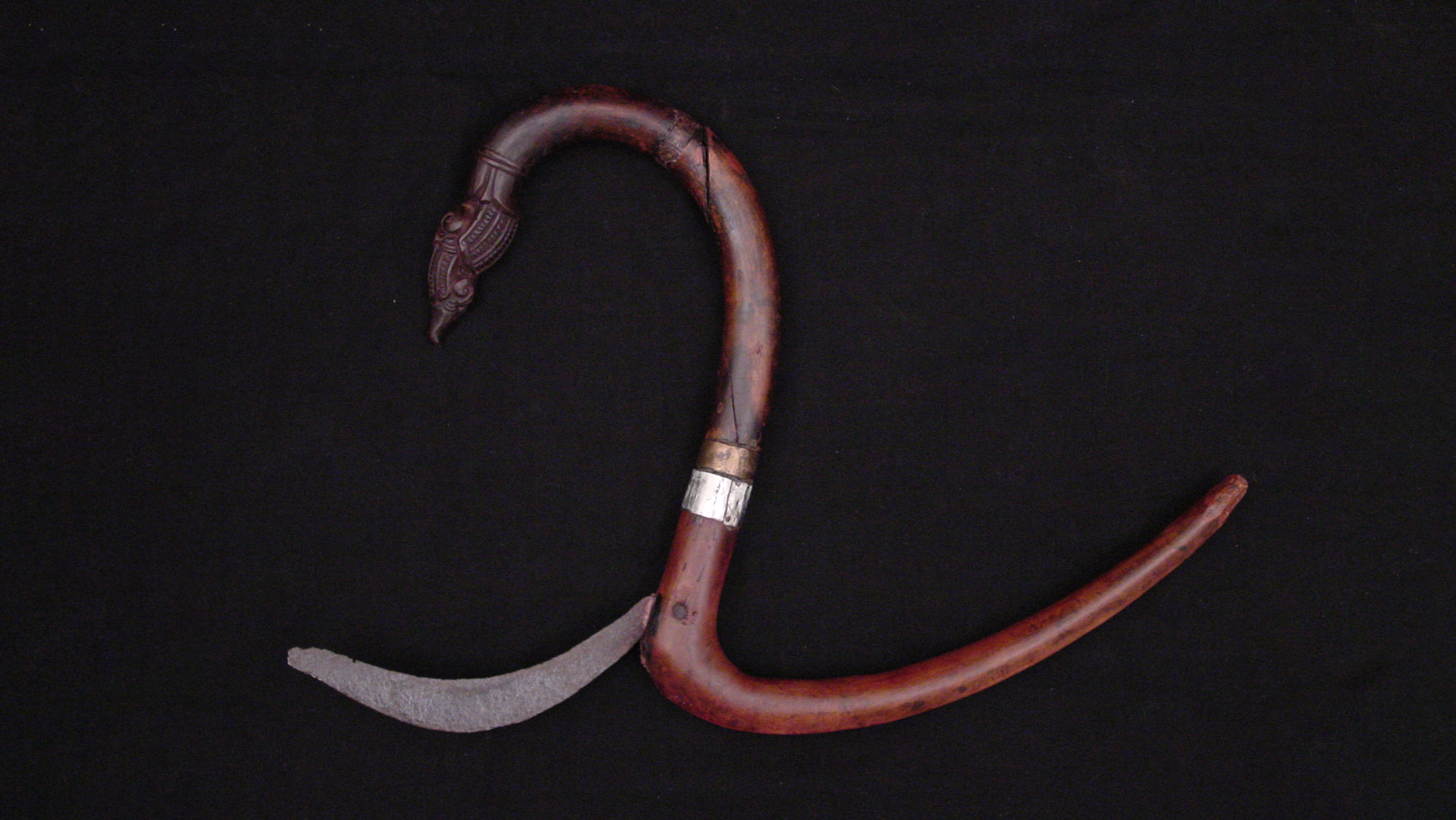 Rice Scythe Cambodia Plant-Wood, Pigment-Stain, Metal Purchased with Funds from the Friends of World Heritage Museum 1996.09.0004
Water is essential to rice cultivation; the ability to control, dam, divert, and understand the intricacies of flood waters is constant work. Paddy fields are the prime example of manipulating water for high yield and supporting dense populations. Irrigated wet rice is not, however, the only form of rice cultivation. In Southeast Asia rice is cultivated through rain-fed irrigation. Understanding and adapting to the patterns of precipitation is a skill that requires honing. The wet season in Thailand, for example, is highly unpredictable. Fluctuations in dry and wet conditions are critical to the yield of rice and productivity of cultivation.
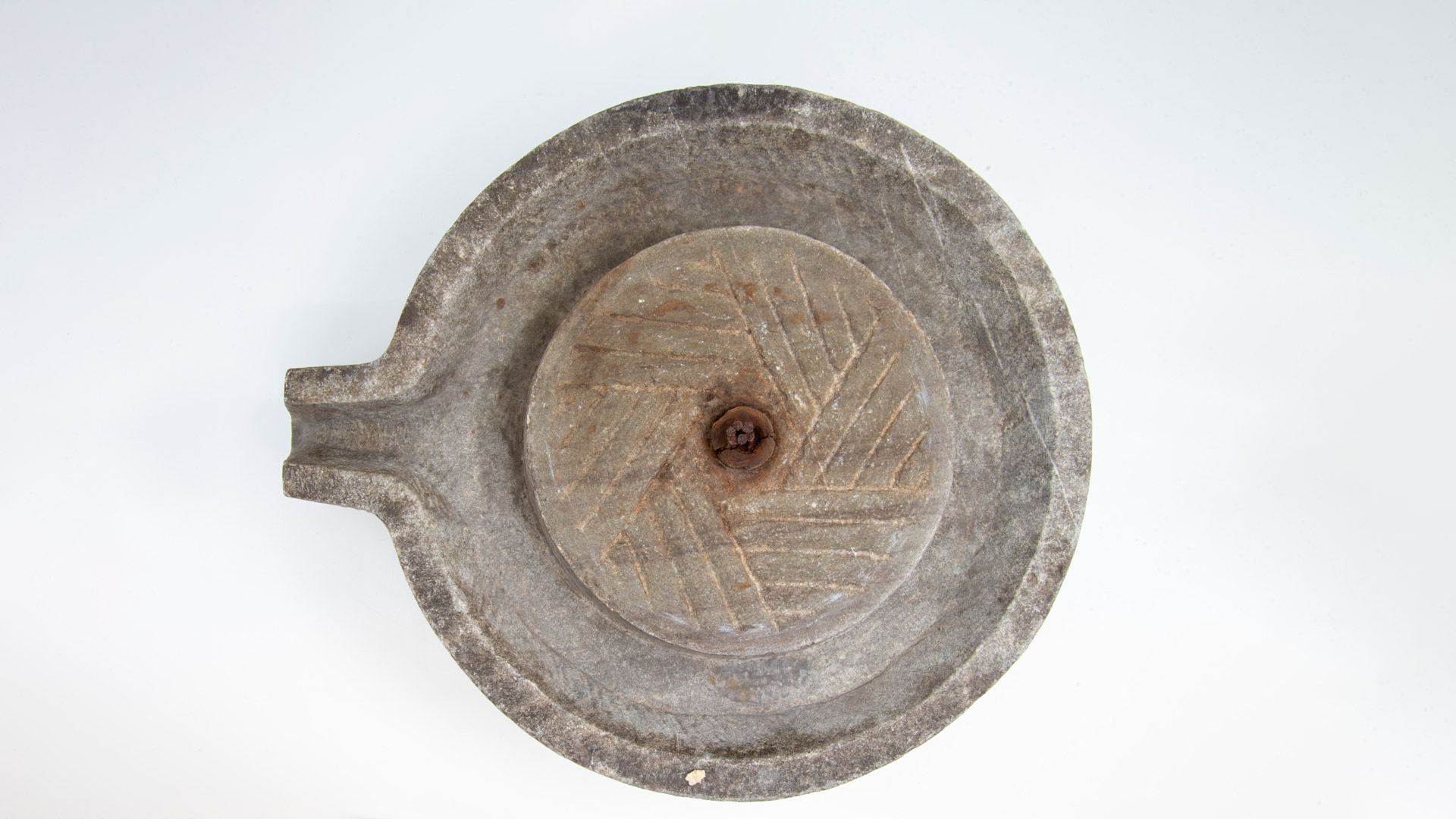
Domesticated rice in China has been dated as far back as 10,000 BCE and over the centuries thousands of rice varieties were developed. Some were resistant to floods or droughts, others withstood high winds. Delicious strands were developed along with purposefully designed strands for either brewing or baking. Water wheels and chain pumps were used in rice-farming; however, most farming implements were small and light. This is largely because rice farming was a technological system centered around highly skilled laborers and the quality of their work. Rice milling is believed to have begun in China during the Tang Dynasty in the 8th century. The process is long and tedious; but it changed the landscape of rice production. Innovation from animal power to water wheels and eventually steam engines brought more efficient processing and even higher yield.
-
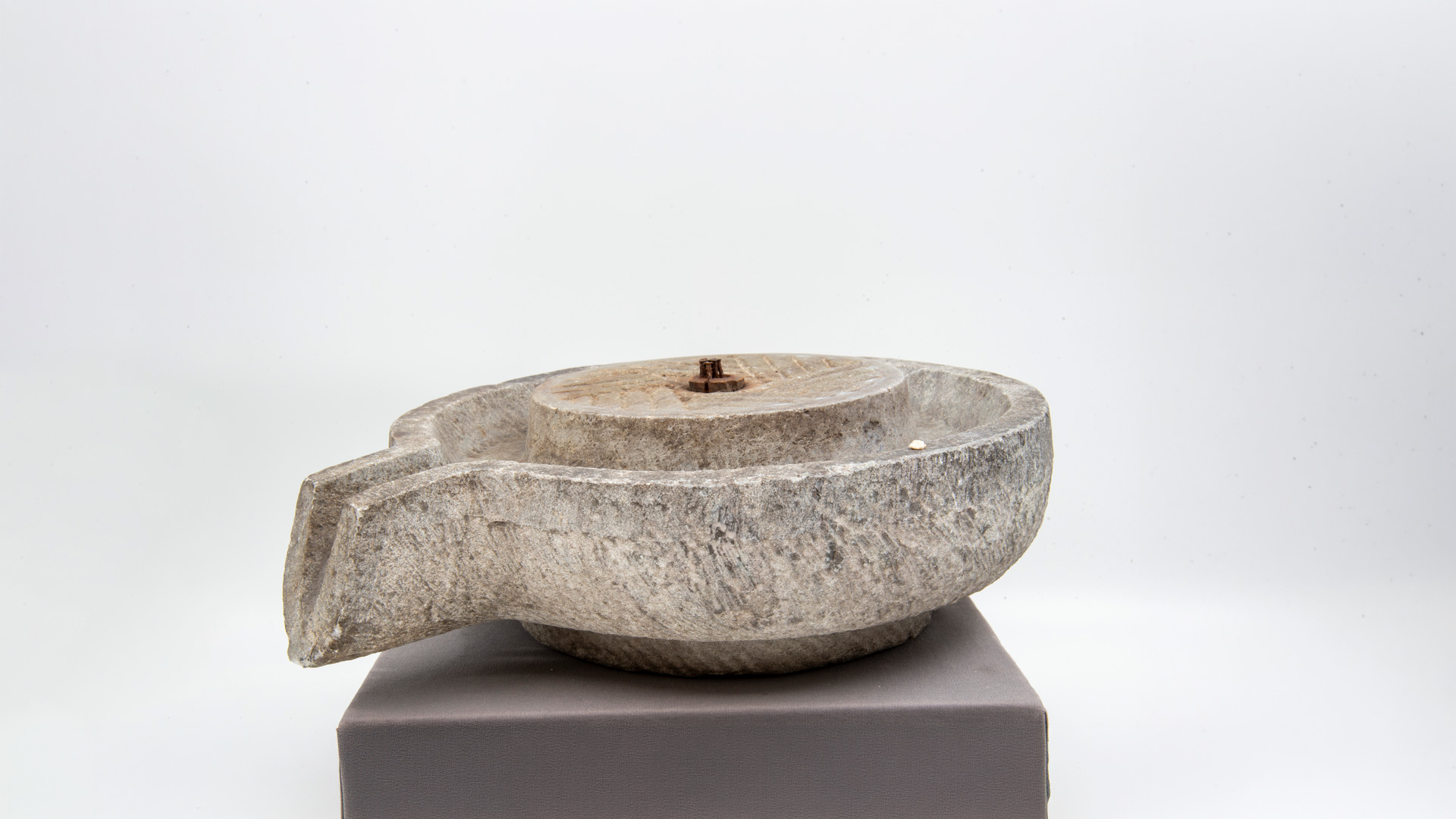 Soy and Rice Mill: Quern, Base China Metal, Stone, Plant-Wood 1907-1950 2011.04.0001A
 -
Labor
For around 3,000 years Oryza glaberrima, a strain of rice, has been cultivated in West Africa; it continues to be an integral part of culture and diet in the region. Harvesting and processing rice are both intensely laborious processes, requiring both skill and knowledge. Traditionally women were the holders of this knowledge, and in colonial South Carolina, enslavers weaponized generational knowledge from West African regions. From 1710–1730 the enslaved population increased from ~3,000 to ~20,000 with around 40% of people being taken from rice producing regions in Africa. The labor was long and grueling. Milling alone was a three-step process consisting of threshing, winnowing, and pounding. Threshing required separating the grains from the stalk following the drying process. Winnowing alternated with pounding removed the husks from the chaff. Pounding removed the grains outer coats while also polishing the rice. Without the generational knowledge of the enslaved people rice production in in the Americas and certainly South Carolina simply would not have been successful.
-
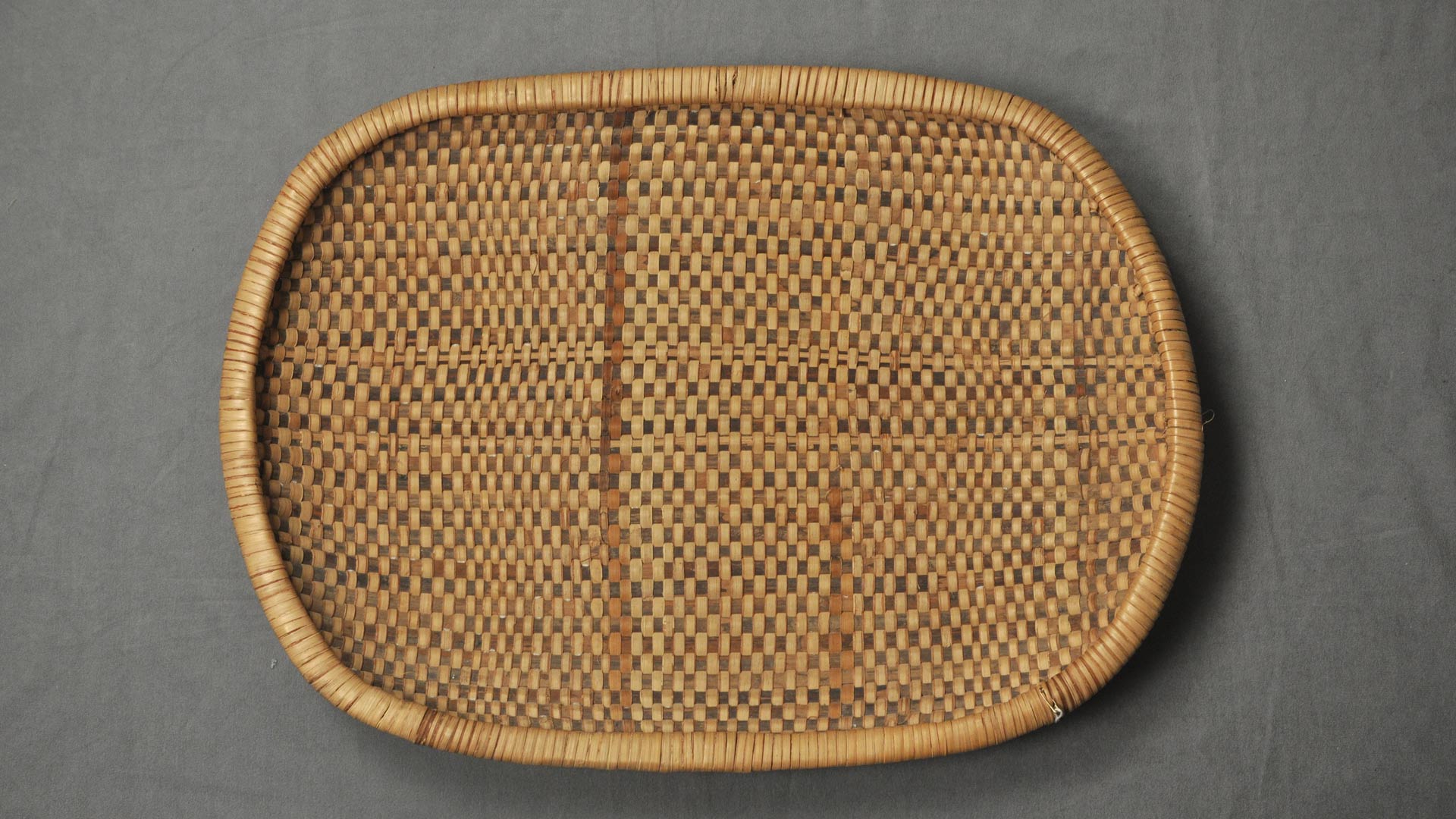 Rice Winnowing Tray Liberia Plant-Fiber 1982-1984 2014.10.0001
 -
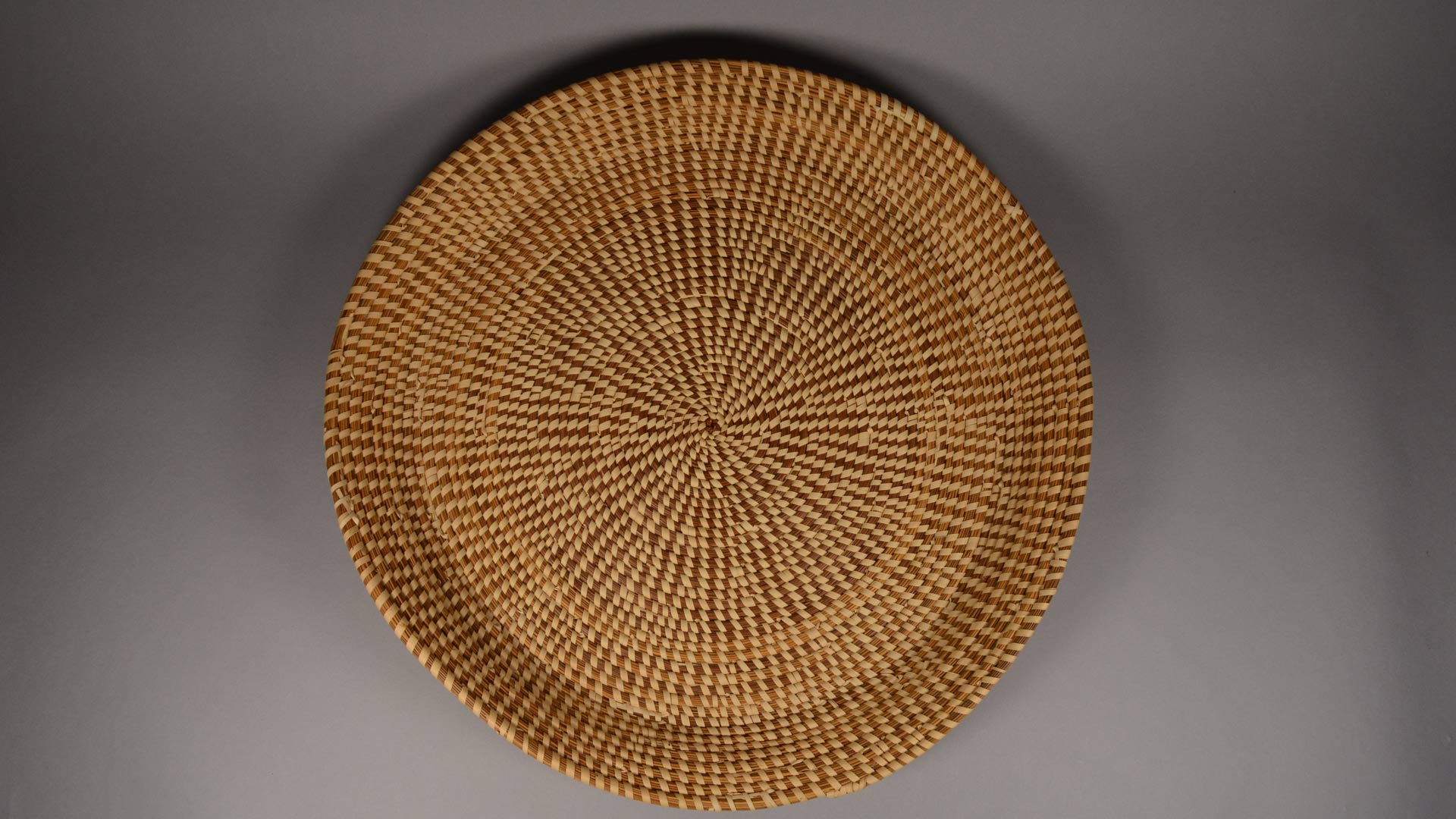 Basket: Rice Winnowing Tray United States Plant-Leaf, Plant-Palm 1975 CE The Doris A. Derby Collection 2018.07.0009
Bulul
Bulul are deeply connected to both the Ifugao people and the Luzon region of the Philippines. Traditional study of Bulul has been rooted in Eurocentrism and focused on Western ideas of religion label Bulul as simply a rice deity. Comparing the spirituality and deep cultural context surrounding the Ifugao and Bulul to Christianity evokes a binary that does not encapsulate the full scope of the Bulul. Recent research has argued these practices and labels are reductive to the multifunctionality of Bulul. Healing and peace-making are a large part of Bulul’s full picture. So too is the interconnectedness between dimensions and humans as not the only consciousness in existence, but rather one of many. Bulul are such beings, to the Ifugao they are not simply woodcarvings or representations of humans but instead they are living. They are an extension of their village and their family.
-
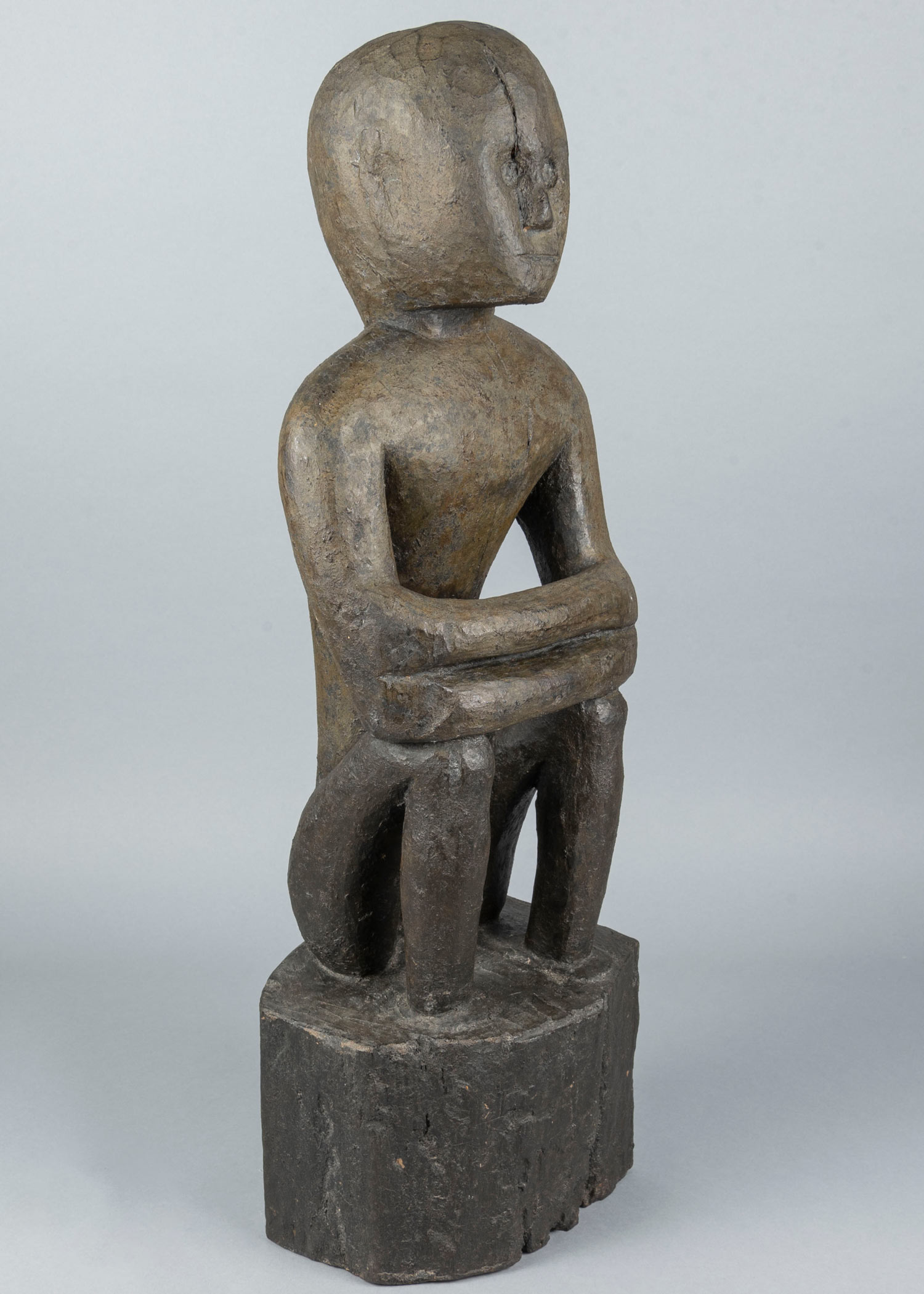 Bulul, Bulol Rice Guardian Figure Philippines Plant-Wood Gift of Drs. Albert V. and Marguerite Carozzi 1990.10.0082
 -
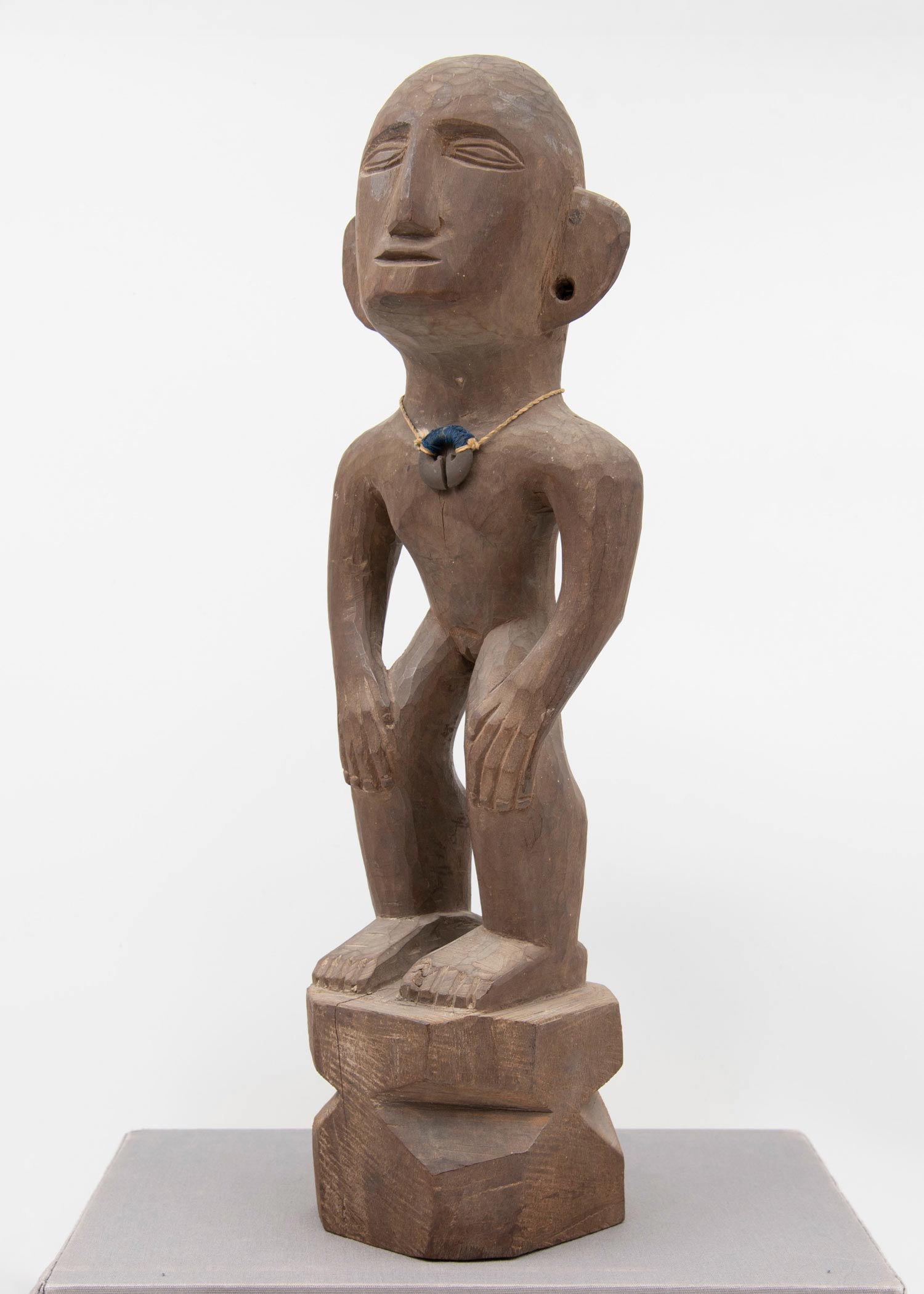 Bulul Rice Guardian Figure Philippines Plant-Wood Gift of Charles Bur Harper 2004.11.0018
One of the origin tales of Bulul tells of a tree who persuaded humans to carve several human figures from its bark. Upon the completion of this task, Bulul dwelled inside the carved figurines. Wooden statues provide a physical dwelling for Bulul, who are spiritual beings from another dimension. The carvings are of both male and female forms and reside together or singularly depending on the family who carved them and their intentions. Invitations to Bulul came only after the process of divining the location of the tree that would be used, boring into the trunk to ensure the tree was right for Bulul, and then careful carving. Bulul provided the people with successful harvests, large livestock, and boosted reproduction; however, these gifts were not without regular offerings required of the people. To invite Bulul into the figurine and thus into your spiritual life, libations of rice wine called baya, smears of blood from sacrificial animals, and binakle — a sweet dessert made from sugarcane and glutinous rice — were required. Bulul occupy the rice granary as they are not kept inside homes because of their deep disdain for any food that smells of fish.
Current research argues that colonial intervention and religious conversion have had a significant impact on how the Ifugao people view Bulul. While some disregard Bulul with coldness and disdain others have a positive personal connection and hold their contributions in very high regard. Some stories connect religious conversion to violent acts traced back to Bulul. Families who threw away or sold their Bulul to antique dealers would experience an unexplained illness. Other stories describe individuals who were separated from Bulul or did not replace the carving for Bulul often faced an untimely death. Alternatively, and very importantly, Bulul rites were performed to heal aliments and bones. In fact, some Ifugao praise healing as Bulul’s main purpose, insisting they are objects where human illnesses are transferred allowing the person to recover. The implications of Colonization have deeply impacted the research surrounding Bulul and the way the Ifugao view Bulul. So much more than a rice god, Bulul is a deeply complex culturally significant being that heals and harms, brings luck and protection, has favorite foods and cannot stand the smell of fish; Bulul are members of the family.
Conclusion
Rice is present on every populated continent on the planet, so its story is complex. From debated origins to domestication, with a complicated past of labor and spiritual connections, rice and humans are deeply intertwined. Food tells a unique story of people and places, and meals are sources of memories, identity, and culture. Situating rice in its vast cultural and historical context aims to link these ideas to artifacts in the collection at the Spurlock Museum, with rice served as the main course.
-
- Share:
- Subscribe to Newletter
- Giving