
Search Results
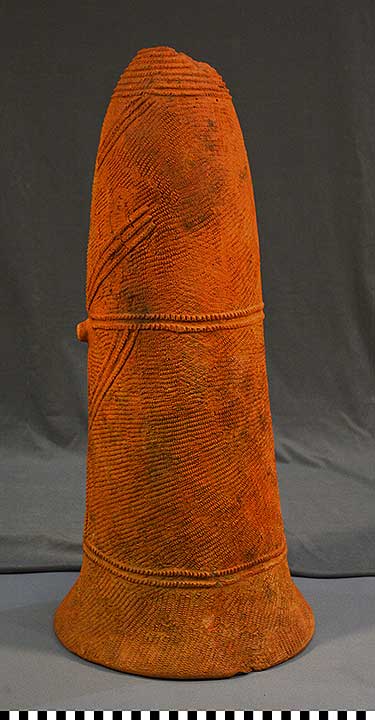
Bura Grave Urn2001.06.0001 (2001.06.0001)
79.1 x 36.2 cm ( g)
Location: Africa, West: Burkina Faso, Nigeria: Northern Nigeria?
Classification/Nomenclature: Communication Artifacts : Ceremonial Artifacts : Funerary Objects
Classification/Nomenclature: Communication Artifacts : Ceremonial Artifacts : Funerary Objects
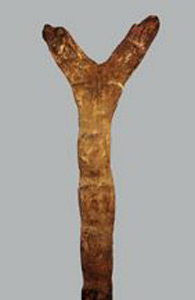
Ladder2001.06.0002 (2001.06.0002)
117.8 x 42 x 9.5 cm ( g)
Location: Africa, West: Mali
Classification/Nomenclature: Furnishings : Household Accessories : Other Household Accessories
Classification/Nomenclature: Furnishings : Household Accessories : Other Household Accessories
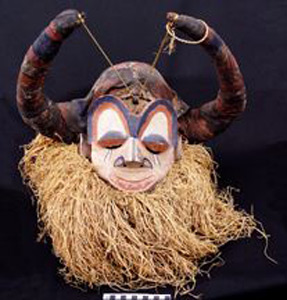
Chimpanzee Mask2001.06.0003 (2001.06.0003)
54.5 x 46.5 x 45.8 cm (1613 g)
Location: Africa, Central: Congo
Classification/Nomenclature: Communication Artifacts : Ceremonial Artifacts : Holiday Objects
Classification/Nomenclature: Communication Artifacts : Ceremonial Artifacts : Holiday Objects
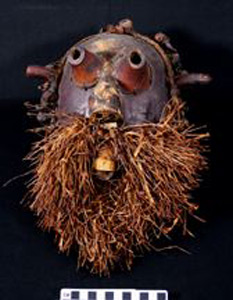
Mask2001.06.0004 (2001.06.0004)
38.3 x 25.4 x 10.9 cm (213 g)
Location: Africa, Central: Congo
Classification/Nomenclature: Communication Artifacts : Ceremonial Artifacts : Religious Objects
Classification/Nomenclature: Communication Artifacts : Ceremonial Artifacts : Religious Objects
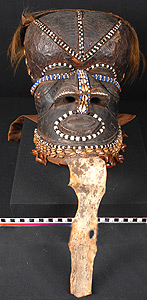
Bwoom Mask2001.06.0005 (2001.06.0005)
41.5 x 28.8 x 26.3 cm (1897 g)
Location: Africa, Central: Congo
Classification/Nomenclature: Communication Artifacts : Ceremonial Artifacts : Religious Objects
Classification/Nomenclature: Communication Artifacts : Ceremonial Artifacts : Religious Objects
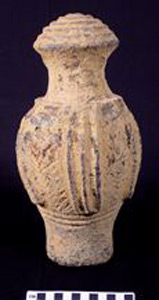
Vase-Shaped Object2001.06.0006 (2001.06.0006)
29.7 x 15.8 x 14.7 cm (2178 g)
Location: Africa, West: Nigeria?
Classification/Nomenclature: Unclassifiable Artifacts
Classification/Nomenclature: Unclassifiable Artifacts
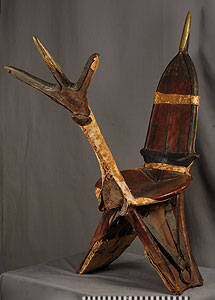
Camel Saddle2001.06.0007 (2001.06.0007)
83.6 x 74.4 x 30.8 cm ( g)
Location: Africa, West: Niger
Classification/Nomenclature: Distribution & Transportation Artifacts : Land Transportation T&E : Land Transportation Accessories
Classification/Nomenclature: Distribution & Transportation Artifacts : Land Transportation T&E : Land Transportation Accessories
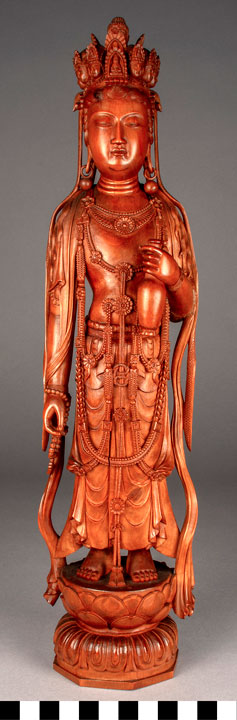
Okimono: Kannon (Guanyin, Kuanyin, Avalokiteshvara)2001.07.0001 (2001.07.0001)
36.1 x 8.8 x 7.1 cm (637 g)
Location: Asia, East: Japan
Period: Meiji Period (1868-1912); Late 19th Century
Classification/Nomenclature: Communication Artifacts : Art
Description: This is a Japanese okimono of Kannon (Guanyin), the Japanese name for the Bodhisattva Avalokitesvara...
Period: Meiji Period (1868-1912); Late 19th Century
Classification/Nomenclature: Communication Artifacts : Art
Description: This is a Japanese okimono of Kannon (Guanyin), the Japanese name for the Bodhisattva Avalokitesvara...
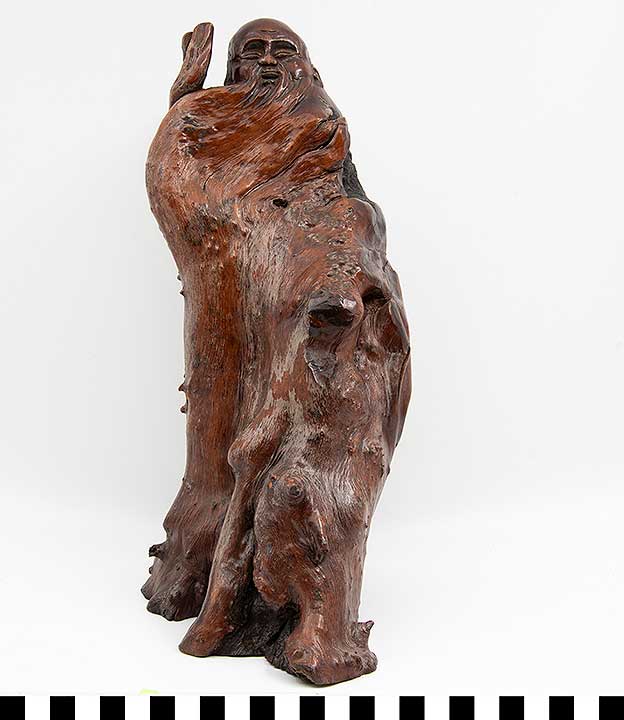
Figurine: Bust of Bearded Man2001.07.0002 (2001.07.0002)
36.8 x 24.9 x 14 cm ( g)
Location: Asia, East: China
Period: Qing Dynasty (1644-1911); 19th Century
Classification/Nomenclature: Communication Artifacts : Art
Description: This is a Chinese carved figurine of a bearded man. As the second of the five Chinese elements, wood is highly venerated as a material for decorative art...
Period: Qing Dynasty (1644-1911); 19th Century
Classification/Nomenclature: Communication Artifacts : Art
Description: This is a Chinese carved figurine of a bearded man. As the second of the five Chinese elements, wood is highly venerated as a material for decorative art...
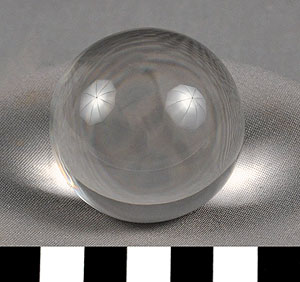
Crystal Ball2001.07.0003A (2001.07.0003A)
4.8 x 4.8 x 4.7 cm (154 g)
Location: Asia, East: Japan
Period: Meiji Period (1868-1912); 19th Century
Classification/Nomenclature: Communication Artifacts : Art
Description: "A Japanese boxwood stand, carved to form chrysanthemums, foliage and buds, surmounted by a crystal ball...
Period: Meiji Period (1868-1912); 19th Century
Classification/Nomenclature: Communication Artifacts : Art
Description: "A Japanese boxwood stand, carved to form chrysanthemums, foliage and buds, surmounted by a crystal ball...
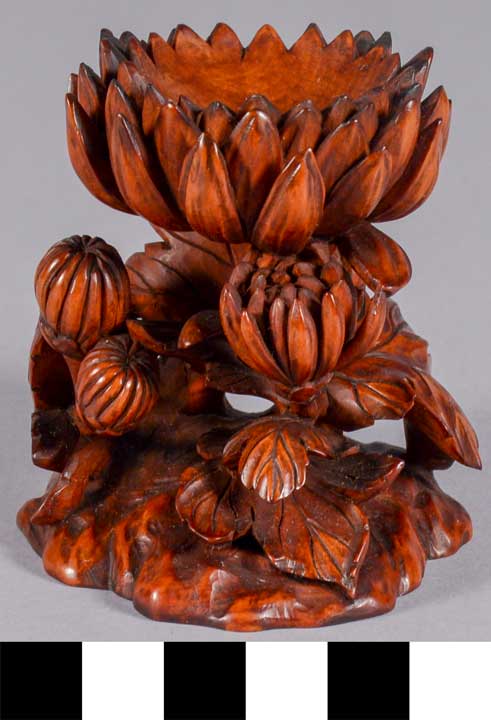
Crystal Ball Stand2001.07.0003B (2001.07.0003B)
6.9 x 6.4 x 5.9 cm (63 g)
Location: Asia, East: Japan
Period: Meiji Period (1868-1912); 19th Century
Classification/Nomenclature: Communication Artifacts : Art
Description: "A Japanese boxwood stand, carved to form chrysanthemums, foliage and buds, surmounted by a crystal ball...
Period: Meiji Period (1868-1912); 19th Century
Classification/Nomenclature: Communication Artifacts : Art
Description: "A Japanese boxwood stand, carved to form chrysanthemums, foliage and buds, surmounted by a crystal ball...
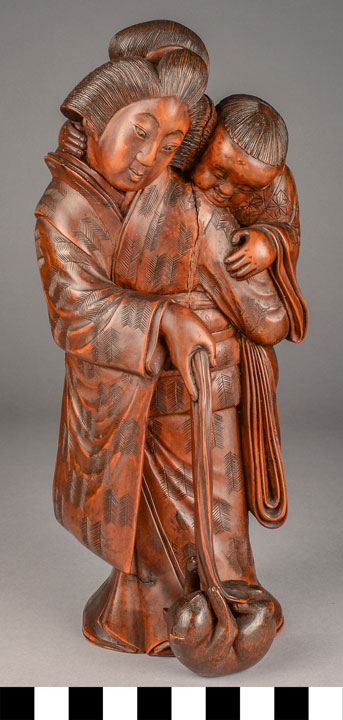
Okimono: Bijin (Beautiful Woman) with Child2001.07.0004 (2001.07.0004)
22 x 9.6 x 8.2 cm (725 g)
Location: Asia, East: Japan
Period: Meiji Period (1868-1912); Late 19th Century
Classification/Nomenclature: Communication Artifacts : Art
Description: This is a Japanese boxwood okimono of a bijin (beautiful woman) with her child, both watching their cat play...
Period: Meiji Period (1868-1912); Late 19th Century
Classification/Nomenclature: Communication Artifacts : Art
Description: This is a Japanese boxwood okimono of a bijin (beautiful woman) with her child, both watching their cat play...
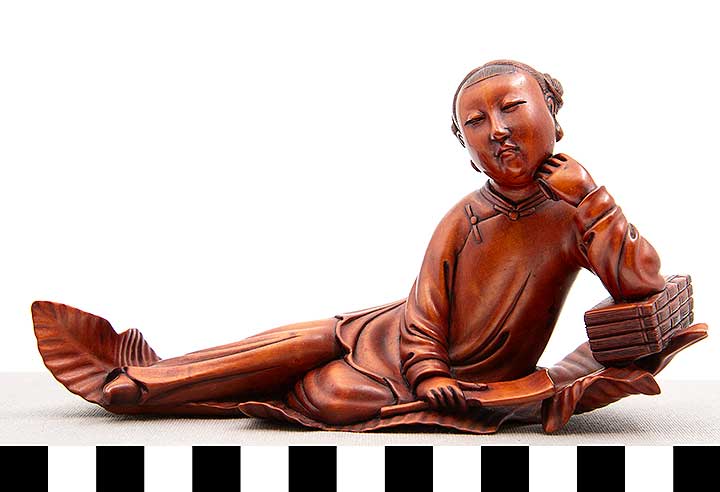
Figurine: Recumbent Woman2001.07.0005 (2001.07.0005)
15.8 x 7.8 x 5.2 cm (116 g)
Location: Asia, East: China
Period: Late Qing Dynasty (1644-1911); 19th century, 1780 - 1911 CE
Classification/Nomenclature: Communication Artifacts : Art
Description: This is a Chinese carved figurine of a recumbent woman on a leaf, resting her elbow on a stack of books while holding a fan...
Period: Late Qing Dynasty (1644-1911); 19th century, 1780 - 1911 CE
Classification/Nomenclature: Communication Artifacts : Art
Description: This is a Chinese carved figurine of a recumbent woman on a leaf, resting her elbow on a stack of books while holding a fan...
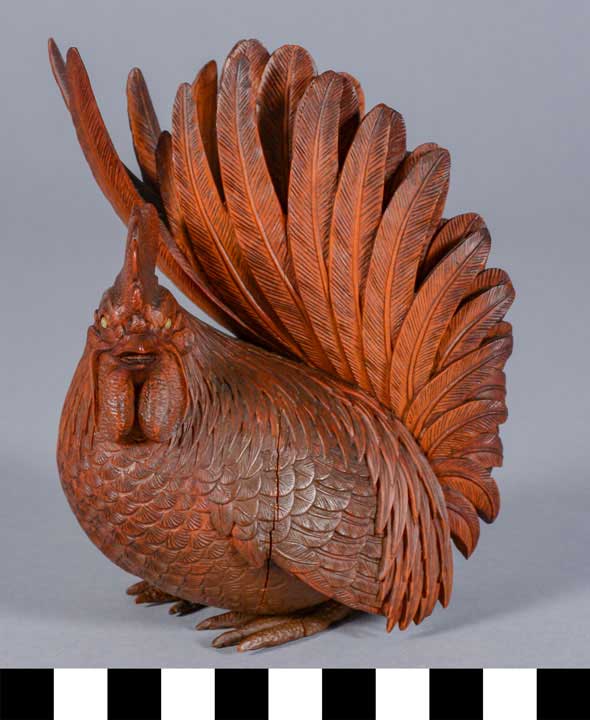
Okimono: Cockerel2001.07.0006A (2001.07.0006A)
12.6 x 8.9 x 7.1 cm (274 g)
Location: Asia, East: Japan
Period: Meiji Period (1868-1912); Circa 1868-1912
Classification/Nomenclature: Communication Artifacts : Art
Description: This is a Japanese okimono of a cockerel looking on. This carving is a part of a hen and cockeral pairing...
Period: Meiji Period (1868-1912); Circa 1868-1912
Classification/Nomenclature: Communication Artifacts : Art
Description: This is a Japanese okimono of a cockerel looking on. This carving is a part of a hen and cockeral pairing...

Okimono: Hen2001.07.0006B (2001.07.0006B)
9.9 x 8.3 x 4.9 cm (95 g)
Location: Asia, East: Japan
Period: Meiji Period (1868-1912); Circa 1868-1912
Classification/Nomenclature: Communication Artifacts : Art
Description: This is a Japanese okimono of a hen picking at seeds. This carving is a part of a hen and cockeral pairing...
Period: Meiji Period (1868-1912); Circa 1868-1912
Classification/Nomenclature: Communication Artifacts : Art
Description: This is a Japanese okimono of a hen picking at seeds. This carving is a part of a hen and cockeral pairing...
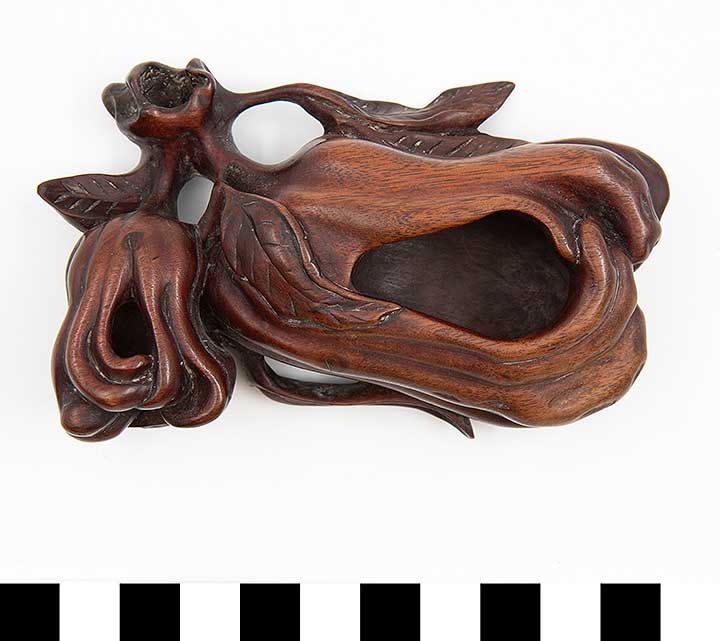
Brush Washer, Water Coup2001.07.0007 (2001.07.0007)
10 x 6.8 x 3.3 cm (61 g)
Location: Asia, East: China
Period: Qing Dynasty (1644-1911); 18th - 19th Century
Classification/Nomenclature: Communication T&E : Written Communication T&E : Writing Accessories
Description: Brush washers of the Qing Dynasty (1644-1911) were treasured items for interior design, particularly ones made from zitan wood...
Period: Qing Dynasty (1644-1911); 18th - 19th Century
Classification/Nomenclature: Communication T&E : Written Communication T&E : Writing Accessories
Description: Brush washers of the Qing Dynasty (1644-1911) were treasured items for interior design, particularly ones made from zitan wood...
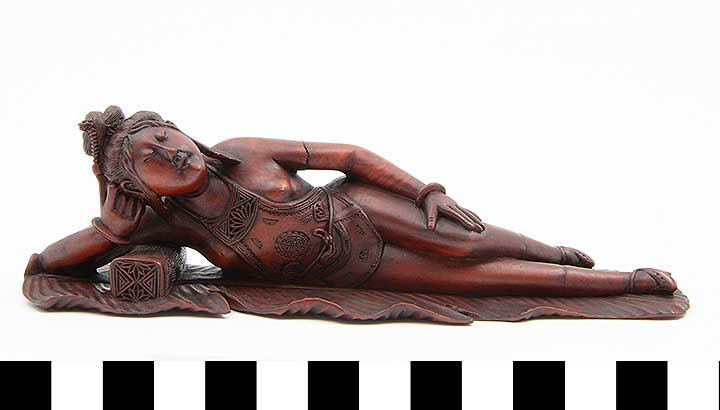
Figurine: Recumbent Woman2001.07.0008A (2001.07.0008A)
18.2 x 5.1 x 4.6 cm (89 g)
Location: Asia, East: China
Period: Late Qing Dynasty (1644-1911); 1780 - 1911 CE
Classification/Nomenclature: Communication Artifacts : Art
Description: This is a Chinese carved figurine of a recumbent woman on a leaf-like mat. This type of sentimental and natural imagery has been a consistent theme of Chinese lacquered artwork...
Period: Late Qing Dynasty (1644-1911); 1780 - 1911 CE
Classification/Nomenclature: Communication Artifacts : Art
Description: This is a Chinese carved figurine of a recumbent woman on a leaf-like mat. This type of sentimental and natural imagery has been a consistent theme of Chinese lacquered artwork...
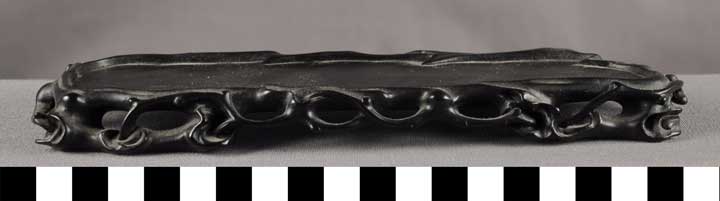
Figurine: Recumbent Woman, Stand2001.07.0008B (2001.07.0008B)
20.4 x 6.5 x 1.8 cm (73 g)
Location: Asia, East: China
Period: Late Qing Dynasty (1644-1911); 1780 - 1911 CE
Classification/Nomenclature: Furnishings : Furniture : Support Furniture
Description: This is the stand for a Chinese wood carving of a recumbent woman. Lacquerware of the Qing Dynasty (1644-1911) was typically produced in government-sponsored workshops and carved by craftsmen already experienced in crafting works of bamboo and ivory...
Period: Late Qing Dynasty (1644-1911); 1780 - 1911 CE
Classification/Nomenclature: Furnishings : Furniture : Support Furniture
Description: This is the stand for a Chinese wood carving of a recumbent woman. Lacquerware of the Qing Dynasty (1644-1911) was typically produced in government-sponsored workshops and carved by craftsmen already experienced in crafting works of bamboo and ivory...
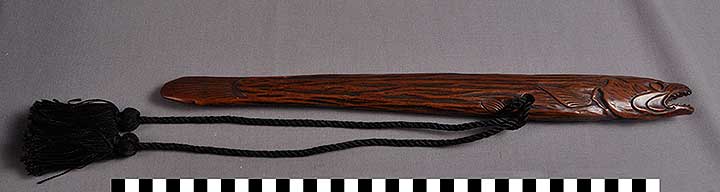
Doctor's Bokuto, Wooden Sword2001.07.0009 (2001.07.0009)
40.5 x 3.8 x 2.1 cm (133 g)
Location: Asia, East: Japan
Period: Late Edo Period; 1740 - 1868 CE
Classification/Nomenclature: Communication Artifacts : Personal Symbols : Status Symbols
Description: "A Japanese Bokuto (literally 'wooden sword' - when, with the end of the civil rivalry between the Shogun and his enemies, carrying arms became obsolete in Japan, the wearing of small dummy swords by the Samurai was imitated by doctors, artists and other professionals as a symbol of social and professional status...
Period: Late Edo Period; 1740 - 1868 CE
Classification/Nomenclature: Communication Artifacts : Personal Symbols : Status Symbols
Description: "A Japanese Bokuto (literally 'wooden sword' - when, with the end of the civil rivalry between the Shogun and his enemies, carrying arms became obsolete in Japan, the wearing of small dummy swords by the Samurai was imitated by doctors, artists and other professionals as a symbol of social and professional status...
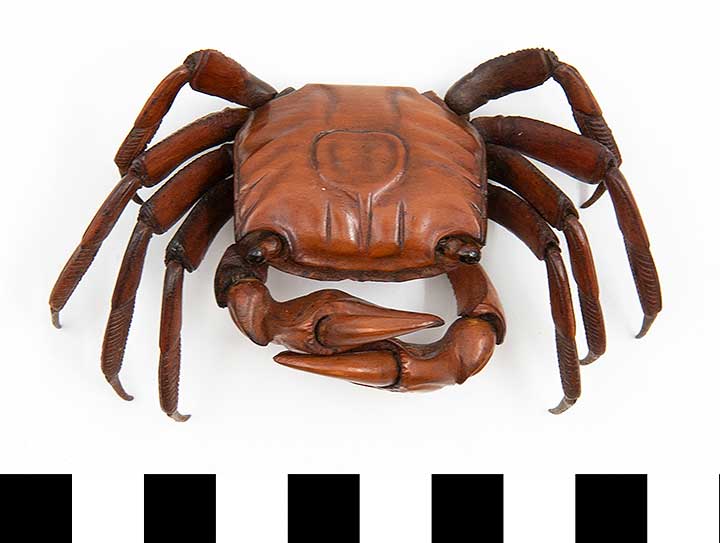
Okimono: Crab2001.07.0010A (2001.07.0010A)
8.8 x 5.2 x 3 cm (18 g)
Location: Asia, East: Japan
Period: Meiji Period (1868-1912); 1868 - 1912
Classification/Nomenclature: Communication Artifacts : Art
Description: This is a Japanese okimono of a crab signed by Ikkan. In legend, the Heike crabs of Akamaganseki are tiny crabs where the ghostly remains of the warriors killed at the Battle of Dan-no-ura (1185) reside...
Period: Meiji Period (1868-1912); 1868 - 1912
Classification/Nomenclature: Communication Artifacts : Art
Description: This is a Japanese okimono of a crab signed by Ikkan. In legend, the Heike crabs of Akamaganseki are tiny crabs where the ghostly remains of the warriors killed at the Battle of Dan-no-ura (1185) reside...
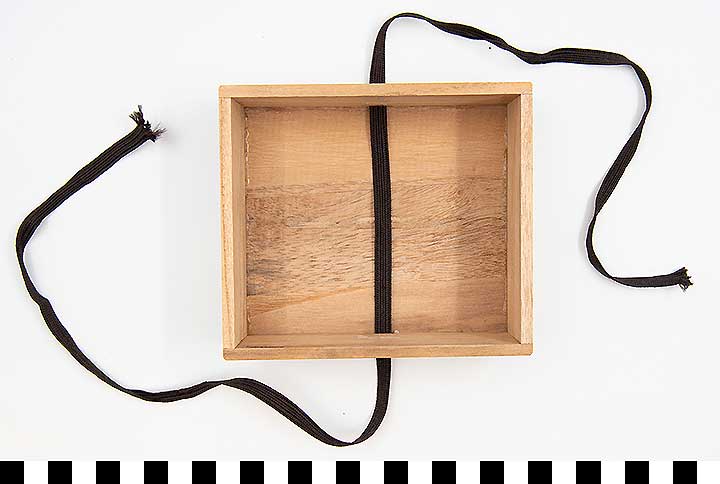
Box for Okimono2001.07.0010B (2001.07.0010B)
11.9 x 10.5 x 4 cm (33 g)
Location: Asia, East: Japan
Period: Meiji Period (1868-1912), Taisho Period (1912-1926), Showa Period (1926-1989); Late 19th - late 20th century
Classification/Nomenclature: Personal Artifacts : Personal Gear : Personal Carrying & Storage Gear
Description: This is a box of a Japanese okimono of a crab signed by Ikkan. In legend, the Heike crabs of Akamaganseki are tiny crabs where the ghostly remains of the warriors killed at the Battle of Dan-no-ura (1185) reside...
Period: Meiji Period (1868-1912), Taisho Period (1912-1926), Showa Period (1926-1989); Late 19th - late 20th century
Classification/Nomenclature: Personal Artifacts : Personal Gear : Personal Carrying & Storage Gear
Description: This is a box of a Japanese okimono of a crab signed by Ikkan. In legend, the Heike crabs of Akamaganseki are tiny crabs where the ghostly remains of the warriors killed at the Battle of Dan-no-ura (1185) reside...
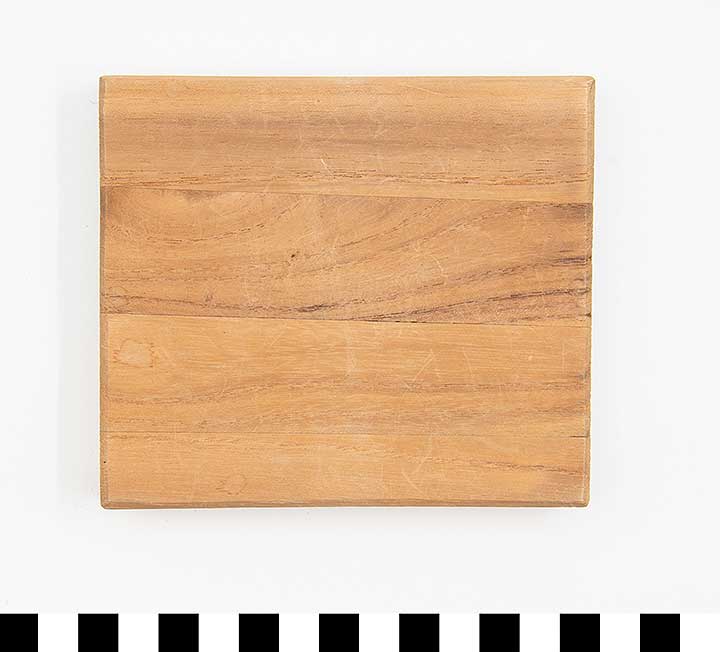
Box Lid for Okimono2001.07.0010C (2001.07.0010C)
11.8 x 10.2 x 1.8 cm (23 g)
Location: Asia, East: Japan
Period: Meiji Period (1868-1912), Taisho Period (1912-1926), Showa Period (1926-1989); Late 19th - late 20th century
Classification/Nomenclature: Personal Artifacts : Personal Gear : Personal Carrying & Storage Gear
Description: This is a box lid of a Japanese okimono of a crab signed by Ikkan. In legend, the Heike crabs of Akamaganseki are tiny crabs where the ghostly remains of the warriors killed at the Battle of Dan-no-ura (1185) reside...
Period: Meiji Period (1868-1912), Taisho Period (1912-1926), Showa Period (1926-1989); Late 19th - late 20th century
Classification/Nomenclature: Personal Artifacts : Personal Gear : Personal Carrying & Storage Gear
Description: This is a box lid of a Japanese okimono of a crab signed by Ikkan. In legend, the Heike crabs of Akamaganseki are tiny crabs where the ghostly remains of the warriors killed at the Battle of Dan-no-ura (1185) reside...
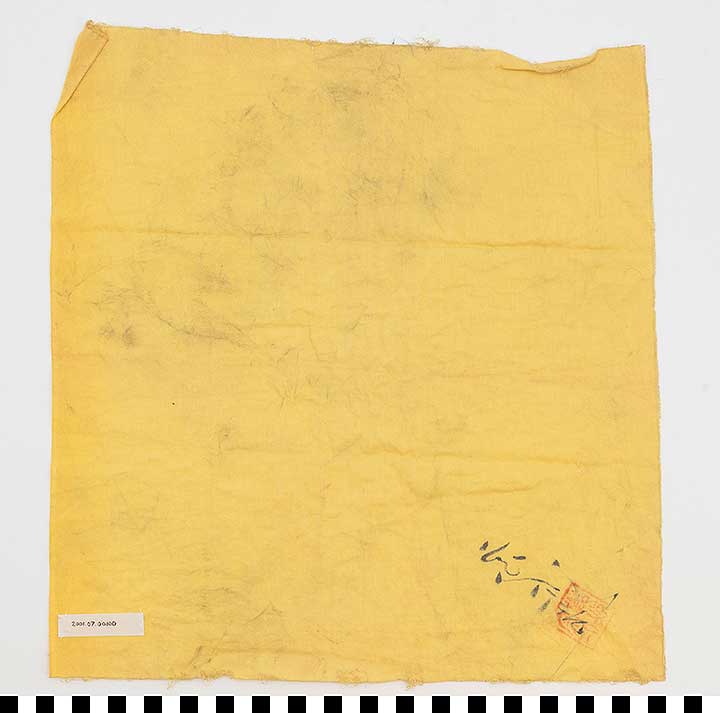
Packing Cloth2001.07.0010D (2001.07.0010D)
35.9 x 34 x .1 cm (13 g)
Location: Asia, East: Japan
Classification/Nomenclature: Furnishings : Household Accessories : Storage & Display Accessories
Classification/Nomenclature: Furnishings : Household Accessories : Storage & Display Accessories
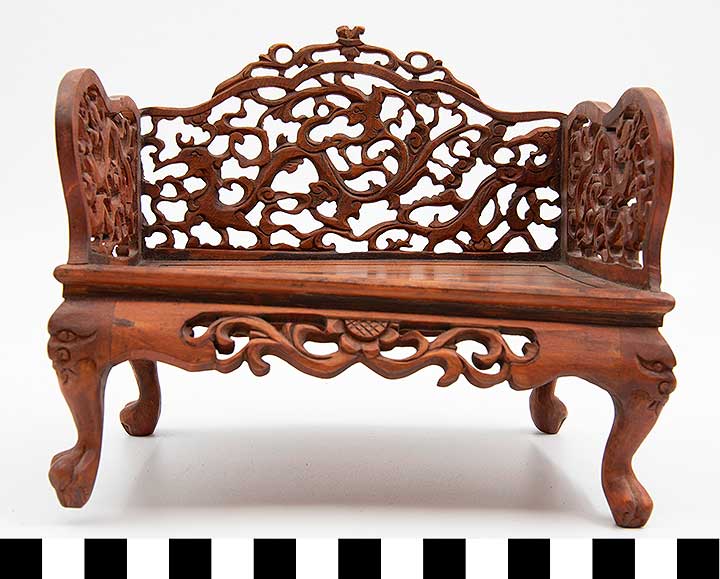
Miniature Chair2001.07.0011A (2001.07.0011A)
19.7 x 17.9 x 15 cm (380 g)
Location: Asia, East: China
Period: Qing Dynasty (1644-1911); 19th Century
Classification/Nomenclature: Furnishings : Furniture : Support Furniture
Description: Furniture pieces of the Qing Dynasty (1644-1911) were treasured items for interior design, particularly when displayed in a house reception hall...
Period: Qing Dynasty (1644-1911); 19th Century
Classification/Nomenclature: Furnishings : Furniture : Support Furniture
Description: Furniture pieces of the Qing Dynasty (1644-1911) were treasured items for interior design, particularly when displayed in a house reception hall...
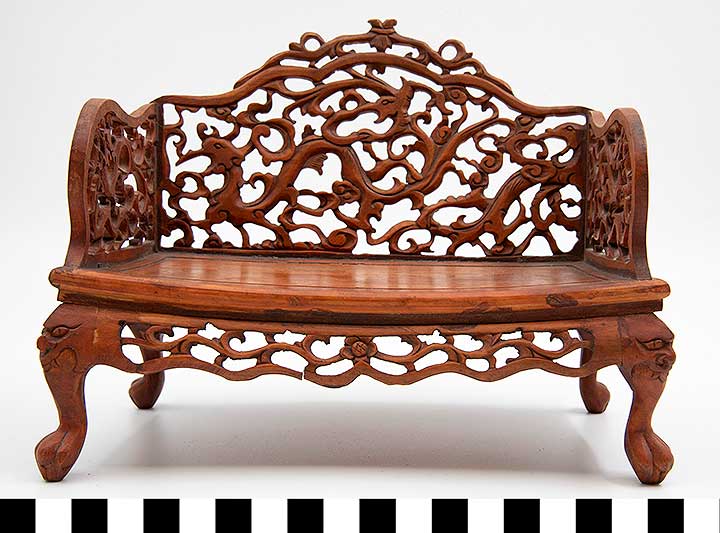
Miniature Chair2001.07.0011B (2001.07.0011B)
24.1 x 20.1 x 13.9 cm (533 g)
Location: Asia, East: China
Period: Qing Dynasty (1644-1911); 19th Century
Classification/Nomenclature: Furnishings : Furniture : Support Furniture
Description: Furniture pieces of the Qing Dynasty (1644-1911) were treasured items for interior design, particularly when displayed in a house reception hall...
Period: Qing Dynasty (1644-1911); 19th Century
Classification/Nomenclature: Furnishings : Furniture : Support Furniture
Description: Furniture pieces of the Qing Dynasty (1644-1911) were treasured items for interior design, particularly when displayed in a house reception hall...
Search Examples
Explore More
Access the public portions of the catalog records for the approximately 50,000 cultural and ethnographic objects in the Museum's Artifact Collection.